EN


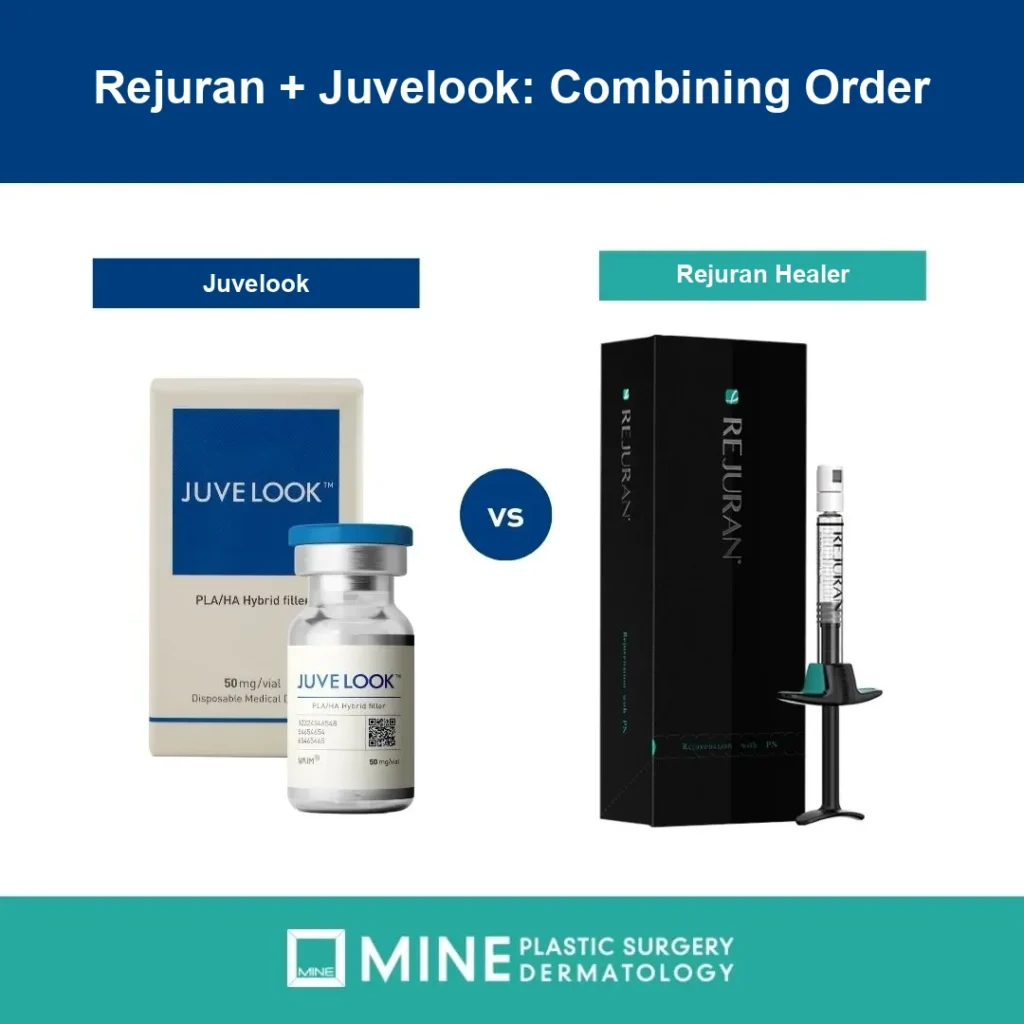
Can you get Rejuran and Juvelook together? Yes. Getting Rejuran and Juvelook together means combining two skin boosters with different mechanisms — Rejuran’s PN (polynucleotide) for repair and Juvelook’s PDLLA plus hyaluronic acid for collagen — in one planned sequence: Rejuran first, Juvelook 1–2 weeks after the last Rejuran session, never on the same day.
“Can I have Rejuran and Juvelook together?” is one of the questions I hear most often in skin consultations. Both boosters are popular, so it is natural to want the benefits of both at once. In this guide I explain why the two do not clash, why same-day injection is not advised, which one should come first, how long to wait in between, and how to keep results going over the long term.
Rejuran and Juvelook together: key takeaways
- The two boosters work in different ways, so their ingredients do not conflict.
- Same-day treatment is not recommended — injections, bruising and swelling stack up.
- Rejuran usually goes first, typically as 3 sessions about 1 month apart.
- Juvelook starts at least 1–2 weeks after the final Rejuran session.
- After the first course, many patients alternate the two every 3–6 months.
Dr. Lee Sung-wook, Board-Certified Plastic Surgeon, MINE Plastic Surgery & Dermatology, Seoul
Table of Contents
Rejuran and Juvelook Together: Can You Combine Them?
Rejuran and Juvelook do different jobs in the skin. Rejuran focuses on helping skin cells repair and renew themselves. Juvelook stimulates your skin to make new collagen, so the skin is rebuilt gradually from within. Because the goals complement each other rather than overlap, there is no ingredient clash that would cause side effects when you use Rejuran and Juvelook together.
That is why many patients choose both. But having Rejuran and Juvelook together does not mean “in one appointment”. It means one planned sequence. The order you have them in, and the spacing between them, decides how well the combination works.
If you are still weighing up other booster families as well, our overview of the types of skin boosters explains how they differ.
Why the Two Boosters Don’t Conflict
Knowing what is inside each booster makes it easier to see why Rejuran and Juvelook together make sense, and why the order matters. Here is how each one works, in plain terms.
Rejuran: PN (Polynucleotide) for Skin Repair
The main ingredient in Rejuran is PN (polynucleotide), purified from salmon DNA. Its structure is similar to the building blocks of our own DNA. Put simply, it supplies “repair material” that helps skin cells recover and renew on their own.
Once injected, PN is expected to support the repair of damaged cells, draw in moisture to improve hydration, and calm irritated skin. Rejuran’s effects usually appear within 2–4 weeks and last about 4–6 months. Because of its soothing action, it tends to suit dry and sensitive skin well. You can read more about our Rejuran Healer treatment at MINE.
Juvelook: PDLLA + HA for Gradual Collagen
Juvelook combines PDLLA (poly-D,L-lactic acid) with hyaluronic acid (HA, a moisture-holding ingredient naturally found in skin). The two share the work: HA gives an effect you notice soon after treatment, while PDLLA delivers the slower, longer-lasting change.
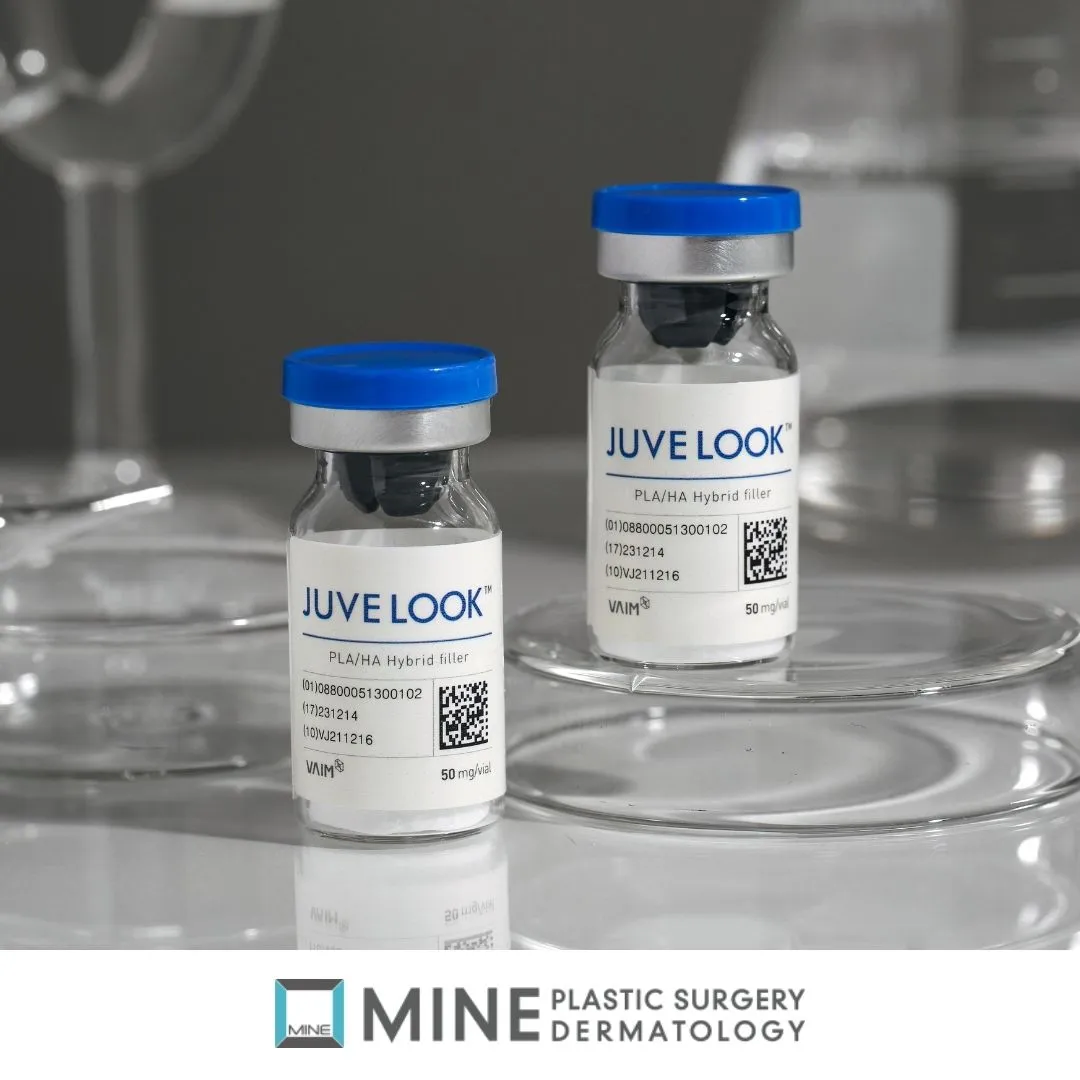
Cosmetic dermatology textbooks describe injectable poly-lactic acid, in use worldwide since the 1990s, as a collagen biostimulator that builds new collagen gradually rather than filling instantly. In simple terms, the PDLLA particles break down slowly after injection. As they do, they stimulate fibroblasts (the cells that make collagen). The stimulated fibroblasts produce fresh collagen, and the dermis (the thicker inner layer of skin) gradually becomes denser. Rather than filling the skin from outside, Juvelook prompts your own skin to make collagen.
Meanwhile, the hyaluronic acid adds hydration and a little volume from early on, bridging the gap while collagen slowly builds. Juvelook’s effects begin around 4–6 weeks and last about 8–12 months. This slow onset matches the gradual collagen build-up the textbooks describe for this class of ingredient. For details on the procedure itself, see our Juvelook treatment at MINE.
Quick Side-by-Side (Full Comparison Elsewhere)
This short table covers only what matters when planning Rejuran and Juvelook together. For the full Juvelook vs Rejuran comparison of ingredients, effects and duration, see our dedicated guide.
| Rejuran | Juvelook | |
|---|---|---|
| Main ingredient | PN (polynucleotide) | PDLLA + hyaluronic acid |
| Main action | Repair, hydration, soothing | Collagen, volume, elasticity |
| Onset | 2–4 weeks | 4–6 weeks |
| Duration | About 4–6 months | About 8–12 months |
Both products use medical ingredients approved by Korea’s Ministry of Food and Drug Safety (MFDS). Before any treatment, I recommend checking the product and ingredients being used.
Why Not Get Rejuran and Juvelook on the Same Day?
Since the ingredients do not clash, why not do both in one visit? The concern is not chemistry. It is how much your skin has to cope with at once. Having Rejuran and Juvelook together on the same day is not something I recommend, for three reasons.
More Injections in One Sitting
Both treatments involve many small injections. Having Rejuran and Juvelook together in one session concentrates a large number of injections into a short time, so the stress on your skin piles up all at once instead of being spread out.
Overlapping Bruising, Swelling and Redness
Temporary reactions such as bruising, swelling and redness are common after either booster. When you receive Rejuran and Juvelook together back to back, these reactions can overlap and become more noticeable than they would be after one treatment alone.
Harder to Tell Which Product Caused a Reaction
If something unexpected appears during recovery, it becomes difficult to tell which booster caused it. Spacing the treatments out keeps each reaction easy to read and lets each booster work fully. It is the safer and more efficient approach.
The Right Order: Rejuran Before Juvelook
This is the part most patients want to know. When you plan Rejuran and Juvelook together, the usual sequence is to build a repair foundation with Rejuran first, then strengthen collagen with Juvelook, leaving at least 1–2 weeks between the two.
Why Rejuran Goes First
As explained above, Rejuran’s PN helps create a healthy environment in which skin cells can recover. When Juvelook’s collagen stimulus arrives in skin that is already in better condition, the fibroblasts respond more actively. That is the reasoning behind giving Rejuran before Juvelook: it helps Juvelook’s collagen effect work more efficiently.
Think of it like gardening. You enrich the soil first (Rejuran), then plant the seeds (Juvelook). A well-prepared base makes everything you build on top of it work better.
How Long to Wait Between Them
Rejuran is typically given as 3 sessions about 1 month apart, and Juvelook starts at least 1–2 weeks after the final Rejuran session. That gap gives your skin time to settle and recover from the injections, so bruising or swelling from one booster does not overlap with the next. Spacing is what turns Rejuran and Juvelook together into a safe plan rather than a crowded appointment.
A Sample Combined Timeline
Here is how a first course of Rejuran and Juvelook together often looks. Your own schedule may differ depending on your skin.
| Timing | Treatment |
|---|---|
| Month 0 | Rejuran, session 1 |
| Month 1 | Rejuran, session 2 |
| Month 2 | Rejuran, session 3 |
| At least 1–2 weeks after session 3 | Juvelook begins, once the skin has settled |
| After the first course | Alternate the two boosters every 3–6 months |
If you are travelling to Seoul to have Rejuran and Juvelook together, keep in mind that a full combined course spans several months. It helps to plan your visits around the monthly Rejuran sessions and the gap before Juvelook.
Long-Term Plan: Alternating Every 3–6 Months
Using Rejuran and Juvelook together is not a one-off. After the first course, many patients alternate the two boosters every 3–6 months. This keeps both skin repair and collagen production going, so the results are maintained for longer.
The right interval depends on your skin condition and how quickly you recover. I set the schedule for Rejuran and Juvelook together with each patient individually rather than applying a fixed calendar.
Who Should Start With Which Booster?
If having Rejuran and Juvelook together is not practical, or you simply want to know where to begin, your main skin concern can guide the choice.
Dry or Sensitive Skin: Start With Rejuran
If your skin often feels dry or reacts easily, or you are in your late 20s to 40s and your main goals are renewal, hydration and a more even tone, Rejuran is generally the better place to start. Thanks to the soothing effect of PN, sensitive skin usually tolerates it comfortably.
Lost Elasticity or Volume: Emphasise Juvelook
If you are around 35 to 55 and notice loss of firmness or volume, or are bothered by enlarged pores or shallow scars, Juvelook may suit you better. Because PDLLA works by stimulating the skin to trigger a collagen response, the reaction can be somewhat stronger in sensitive skin. A consultation beforehand is important.
Choosing by Facial Area
Each booster also has strengths by area. Juvelook works well where volume and firmness are needed, such as the cheeks, cheekbones, mouth corners and forehead. Rejuran suits thin, sensitive areas like the neck and the backs of the hands, as well as overall skin texture and hydration. Ask yourself whether your biggest concern is “repair and hydration” or “firmness and volume” — that makes the priority much clearer.
Recovery and Precautions When Combining
Both boosters are generally considered safe, but like any treatment they come with precautions and possible side effects. Knowing them in advance helps you plan Rejuran and Juvelook together safely.
After Rejuran
Bruising, swelling and redness at the injection sites can last a few days. Rejuran bruising and swelling usually settle within 1–2 weeks. Right after treatment, avoid intense exercise, saunas and alcohol, and focus on moisturising and sunscreen.
After Juvelook
As PDLLA stimulates collagen, small lumps you can feel under the skin (nodules) may appear temporarily. These are related to injection depth, the amount injected and whether the area is massaged, which is why an experienced doctor matters. If a reaction persists, see a doctor. You can read more in our guide to Juvelook nodules: causes and care.
Rules for a Combined Plan
Three rules apply whenever you have Rejuran and Juvelook together:
- Never on the same day. This is the most important rule.
- Keep the gap. Leave at least 1–2 weeks between treatments so your skin is not under cumulative stress.
- Share your history. Tell your clinician about any medications you take and your current skin condition before and after treatment.
How MINE Plans a Combined Skin Booster Protocol
There is no single formula for combining skin boosters. Even when two patients both want Rejuran and Juvelook together, their skin is never quite the same, so the order and spacing need to be designed for the individual.
1:1 Skin Assessment by Dr. Lee Sung-wook

At MINE, I personally assess each patient’s skin elasticity, hydration and sensitivity, then decide which booster comes first and at what interval. Rather than simply listing treatments, I first work out what stage your skin is at and suggest an order that fits it.
Other Treatments That Can Be Combined
Skin boosters work on their own, but pairing them with energy-based lifting such as Ulthera (ultrasound) or Titanium can help with elasticity. After energy-based lifting, the skin’s recovery period should be checked before a booster is given. We can also discuss linking your plan with Rejual, MINE’s own in-house injection protocol, which is a separate treatment from Rejuran. Which combination suits you is best decided after I have examined your skin in person.
Rejuran and Juvelook Together: Frequently Asked Questions
Can you get Rejuran and Juvelook on the same day?
Same-day treatment is not recommended. Concentrating many injections into a short time increases the stress on your skin, and bruising and swelling can overlap. It is safer to keep them at least 1–2 weeks apart and have them in order.
Should Rejuran or Juvelook come first?
Rejuran usually comes first. Its PN creates a better repair environment in the skin, which helps Juvelook’s collagen stimulation work more efficiently afterwards.
How long do Rejuran and Juvelook last?
Rejuran lasts about 4–6 months and Juvelook about 8–12 months. Juvelook lasts longer because PDLLA keeps stimulating collagen over a long period. Duration varies with individual skin condition. Our full Juvelook vs Rejuran comparison of ingredients, effects and duration covers this in more detail.
Can sensitive skin have both boosters?
If you have sensitive skin, I suggest starting with Rejuran for its soothing effect. Juvelook’s PDLLA can trigger a somewhat stronger reaction in sensitive skin as it stimulates collagen, so care is needed. Decide after a consultation with a specialist.
How often should you repeat Rejuran and Juvelook?
The basic protocol is 3 sessions of each treatment about 1 month apart, then alternating the two every 3–6 months for maintenance. The interval can be adjusted to your skin condition.
※ This content is for informational purposes only and does not replace professional medical advice, diagnosis, or treatment. Individual results may vary, and side effects may occur. Please consult with a board-certified plastic surgeon for personalized advice.
Plan Your Rejuran and Juvelook Combination at MINE
Whether Rejuran and Juvelook together are right for you, and which order fits your skin, can only be answered accurately after an in-person skin assessment. At MINE Plastic Surgery & Dermatology, I design a 1:1 skin booster protocol for each patient.
If you have questions, you are welcome to reach out. You can send us an online consultation request, message us on WhatsApp, or call +82-2-516-1175. We are at 813 Nonhyeon-ro, Gangnam-gu, Seoul.
Written and reviewed by Dr. Lee Sung-wook, Board-Certified Plastic Surgeon, MINE Plastic Surgery & Dermatology.