EN
EN

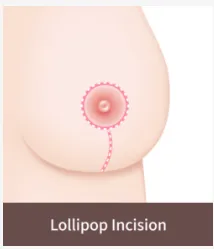
A breast lift scar is the permanent mark left where the surgeon makes incisions during a breast lift (mastopexy) to remove loose skin and reposition the nipple. Because the skin has to be cut and re-closed, some scarring is unavoidable. The good news is that with the right technique and consistent aftercare, a breast lift scar usually fades into a thin, pale line that is easy to hide within 12 to 18 months. This guide from Mine Clinic in Seoul explains why these scars form, what the different incision patterns look like, and the step-by-step care that gives international patients the smoothest possible result.
Table of Contents
- Understanding Breast Lift Scars
- Types of Breast Lift Incisions and Scar Patterns
- Why Breast Lift Scars Form: The Science of Healing
- Post-Operative Scar Care: The First 6 Months
- Advanced Scar Treatment Options in Korea
- Risks, Side Effects & Safety
- Long-Term Scar Care and Results
- Frequently Asked Questions
Understanding Breast Lift Scars
Breast lift surgery, medically known as mastopexy, raises and reshapes breasts that have begun to sag. For most international patients, the biggest question is not about the lift itself but about the breast lift scar that comes with it. Knowing what causes the scar, and how much control you actually have over it, takes a lot of the worry out of the decision.
Scarring happens because the procedure requires incisions to remove excess skin and move the nipple-areola complex into a higher position. How noticeable the final scar becomes depends on a few things: the incision pattern your surgeon uses, your skin type and genetics, and—very importantly—how carefully you follow aftercare in the months that follow.
At Mine Clinic in Seoul, we plan every breast lift surgery around two goals at once: a beautiful shape and a scar that is as discreet as possible. Korean plastic surgery has refined gentle tissue handling and meticulous, layered suturing that take tension off the skin surface, which is one of the single most important factors in how a breast lift scar matures.
The reassuring reality is that a well-cared-for breast lift scar typically becomes barely noticeable within 12 to 18 months. Many patients tell us the improved shape and renewed confidence far outweigh a faint line that swimwear and bras keep hidden anyway.
Types of Breast Lift Incisions and Scar Patterns
The pattern of your breast lift scar depends mainly on the incision technique, which is chosen according to how much the breast is sagging. At Mine Clinic we match the approach to your anatomy so you get enough lift without a larger scar than you need. The four common patterns are shown below.
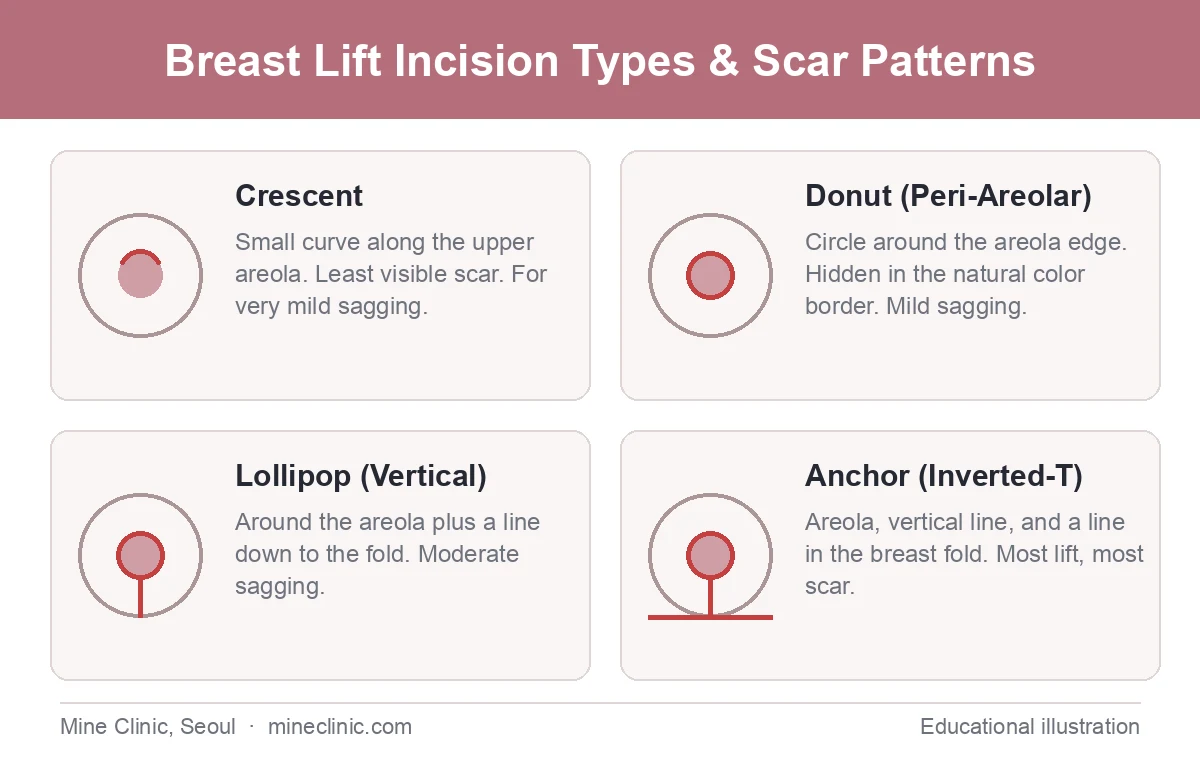
Crescent Lift (minimal scarring). A small incision runs along the upper half of the areola border. It suits very mild sagging and leaves the least visible mark, because the line blends into the natural color change between the areola and the breast skin.
Donut or peri-areolar lift. A circular incision is made right around the edge of the areola. The scar follows that natural color border, so it camouflages well. This option fits mild to moderate sagging, and the line usually fades to a thin, faint circle within a year.
Lollipop or vertical lift. This combines the circle around the areola with a single vertical line down to the breast crease. It allows more reshaping and suits moderate sagging. Careful placement keeps the resulting breast lift scar hidden under most bras and swimwear.
Anchor or inverted-T lift. For significant sagging, three lines are used: around the areola, vertically down, and horizontally along the crease. It gives the most dramatic lift and, naturally, the most scar. Our layered closure and early scar therapy are aimed squarely at softening this pattern over time.
Your surgeon will recommend the most suitable method at your consultation. The principle is consistent: deliver the lift you want while keeping any breast lift scar well concealed.
Why Breast Lift Scars Form: The Science of Healing
Understanding how a scar is built helps you take the right steps at the right time. After any incision, the body heals in three overlapping stages: inflammation, proliferation, and remodeling.
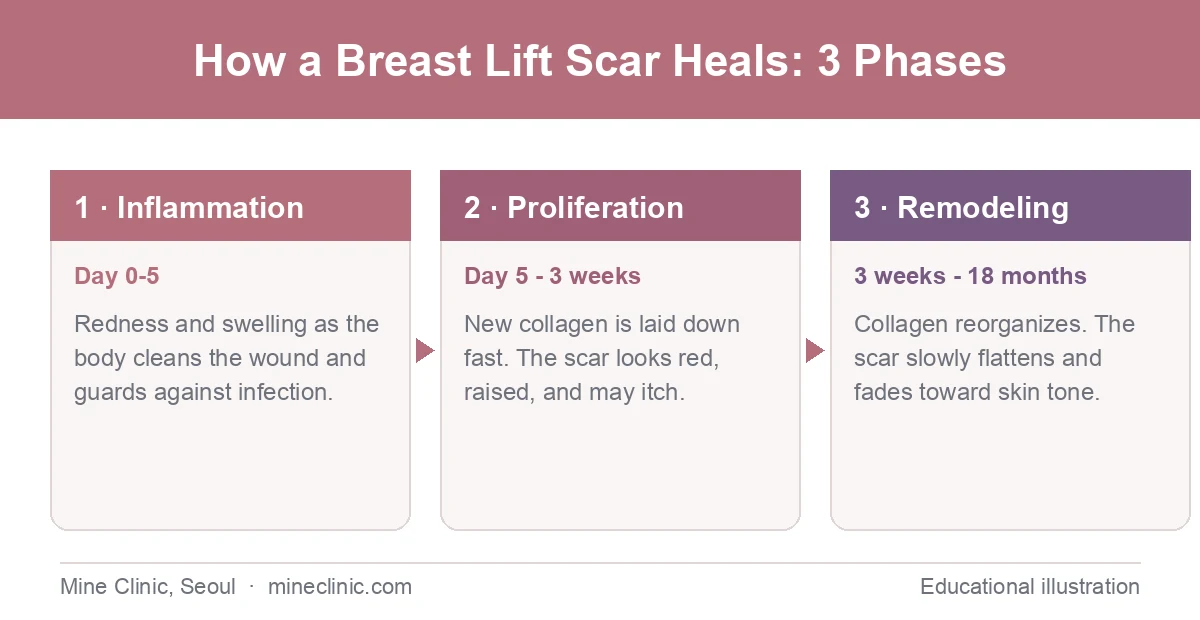
During the inflammation phase (roughly the first 3-5 days), blood flow to the wound increases, causing redness and swelling while the body guards against infection. Keeping the area clean and protected during this short window matters a great deal.
In the proliferation phase (about 5 days to 3 weeks), the body lays down fresh collagen quickly to close the gap. This is why a young breast lift scar looks red and raised and can feel firm or itchy. That appearance is normal and is simply a sign of active repair.
The remodeling phase is the longest, running from about three weeks out to 18 months and sometimes two years. The collagen reorganizes and strengthens, and the scar gradually flattens and fades from red to pink and finally toward your natural skin tone. The American Society of Plastic Surgeons notes that full scar maturation can take up to two years.
One point deserves special attention for breast surgery. In plastic surgery teaching, the breast is recognized as a high-tension area, alongside the chest, shoulders, and neck. Skin tension pulling across a healing wound is a key driver of thick, raised scars such as hypertrophic scars and keloids. That single fact explains most of modern scar care.
Because tension is the enemy, the most effective strategies all work by reducing it. Surgically, that means deep tension-bearing sutures that support the wound from underneath so the skin surface is not pulled tight. For you at home, it means avoiding movements and pressure that tug on a fresh breast lift scar while it is still forming.
Genetics and skin type also shape the outcome. Some people naturally produce more collagen and scar more thickly, and a personal or family history of keloids raises the risk. Darker skin tones can be more prone to color changes during healing. At Mine Clinic we screen for these factors before surgery so that higher-risk patients start protective scar care from day one.
Post-Operative Scar Care: The First 6 Months
The first six months decide most of how a breast lift scar will ultimately look. The timeline below shows the simple, phase-based routine we give every patient.
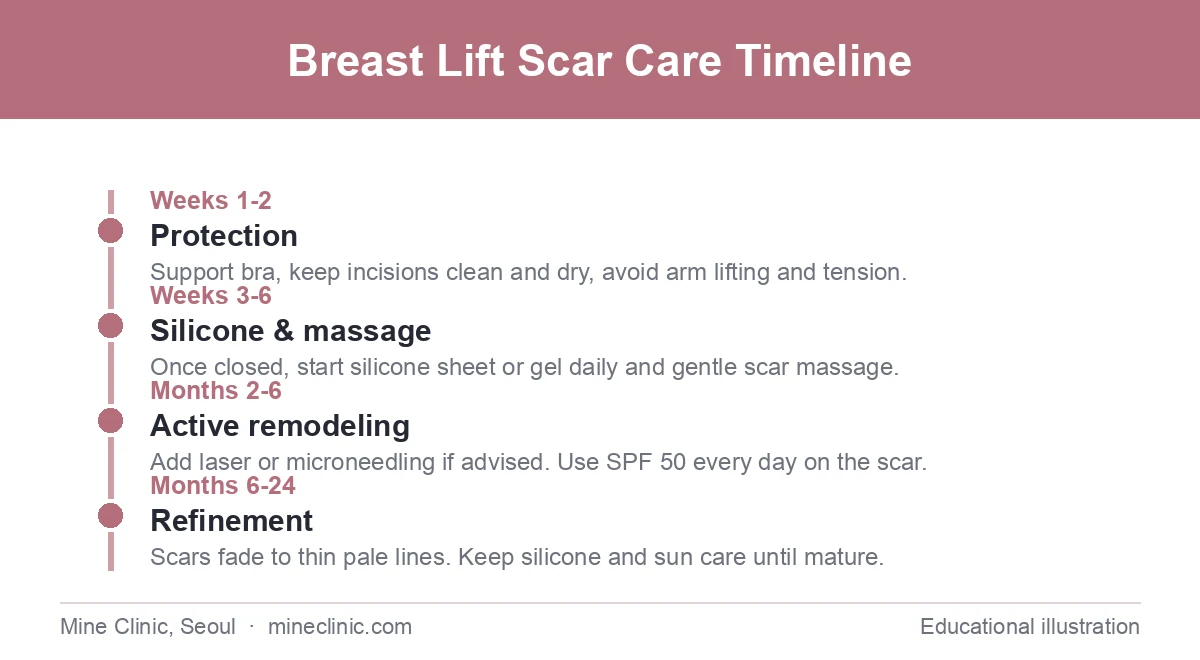
Weeks 1-2: protection. Your incisions are closed with dissolving stitches under the skin and tape on top. You will have a check-up around day 5-7 to inspect the wound. The job now is to keep the area clean and dry and to keep tension off the lines.
Wear the supportive surgical bra we provide, avoid raising your arms above shoulder height, and do not lift anything heavy. Sleep on your back with your upper body slightly raised to ease swelling. Every one of these habits is really about protecting a delicate breast lift scar from being pulled wider.
Weeks 3-6: start silicone. Once your surgeon confirms the incisions have fully closed, silicone becomes your most important tool. Medical-grade silicone sheets or gel work by sealing in moisture and gently occluding the scar, which calms overactive collagen production. This is the most evidence-backed home treatment for surgical scars.
Use the silicone for about 12-24 hours a day as directed. The scar will still look red and feel firm in this phase, which is expected. Once approved, light massage along the line for a few minutes twice daily helps soften the tissue and break up tight collagen bundles.
Months 2-6: active remodeling. Now the scar slowly flattens and the redness begins to settle. This is the ideal window to add in-clinic options if needed, such as laser treatment that targets redness and texture, or microneedling that nudges collagen to reorganize more evenly.
Sun protection becomes essential here. Ultraviolet light can permanently darken a healing breast lift scar, so apply a broad-spectrum SPF 50 to any area that might see sunlight, even through thin clothing. For patients who have flown home, we offer virtual follow-ups to monitor progress and fine-tune the plan.
Advanced Scar Treatment Options in Korea
Korea’s strength in both plastic surgery and dermatology means Mine Clinic can offer scar treatments that are not always easy to find elsewhere. These are most useful for patients whose scars are healing slowly or thickening more than expected.
Fractional laser. This treatment sends precise columns of laser energy into the scar to trigger fresh, more organized collagen. Because it treats only a fraction of the surface at a time, downtime stays short. Started around month three, a series of sessions can noticeably reduce redness and smooth raised areas of a breast lift scar.
Microneedling with growth factors. Fine needles create tiny controlled micro-injuries that prompt the skin to remodel. Paired with growth factors or stem cell therapy solutions, it can improve both the texture and the color match of the scar with the skin around it.
Exosome therapy. One of the newer Korean innovations, exosome therapy delivers regenerative signals straight to healing tissue. These nano-sized messengers carry growth factors that calm inflammation and support repair, which can shorten healing time and refine scar quality.
Steroid injections for raised scars. If a scar becomes thick or raised despite good care, a small steroid injected directly into it can flatten it. Steroid injection has long been a first-line treatment for hypertrophic and keloid scars because it quiets inflammation and slows excess collagen. Most patients see improvement after two or three sessions.
Combining treatments usually works better than relying on any one. Your surgeon and dermatology team will build a plan around how your individual breast lift scar is actually behaving, rather than a one-size-fits-all protocol.
Risks, Side Effects & Safety
Like any surgery, a breast lift carries risks worth understanding before you decide. Being informed helps you tell normal healing apart from a problem that needs attention. At Mine Clinic, clear explanation and patient care and safety are core to how we work.
Common, temporary effects. Almost everyone has swelling, bruising, and some discomfort for the first week or two. Temporary numbness or altered sensation in the nipple and breast skin is also common and usually improves within three to six months as the nerves recover.
Early redness, firmness, and slight unevenness as one side settles faster than the other are also normal. These differences typically even out as swelling resolves. A new breast lift scar always looks more obvious at first than it will once it matures.
Less common complications. Infection occurs in roughly 1-2% of cases; signs include rising redness, warmth, discharge, or fever, and warrant a prompt call to your surgeon. A hematoma (blood collection) or seroma (fluid) can also occur early; small ones often settle on their own, while larger ones may need draining.
Delayed healing or a small wound separation is more likely at points of highest tension, such as where the vertical and horizontal lines meet in an anchor lift. Smoking, diabetes, and poor circulation raise this risk, and a separation can lead to a wider breast lift scar.
Scarring complications. Hypertrophic scars (raised but staying within the incision line) develop in roughly 5-10% of patients and respond well to silicone, steroid injections, and laser. Keloids (raised scars that spread beyond the original line) are less common but harder to treat, so a personal or family history should be flagged before surgery.
Color changes—darkening or lightening of the scar compared with nearby skin—can occur, especially in darker skin tones. Diligent sun protection and certain topical treatments help keep these to a minimum. Most patients, though, heal smoothly and are very happy with the result.
Long-Term Scar Care and Results
The first six months matter most, but care beyond that point can still improve your result, because a scar keeps maturing for up to two years.
Months 6-12: refinement. By six months your breast lift scar should be softer, flatter, and lighter. Keep using silicone if any part is still raised or dark, and consider a follow-up—in person or virtual—to judge whether a little extra laser or microneedling would help.
Stay strict with sun protection. Even a well-healed scar can darken with ultraviolet exposure, so daily SPF on any exposed area is a habit worth keeping for the full first year and beyond.
Year 1-2: final maturation. During the second year the scar slowly settles into its final look—usually a thin, flat, pale line that blends with your skin. It will always be present, but in most everyday situations it is genuinely hard to spot.
Habits that help. Keeping a stable weight prevents the skin from stretching and widening a healed line. A diet with enough protein, vitamins A and C, and zinc supports collagen and skin repair, and staying hydrated keeps skin supple. Not smoking is non-negotiable, since tobacco starves the wound of blood flow and clearly worsens scarring.
When to consider revision. Most patients never need it. But if a scar stays raised, widened, or discolored beyond 12-18 months, scar removal surgery can remove the problem tissue and re-close the area with finer technique. Patience plus consistent care is what produces the best long-term breast lift scar.
Frequently Asked Questions
How long does a breast lift scar take to fade?
A breast lift scar usually reaches its final appearance in 12-18 months, with subtle improvement continuing for up to two years. It starts red and slightly raised, then gradually flattens and fades to a thin, pale line.
The exact timeline depends on your healing, the incision pattern, and how consistently you use silicone and sun protection. Scars never vanish completely, but they are placed to stay hidden under bras and swimwear, and most patients find them easy to overlook.
Can I completely prevent a breast lift scar?
No—because the procedure requires cutting the skin, some scar is unavoidable. What you can do is make it as faint as possible. The first step is choosing an experienced surgeon who uses meticulous, tension-reducing closure.
From there, follow activity limits to keep tension off the wound, start silicone once the incision has closed, protect the scar from the sun for at least a year, and add laser or microneedling if advised. Anyone with a keloid history should mention it before surgery so preventive steps begin early.
What is the best product for a breast lift scar?
Medical-grade silicone—as a sheet or a gel—is the gold standard for surgical scars and is supported by extensive research. It works by holding in moisture and occluding the scar, which helps keep it from becoming raised or overly firm.
Use it consistently for several months once your incisions have fully closed, typically applied once or twice a day. Some products add ingredients like vitamin E or peptides, but always check with your surgeon before applying anything to a healing breast lift scar.
Will my breast lift scar show in a bikini?
Usually not. A peri-areolar scar sits at the areola border and is hidden by any top. A vertical scar runs down toward the crease and is covered by most bikini styles except very low-cut ones.
The horizontal line of an anchor lift sits in the natural breast fold, so it is tucked away when your arms are down and covered by bras and swimwear. If swimwear is a priority for you, tell your surgeon—incision placement can sometimes be adjusted within safe limits.
Is it normal for a breast lift scar to itch?
Yes. Itching is a normal, positive sign that the tissue is actively repairing. It tends to peak during the proliferation phase—roughly weeks 2-8—when new collagen forms and nerve endings regenerate, then eases as the scar matures.
Do not scratch, as that can irritate and widen the scar. Instead, gently pat the area, apply your silicone product, use a cool compress, or take an antihistamine if your surgeon approves. If itching comes with spreading redness, warmth, or discharge, contact your surgeon, as these can signal infection.
Conclusion
Managing a breast lift scar comes down to understanding, patience, and steady care. Scarring is an unavoidable part of the procedure, but modern technique and the advanced options available in Korea can make the final result remarkably discreet.
At Mine Clinic in Seoul, we combine careful surgery with Korea’s skincare technology to support you from the operating room through to a fully matured scar—meticulous closure, a personalized aftercare plan, advanced treatments like laser and stem cell therapy, and dedicated help for international patients.
With the right care, most patients find their breast lift scar fades to a faint line that is well worth the improved shape and confidence they gain. The keys are an experienced surgeon, evidence-based scar care, and realistic expectations about the timeline.
Considering a breast lift in Korea? Contact Mine Clinic for a personalized online consultation. We are happy to assist you on WhatsApp and guide you through your K-Beauty journey in Seoul—from planning your procedure and recovery stay to a complete scar management plan for the best possible result.
Medical Disclaimer: This content is for informational purposes only and does not substitute professional medical advice, diagnosis, or treatment. Always seek the advice of qualified healthcare providers with questions regarding medical conditions or procedures. Individual results may vary, and the information presented reflects general experiences and outcomes but cannot predict your specific results.
Reviewed by Dr. Lee Sung-wook, Board Certified Plastic Surgeon at Mine Clinic
※ This content is for informational purposes only and does not replace professional medical advice, diagnosis, or treatment. Individual results may vary, and side effects may occur. Please consult with a board-certified plastic surgeon for personalized advice.