EN
EN

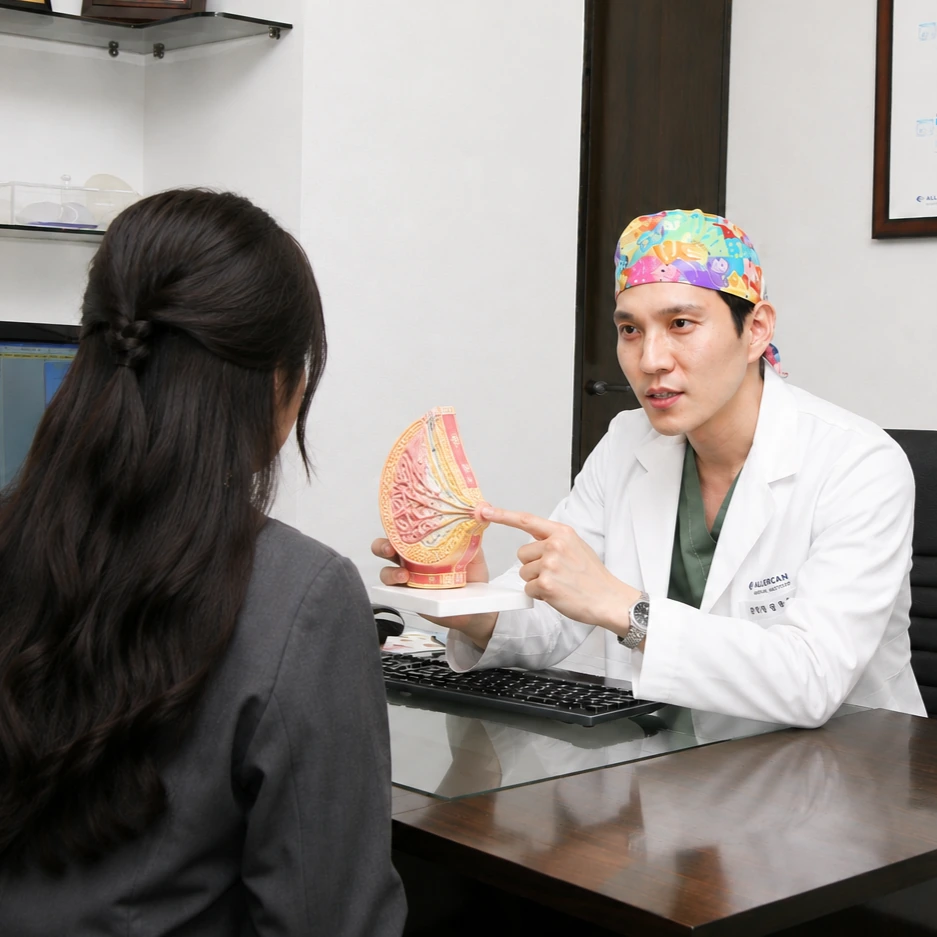
If your nipple was corrected and you have started to notice it slowly drawing back in, it is natural to feel disappointed and worried. Inverted nipple recurrence is when a nipple that was surgically corrected gradually pulls back inward below the areola, usually because the short milk ducts and fibrous bands that caused the inversion were not fully released or supported.
In other words, a recurrence is often less about surgery “going wrong” and more about how well the surgeon handled the natural pull of that fibrous tissue and those ducts. This article focuses only on why inverted nipples come back, how technique changes the risk, and what you can do to protect your result. For the full overview of grades, surgical steps and recovery, see our guide to how inverted nipple surgery is graded and performed.
- What Is Inverted Nipple Recurrence?
- Why Do Inverted Nipples Come Back? 4 Anatomical Causes
- How Grade Affects Inverted Nipple Recurrence Risk
- Does Surgical Technique Change the Recurrence Rate?
- Side Effects and Loss of Projection to Know About
- How to Prevent Inverted Nipple Recurrence Before and After Surgery
- If It Comes Back: What Revision Surgery Involves
- Frequently Asked Questions
- Talk to a Board-Certified Plastic Surgeon About Your Case
What Is Inverted Nipple Recurrence?
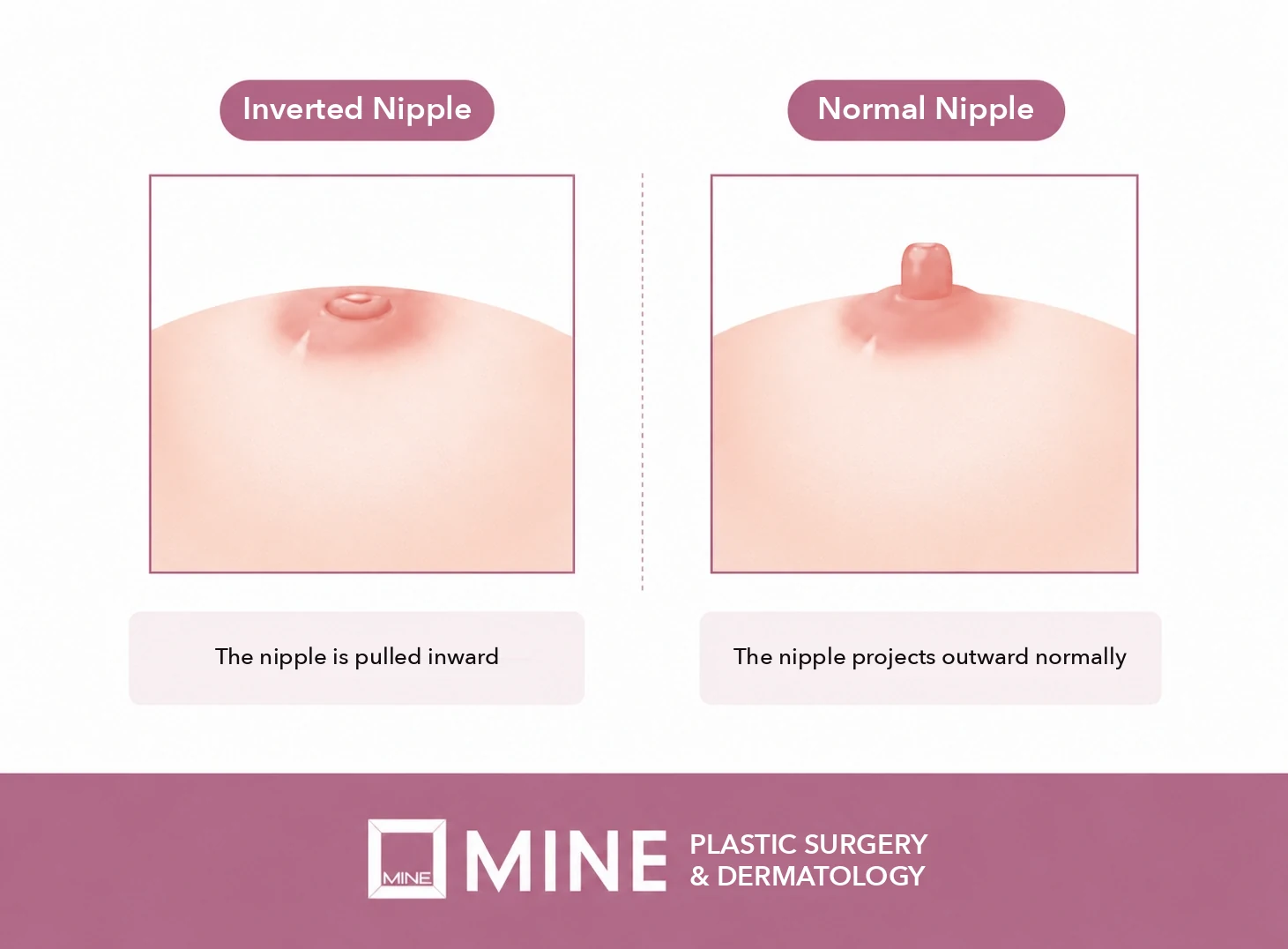
An inverted nipple is one that does not project outward as usual but sits pulled in below the surface of the areola (the darker skin around the nipple). Recurrence means that after correction, the nipple gradually returns to that pulled-in position.
To understand why this happens, it helps to know what holds the nipple in. Underneath it run the milk ducts, the small tubes that carry milk to the surface. Normally they are long enough for the nipple to sit outward. In an inverted nipple, the ducts are often too short, and tough strands of connective tissue (fibrous bands) tether the nipple from below. A simple way to picture it: a balloon tied to a short string cannot float up, however much air it has.
About 93.9% of inverted nipples are congenital (present from birth), and about 6.1% are acquired later in life, for example after breastfeeding, with aging, or after previous breast surgery. Medical literature gives a clear example of the acquired type: a study cited in a plastic surgery textbook found delayed nipple inversion in 18% of 100 women after a Strombeck breast reduction. That figure describes inversion appearing after a different operation. It is not a recurrence rate after inverted nipple correction, and the two should not be confused.
Why Do Inverted Nipples Come Back? 4 Anatomical Causes
The anatomical reasons behind inverted nipple recurrence are fairly well understood. In most cases, one or more of these four factors is at work:
- Incomplete release of the fibrous bands that pull the nipple inward
- Tension from short milk ducts, especially in Grade 3
- Missing internal support under the newly freed nipple
- Scar tissue re-adhesion as the area heals
Incomplete Release of the Fibrous Bands
The fibrous bands act like anchoring ropes. If some of them are left uncut or only partly released, the nipple may look fine on the operating table. Over the following weeks and months, though, the remaining bands can contract again and slowly draw the nipple back in.
This is why a thorough release under the nipple matters. Surgical textbooks describe freeing the deep structures beneath the nipple carefully, while protecting the skin’s deeper layer (the dermis) so the nipple keeps a healthy blood supply.
Tension from Short Milk Ducts (Especially Grade 3)
In more severe inversion, the ducts themselves are short. Even when the fibrous bands are released, short ducts keep pulling down like a tight elastic. The nipple simply does not have enough “slack” to stay out on its own.
In these cases, some or all of the ducts may need to be divided to let the nipple project. That decision affects both the risk of recurrence and future breastfeeding, so it needs to be planned and discussed before surgery.
Missing Internal Support Under the Nipple
Releasing the nipple creates a small empty space beneath it. If nothing fills or supports that space, the nipple has nothing to stand on and tends to sink back down. Surgeons call this support “suspension.”
Think of a tent pole: you can lift the canvas by hand, but it only stays up if something holds it there. Support can come from the patient’s own tissue, such as a small flap of dermis, or from specific internal stitches.
Scar Tissue Re-adhesion During Healing
Healing always produces some scar tissue. As new scar forms and matures, it can stick to surrounding structures and gradually tug the nipple downward again. This is one reason the weeks after surgery matter so much, and why aftercare is part of preventing inverted nipple recurrence, not an optional extra.
Dr. Lee’s Key Point: Recurrence is not a matter of luck. It depends on how precisely the tension from the fibrous tissue and ducts was released, and how well the nipple was supported afterward.
How Grade Affects Inverted Nipple Recurrence Risk
Inverted nipples are usually graded by how they respond when gently pulled:
- Grade 1 (mild): the nipple comes out and stays out for a while.
- Grade 2 (moderate): it comes out but quickly goes back in.
- Grade 3 (severe): it barely comes out at all, with marked fibrosis and short ducts.
For a detailed explanation of each grade and how it is assessed, see how inverted nipple surgery is graded and performed.
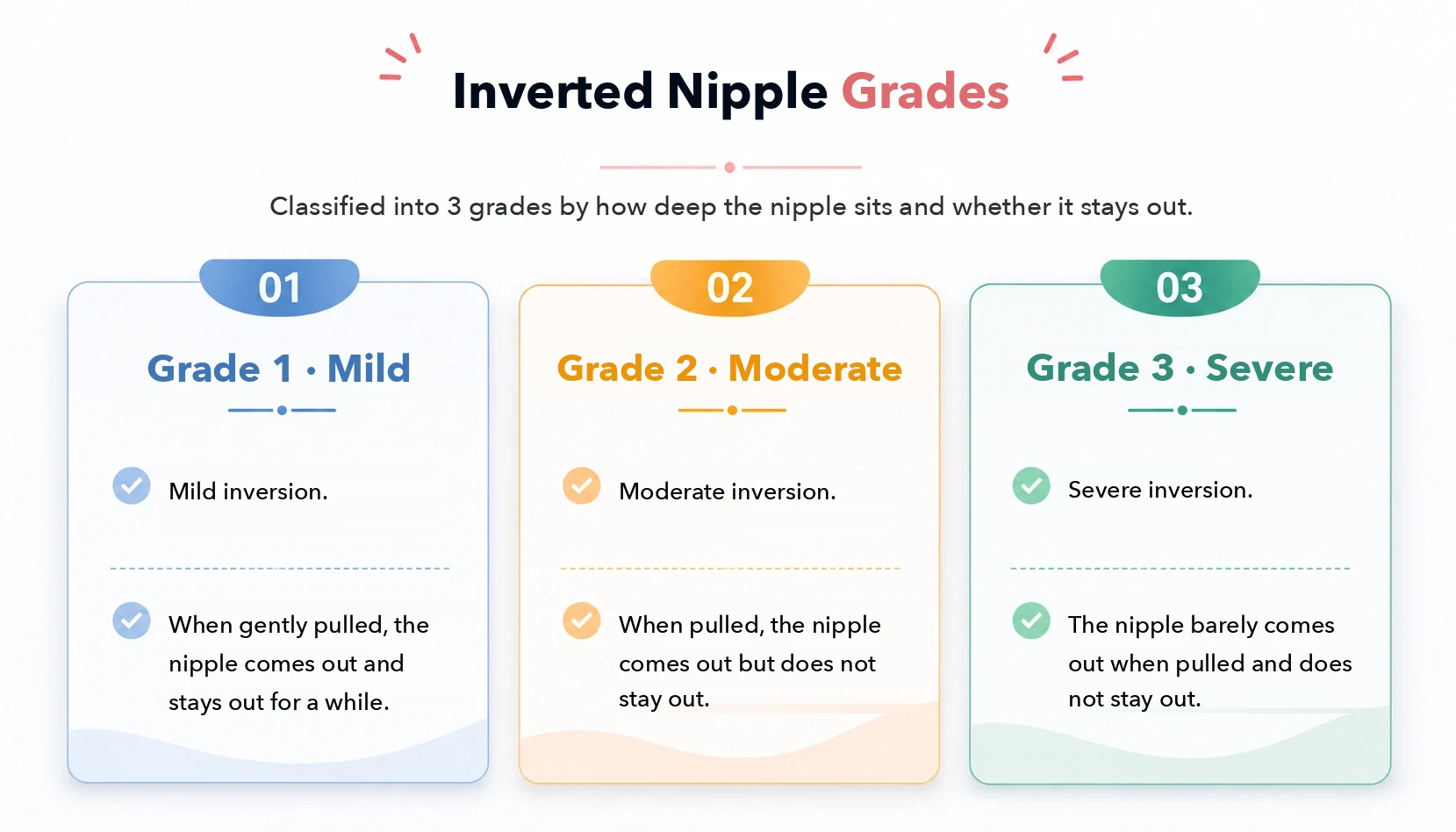
In my clinical experience, the most common misunderstanding is the idea that “once it is operated on, the result is the same regardless of grade.” In reality, the higher the grade, the more often the ducts need to be divided. That means planning around recurrence and breastfeeding matters even more for Grade 3 than for Grade 1.
Grade also shapes which technique makes sense. A mild case may need far less release than a severe one, while a severe case usually needs both a more complete release and stronger support. For a broader look at how surgeons approach different nipple shapes, including recurrence by grade, see our nipple reduction and inverted nipple correction guide.
Does Surgical Technique Change the Recurrence Rate?
Yes, and quite significantly. The core principle that lowers inverted nipple recurrence can be summed up in two words: release and support. Cutting the bands frees the nipple; supporting it from inside helps it stay out. Published studies reflect how much this difference matters.
Suture-Only Techniques
Traditional methods that rely mainly on stitches are relatively simple. However, some older studies of suture-only techniques reported recurrence rates as high as 41%. Without adequate release and support, a stitch alone may not hold against the ongoing pull of short ducts and fibrous bands.
Fibrous Band Release Plus Dermal Flap Support
Here the surgeon releases the fibrous bands and then fills the freed space with the patient’s own tissue, often a small dermal flap (a strip of the deeper skin layer), to prop the nipple up from below. Using your own tissue as a cushion helps reduce re-adhesion.
Surgical textbooks describe one practical way of doing this in simple steps. The surgeon makes a tiny incision of about 3 mm at the base of the nipple. Through it, the deep ducts and fibrous structures are separated so the nipple can move freely, while care is taken not to injure the dermis. Finally, an internal purse-string stitch (a stitch that runs in a circle and tightens like the drawstring of a bag) narrows the base so that it becomes slimmer than the nipple itself. With a narrower “neck,” the nipple cannot easily slip back in.
Adding External Traction (a Splint)
Some techniques add a small external device or splint that gently keeps the nipple pulled outward during healing. This gives the tissues time to settle in the new position. Studies that added external traction with a splint reported inverted nipple recurrence of about 1.5%.
Looking at the bigger picture, a systematic review reported an overall recurrence rate of about 3.9% (131 of 3,369 cases) after inverted nipple correction. The spread between techniques shows that technique choice and planning matched to the grade largely determine the outcome.
When inverted nipple correction is combined with breast augmentation, the added volume from the implant can also help ease the inversion somewhat. To learn how we plan these procedures, see nipple correction at MINE.
Dr. Lee’s Key Point: Lowering recurrence takes more than “cutting to release.” The plan also has to include “supporting to maintain.”
Side Effects and Loss of Projection to Know About
Trust comes from being honest about possible side effects, not only from promising good results. These are the main ones to know:
- Bruising and swelling: common right after surgery and usually temporary.
- Changes in sensation: nipple sensation may be dulled for a while. In severe cases where ducts are divided, a permanent change is possible and should be discussed beforehand.
- Scarring: a small incision may be placed along the edge of the areola.
- Effect on breastfeeding: dividing the ducts, particularly in Grade 3, can affect future breastfeeding. You can read more about nipple surgery and breastfeeding.
- Reduced projection: the nipple may become a little less prominent over time.
It is important to separate reduced projection from true inverted nipple recurrence. Research reports that nipple projection can decrease by about 31–39% one year after surgery, depending on technique and severity. A nipple that sits slightly lower but still points outward has settled; a nipple that sinks back below the areola has recurred.
How to Prevent Inverted Nipple Recurrence Before and After Surgery
Prevention starts before the first incision and continues for weeks after the last stitch comes out.
Before Surgery: Accurate Grading and Planning
- Get an accurate grade. Grades 1 to 3 call for different techniques, so a precise examination comes first.
- Mention breastfeeding plans in advance. If you hope to breastfeed in the future, say so before surgery so the option of preserving the ducts can be considered.
- Cut down on smoking. Smoking reduces blood flow, which works against good scarring and raises the risk of re-adhesion.
Choosing the right surgeon matters as well. The Korean Society of Plastic and Reconstructive Surgeons generally recommends having this kind of surgery performed by a board-certified plastic surgeon. If you are comparing clinics, our guide to choosing a plastic surgeon in Korea explains what to check.
After Surgery: The Rules That Protect Your Result
- Do not shorten the splint or dressing period on your own. Depending on the technique, it may need to stay on for several weeks. Removing it early is one of the easiest ways to invite recurrence.
- Avoid pressure and friction on the nipple. Skip tight underwear and avoid sleeping face down for as long as your surgeon advises.
- Keep every follow-up appointment. Early signs of re-adhesion are much easier to manage when they are caught early.
Stitches are usually removed 7–10 days after surgery, and most swelling settles within about 2 weeks. That is when many patients feel “done,” but the tissue under the nipple is still stabilizing, and that later phase is where recurrence is often decided.
Dr. Lee’s Key Point: Swelling goes down in about two weeks, but keeping the tissue stable after that matters even more. Half of preventing recurrence happens not in the operating room but in how carefully recovery is followed.
If It Comes Back: What Revision Surgery Involves
If your nipple has drawn back in, the first thing to know is that one episode of inverted nipple recurrence does not mean it will happen again. Revision surgery can still give a stable result, but it has to be planned around what went wrong the first time.
A revision usually involves three steps:
- Diagnose the cause. Was it incomplete release, short ducts, missing support or scar re-adhesion? Often it is a combination, and the plan depends on the answer.
- Release the scar tissue thoroughly. Scar from the first operation is now part of what is pulling the nipple in, so it needs to be freed along with any remaining fibrous bands.
- Reinforce the support. Because the tissue has already been operated on, a stronger internal support is usually needed to keep the nipple out.
Revision cases also call for an honest conversation about sensation and breastfeeding, since a second operation in the same area can affect both. An in-person examination is the only way to judge this properly.
Frequently Asked Questions
How common is inverted nipple recurrence after correction?
A systematic review reported an overall recurrence rate of about 3.9% (131 of 3,369 cases), but the rate varies widely with technique and grade. Recurrence is more likely with suture-only methods and with severe, Grade 3 inversion.
Why do inverted nipples come back after surgery?
There are four main reasons: fibrous bands that were not fully released, tension from short milk ducts, a lack of internal support under the nipple, and scar tissue sticking down again as the area heals. Often more than one is involved.
If my inverted nipple comes back, will it recur again after revision?
Not necessarily. A revision focuses on finding the original cause, thoroughly releasing scar tissue and reinforcing the support beneath the nipple. With that approach, the risk of another recurrence can be reduced.
How long should I wear the splint to prevent recurrence?
It depends on the technique used, and it may be several weeks. Follow the period your surgeon recommends and do not shorten it on your own, because the tissue needs that time to settle in its new position.
Can I still breastfeed after inverted nipple correction?
In Grades 1 and 2, where the ducts can often be preserved, breastfeeding is frequently still possible. In Grade 3, if the ducts are divided, breastfeeding may be affected, so discuss your plans before surgery. See nipple surgery and breastfeeding for details.
Talk to a Board-Certified Plastic Surgeon About Your Case
Inverted nipple recurrence is less a “failure” than something that can be kept low when the plan is matched to your grade and tissue from the start. Still, duct length, the degree of fibrosis and the structure of the nipple and areola differ from person to person, so even two nipples of the same grade may need different techniques.
An accurate diagnosis requires an in-person examination. If you would like advice on your own case, including a recurrence after previous surgery, we recommend a one-to-one consultation with a board-certified plastic surgeon. Costs depend on your condition, so they are discussed individually. You can learn more about nipple correction at MINE, request an online consultation through the form at mineclinic.com, or call +82-2-516-1175.
Written and medically reviewed by Dr. Lee Sung-wook, Board-Certified Plastic Surgeon, Representative Director of MINE Plastic Surgery & Dermatology. Published October 11, 2026. Last reviewed October 11, 2026.
※ This content is for informational purposes only and does not replace professional medical advice, diagnosis, or treatment. Individual results may vary, and side effects may occur. Please consult with a board-certified plastic surgeon for personalized advice.