EN
EN

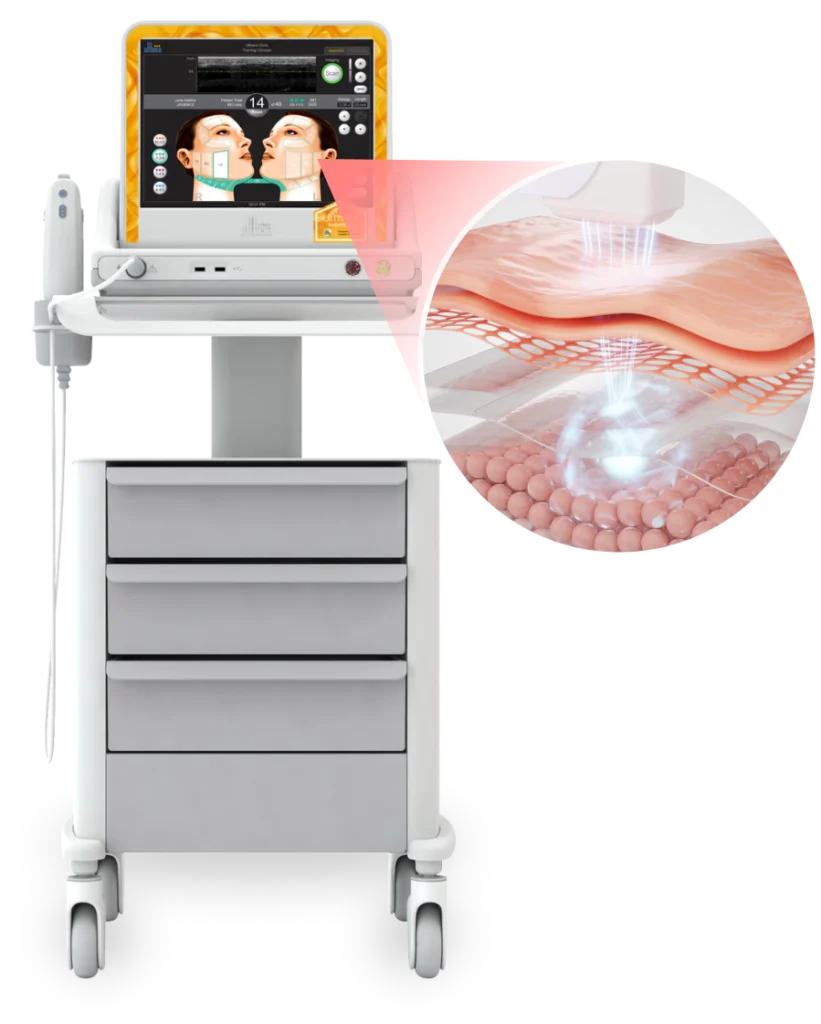
How many Ultherapy shots you need depends on the area treated, your skin and fat thickness, how much sagging there is, and which transducer depths are used. Most full-face plans use about 600–900 shots (also called lines), while a single area such as the jawline needs far fewer.
If you have collected a few Ultherapy quotes, you have probably noticed that one clinic suggests 300 shots, another 800, and a third more than 1,200. It is natural to wonder which number is right for you. In my clinical experience, “Why is my shot count higher than the clinic down the street?” is one of the most common questions I hear in consultation.
This guide explains how many Ultherapy shots different areas usually need, what a single shot actually does under the skin, and the four factors that move your number up or down. I’m Dr. Lee Sung-wook, a board-certified plastic surgeon at MINE Clinic in Seoul, and I will walk you through it the way I explain it to my own patients.
How Many Ultherapy Shots Is Typical? The Short Answer
To work out how many Ultherapy shots you need, it helps to know how they are counted. Ultherapy shots (also called lines) are counted one by one: each shot is one pass of the transducer that lays down a short, straight row of tiny heat points at a single depth beneath the skin. The wider the area and the more depths used, the more shots a plan needs.
Here is how many Ultherapy shots each type of plan typically uses at our clinic. Treat these ranges as a starting point for discussion, not a fixed rule.
| Treatment plan | Typical shot range | What it usually covers |
|---|---|---|
| Partial area (jawline or cheeks) | About 100–300 shots | Focused correction of one sagging zone |
| Full face | About 600–900 shots | Cheeks, jawline, and overall firmness together |
| Full face + neck | 1,200 shots or more | Face plus the neck line |
Even within the “full face” row, two people can end up with quite different counts. Face size, the thickness of the fat under the skin, and the pattern of sagging all change the plan, which is why the honest answer to “how many Ultherapy shots do I need?” is always “it depends on your face.” The rest of this article explains exactly what it depends on.
What One Ultherapy Shot (Line) Actually Does
Think of a magnifying glass focusing sunlight onto one spot. Spread out, the light only feels warm; concentrated, it becomes hot enough to scorch paper. Ultherapy works on a similar principle. It concentrates ultrasound energy into one small point at a chosen depth, so the heat builds there while the skin surface stays intact.
According to plastic surgery textbooks, microfocused ultrasound (the technology Ultherapy uses) heats focal points in the dermis (the thick, supportive layer just beneath the skin’s surface) and the SMAS to about 65°C (149°F). The SMAS is the thin layer of muscle and connective tissue that supports the face, a bit like the frame that holds up a tent. At that temperature, collagen fibers contract right away for an early tightening effect, and the body then begins making new collagen over the following months.
Each heat point (doctors call it a thermal coagulation point) is tiny, under 1 mm, and the device places them in neat rows. So when a clinic tells you how many Ultherapy shots you will receive, it is really describing how many of these rows will be placed, where, and how densely. If you would like the full science, our article on how Ultherapy’s HIFU works covers it in detail.
Ultherapy Transducer Depths: 1.5 mm, 3.0 mm and 4.5 mm
What sets Ultherapy apart is that the doctor can choose the depth of every row. That choice is made by switching the transducer, the handpiece that delivers the energy. There are three main depths, each targeting a different layer, and the mix you need shapes how many Ultherapy shots are used.
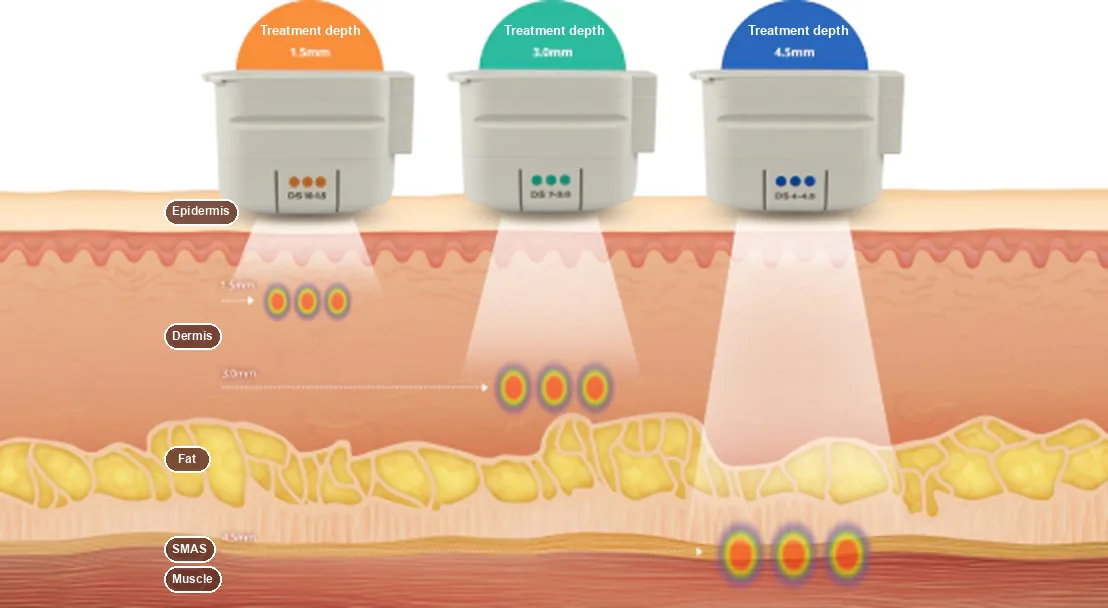
Which layer each depth reaches
| Transducer depth | Layer reached | Main purpose | Suitable zones |
|---|---|---|---|
| 1.5 mm (10 MHz) | Superficial (upper) dermis | Skin texture, surface firmness | Thin-skinned areas such as around the eyes and forehead |
| 3.0 mm (7 MHz) | Deep dermis | Collagen renewal, skin elasticity | Cheeks and the face in general |
| 4.5 mm (4 MHz) | SMAS layer | Lifting of sagging tissue | Jawline, lower cheeks, neck |
Dermatology textbooks explain why these pairings work: a higher ultrasound frequency focuses at a shallower depth, which is why the 10 MHz head treats near the surface and the 4 MHz head reaches the deepest layer. The 4.5 mm depth matters most for lifting. The SMAS is the same layer a surgeon tightens during a facelift, and Ultherapy heats it without an incision.
How shots are split across depths
Depth choice is a big part of how many Ultherapy shots a plan needs. Your total is simply the sum of the rows placed at each depth. A plan that uses only the 4.5 mm transducer on the jawline will need fewer shots than a plan that layers all three depths across the whole face. Combining depths lets us treat surface texture and deep sagging in one session, but it also adds lines.
In practice, I put more of the 4.5 mm rows where sagging is heaviest, such as along the jowls, and use the 3.0 mm and 1.5 mm depths more selectively. Around the eyes, where the skin is thin, shallow depths are usually the safer choice.
How Many Ultherapy Shots per Area? Why Your Count Differs
So what decides how many Ultherapy shots your plan needs? I look at four factors. Each one can move the count up or down, and together they explain why two quotes for the “same” treatment rarely match.
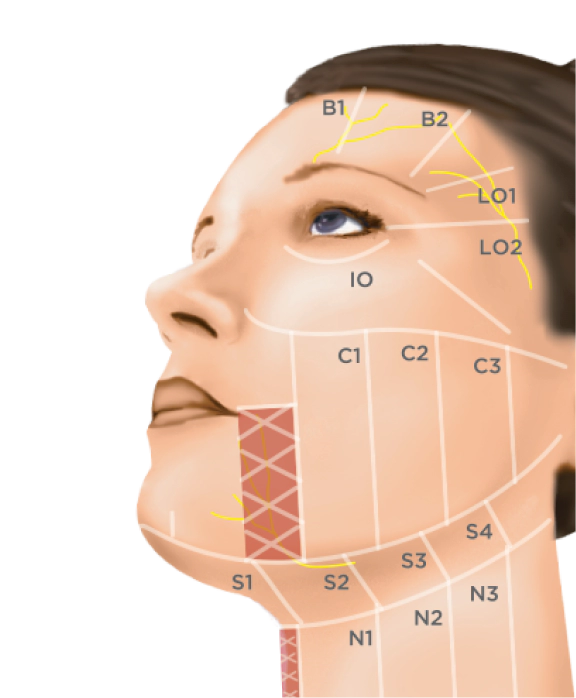
Treatment area and extent
When patients ask me how many Ultherapy shots they need, my first question is which areas bother them. Treating only the jawline is a very different job from treating the brow, cheeks, jawline, and neck. Each zone added to the plan adds rows of heat points.
We map these zones on a design chart before treatment. The chart divides the face and neck into labeled zones: B1–B2 for the brow, LO1–LO2 and IO around the eye area, C1–C3 for the cheeks, S1–S4 for the area under the jaw, and N1–N3 for the neck. It also marks where nerves run and which areas to avoid. Seeing your plan zone by zone makes it much easier to understand where your shots are going.
Skin and fat thickness
To reach the SMAS, energy has to pass through the skin and the fat beneath it. In faces with a thicker layer of fat under the skin, energy tends to spread out more before it reaches its target. That can call for adjusted energy settings or extra rows. A slim face and a fuller face can therefore differ in how many Ultherapy shots they need, even when the treatment area is the same. Men often have a thicker dermis as well; we cover that in our guide to Ultherapy for men.
Degree of sagging
The more widespread and pronounced the laxity, the larger the area that needs stimulation, and the more heat points it takes. Two people of the same age can have very different sagging patterns. One may have mild softening along the jawline, while another has heavier jowls and early neck laxity. That difference changes how many Ultherapy shots each of them needs.
Transducer mix and genuine cartridges
As explained above, using more depths adds shots. The other part of this factor is the cartridge itself. Genuine single-use cartridges are designed to deliver a set amount of energy consistently. Refurbished or non-genuine tips can deliver energy unevenly, so the same number on paper may mean weaker heat points in some spots and excessive heat in others. That affects both results and safety, which is why it is worth asking which cartridges will be used, not just how many Ultherapy shots or lines are planned.
To sum up, your plan is shaped by:
- Treatment area and extent (jawline only, full face, or face plus neck)
- Skin and fat thickness
- Degree of aging and sagging
- Transducer mix (1.5 / 3.0 / 4.5 mm) and whether genuine cartridges are used
Are More Ultherapy Lines Always Better?
No, and this is the misunderstanding I correct most often: how many Ultherapy shots you receive matters less than where they go. It feels intuitive that more lines should mean a stronger lift. The research does not support that idea.
A cosmetic dermatology textbook describes a randomized, side-by-side trial in 30 patients with upper-arm laxity. One side was treated at a single depth (4.5 mm) and the other at two depths (4.5 mm plus 3.0 mm). Both sides showed comparable improvement at 1, 3, and 6 months. In other words, adding another treatment plane, and the extra shots that come with it, did not produce proportionally better results in that study.
Over-treatment also raises its own concerns. In thin faces with little fat, placing many deep rows where they are not needed can increase irritation, which is partly why patients often ask whether Ulthera can cause hollow cheeks. Good planning means deciding how many Ultherapy shots each zone needs, choosing the right depth, and putting energy only where the tissue will benefit.
This is also why quotes vary so much between clinics. Because the price usually follows the number of lines, a higher count can look like better value. But how many Ultherapy shots you are offered tells you less than how those shots will be distributed. For more on how pricing and recovery work for visiting patients, see Ultherapy cost and recovery in Korea.
How DeepSEE Imaging Guides Shot Placement
Ultherapy includes a built-in ultrasound imaging function called DeepSEE. Before any energy is delivered, the screen shows a live picture of the layers under the transducer: the dermis near 1.5 mm, the fat and fibrous strands around 3.0 mm, and the muscle and SMAS near 4.5 mm.
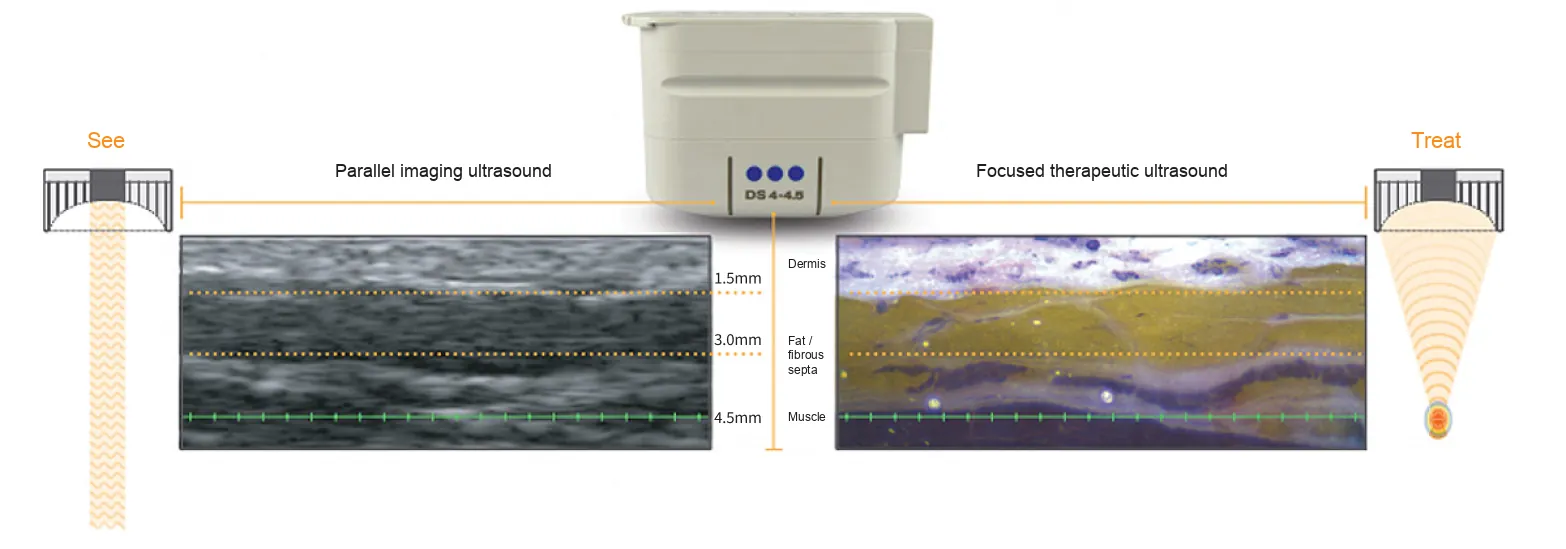
This view lets the doctor confirm that the transducer is in full contact with the skin and that the chosen depth matches the actual tissue in each zone. Skin thickness varies across the face, so checking it zone by zone is what turns a standard number into a personal plan. Combined with the design chart, imaging helps us decide not just how many Ultherapy shots to use, but where each row belongs.
Recovery and Results After Your Session
Recovery is usually brief no matter how many Ultherapy shots your plan includes. Because the treatment is non-surgical, most people return to normal activities the same day. Temporary redness, mild swelling, and a tingling or tender feeling are common and usually settle within a few hours to a few days.
The lifting effect builds gradually rather than appearing overnight. Results develop over 3–6 months as new collagen forms and typically last about 1–2 years; many patients choose to repeat treatment after 12–18 months. A few simple habits help:
- Use gentle skincare and daily sunscreen for the first few days.
- Avoid saunas and very hot baths while any redness lasts.
- Let us know about any discomfort that does not fade as expected.
Before booking, tell your doctor if you are pregnant, have metal implants in the face, or have an active skin condition in the treatment area. Ultherapy received US FDA clearance in 2009; you can read more about the device on the official Ultherapy site.
Ultherapy Shots FAQ
How many Ultherapy shots does a full face need?
There is no single answer to how many Ultherapy shots a full face needs. As a guide, a full-face plan typically uses about 600–900 shots, and adding the neck usually brings the total to 1,200 or more. Your exact number depends on face size, fat thickness, sagging, and the depths used, so it should be set after an in-person assessment.
Is an Ultherapy “line” the same as a shot?
Yes. The manufacturer counts treatment in lines, while many clinics, especially in Korea, say shots. Both refer to the same unit: one pass of the transducer that places a row of tiny heat points at one depth.
Why do clinics quote different numbers of Ultherapy lines?
Clinics may plan different treatment areas, use a different mix of depths, or assess skin thickness and sagging differently. Cartridge type matters as well. Rather than comparing how many Ultherapy shots each clinic offers, ask how the shots are distributed by zone and depth.
Can too many Ultherapy shots cause volume loss?
Over-treating thin areas with little fat is a recognized concern, which is why depth selection and imaging matter. A careful plan matches each depth to the tissue in that zone rather than adding shots everywhere.
How often can I repeat Ultherapy?
Many patients repeat treatment after about 12–18 months, depending on how their skin responded and how it has aged since. Your doctor can reassess and redesign the plan based on your skin at that time.
Planning Your Ultherapy Shots at MINE Clinic
The right shot count for your face can only be decided by looking at your skin. At MINE Clinic, I check skin thickness and sagging with DeepSEE imaging, map your zones on a design chart, and build a personalized plan that explains how many Ultherapy shots you need and where each one will go.
If you are comparing quotes or simply want to understand your options, we would be glad to help. You can learn more about Ulthera treatment at MINE, or contact us at +82-2-516-1175. MINE Plastic Surgery & Dermatology, 813 Nonhyeon-ro, Gangnam-gu, Seoul, Korea.
Written and medically reviewed by Dr. Lee Sung-wook, Board-Certified Plastic Surgeon, MINE Plastic Surgery & Dermatology.
※ This content is for informational purposes only and does not replace professional medical advice, diagnosis, or treatment. Individual results may vary, and side effects may occur. Please consult with a board-certified plastic surgeon for personalized advice.