EN
EN

Downsizing breast implants is a revision surgery in which existing breast implants are replaced with smaller ones, often combined with tightening of the implant pocket and, when the skin has stretched, a breast lift. It is a common reason women return to a plastic surgeon years after their first augmentation.
If you are considering downsizing breast implants, your biggest worry is probably not the implant itself. It is the skin. Will it shrink back neatly around a smaller implant, or will you be left looking deflated and loose? That is the question I hear most often in consultation, and it deserves an honest answer.
This guide to downsizing breast implants explains what happens to stretched skin, the five signs that suggest you may also need a lift, the three main surgical paths, and what recovery usually looks like. It is written by Dr. Lee Sung-wook, a board-certified plastic surgeon at MINE Plastic Surgery in Seoul.
Table of contents
What Is Downsizing Breast Implants and Why Do Women Choose It?
Medical textbooks note that many women who had breast augmentation earlier in life want smaller breasts later on. For those who want to keep implants, downsizing breast implants is the usual option: keeping an implant, but in a size that fits your body and lifestyle today.

Common Reasons to Go Smaller
The reasons for downsizing breast implants are usually practical and personal. The ones I hear most often are:
- Exercise and lifestyle – larger implants can feel heavy during running, yoga or high-impact training.
- Back, neck and shoulder comfort – some women notice strain or bra-strap grooves they did not have before.
- Proportion after life changes – weight loss, pregnancy and breastfeeding can change how the implant looks on your frame.
- A more natural look – a size that felt right at 25 may not feel right at 45.
- Sagging – some degree of ptosis (sagging) is a natural part of aging, and the weight of a large implant can add to it over time.
For a general patient-education background on revision procedures, the breast implant revision overview from the American Society of Plastic Surgeons is a useful read alongside this guide.
Downsizing vs. Removal: Two Different Goals
Two goals are often mixed up online. Downsizing breast implants means a smaller implant stays in. Explant surgery means the implants come out and none are replaced. An explant can be combined with a lift or fat transfer, but that is a different path, covered briefly below.
Why does this matter? Because downsizing breast implants is not simply “a swap.” Plastic surgery textbooks describe it as an operation that can become deceptively complicated. The pocket and the skin envelope (the skin that wraps around the breast) may need to be reduced too, which in practice can mean a lift on a breast that has already been operated on.
What Happens to Stretched Skin When You Go Smaller
When an implant sits in the breast for years, the skin, tissue and pocket all adapt to its size. Downsizing breast implants changes the volume overnight, but the tissues do not always follow at the same pace.
Why Stretched Skin Does Not Always Shrink Back
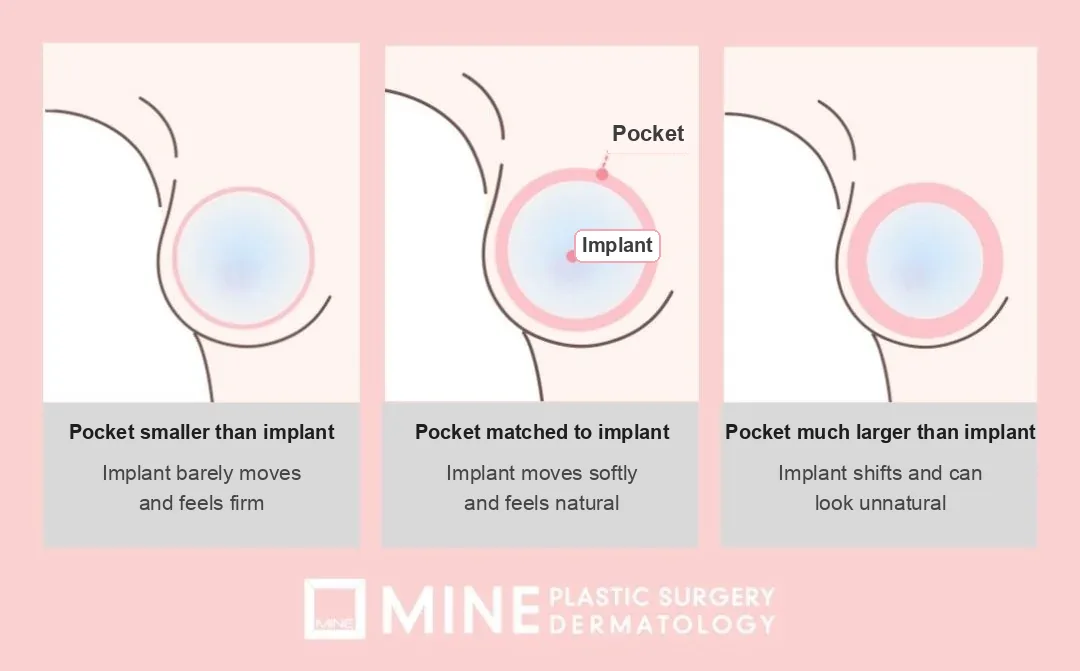
Medical textbooks note that stretched, aging breast skin is less likely to contract after implants are made smaller, so loose skin is a common concern. Two things work against you here. First, skin loses elasticity with age, much like a rubber band that has been stretched many times. Second, glandular tissue in the breast is gradually replaced by softer fat, which offers less natural support.
That does not mean every woman ends up with loose skin after downsizing breast implants. Some skin tightens partly, especially in younger patients, with modest size changes, or when the skin was firm to begin with. But no surgeon can promise it. How your skin responds is individual, and it is the main thing I assess when planning an implant downsize.
The Pocket Is Now Too Big
Around every implant, the body forms a capsule (a thin lining of scar tissue). That capsule and the pocket it surrounds were shaped to fit the original, larger implant. A smaller implant placed into the same space has room to move. It may settle too low, slide toward the side when you lie down, or leave the upper part of the breast looking flat and empty.
This is why downsizing breast implants often includes work on the pocket itself, not just a change of implant.
Thinner Tissue After Years of Implants
Plastic surgery textbooks explain that breast tissue typically becomes thinner (atrophic) after years of supporting an implant. At the same time, the blood supply to the nipple and the breast skin has already been changed by the first operation. It now relies more on smaller side vessels, known as collateral circulation, rather than the original main routes.
This is the key safety point in downsizing breast implants. It is why revision planning is more careful than a first augmentation, and why surgeons sometimes choose a conservative or staged approach.
In a lower pole stretch deformity, the distance from the nipple to the breast crease gets longer while the crease itself stays in its natural place. It is seen most often with very large implants. This is different from implant malposition, where the crease itself has been disrupted and the implant has dropped below it. Both can look similar in the mirror, so an in-person examination matters.
5 Signs You May Also Need a Lift When Downsizing
Not every woman downsizing breast implants needs a lift. These five signs suggest a lift is worth discussing:
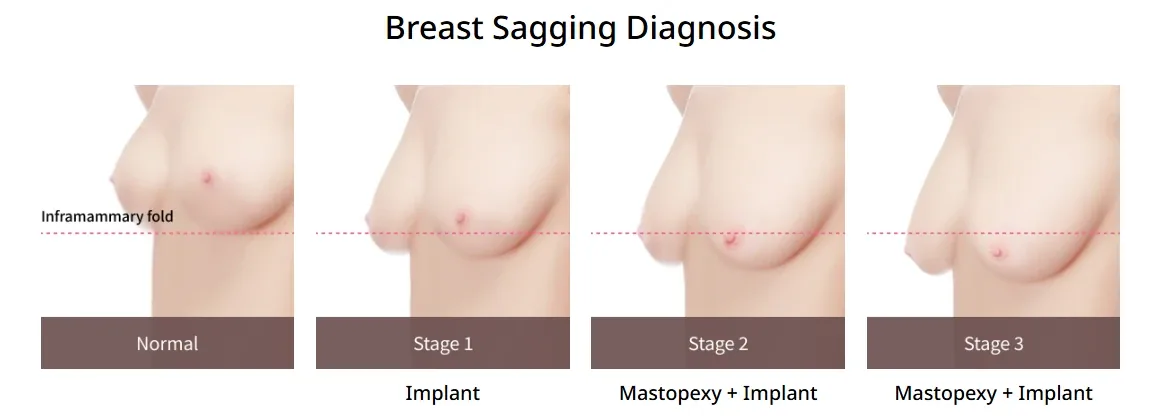
- Your nipple sits at or below the breast crease. If the nipple points downward or sits level with or under the fold, a smaller implant alone usually will not lift it.
- The nipple-to-fold distance has lengthened. A stretched lower half of the breast often shows up as more skin between the nipple and the crease than before.
- Your skin is thin, crepey or marked with stretch marks. Thin tissue on a pinch test, or visible stretch marks, suggests the skin has limited ability to tighten.
- Sagging was already there, or the implant’s weight has caused it. If you needed or nearly needed a lift at your first surgery, the need has likely grown.
- The planned reduction is large compared with your natural breast tissue. If most of your current volume is implant rather than breast, going much smaller leaves more empty skin.
If the first sign sounds familiar, it helps to understand the stages of breast sagging, because the grade of sagging strongly shapes which lift technique is suitable.
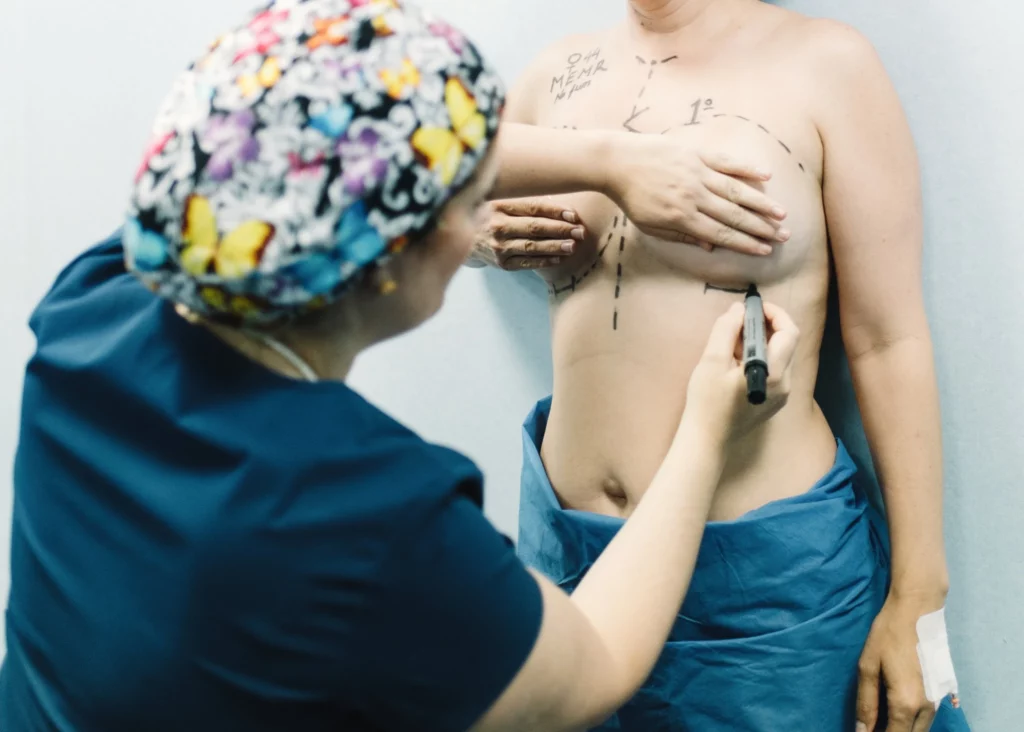
How a Surgeon Assesses Your Skin and Nipple Position
When I examine a patient considering downsizing breast implants, I look at a few specific things:
- Where the nipple-areola complex (the nipple and the darker skin around it) sits relative to the inframammary fold (the crease under the breast)
- The measured distance from the nipple to the fold, compared on both sides
- A pinch test of the upper breast to judge how much natural tissue covers the implant
- Skin quality, including stretch marks and how quickly the skin springs back
- The condition of the existing capsule, including any firmness or contracture
- Your implant records: size, type, surface and placement above or below the muscle
Why There Is No Fixed “cc Rule”
You may read online that going down by a certain number of cc always requires a lift. Plastic surgery textbooks do not set a fixed cc threshold for when a lift is needed; the decision rests on nipple position, skin quality and tissue thickness. Two women downsizing breast implants by the same amount can need completely different operations.
Any rule of thumb you see is general guidance, not a rule. A larger reduction does raise the chance of loose skin, but the examination decides, not the number on the implant box.
Downsizing Breast Implants: Exchange Only, Exchange With a Lift, or Removal
Once your skin, tissue and goals are assessed, downsizing breast implants usually follows one of three paths, each with a different balance of scars, shape and recovery.
| Exchange only | Exchange + lift | Removal ± lift | |
|---|---|---|---|
| Best for | Firm skin, good nipple position, modest size change | Stretched skin or sagging, wish to keep some implant volume | Wish to live without implants |
| Skin requirement | Skin able to adapt to a smaller implant | Excess skin that needs to be removed | Depends on natural tissue and skin quality |
| Scars | Usually the existing incision | Lift scars (around the areola, vertical or anchor) | Existing incision, plus lift scars if lifted |
| Pocket work | Often pocket tightening | Pocket tightening plus skin reshaping | Capsule managed case by case |
| Main trade-off | Risk of residual looseness if skin is weak | More scarring and a longer recovery | Smaller, flatter shape; may look deflated without a lift |
Smaller Implants Alone
Downsizing breast implants without a lift suits women whose skin is still reasonably firm and whose nipple position is acceptable. Even then, the surgeon may need to tighten the pocket with internal stitches, a step called capsulorrhaphy, so the smaller implant stays in the right place. The scar is usually the existing incision.
Smaller Implants Plus a Lift (Revision Augmentation-Mastopexy)
When there is real excess skin, downsizing breast implants together with a lift is often a more predictable way to get a lifted, proportional shape. The surgical term is revision augmentation-mastopexy (mastopexy is the medical word for a breast lift). Surgical literature considers going smaller during a revision lift relatively safe, because a smaller implant puts less pressure on the nipple’s blood supply and on the lifted skin. Surgeons still tend to remove skin conservatively.
In one published textbook case, 350 cc saline implants were exchanged for 250 cc silicone gel implants together with a skin revision, and the result remained stable 8 years later. That is a single example, not a promise, but it shows that a well-planned combined operation can hold its shape over time. If you would like to understand the lift side of this choice, read more about breast lift surgery and the incision patterns it uses.
Implant Removal and Lift: When You Want No Implants
Some women decide they no longer want implants at all. For some, removal alone gives a result they are happy with. For others, especially with thin tissue and stretched skin, it can leave the breasts looking deflated or older than expected. An implant removal and lift can help reshape the remaining tissue, but the lift needs to be done cautiously, with minimal separation of tissue, to protect the nipple’s blood supply. For some women, fat transfer is another way to restore a little volume.
Breast implant removal with lift is a separate decision from downsizing breast implants, with its own set of trade-offs. If you are leaning toward an explant with lift, see our guide to options after breast implant removal for the full picture.
How the Surgery Is Planned: Pocket, Capsule, and Blood Supply
Once the path is chosen, planning downsizing breast implants focuses on three areas: the pocket and capsule, whether to do everything at once, and whether thin tissue needs internal support.
Tightening the Pocket and Managing the Capsule
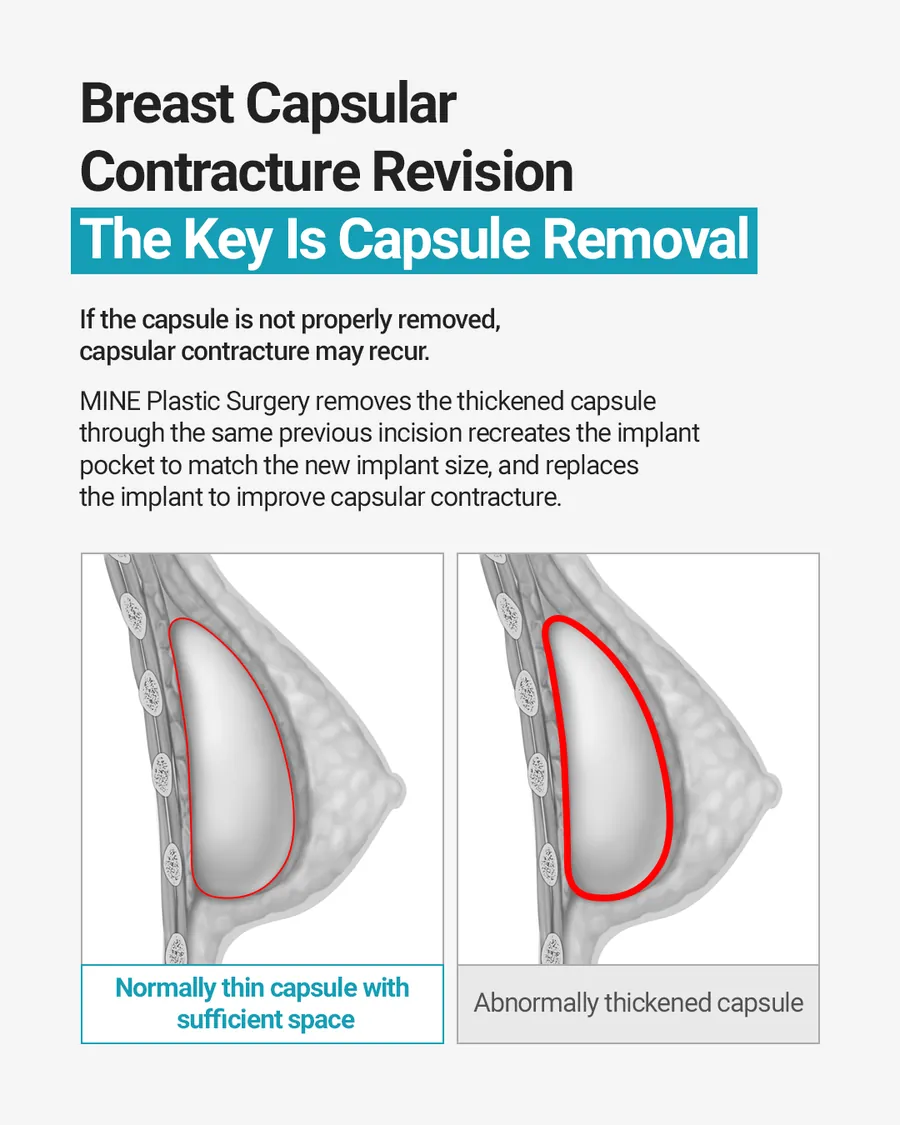
If the existing capsule is soft and healthy, with no capsular contracture (a tightening of the scar lining that makes the breast hard), it can often be preserved or simply tightened. When there is contracture or another problem, it may be partly or fully removed. Whether the capsule needs to come out is a frequent question in revision surgery, and you can read more on whether the capsule needs to be removed.
One Surgery or Two? When Staging Is Safer
Most women prefer downsizing breast implants in one operation, and in many cases that is reasonable. However, when tissue is very thin or the capsule needs a lot of work, a staged approach can be safer. Textbooks describe doing capsule work and the lift in 2 separate operations as one way to protect a thinned blood supply.
Staging is a safety option, not a universal requirement. We would discuss it only if your examination showed that combining everything in one sitting would add unnecessary risk to the nipple or skin.
Internal Support for Thin Tissue
When the breast tissue is very thin, some surgeons use an acellular dermal matrix, or ADM (a sheet of specially processed tissue that acts like an internal sling). It supports the implant from below and takes some of the load off the thinned breast tissue. It is used selectively, not routinely.
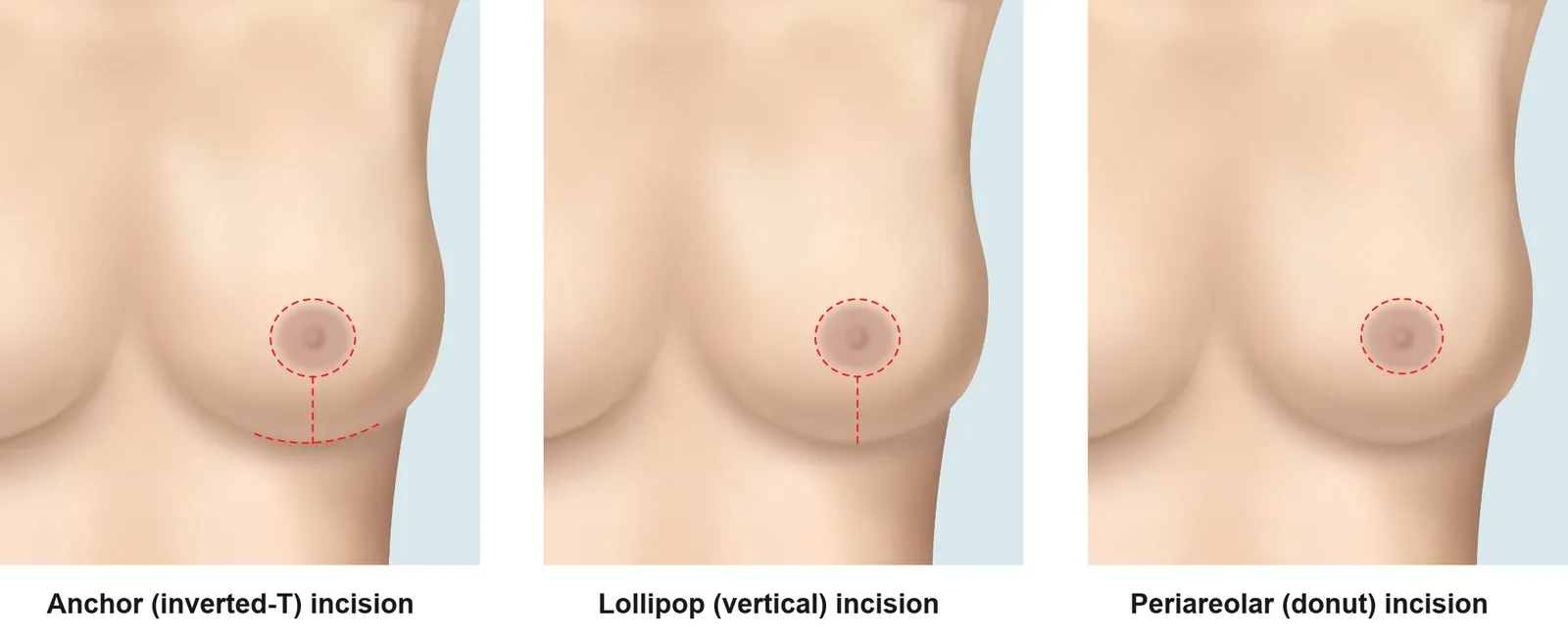
The lift pattern, if one is needed, is chosen by how much excess skin there is: around the areola for a small amount, a vertical “lollipop” pattern for moderate excess, or an anchor pattern for more. Revision lifts sometimes use specially shaped skin removal patterns designed for extra skin on the lower half of the breast.
If you are traveling for surgery, bring your previous operative report and implant cards (size, type and placement). These records make planning your downsizing surgery much safer and more precise.
Recovery, Risks, and Realistic Results After Going Smaller
Recovery after downsizing breast implants depends on which path you take. An exchange alone is usually lighter than an exchange with a lift, and a staged plan means two shorter recoveries rather than one.
Typical Recovery Timeline
The table below shows typical ranges. They are general guidance and vary by procedure and by person.
| Time after surgery | What is typical |
|---|---|
| Week 1 | Soreness, swelling and tightness; most patients return to light daily activity within about 1 week |
| Weeks 2–4 | Swelling eases; desk work and gentle walking are usually comfortable; support bra worn day and night |
| Weeks 4–6 | Strenuous exercise and heavy lifting are usually avoided for about 4–6 weeks, longer after a lift |
| 3–6 months | The implant settles and the breast shape becomes more natural |
| 12 months | Lift scars typically keep fading for about 12 months |
Possible Risks and Complications
Like any surgery, downsizing breast implants carries risks. These include:
- Asymmetry between the two sides
- Some remaining looseness of the skin
- Implant malposition (the implant settling in the wrong place)
- Capsular contracture
- Changes in nipple or skin sensation
- Delayed wound healing, infection or bleeding
- Reduced blood supply to the nipple or skin, which is more of a concern in thin, previously operated tissue
That last risk is exactly why conservative skin removal and staging exist. They are ways of protecting tissue that has already been through one operation. It also helps to remember that breast implants are not lifetime devices, so future checks or further surgery may be needed.
What “Downsizing Implants Before and After” Really Looks Like
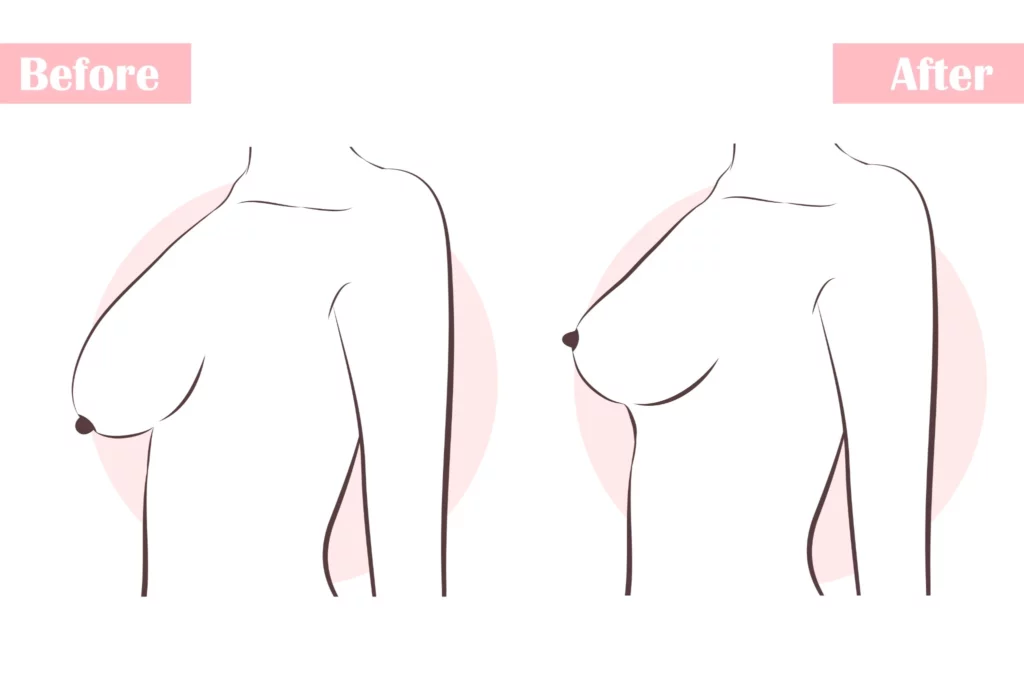
Many readers search for downsizing implants before and after photos. Rather than show images, here is what a realistic result of downsizing breast implants usually means: breasts that are smaller and more in proportion with your frame, often a softer and more natural upper chest, and, if a lift was done, a higher nipple position with visible but fading scars. The aim is a balanced, comfortable shape, not a copy of your original size before any surgery.
Frequently Asked Questions About Downsizing Breast Implants
Will my skin shrink after downsizing breast implants?
Sometimes partly, but stretched and aging skin is less likely to contract fully. How much it tightens depends on your skin quality, tissue thickness and how much smaller you go. Younger, firmer skin and modest size changes do better. Your surgeon can estimate this during an in-person examination.
How do I know if I need a lift when going smaller?
The key signs are a nipple at or below the breast crease, a longer nipple-to-fold distance, thin or crepey skin and sagging that was already present. There is no fixed cc cutoff. The decision is made by examining your skin, tissue and nipple position, not by the size of the reduction alone.
Can I downsize and get a lift in the same surgery?
Often, yes. A smaller implant puts less tension on the lifted skin, which is why combining the two is common. When tissue is very thin or the capsule needs extensive work, some surgeons prefer to stage the operations to protect the blood supply to the nipple and skin.
What is the difference between downsizing and explant with lift?
Downsizing keeps a smaller implant in place, sometimes with a lift. An explant with lift removes the implants completely and reshapes the remaining breast tissue and skin. The second gives a smaller, implant-free result. Our guide to options after breast implant removal explains that path in detail.
How long is recovery after downsizing breast implants?
Typically, most patients return to light activity in about a week and avoid strenuous exercise for about 4–6 weeks. The shape keeps settling over several months. Recovery is usually longer when a lift is added. These are general ranges, and your own timeline depends on the procedure performed.
Do I need to remove the capsule when downsizing?
Not always. A healthy capsule without contracture can often be kept or tightened to fit the smaller implant. It is usually removed or modified when there is contracture, implant rupture or another problem. Your surgeon decides this after examination and, if needed, imaging.
Downsizing breast implants can give you a lighter, more proportional result, but a good outcome comes from planning around your skin, not just the implant size. An honest examination tells you whether a smaller implant alone is enough or whether a lift will give a better shape.
Thinking about downsizing breast implants? You can start with an online photo consultation with Dr. Lee Sung-wook through WhatsApp or our website form. Please have your implant records and any previous operative notes ready. Learn more about breast revision surgery at MINE in Seoul.
Written and medically reviewed by Dr. Lee Sung-wook, board-certified plastic surgeon, MINE Plastic Surgery, Seoul.
※ This content is for informational purposes only and does not replace professional medical advice, diagnosis, or treatment. Individual results may vary, and side effects may occur. Please consult with a board-certified plastic surgeon for personalized advice.