EN
EN

Table of Contents
What Is a Breast Capsule?
A breast capsule is the thin shell of scar tissue that the body forms around a breast implant in the weeks after augmentation surgery. Every implant develops one. It is the normal foreign-body response to any device placed inside the body, and in most patients the capsule stays soft, thin and completely unnoticeable.
Problems begin only when that scar layer thickens and contracts around the implant, a complication called capsular contracture. The plastic surgery literature describes capsular contracture as the leading reason patients return for breast augmentation revision. Reported rates vary widely between studies, from roughly 3% to 19% in large augmentation series, with some older reports considerably higher. It can appear within weeks of surgery or many years later.
Breast revision surgery addresses capsular contracture, implant rupture, size or shape changes, and aesthetic dissatisfaction. The question international patients ask most often is whether the existing breast capsule has to come out. The honest answer is that it depends on three things: the condition of the capsule, the reason for the revision, and the result you want.
Understanding breast capsule management matters because it drives the surgical technique, the length of your recovery and the durability of your result. Korean surgeons performing breast revision surgery have refined their approach to capsule handling, balancing safety against the aesthetic result.
Baker Grades: How Surgeons Classify a Breast Capsule
Surgeons grade capsular contracture using the Baker classification, first described by Baker in 1977 and later modified by Spear for reconstructive cases. It is the scale Mine Clinic uses when deciding whether a capsule needs to be removed:
- Grade I — the augmented breast feels as soft as a breast that has never been operated on. The capsule is thin and pliable.
- Grade II — firmness is minimal. The implant can be felt but is not visible.
- Grade III — the breast is firm, and the implant is visible or the breast shape is clearly distorted.
- Grade IV — the breast is hard, distorted and painful to the touch.
Grade I and Grade II capsules usually need no treatment at all. Surgical textbooks recommend that revision with removal of the fibrous breast capsule be considered at Grade III and above, and that is the threshold we apply. Grading is confirmed during surgery, because a capsule can feel thicker on the operating table than imaging suggests.
When Breast Capsule Removal Is Necessary
Not every revision requires a full capsulectomy. These are the five situations in which removing the breast capsule is generally considered necessary.
1. Capsular Contracture (Baker Grade III–IV)
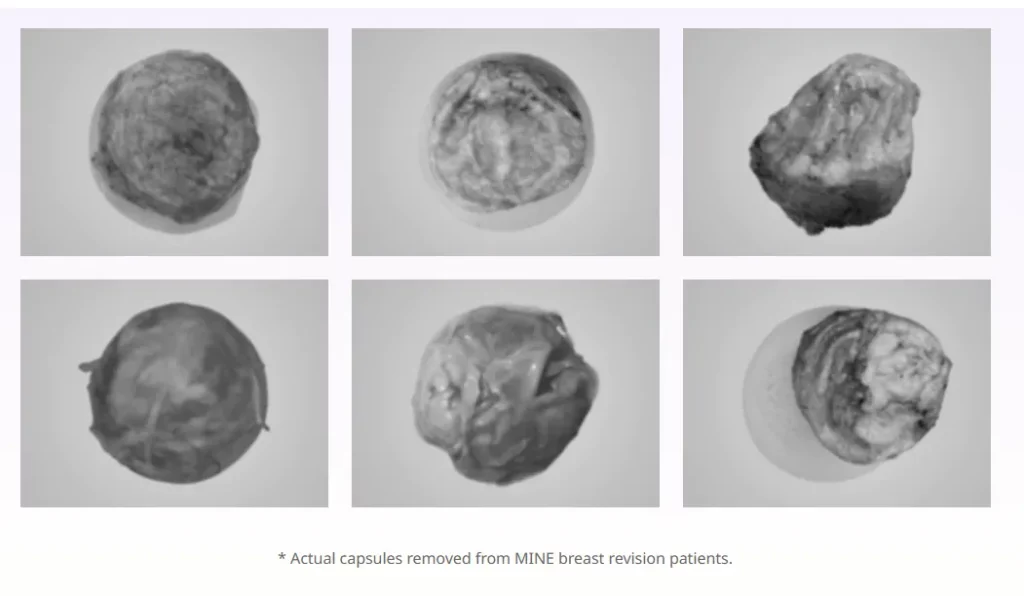
At Baker Grade III or IV the breast capsule is thick and hard, sometimes calcified, and it can cause pain or visible distortion of the breast. Complete removal, called a capsulectomy, is typically recommended. Capsular contracture that appears within the first year after augmentation is treated more aggressively, because early contracture is managed much like a low-grade implant infection: total capsulectomy, antibiotics, a fresh pocket and a new device.
2. Implant Rupture or Leakage
If an implant has ruptured, particularly a silicone gel device, removing the entire breast capsule helps clear silicone that has leaked into the surrounding tissue. Where a thick capsule is calcified or contains silicone granulomas, textbooks note that a partial or complete capsulectomy is often required to correct the resulting deformity. Our guide to breast implant rupture covers the warning signs to watch for.
3. Chronic Inflammation or Infection
Persistent inflammation or infection inside the capsule calls for complete removal. Leaving contaminated tissue behind compromises healing and raises the risk of the same problem recurring around a new implant. In these cases the surgeon also builds a clean new pocket rather than reusing the old one.
4. Changing the Implant Pocket Position
When switching from a subglandular to a submuscular position, or the reverse, selective capsule removal or release is used to build the new pocket while keeping structural support where it is still useful. Creating a neo-subpectoral pocket in front of the existing capsule is one well-described option in the revision literature.
5. Aesthetic Concerns
Visible rippling, asymmetry, implant displacement or an unnatural breast shape caused by a distorted capsule may justify partial or complete removal. Our guide to breast implant malposition explains how capsule scarring pulls an implant out of position over time.
Capsule management remains one of the most debated areas in revision breast surgery, and opinions differ between surgeons. The American Society of Plastic Surgeons publishes patient safety guidance on breast implants that is worth reading before you commit to any revision plan.
The Breast Capsule Removal Procedure at Mine Clinic
Mine Clinic uses endoscopic techniques refined in Korea for capsule management during revision procedures. The approach prioritizes controlled, complete removal of diseased tissue with as little trauma as possible to the healthy tissue around it.
Preoperative Assessment
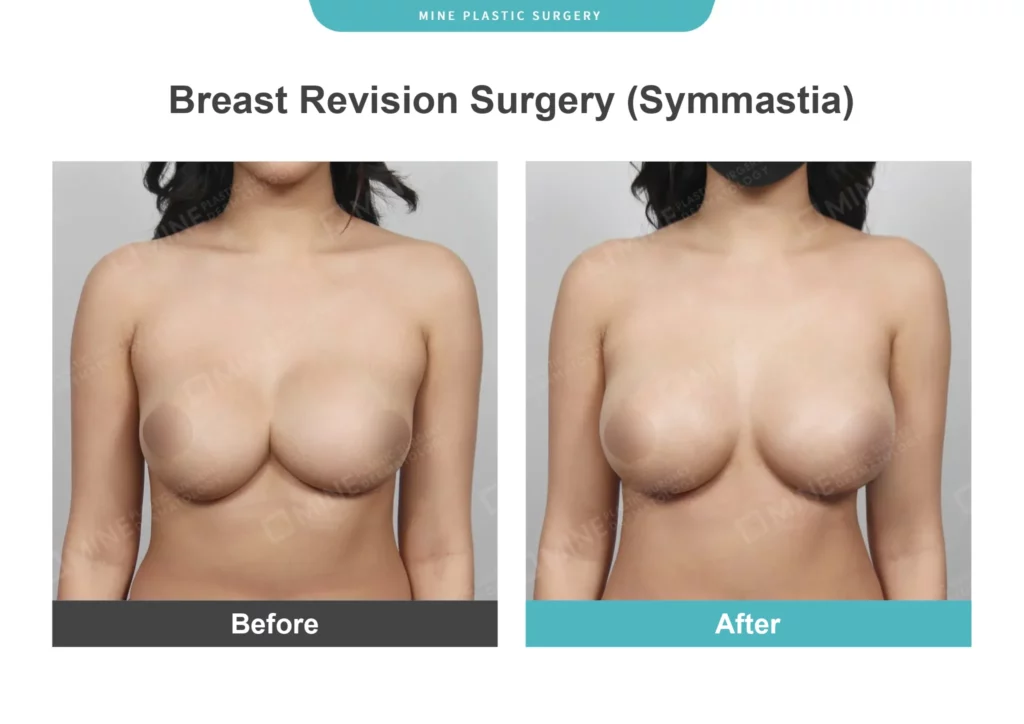
Dr. Lee Sung-wook reviews imaging, including ultrasound, to assess capsule thickness, implant integrity and soft-tissue quality before surgery. That assessment determines which of the four techniques below is planned, and how much of the operating time should be reserved for capsule work.
Surgical Techniques
Complete Capsulectomy: the entire breast capsule is dissected free and removed along with the implant. This is the preferred technique for severe contracture, rupture or infection. Precise dissection preserves healthy tissue while eliminating the problematic scar layer.
Partial Capsulectomy: selected portions of the capsule are removed while areas that still provide useful support are left in place. This suits cases where only specific sections are thickened or distorted.
Capsulotomy: the capsule is scored or released rather than removed. It can be appropriate for mild contracture, or when a thin, healthy capsule simply needs to be enlarged to accommodate a different implant.
En Bloc Removal: the implant and the surrounding capsule are taken out together as a single intact unit. It is used for ruptured silicone implants and when capsule tissue needs to be sent for pathology. It is not necessary for every revision, and it requires more dissection than a standard capsulectomy, so it is chosen on clinical grounds rather than by default.
Advanced Technology Integration
Mine Clinic uses HD endoscopic visualization during revision surgery, which can improve precision in confined spaces and reduce bleeding. Seeing the capsule directly matters most where it is fused to the ribs or the pectoral muscle, which is exactly where incomplete removal tends to happen.
The procedure usually takes two to three hours, depending on how firmly the breast capsule is attached to the chest wall. Our international service team coordinates scheduling, interpretation and follow-up throughout your revision.
What Happens If the Breast Capsule Is Left Behind
Partial removal is sometimes chosen simply because a hardened capsule stuck to the ribs is slow and difficult to dissect. When diseased tissue is left behind, three problems can follow. The original distortion may persist despite the new implant. Calcified capsule fragments can show up on future mammograms and complicate breast cancer screening. And contracture, seroma or fluid collection is more likely to recur.
A breast capsule does not dissolve or reabsorb on its own. Fibrous tissue persists until it is surgically excised, although a thin capsule left after implant removal often softens and flattens over the following months. That is why the decision to remove or preserve should be deliberate rather than incidental.
Why Choose Korea for Breast Revision Surgery
Korea has become a significant destination for revision breast surgery, with Seoul’s Gangnam district hosting many of the country’s most experienced plastic surgeons. Several factors make Korean breast surgery practical for international patients seeking revision procedures.
Specialized Expertise in Complex Cases
Korean plastic surgeons perform high volumes of revision breast surgery and develop refined techniques for difficult capsule dissection. At Mine Clinic, our surgeons see the full range of implant types, capsule conditions and previous surgeries that international revision patients bring with them.
Advanced Surgical Technology
Korean clinics invest heavily in surgical equipment. HD endoscopy, ultrasound imaging and modern operating rooms with real-time monitoring support both precision and safety during capsule removal.
Comprehensive Post-Operative Care
Korean medical culture places heavy emphasis on aftercare. Mine Clinic provides daily monitoring, professional wound care and lymphatic drainage massage during the early recovery period, when swelling and fluid management matter most after extensive capsule dissection.
Cost Relative to Western Countries
Korean breast revision surgery often costs less than a comparable procedure in North America or Western Europe, even after travel and accommodation are taken into account. Costs vary by case complexity, so any figure should come from a personal consultation rather than a price list.
Medical Tourism Infrastructure
Seoul’s medical tourism infrastructure supports international patients with interpretation, accommodation assistance and travel guidance. Our international service team manages the logistics so you can concentrate on healing.
Risks, Side Effects & Safety Considerations
Understanding the risks is essential before choosing revision surgery with breast capsule removal. Mine Clinic prioritizes transparency about what international patients should realistically expect.
Common Side Effects
Swelling and bruising typically peak within the first week and subside gradually over three to four weeks. Some discomfort and tightness are normal as tissues heal around a new implant. Temporary changes in nipple sensitivity occur in some patients and usually resolve over several months as nerves recover.
Potential Complications
Bleeding or Hematoma: capsule dissection creates a large raw surface, so careful hemostasis and post-operative monitoring matter. Protocols include compression garments, drains where indicated and activity restriction during early recovery.
Infection: uncommon with proper sterile technique, but possible with any surgery. Prophylactic antibiotics and meticulous wound care reduce the risk.
Recurrent Capsular Contracture: even after a complete capsulectomy, the body forms a new breast capsule around the new implant, and that capsule can harden again. Risk is reduced by careful control of bleeding, antibiotic or antiseptic irrigation of the pocket, handling the implant as little as possible during insertion to limit contamination, and creating a clean new pocket rather than reusing the old one. Acellular dermal matrix has shown promise in selected revision cases. Older advice to rely on textured implant surfaces has been superseded, and implant selection is now made case by case.
Implant Malposition: removing supportive capsule tissue can affect where the implant sits. Internal suturing techniques, sometimes with mesh or matrix support, are used to hold the new pocket in place.
Asymmetry: pre-existing tissue differences can become more visible once a thick capsule is removed. Additional procedures such as fat grafting may be discussed to address this.
Safety Protocols at Mine Clinic
Our safety standards include board-certified anesthesiologists, real-time monitoring systems and accredited surgical facilities. We follow strict sterilization protocols and use implants approved by Korea’s Ministry of Food and Drug Safety; many of the devices we work with also carry CE marking or FDA approval.
Breast revision with capsule removal is a significant operation, not a minor touch-up. Dr. Lee Sung-wook conducts a full consultation to assess your candidacy, discuss realistic expectations and confirm that you understand the trade-offs before proceeding. International patients also receive pre-operative health screening to identify contraindications.
Recovery Timeline in Seoul
Recovery after breast capsule removal is slower than after a straightforward implant exchange, because more tissue has been dissected. Knowing the timeline helps international patients book travel realistically.
Immediate Post-Operative Period (Days 1–3)
You stay at our partnered recovery facility with 24-hour nursing care. Pain management, wound monitoring and mobility assistance support comfortable early healing. Drains, if placed, are usually removed within two to three days.
Early Recovery (Days 4–7)
Most international patients remain in Seoul during this period, with daily check-ups at Mine Clinic to monitor healing. Dr. Lee Sung-wook checks your sutures or surgical tape, and you can start moving around more. Gentle sightseeing is usually fine, as long as you stay within the activity restrictions you have been given.
Stitch Removal and Clearance (Days 7–10)
Non-dissolvable sutures come out around day seven. Dr. Lee Sung-wook then evaluates healing and gives clearance for long-haul travel where appropriate. Most patients fly home comfortably at this stage with written aftercare instructions.
Intermediate Healing (Weeks 2–4)
Swelling continues to settle and breast shape begins to stabilize. You manage recovery remotely with support from our international team by messaging and video consultation. Light upper-body movement is permitted while strenuous activity is still avoided.
Advanced Healing (Months 2–3)
Tissue softens and implant position stabilizes as the new capsule matures. Scar care with silicone sheets or gel continues. Most patients resume normal activity, including exercise, during this phase.
Final Results (Months 6–12)
Complete tissue integration and scar maturation reveal the final aesthetic outcome. Follow-up imaging may be recommended to confirm that implant position and capsule formation remain healthy.
Recommended Seoul Stay
We recommend planning 10 to 14 days in Seoul for breast revision with capsule removal. That window gives us time to monitor you through the critical early healing phase and to clear you safely for travel. Our location in Gangnam gives easy access to accommodation, international food and transport during recovery.
Frequently Asked Questions
Can I Keep My Breast Capsule If It Looks Healthy?
In some cases, yes. If the capsule is thin and soft and you are simply changing implant size or type without complications, your surgeon may preserve it to maintain structural support. Partial scoring or release may still be needed so the new implant sits correctly. Dr. Lee Sung-wook makes this judgment during surgery, based on how the capsule actually looks and feels once the pocket is opened.
Do Breast Implant Capsules Dissolve on Their Own?
No. A breast capsule is fibrous scar tissue, and it does not dissolve, melt or reabsorb the way a suture does. If implants are removed and the capsule is left in place, a thin, healthy capsule often collapses and softens over several months and may become clinically irrelevant. A thick, calcified or contracted capsule behaves differently and generally has to be excised surgically.
What Is the Difference Between Capsulectomy and Capsulotomy?
A capsulectomy removes capsule tissue; a capsulotomy only cuts or releases it. A capsulectomy can be complete, taking the whole capsule out, or partial, taking out only the diseased sections. A capsulotomy leaves the capsule in place but scores it so the pocket can expand. Capsulotomy is quicker and less invasive, but for advanced contracture the literature favours capsulectomy for a more durable result.
How Does Breast Capsule Removal Affect Recovery Time?
Complete removal typically extends recovery by one to two weeks compared with a simple breast implant exchange. The additional dissection means more tissue has to heal, so early swelling and discomfort are greater. When the capsule is genuinely diseased, though, thorough breast capsule removal usually gives better long-term comfort and shape, which is why the longer recovery is generally considered worthwhile.
Will Removing the Breast Capsule Prevent Future Contracture?
Removal does not guarantee that contracture will never return, because the body always forms some scar tissue around an implant. What it does is take out diseased tissue and reset the pocket, which lowers the risk of recurrence when combined with careful technique and good post-operative care. No surgeon can promise a permanent result, and anyone who does should be treated with caution.
Is Breast Capsule Removal More Expensive Than Simple Revision?
A complete capsulectomy is more complex and time-intensive than a straightforward implant exchange, which is usually reflected in the surgical fee. Mine Clinic provides a personalized quote at consultation, because the cost depends on your specific revision needs, implant selection and whether other procedures are combined. Our international team provides pricing in writing, with every item listed up front.
Can I Switch to Fat Grafting Instead of New Implants After Capsule Removal?
Yes. Breast fat grafting can be an alternative after implant and breast capsule removal, but it works best for patients who want a modest increase in size and have enough donor fat. It avoids implant-related complications, though you do need realistic expectations about how much volume is achievable. Combining a small implant with fat grafting is another option where upper-pole fullness matters.
Conclusion
Whether the breast capsule has to be removed during revision surgery depends on the individual case: the grade of contracture, the state of the implant, the reason for revision and the result you are aiming for. Not every revision needs a capsulectomy. But when the capsule is thick, calcified, infected or distorting the breast, removing it thoroughly gives the best chance of a durable result.
Mine Clinic’s experience with complex revision cases, combined with Korea’s surgical technology and structured aftercare, makes Seoul a practical choice for international patients. The most useful thing you can do before surgery is ask your surgeon directly which technique they plan to use on your capsule, and why.
For more on our breast surgery services, explore our blog resources covering breast procedures, recovery and patient experience.
Considering breast revision surgery? Contact Mine Clinic for a personalized online consultation. Our team can answer your questions on WhatsApp and guide you through planning your treatment in Seoul. Visit our online consultation page or book your appointment to get started.
Reviewed by Dr. Lee Sung-wook, Board Certified Plastic Surgeon at Mine Clinic
※ This content is for informational purposes only and does not replace professional medical advice, diagnosis, or treatment. Individual results may vary, and side effects may occur. Please consult with a board-certified plastic surgeon for personalized advice.