EN


Skin boosters are injectable treatments that deliver an active ingredient into the dermis, and the main types of skin boosters fall into four ingredient families: PDRN (for example, Rejuran), PLLA/PDLLA (for example, Juvelook), hyaluronic acid (HA) and ECM or collagen complex (for example, Re2O and Laetigen).
There are now dozens of skin booster brands, and many patients come into my consultation room with the same question: “Which one is actually right for me?” The good news is that once you know the main ingredient, the list gets much shorter. Brands differ, but each one belongs to one of only four families.
In this guide I explain the types of skin boosters the way I do with patients: what each family does in the skin, how many sessions it usually takes and when you can expect to see a change, which skin concern each family suits, and who should not have a skin booster at all.
What Skin Boosters Actually Do in the Dermis
Before comparing products, it helps to know where a skin booster works. Your skin has three layers: the epidermis on the surface, the dermis beneath it, and the fatty layer below that. All types of skin boosters are aimed at the middle layer, the dermis.
Injection vs topical cream: why delivery depth matters
A moisturizer or serum mostly stays in the epidermis, the thin outer layer. It can make the surface feel softer, but it does not reach far below it. A skin booster uses a fine needle to place the ingredient directly in the dermis, so the aim is a change from inside the skin rather than on top of it.
Fibroblasts, procollagen and why output drops with age
The dermis contains fibroblasts, cells that work like small collagen factories. Dermatology textbooks describe how fibroblasts first make an unfinished form called procollagen, which then matures into firm collagen with the help of cofactors such as vitamin C and iron.
With age, these factories slow down. They make less collagen, and a process called glycation (sugar molecules sticking to collagen and making it stiff) lowers its quality, so skin loses bounce and elasticity. The different types of skin boosters support the dermis in different ways, which is why the ingredient family matters more than the brand name on the box.
The 4 Types of Skin Boosters by Ingredient Family
When you group the many skin booster brands by their core ingredient, they sort neatly into four families. Because each family works differently in the skin, comparing PDRN vs PLLA vs hyaluronic acid and ECM complex tells you far more than comparing brand names. The table below gives a quick overview, and each family is explained in plain language after it.
| Family | Example products | How it works | Main goal |
|---|---|---|---|
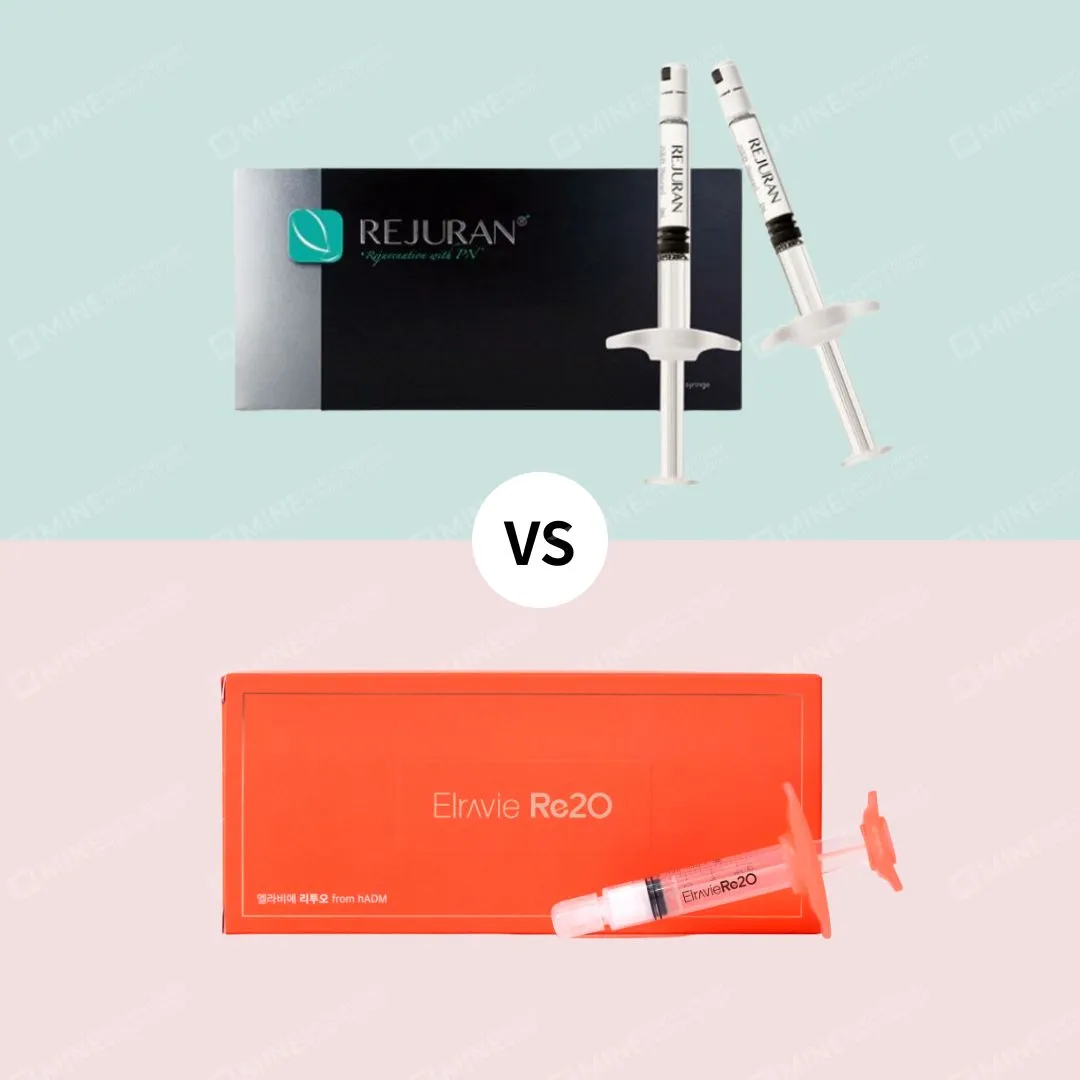
| PDRN / polynucleotide | Rejuran | Sends repair signals to skin cells | Recovery, calmer and healthier-looking skin |
| PLLA/PDLLA | Juvelook | Prompts your own fibroblasts to build new collagen | Firmness and elasticity |
| Hyaluronic acid (HA) | Various HA boosters | Binds water in the dermis | Hydration and subtle volume |
| ECM / collagen complex | Re2O, Laetigen | Supplies several matrix components at once | Smoother texture and more even tone |
PDRN / polynucleotide (Rejuran): signaling repair
PDRN (polydeoxyribonucleotide) is made of small DNA fragments taken from salmon. These fragments bind to a receptor on skin cells, the adenosine A2A receptor, which acts as a kind of “on switch” for repair. Through this switch, PDRN is reported to support fibroblast activity and the production of collagen and elastin, and to help calm inflammation. In simple terms, this family helps the skin recover better on its own.
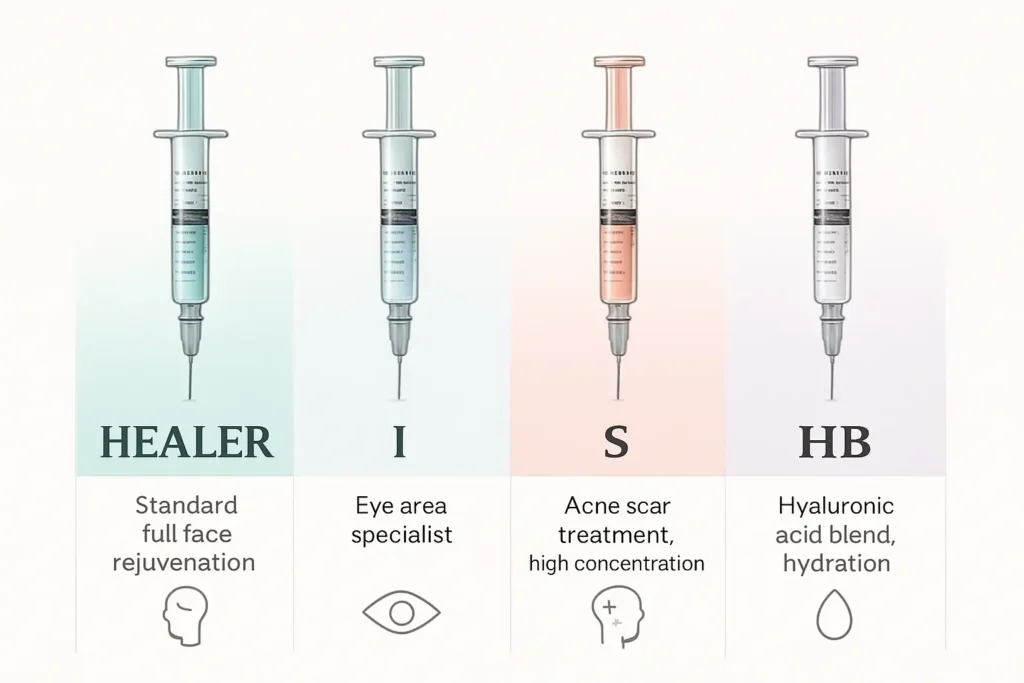
Keep in mind that this describes how the ingredient works in general, not trial data for any one product. Rejuran also comes in several versions, which I cover separately in my guide to Rejuran Healer, I, S and HB.
PLLA/PDLLA (Juvelook): stimulating your own collagen
PLLA (poly-L-lactic acid) is a sterile synthetic material that the body slowly breaks down. It is biodegradable and biocompatible, meaning the body tolerates it well. Dermatology textbooks describe PLLA as stimulating your own fibroblasts over the long term, so that they lay down new collagen. The same sources report that after a series of treatments, this effect can last 2 years or more. No skin test is needed beforehand. Dermatology literature also notes that PLLA itself has been approved in Europe for soft-tissue augmentation since 1999, giving the ingredient a long clinical track record.
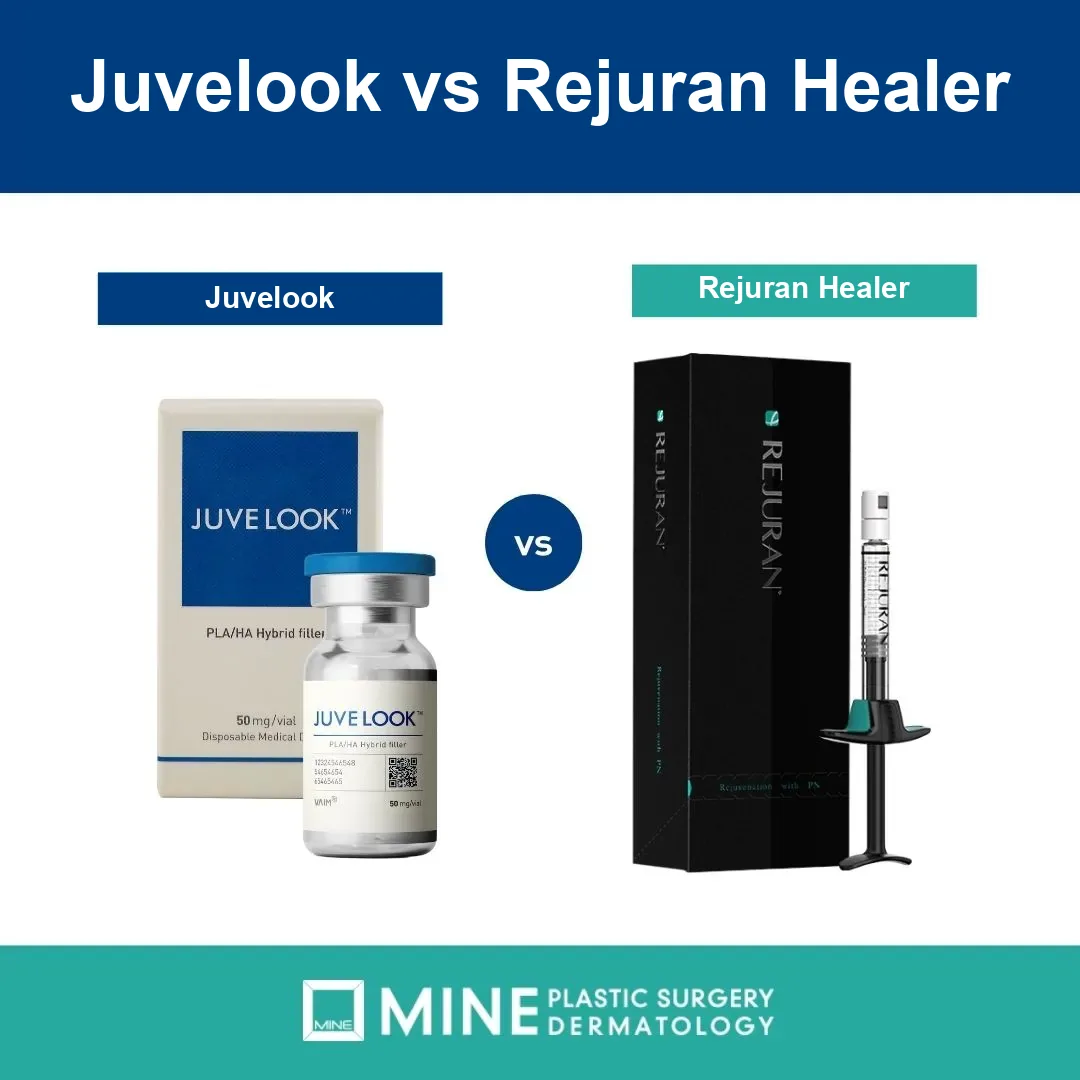
Juvelook belongs to this family. It is a hybrid of PDLLA (another form of polylactic acid) and hyaluronic acid, which is why the box reads “PLA/HA hybrid”. Because the result comes from collagen you build yourself, the change is gradual rather than instant.
Hyaluronic acid (HA): binding water, restoring hydration
Hyaluronic acid occurs naturally in almost every tissue in the body, so it is biodegradable, biocompatible and rarely rejected. In the dermis it holds on to water, which hydrates the skin from within and can add a little volume. According to dermatology textbooks, injectable hyaluronic acid typically lasts about 3 to 12 months before the body absorbs it. It is the family to consider when you want quick hydration and a little volume. For more on how long HA lasts and how it compares with other boosters, see our guide to hyaluronic acid skin boosters.
ECM / collagen complex (Re2O, Laetigen): texture and tone
The fourth family uses a mix of components rather than a single one. ECM stands for extracellular matrix, the supportive network that surrounds cells in the dermis. Re2O is derived from hADM (human acellular dermal matrix, donated dermis with the cells removed so only the supporting structure remains). Laetigen focuses on replenishing collagen, and its maker describes it as 99.9% pure collagen. Both aim for smoother texture and a more even tone. For a closer look at one of them, see our article on the Re2O ECM skin booster.
Sessions and Timeline: How Each Type of Skin Booster Works Over Time
Different types of skin boosters follow different schedules. Knowing in advance how many sessions you need and when a change usually appears saves a lot of unnecessary worry in the weeks after treatment.
| Family | Typical sessions | Interval | When change shows | How long it lasts | Common short-term reaction |
|---|---|---|---|---|---|
| PDRN (Rejuran) | 3–4 | 3–4 weeks | Builds over 4–12 weeks | Varies; maintenance planned individually | Small bumps, redness |
| PLLA/PDLLA (Juvelook) | A series, similar to PDRN | Set by the doctor | Gradual, as collagen forms | Can reach 2 years or more with serial treatment (textbook data for PLLA) | Small bumps for 24–48 hours |
| HA | Often 1 or a short series | Depends on product | Relatively soon | About 3–12 months | Mild swelling, bruising |
| ECM complex | A series, then maintenance | Depends on goal | Gradual | Depends on maintenance plan | Redness, mild swelling |
PDRN (Rejuran): 3–4 sessions, results over 4–12 weeks
Rejuran is usually given as 3–4 sessions spaced 3–4 weeks apart, with changes building gradually over 4–12 weeks. The skin needs time to repair and produce collagen, so it is normal not to see much right after the first session.
PLLA/PDLLA (Juvelook): small bumps for 24–48 hours are expected
Juvelook is given in a similar series. Right after treatment, small raised bumps can appear where the product was placed. Small bumps after Juvelook are an expected reaction and usually settle within 24–48 hours. A nodule is something different: a firm lump that stays for weeks. If you notice that, have it checked, and read more about when bumps become Juvelook nodules.
HA: visible quickly, re-treatment in about 3–12 months
Because HA works by holding water, most people feel the difference relatively soon. Over time the body absorbs it, so re-treatment is usually considered after about 3–12 months, depending on the product, the amount used and the area treated.
ECM complex: series plus maintenance
For ECM complex boosters, the number of sessions and the spacing depend on your goal, such as smoother texture or more collagen support. Most people start with a short series, followed by maintenance sessions that the doctor plans around their skin. With almost all types of skin boosters, you can return to your normal routine the same day.
Which Type of Skin Booster Fits Your Skin Concern?
The simplest way to choose between the types of skin boosters is to start from your main skin concern, not from a brand. Here is a quick guide:
- Skin that recovers slowly, feels sensitive or looks tired → PDRN (Rejuran)
- Loss of firmness and elasticity → PLLA/PDLLA (Juvelook)
- Dryness, tightness or small volume gaps → HA
- Rough texture and uneven tone → ECM complex (Re2O, Laetigen)
Slow-to-recover, sensitive or tired-looking skin: PDRN
If your skin takes a long time to calm down after irritation, or simply looks worn out, the PDRN family is often the first option to consider, because its main job is supporting the skin’s own repair.
Loss of firmness and elasticity: PLLA/PDLLA
If your main concern is skin that feels less firm than it used to, the PLLA/PDLLA family is the more common choice, because it pushes the dermis to build new collagen. Neither PDRN nor PLLA is better or worse than the other; they simply work in different ways.
Dryness, tightness and small volume gaps: HA
Skin that looks dull and feels tight even after moisturizer, or an area with a slight hollow, tends to respond well to HA. You can usually expect a sense of fullness relatively quickly.
Rough texture and uneven tone: ECM complex
If your goal is overall smoothness and a more even tone, an ECM complex booster such as Re2O or Laetigen is an option, especially when you want to address several things at once rather than one.
Can you combine families (e.g. Rejuran + Juvelook)?
Yes, mixing two types of skin boosters, such as Rejuran and Juvelook, is possible. The order and the gap between treatments depend on your skin, so this is a decision for your doctor. Dermatology textbooks also stress the need for an individualized plan that weighs the reason for treatment, possible side effects and cost together.
One more point: if your real concern is lost volume or deep folds, that is usually a job for filler rather than any skin booster. If you are unsure which applies to you, our guide to choosing between a skin booster and filler walks through the difference.
Who Should Not Get Skin Boosters: Contraindications and Precautions
No skin booster is right for everyone. Whichever type you are considering, the first step is to check whether any contraindication (a reason not to treat) applies to you.
Common contraindications across all families
Textbook contraindications for injectable skin treatments, which apply to all types of skin boosters, include active infection, diabetes, lupus and other collagen or connective-tissue disorders, recent isotretinoin use (an oral acne medication), and bleeding or clotting disorders. If any of these apply, treatment is generally not advised. Please also tell your doctor about every medication and supplement you take, including blood thinners. For general information on aesthetic procedure safety, you can also look at resources from ISAPS (the International Society of Aesthetic Plastic Surgery).
PDRN-specific: salmon or fish allergy
Because PDRN is extracted from salmon, anyone with a salmon or fish allergy should tell the doctor and discuss it in detail before choosing a PDRN booster.
Same-day precautions: sauna, intense exercise, alcohol
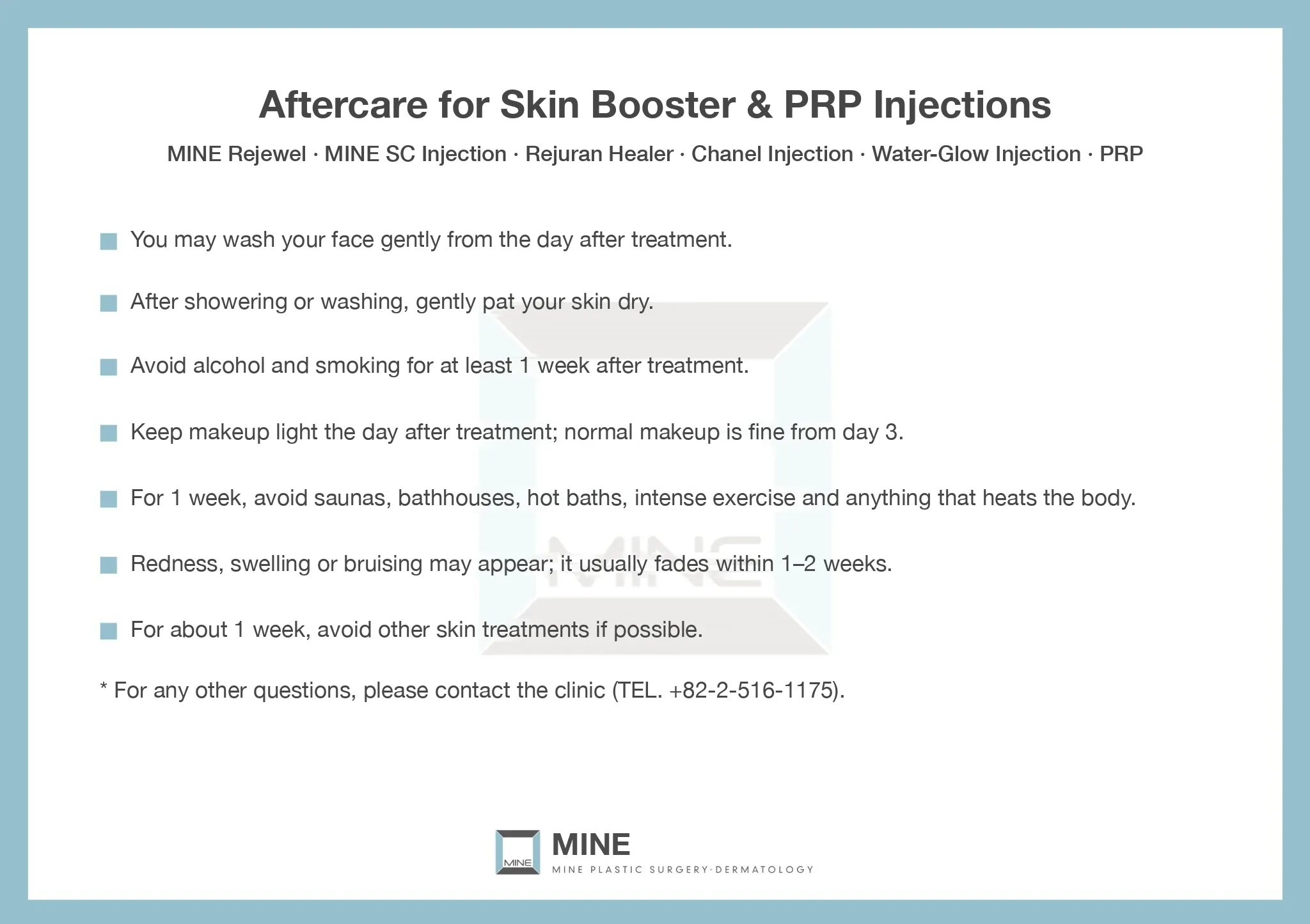
Most people can go about their normal day after a skin booster, but redness, swelling, bruising or small bumps are possible. These usually fade within a few days to 1–2 weeks. If a lump persists or grows, come back so we can check it. Avoid saunas, hot baths, strenuous exercise and alcohol on the day of treatment. Our aftercare sheet goes further and recommends avoiding heat and alcohol for about a week, because both can increase swelling and irritation at the injection sites.
Frequently Asked Questions
Which skin booster is right for me?
Match the type of skin booster to your main concern rather than to a brand. For slow recovery or sensitive skin, PDRN is usually considered; for lost elasticity, PLLA/PDLLA; for dryness and small volume gaps, HA; and for rough texture or uneven tone, an ECM complex booster. A consultation confirms the right choice for your skin.
PDRN vs PLLA skin boosters: what is the difference?
They work in different ways. PDRN sends repair signals to skin cells through the adenosine A2A receptor, while PLLA/PDLLA prompts fibroblasts to build new collagen. The two can be combined, with the order and spacing set by your doctor.
How often should you get skin booster injections?
It depends on the family. Rejuran is usually given as 3–4 sessions, 3–4 weeks apart, and Juvelook is given in a similar series. HA is typically repeated after about 3–12 months, and ECM complex boosters use a series followed by maintenance. Setting up a maintenance plan with your doctor works best.
How long do skin booster results last?
According to dermatology textbooks, injectable HA lasts about 3 to 12 months, while the collagen effect of PLLA can last 2 years or more with serial treatments. PDRN results build over 4–12 weeks, and how often you need maintenance varies from person to person.
Who should not get skin boosters?
People with an active infection, diabetes, lupus or other connective-tissue disorders, recent isotretinoin use, or a bleeding disorder are generally advised against treatment. If you have a salmon or fish allergy, consult your doctor before any PDRN booster.
Can I go back to work right after a skin booster?
Usually, yes, on the same day. Avoid saunas, intense exercise and alcohol afterward. With Juvelook, small bumps can appear right after treatment and usually settle within 24–48 hours.
Choosing Your Skin Booster at MINE in Seoul
At MINE Plastic Surgery & Dermatology in Gangnam, Seoul, we work with all four types of skin boosters, so the choice can follow your skin rather than a single product we happen to offer.
Skin boosters available at MINE
We offer Rejuran, Juvelook, Re2O, Laetigen and MINE Rejewel. Together they cover the PDRN, PLLA/PDLLA, HA and ECM complex families, so we can match the treatment to your goal: recovery, firmness, hydration or texture.
What we check in your consultation
In a 1:1 consultation we go through your main skin concern, allergy history, any contraindications, the result you are hoping for and how long you would like it to last. From there we build a realistic plan instead of stacking treatments you do not need.
If you would like help choosing among the types of skin boosters, call +82-2-516-1175 or message us on WhatsApp or KakaoTalk to arrange a consultation.
Written and reviewed by Dr. Lee Sung-wook, Board-Certified Plastic Surgeon, MINE Plastic Surgery
※ This content is for informational purposes only and does not replace professional medical advice, diagnosis, or treatment. Individual results may vary, and side effects may occur. Please consult with a board-certified plastic surgeon for personalized advice.