EN


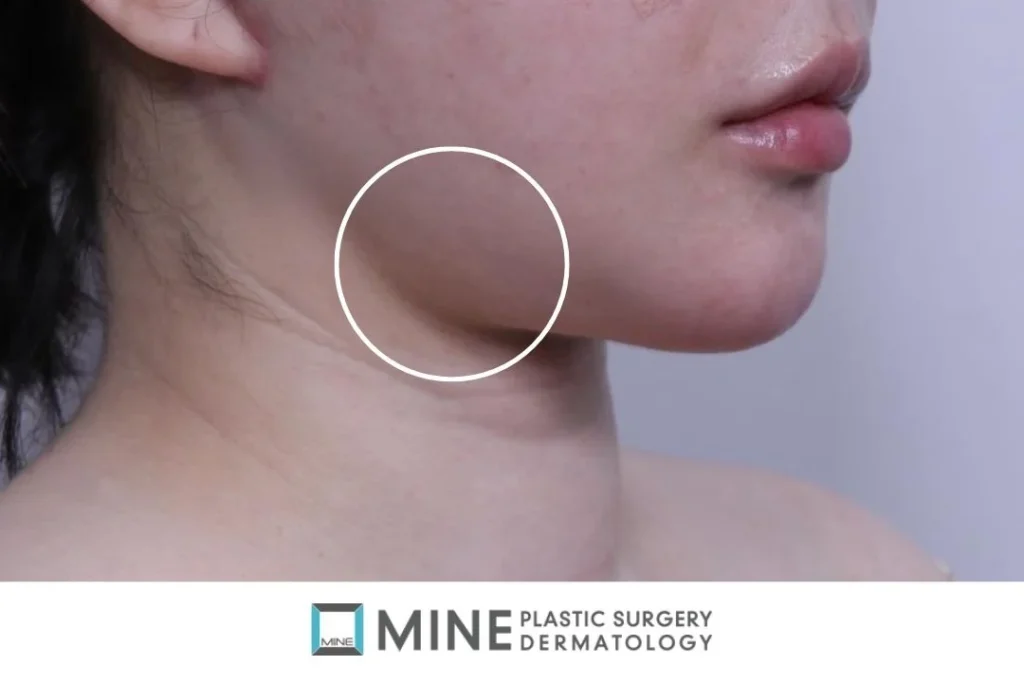
If you have a soft fullness under the jawline that never seems to shift with diet or exercise, your salivary glands may be part of the picture. Salivary gland Botox is a botulinum toxin injection into the submandibular glands under the jaw. So, how long does salivary gland Botox last? Typically about 3–6 months, with the effect starting at 2–4 weeks. The exact length varies from person to person.
This guide focuses on one question: how long the effect lasts, and what kind of change you can realistically expect during that time. We cover why the effect behaves differently from jaw-muscle Botox, a week-by-week timeline, how much a gland can actually shrink, and how repeat sessions are spaced. For a broad overview of the treatment itself, see our general salivary gland Botox guide.
Table of Contents
How Long Does Salivary Gland Botox Last? The Short Answer
For most people, salivary gland Botox lasts about 3–6 months. Change is not instant: the gland begins to look and feel smaller from about 2–4 weeks after the injection, and the effect usually peaks at around 4–6 weeks. After that, the gland slowly returns to its previous activity and size.
How long does salivary gland Botox last for most people? About 3–6 months
Think of the result as a curve rather than an on/off switch. It builds over the first month, holds for a while, and then fades gradually. Because the fade is slow, many patients notice the jawline “softening” again over several weeks rather than overnight. In clinic, the next session is commonly planned around the 4–6 month mark, adjusted to how quickly each person’s effect wears off.
Why individual results vary
Duration depends on several things that differ between people: the starting size of the gland, how active it is, the dose used, and how well the toxin is placed inside the gland. Some patients find that the effect lasts a little longer after repeat sessions, but this is not guaranteed, and there is no large clinical trial that pins down an exact number. That is why we describe duration as a range, not a promise.
As a result, two people who have had the treatment may report durations that differ by a month or more. The factors that most often explain the difference are:
- Gland size: larger, more active glands may need a higher dose and can regain activity sooner.
- Dose and placement: toxin placed accurately inside the gland under ultrasound tends to give a more even effect.
- Treatment history: some people notice a slightly longer effect after repeat sessions, while very frequent top-ups can lead to resistance.
- What is causing the fullness: if fat or loose skin also contributes, the visible change may look smaller even when the gland has responded.
Why the Effect Can Outlast Muscle Botox (How It Works)
Most people know Botox as a treatment for wrinkles or for slimming the jaw muscle (the masseter). In the salivary glands, the same medicine works on a different target, and that difference helps explain the timing.
Blocking the nerve signal, not destroying the gland
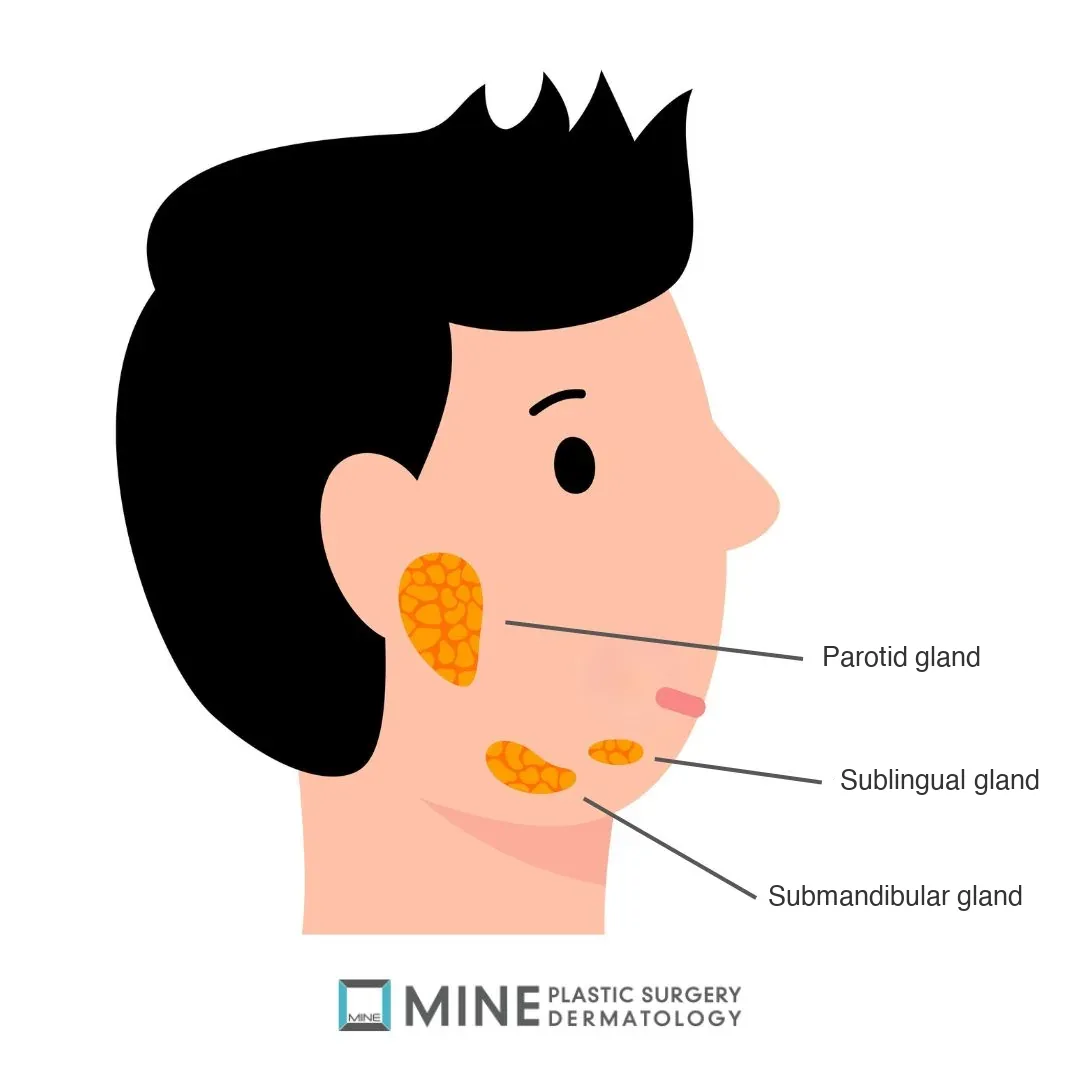
Your salivary glands make saliva when nerves send them a chemical message called acetylcholine (a messenger that tells the gland to start working). Botulinum toxin blocks the release of this messenger at the point where the nerve meets the gland. It does this by disabling a small group of proteins called SNARE proteins (the “delivery machinery” that lets the nerve release its message). With fewer signals arriving, the gland works less, makes less saliva, and gradually becomes smaller.
Surgical literature describes this same action plainly: botulinum toxin reduces saliva production by blocking acetylcholine at the nerve–gland junction. Surgeons even inject it into the gland after partial gland removal to quiet saliva flow while the area heals. Importantly, the toxin does not kill gland cells. It simply turns the volume down for a while.
Why function recovers when the toxin wears off
Because the gland is not damaged, the nerve gradually builds new connections, and normal signaling returns. This is why the result is temporary and why the gland slowly regains its size. It is also why saliva production returns to normal over time.
This also explains why the timing differs from other Botox treatments. Interestingly, secretory glands (glands that produce fluid, such as salivary and sweat glands) often respond for longer than muscles do. Dermatology literature reports effects in these glands lasting several months, and in some cases close to 12 months. That figure comes from secretory glands in general, not from a dedicated trial on submandibular glands, so it should be read as “possible for some people,” not as the expected result.
Why does the gland matter so much for the jawline? One study cited in the medical literature found that the submandibular gland can make up as much as 24.5% of the tissue volume under the chin and neck skin. In other words, fullness under the jaw is not always fat. If you are unsure which one you have, an ultrasound check is the simplest way to tell.
Who Is a Good Candidate, and What Results Are Realistic?
The best candidates have a visible bulge just under the jawline that comes mainly from enlarged submandibular glands rather than from fat or loose skin. Ultrasound helps confirm this before any treatment is planned.
Typical reduction: 10–30% of gland volume
Duration is only half of the picture; the other half is how much change you can expect while it works. Gland volume reduction after salivary gland Botox is generally considered to be about 10–30%. For comparison, masseter (jaw muscle) Botox is often described as shrinking the muscle by about 30%. So the change from gland injections tends to be more modest, but it can still smooth the line between the jaw and the neck. If you are weighing jaw-muscle and gland treatments, our article on masseter versus parotid gland Botox explains how the targets differ.
MRI example: 7.6 mL to 5.4 mL
How much is a “gland volume change” in real numbers? A surgical case in the plastic surgery literature (Auersvald 2018) used MRI to record a submandibular gland shrinking from 7.6 mL to 5.4 mL, about 2.2 mL, six months after neck rejuvenation surgery. To be clear, that patient had surgery, not Botox, so this is not a Botox result. We share it only to show that gland size is measurable and that a few milliliters can make a visible difference under the jaw. You can read the original paper, Management of the Submandibular Gland in Neck Lifts, for the surgical context.
When glands are too large for Botox
Botox has limits. When the glands are very large, or when they hang below the jawline together with loose skin and fat, injections alone may not give the contour you want. In those cases, a surgical option may be discussed during consultation.
The Session Step by Step: What Happens in About 15–20 Minutes
The visit is short. The injection itself takes about 5–10 minutes, and the whole session, including the ultrasound check and observation, usually finishes within 15–20 minutes. At a glance, the visit runs in four steps:
- Ultrasound assessment of both glands
- Numbing cream on the skin
- Ultrasound-guided injection into each gland
- 15–20 minutes of observation before you leave
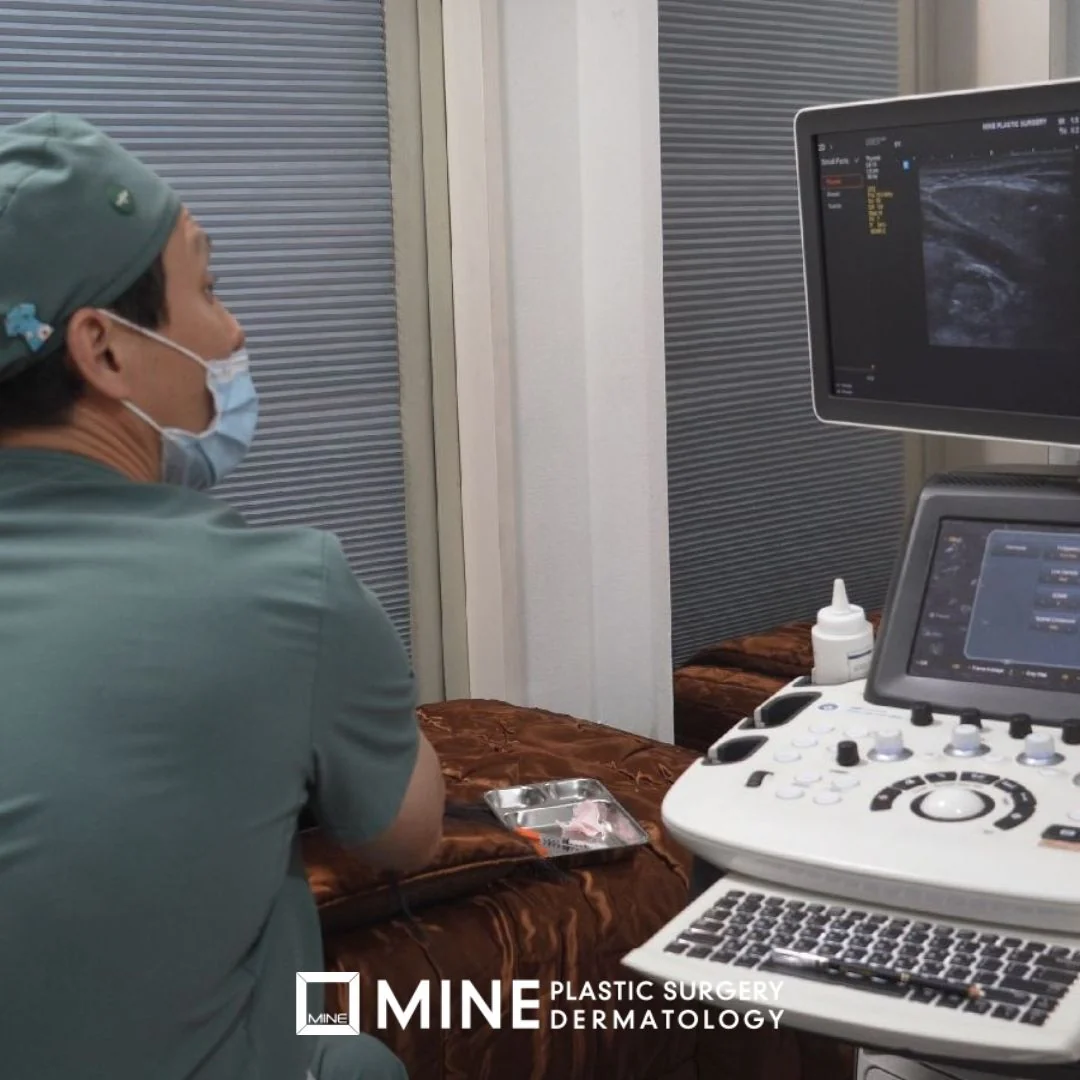
1. Ultrasound assessment
The doctor scans the area under your jaw to locate each gland, check its size and depth, and confirm that the fullness is really coming from the gland.
2. Topical anesthesia
A numbing cream is applied to the skin to keep the injections comfortable.
3. Injection into each gland
Using ultrasound guidance, the toxin is placed inside the gland on each side. Accurate placement matters: the gland sits close to the muscles you use to swallow, and medical textbooks note that care is needed to avoid affecting them.
4. 15–20 minutes of observation
You rest briefly so the team can check how you feel before you go home. Most people return to their normal routine the next day.
Timeline: How Long Salivary Gland Botox Lasts, Week by Week
The table below shows what the months after the injection usually look like, from the first days to the point where the effect fades. Timing differs from person to person, so treat this as a general guide.
| Period | What to expect |
|---|---|
| Days 1–3 | Small injection marks and mild swelling are possible. Normal routine from the next day. |
| Weeks 1–2 | Any bruising usually fades. Gland activity starts to slow. |
| Weeks 2–4 | Gradual change begins. Many people first notice a softer line under the jaw. |
| Weeks 4–6 | Peak effect. This is the best time to judge your result. |
| Months 3–6 | The effect slowly wears off as nerve signals return. A follow-up visit is often planned around 4–6 months. |
Days 1–3
Most patients feel normal. A little swelling at the injection points usually settles within a few days, and small bruises, if any, fade within one to two weeks. For the first few hours, it helps to avoid lying down, and to skip intense exercise and saunas for the day.
Weeks 2–4: gradual change
Because the toxin works on nerve signals, the gland needs time to shrink. Do not judge the result in the first week or two.
Weeks 4–6: peak effect
This is when the result is usually clearest. If you plan to compare photos, take them now, in the same lighting and head position as before treatment.
Months 3–6: wearing off
The gland gradually regains activity and size. This is the stage where many patients start wondering how long their own result will last, because the answer now shows up in the mirror. Keeping a simple note of when you first noticed the change and when it began to fade helps your doctor plan the next interval. If the change faded much earlier than expected, read our guide on what to do if results seem weak or fade early.
Safety, Side Effects and Why Repeat Sessions Need Spacing
Salivary gland Botox is a quick, non-surgical treatment, but like any medical procedure it has possible side effects.
Dry mouth and swallowing discomfort (rare, transient)
Because the gland makes less saliva, some people notice a slightly dry mouth for a while. Most adjust within a few weeks. Swallowing discomfort is uncommon and usually temporary; it is more likely if toxin spreads to nearby swallowing muscles, which is one reason ultrasound-guided placement matters. Bruising and slight asymmetry are also possible. For practical tips, see our page on swallowing and dry mouth care.
Antibody formation (toxin resistance) and interval planning
If botulinum toxin is injected at high doses too often, the body can make antibodies against it, and the treatment may stop working as well. This is called toxin resistance, and it is the main reason not to “top up” early. Knowing how long the effect lasts in your own case helps here: the effect should be allowed to wear off before the next dose, and spacing sessions sensibly with an appropriate dose protects your long-term results. Your doctor will plan the interval with you.
When it seems not to work
A weak result can have several causes: the fullness may be mostly fat rather than gland, the gland may be very large, or the dose may not have matched the gland size. A follow-up scan usually clarifies which applies.
Salivary gland Botox may not be suitable if you are pregnant or breastfeeding, have a neuromuscular condition, or have had an allergic reaction to botulinum toxin. Always share your medical history during consultation. If you want a longer-lasting change, our comparison of Botox versus gland surgery explains the trade-offs. In short, Botox is temporary and non-invasive, while surgery is permanent but involves an operation and recovery.
Frequently Asked Questions About Salivary Gland Botox Duration
How long does salivary gland Botox last?
For most people, the effect lasts about 3–6 months. Change starts at 2–4 weeks and peaks at about 4–6 weeks. Duration varies between individuals, and some people find it lasts a little longer after repeat sessions.
Does salivary gland Botox last longer than masseter Botox?
It can. Dermatology literature reports that secretory glands, such as salivary and sweat glands, may respond for several months and sometimes close to 12 months. There is no direct trial comparing the two, so treat this as possible rather than expected. Read more on masseter versus parotid gland Botox.
When will I see results from salivary gland Botox?
Results appear gradually. Most people notice change from about 2–4 weeks after the injection, with the clearest result at around 4–6 weeks.
How much can the gland shrink?
Typical gland volume reduction is about 10–30%. That is more modest than the roughly 30% reduction often described for masseter Botox, and very large glands may need a different approach.
How often can I repeat salivary gland Botox?
Repeat sessions are usually planned when the effect wears off, often around 4–6 months. Injecting too often can lead to antibodies and weaker results, so your doctor will set a safe interval. See our guide on what to do if results seem weak or fade early.
Is there downtime or dry mouth after the injection?
There is very little downtime, and most people return to their routine the next day. Temporary dry mouth or swallowing discomfort is uncommon and usually settles. Learn more about swallowing and dry mouth care.
Talk to Mine Plastic Surgery About Your Jawline
The right plan starts with knowing what is behind the fullness under your jaw. At Mine Plastic Surgery in Gangnam, Seoul, Dr. Lee Sung-wook, a board-certified plastic surgeon, begins with an ultrasound check to see whether your salivary glands, fat or skin are the main cause, and then explains realistic options and timing. He can also answer “how long does salivary gland Botox last?” for your particular case, based on your gland size and treatment history. International patients can contact our English-speaking coordinators through the inquiry form or by phone at +82-2-516-1175.
Written and medically reviewed by Dr. Lee Sung-wook, board-certified plastic surgeon, Mine Plastic Surgery.
※ This content is for informational purposes only and does not replace professional medical advice, diagnosis, or treatment. Individual results may vary, and side effects may occur. Please consult with a board-certified plastic surgeon for personalized advice.