EN


Salivary gland Botox cost is the price of injecting botulinum toxin into enlarged parotid or submandibular glands, and it is set by five factors — toxin type, number of units, ultrasound guidance, the injecting doctor and follow-up care — rather than a single flat fee. If you have been comparing clinics in Seoul, you have probably noticed that the numbers vary a lot, and it is hard to tell why.
Many people who come to see me describe the same thing. They have not gained weight, yet the jawline looks softer and the area below and in front of the ears seems fuller than it used to. Losing weight or trying other contouring treatments has not changed it much. In a good number of these patients, the cause is enlarged salivary glands.
The first question I usually hear in consultation is, “How much will this cost?” That is a fair question. But as a plastic surgeon with 16 years of practice, I answer the question of salivary gland Botox cost with factors rather than a single number. The same name, “salivary gland Botox,” can describe quite different procedures, and the price only makes sense once you know what you are actually paying for.
What Is Ultrasound-Guided Salivary Gland Botox?
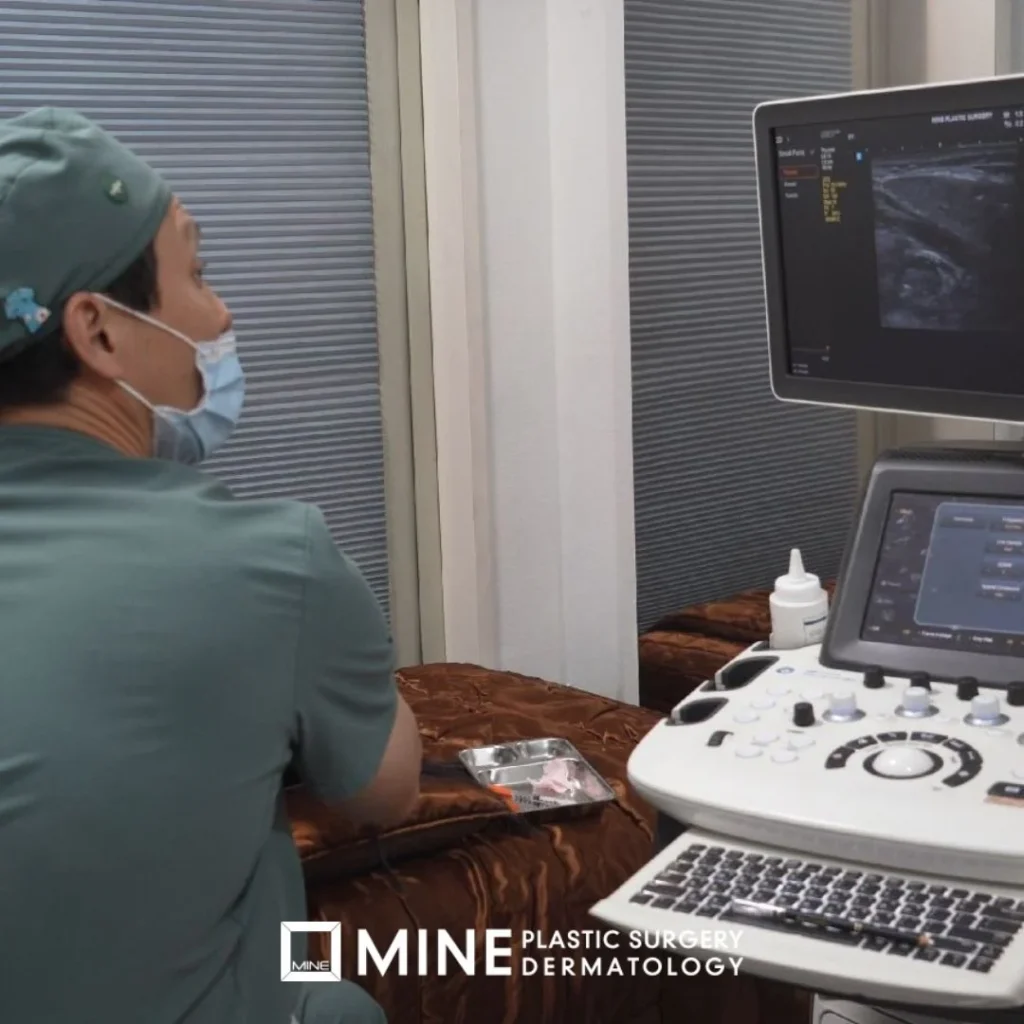
Ultrasound-guided salivary gland Botox is an injection of botulinum toxin directly into the gland tissue while the doctor watches the gland on an ultrasound screen. The toxin calms the gland’s activity, and over the following weeks the gland becomes less bulky, so the side of the face looks slimmer.
Parotid vs submandibular gland enlargement
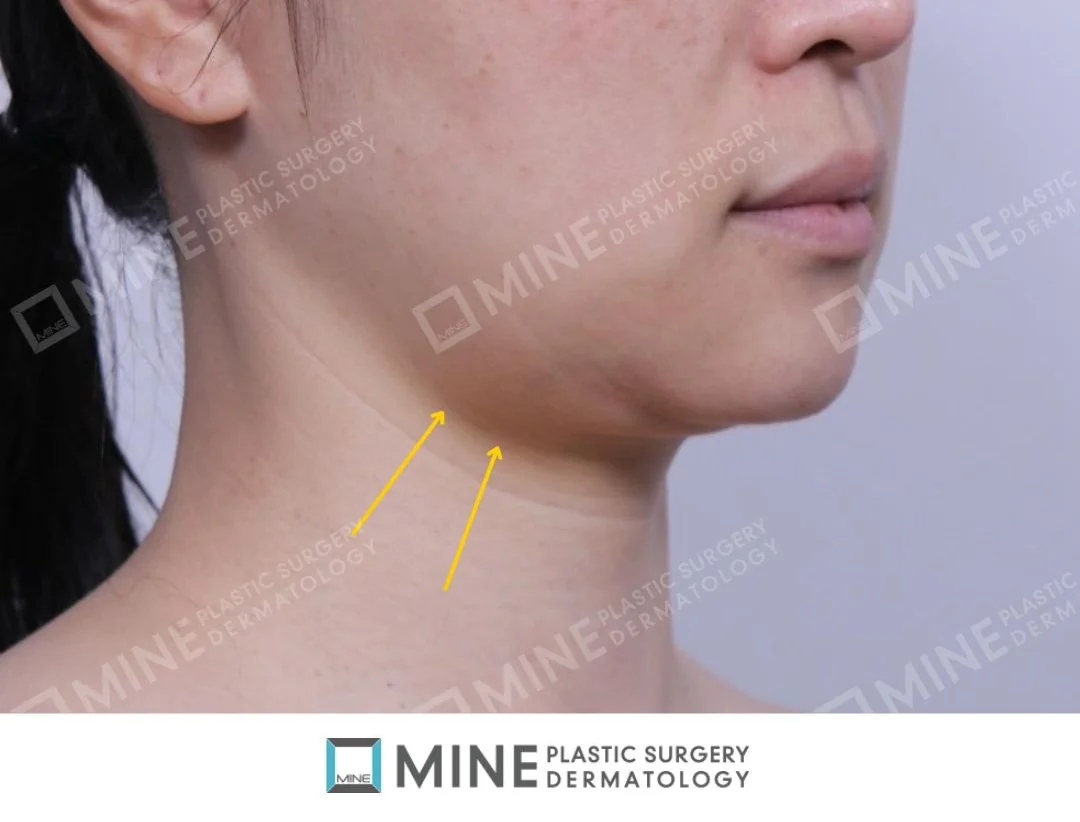
You have two pairs of large salivary glands that affect facial shape. The parotid glands sit in front of and below the ears, over the angle of the jaw. The submandibular glands sit under the jawline, toward the back. When either pair becomes thicker than usual, the lower face can look wider or the jawline can lose its clean line.
Surgical textbooks note that the parotid gland can partly wrap around the edge of the masseter (the main chewing muscle), while the submandibular gland lies deeper, close to the muscle that forms the floor of the mouth. This is why injection depth matters: the submandibular gland needs particular care so that swallowing is not disturbed.
Ultrasound-guided vs palpation-guided injection
Traditionally, salivary gland Botox was done by palpation, meaning the doctor located the gland by touch alone. The difficulty is that gland position, size and depth differ from person to person, and branches of the facial nerve and blood vessels run nearby.
With ultrasound, the doctor sees the gland’s exact position, thickness and surrounding vessels in real time before and during the injection. In practical terms, that brings four benefits:
- Accurate targeting: the toxin works best when it lands inside the gland tissue itself (the parenchyma). Seeing the gland reduces “missed” injections.
- Lower risk to vessels and nerves: injecting where you can see is very different from injecting blind.
- Better dose distribution: the dose can be matched to the gland’s size, which helps avoid side effects from using more than needed.
- Precision at re-treatment: a saved ultrasound record lets the next session be adjusted more precisely.
A surgical textbook on salivary glands describes injecting about 0.1–0.2 mL per point at 4–10 points on the parotid gland depending on its size, preferably under ultrasound control. In my clinical experience, whether a procedure is ultrasound-guided has been the biggest single variable for both safety and how consistent the result is. Being able to see what you are injecting is not a minor detail.
Who Is a Good Candidate (and Who Is Paying for the Wrong Treatment)?
A good candidate for salivary gland Botox is someone whose lower-face fullness actually comes from enlarged salivary glands, not from the masseter muscle, fat or loose skin. Getting this right is the first and most important way to keep your salivary gland Botox cost from being wasted, and to avoid spending money on a treatment that cannot help you.
Gland, masseter, fat or skin laxity — how to tell
These four causes can look similar in the mirror, but they feel different and need different solutions:
| Cause | Main area | How it feels | Usual solution |
|---|---|---|---|
| Salivary gland enlargement | Below the ear to the side of the jaw | Soft, slightly plump tissue | Salivary gland Botox, gland reduction surgery |
| Square jaw (masseter) | Beside the back teeth, below the cheekbone | Turns firm when you clench | Masseter Botox, jaw contouring surgery |
| Double chin (fat) | Center under the chin | Soft tissue you can pinch | Double chin treatment, liposuction |
| Skin laxity | Along the whole jawline | Skin stretches when pulled | Lifting procedures |
Common reasons the glands become prominent include:
- Genetics: if a parent has prominent glands, a similar pattern is more likely.
- Chewing habits: chewing mostly on one side or often eating tough foods can stimulate the glands.
- Aging: as the skin and the SMAS layer (the supportive muscle-and-fascia layer of the face) loosen, the glands can show more.
- After masseter Botox: once the masseter slims down, the glands sometimes look more noticeable. We see this fairly often in clinic.
Aesthetic dermatology literature also describes parotid Botox as an add-on to masseter Botox to enhance facial slimming, which fits what we observe when both structures contribute to a wide lower face.
Why diagnosis is the first cost saving
If the real problem is the masseter, fat or sagging skin, any money you spend on gland Botox is aimed at the wrong target; it will not give the result you want, no matter how good the price looks. As I often tell patients, the first step to saving money is finding out exactly which structure is causing the fullness. A short ultrasound scan during consultation usually makes that distinction much clearer than a mirror or a photo can.
Salivary Gland Botox Cost: 5 Factors That Set the Price
The salivary gland Botox cost is shaped by five factors, and every patient’s combination is different. That is why no honest clinic can quote a single fixed figure before examining you. Here is how each factor affects the final price:
| Factor | What it means | Impact on price |
|---|---|---|
| Toxin type | Country of origin (US, Germany, Korea, China, etc.) and whether it is a genuine product | ★★★★★ |
| Number of units | Varies from about 100 to 200 units or more, depending on gland size | ★★★★☆ |
| Ultrasound guidance | Adds precision and also adds to the cost | ★★★★☆ |
| Who injects | Whether a plastic surgeon performs the injection directly | ★★★★☆ |
| Follow-up policy | Whether side-effect monitoring and re-visits are included | ★★★☆☆ |
Toxin type and genuine product
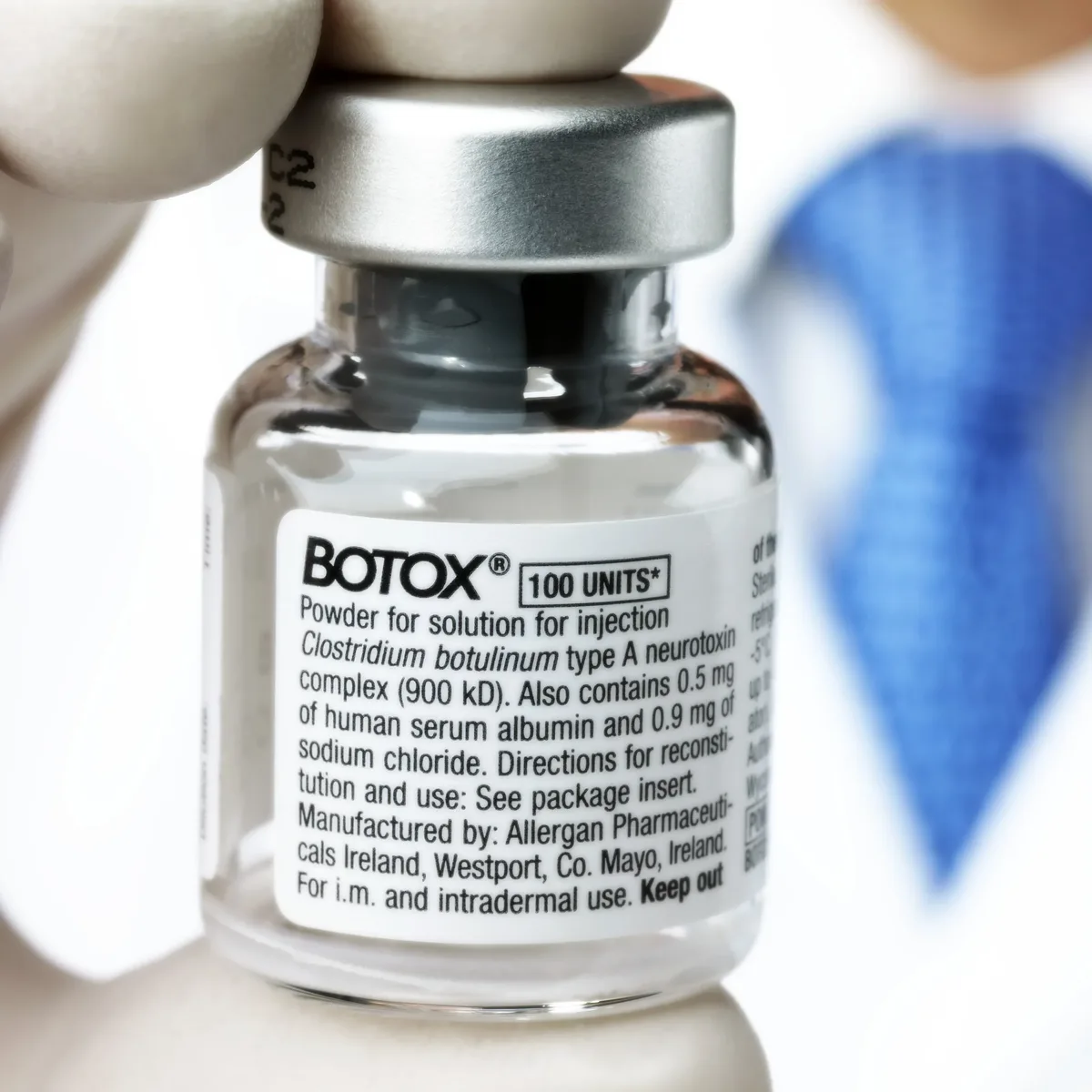
Botulinum toxin products differ in origin and unit price, and this is the factor with the largest effect on salivary gland Botox cost. In Korea, toxins used in clinics should be products approved by Korea’s Ministry of Food and Drug Safety (MFDS). It is reasonable to ask which product will be used and to see the vial before your injection. A clinic that uses genuine products should have no hesitation in showing you the label.
Number of units (100–200+)
Salivary gland Botox typically uses about 100 to 200 or more units depending on gland size. Larger or thicker glands need more, and treating both the parotid and submandibular glands needs more than treating one pair. Because the dose follows your anatomy, the salivary gland Botox cost follows the dose. This is also why any figure given before anyone has examined your glands can only be a rough guess.
Ultrasound guidance
Ultrasound-guided salivary gland Botox requires equipment and time to scan before and during the injection. It usually raises the salivary gland Botox cost compared with palpation-only injection, but it is the part of the price that buys accuracy.
Who injects
The glands sit close to facial nerve branches and blood vessels, so the injector’s anatomical experience directly affects safety. Ask whether a specialist will perform the injection personally, rather than only overseeing it. An experienced injector also adjusts the depth and spacing of each injection point to the individual gland, which is something no advertisement can show you.
Follow-up and aftercare policy
Some prices include a review visit and help if a side effect appears; others do not. This has a smaller effect on the headline price but matters a lot if something does not go as planned.
If you are also weighing up an operation, keep in mind that surgery has a completely different cost structure; I explain it separately in salivary gland surgery cost in Korea.
How to Read a Salivary Gland Botox Price in Korea: 5 Quote Checks
Reading a salivary gland Botox price in Korea means checking what the number includes, not only how low it is. Two quotes with the same salivary gland Botox cost can describe very different treatments.
The “50% off event price” trap
Korean clinics often advertise “event prices,” limited-time discounts that are part of the local marketing culture. Foreign patients sometimes assume a 50% discount is automatically a good deal. It can be, but only if the treatment behind it is the same. A low advertised salivary gland Botox cost may be reached by using fewer units, a different product, or no ultrasound at all. A discount on its own tells you nothing about the product, the dose or the skill of the person holding the needle.
Checklist before you book
Before you confirm a booking, ask these five questions:
- Is it a genuine, MFDS-approved product? Ask for the product name.
- Is the product close to its expiry date? A fair question when the price seems unusually low.
- Does the advertised price cover fewer units than you actually need? Ask how many units your quote covers.
- Is ultrasound actually used during the injection, or does it only appear in the treatment’s name?
- Is there a free follow-up or re-visit if a side effect occurs?
The most useful single question is simple: “What is included in this price?” Patients who ask why a price is what it is tend to end up more satisfied than those who only compare numbers. In medicine, part of what you pay for is the reliability and safety of the result.
How MINE Prepares Your Personal Quote
At MINE, a personal quote is based on an ultrasound measurement of your glands, because the right dose depends on how thick they are and how the tissue is distributed.
Ultrasound measurement → individualized dose
During consultation, we scan the parotid and submandibular glands, measure their thickness, and check how the gland tissue is spread out. From that, I propose a dose for your specific anatomy. The scan is saved, so at your next session we can compare and fine-tune the dose more precisely.
Why there is no flat price
Because the dose is individualized, the same price does not apply to everyone. Our principle is to give the exact salivary gland Botox cost after a personal consultation. If you are traveling from abroad, it helps to arrange a consultation and request a quote before you plan your trip, so you know what to expect. A quote built on your own measurements is also much easier to compare fairly with quotes from other clinics.
Side Effects and Recovery in Brief
Salivary gland Botox is generally regarded as a relatively safe procedure, but like any medical treatment it carries some risk. Here is a short summary:
- Bruising or swelling: the most common effect, usually settling within 3–7 days.
- Temporary dry mouth: saliva output dips for a while, usually recovering within 1–2 weeks.
- Rare effects: mild asymmetry if the two sides are not balanced well, or, very rarely, an allergic reaction to the toxin.
- Nerve or vessel injury: a possibility with imprecise injection, which is why accuracy matters.
Effects begin in 1–2 weeks, are clearest at 3–4 weeks and usually last about 4–6 months. Clinical literature reports that the reduction in saliva output lasts on average about 2–3 months, while the slimmer contour tends to last longer, so the two should not be confused. For details, see effects and side effects of salivary gland Botox, how long salivary gland Botox lasts, and salivary gland Botox aftercare.
Before treatment, tell us if you take aspirin or blood thinners, have had Botox before, or have any allergies. And keep expectations realistic: salivary gland Botox slims the side of the face, but it does not lift sagging skin.
Salivary Gland Botox Cost FAQ
How much does salivary gland Botox cost in Korea?
There is no single flat price. The price depends on the toxin, the number of units, ultrasound guidance, who injects and the follow-up policy. An exact quote is only possible after your glands are measured by ultrasound.
Why do salivary gland Botox prices differ so much between clinics?
Clinics differ in the product and its origin, the units included, whether ultrasound is used, the injector’s qualifications and what aftercare is covered. When you compare salivary gland Botox cost between clinics, look at what each price includes rather than the number alone.
Is ultrasound-guided salivary gland Botox more expensive than injection without ultrasound?
It can cost more. Without ultrasound, some of the toxin may land outside the gland because gland position and depth vary between people. When judging the price, prioritizing accuracy over price usually gives better value for the result.
How many units of Botox are used for salivary glands?
Roughly 100 to 200 units or more, depending on gland size and whether one or both gland pairs are treated. The final dose is decided after measurement.
How often will I need to repeat it, and does that affect total cost?
The effect usually lasts about 4–6 months, so a 4–6 month interval is common. Very short intervals are not advised, because in theory frequent dosing could encourage antibodies to the toxin. Your long-term spending depends on how often you choose to repeat it; see how long salivary gland Botox lasts.
Does salivary gland Botox affect chewing?
The salivary glands make saliva; they are not chewing muscles. When the injection is placed accurately, chewing is rarely affected. You may notice temporary dryness or that swallowing feels slightly different for a short time.
Get a Salivary Gland Botox Quote Based on Your Ultrasound
A salivary gland Botox quote is most useful when it is based on your own ultrasound, because the first question is whether your glands are really the cause. If something else is responsible, the treatment will not buy a satisfying result.
At MINE, we review the ultrasound images with you in a 1:1 consultation and explain honestly which approach suits your face. You can read more about salivary gland reduction at MINE, or contact us for an online consultation or booking. International patients can also call us at +82-2-516-1175.
※ This content is for informational purposes only and does not replace professional medical advice, diagnosis, or treatment. Individual results may vary, and side effects may occur. Please consult with a board-certified plastic surgeon for personalized advice.
Written and reviewed by: Dr. Lee Sung-wook, Board-certified Plastic Surgeon, MINE Plastic Surgery & Dermatology