EN
EN

Quick answer: Numbness after plastic surgery is a common, usually temporary side effect caused by minor disruption to small sensory nerves during the procedure. Most numbness fades over weeks to months as nerves recover – often within 6–12 weeks for smaller procedures, and up to 6–12 months for larger ones such as a facelift or body contouring. Individual recovery varies.
Table of Contents
Understanding Post-Surgical Numbness
One of the most common concerns international patients express before traveling to Korea for plastic surgery is about surgery side effects, particularly the sensation of numbness following their procedure. If you are considering a cosmetic procedure and wondering, “How long will I feel numb after surgery?” you are not alone. This temporary loss of sensation is one of the most frequently discussed topics among patients preparing for their K-Beauty transformation.
Numbness after plastic surgery is an expected and normal part of the healing process. When surgeons make incisions and work with underlying tissues, they inevitably affect the sensory nerves in the treatment area. This disruption leads to temporary changes in sensation, ranging from complete numbness to tingling, hypersensitivity, or altered feeling in the surgical site.
Understanding what to expect regarding post-surgical numbness can significantly reduce anxiety and help you plan your recovery journey more effectively. At Mine Clinic in Seoul, our board-certified surgeons take great care to explain all potential surgery side effects during the consultation process, ensuring you feel fully informed and prepared for your procedure.

Key Takeaway: Post-surgical numbness is a normal, temporary side effect that occurs when sensory nerves are affected during surgery. In most cases, sensation returns gradually over weeks to months.
Why Does Numbness Occur After Plastic Surgery?
To understand why numbness happens, it helps to know a little about how your nervous system works. Your skin contains thousands of sensory nerve endings that transmit information about touch, temperature, pressure, and pain to your brain. During plastic surgery, these delicate nerve fibers can be stretched, compressed, or temporarily disrupted as the surgeon works with the tissues.
The Science Behind Post-Surgical Numbness
There are several reasons why you may experience numbness or altered sensation after a cosmetic procedure:
Nerve Stretching and Compression: During surgery, tissues are manipulated, lifted, and repositioned. This process can stretch or compress the small sensory nerves, temporarily interrupting their ability to transmit signals properly.
Tissue Swelling: Post-operative inflammation and swelling put pressure on nerve endings. As swelling decreases over the following weeks, nerve function gradually returns to normal.
Incision Placement: When incisions are made, some superficial nerve endings are inevitably cut. These tiny nerves typically regenerate over time, but the healing process takes patience.
Anesthesia Effects: Local anesthetics used during and after surgery temporarily block nerve signals. While the primary anesthetic effect wears off within hours, some residual effects on nerve sensitivity may persist.
Stunned Nerves vs. Cut Nerves: Why Recovery Time Differs
Surgical textbooks describe nerve recovery in plain stages, and it helps to picture two very different situations. In the great majority of cosmetic cases, the nerve is only stunned – pressed, stretched, or bruised – but its internal wiring stays intact. Doctors call this neurapraxia. Because nothing is actually broken, the signals simply switch back on once the swelling settles, often within about two to three weeks. This is the most common reason for the early, temporary numbness people notice.
The slower situation happens when a few tiny nerve fibers are genuinely cut at the incision – a stage surgeons call axonotmesis. Here the outer “tube” that guides the nerve survives, so the fiber can regrow along its original path. But it does so slowly: roughly one millimeter per day.
That single fact explains the whole timeline. A nerve close to the surface has only a short distance to travel and recovers in a few weeks. A nerve serving a larger or deeper area – think a facelift, a tummy tuck, or the nipple region – may need many months to reach the end of its path. A complete cut of a major nerve (called neurotmesis) is what would need surgical repair, and this is rare in routine cosmetic surgery.
The takeaway is reassuring: those pins-and-needles and itching feelings are usually the nerve waking up or finishing its regrowth, not a sign that something has gone wrong.

According to the American Society of Plastic Surgeons, temporary numbness is listed as an expected side effect for virtually all surgical procedures. The organization notes that most patients experience gradual return of sensation over a period of weeks to months following surgery.
Types of Altered Sensation You May Experience
Post-surgical sensory changes can manifest in different ways:
- Complete numbness: No sensation in the affected area
- Paresthesia: Tingling or “pins and needles” sensation
- Hypersensitivity: Increased sensitivity to touch or temperature
- Dysesthesia: Uncomfortable or abnormal sensations
- Itching: Often a sign of nerve regeneration
These sensations are typically temporary and actually indicate that your nerves are healing and reconnecting.
How Long Does Numbness Last by Procedure?
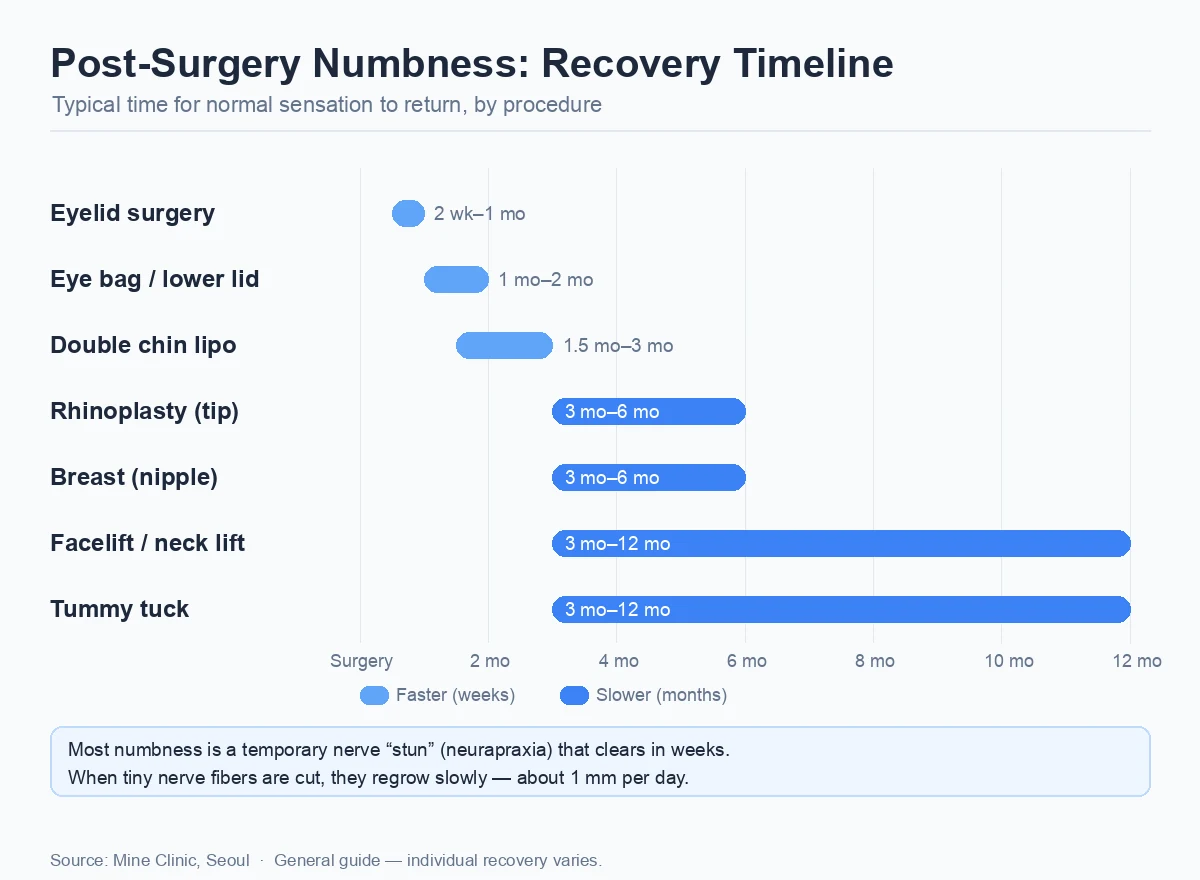
The duration of numbness varies significantly depending on the type of surgery performed, the extent of tissue manipulation involved, and individual healing factors. Below is a comprehensive guide to expected recovery timelines for common procedures performed at Mine Clinic.
Facial Procedures
Double Eyelid Surgery and Eye Procedures
Numbness following double eyelid surgery or ptosis correction typically resolves within two to four weeks. Because the eyelid skin is very thin and the incisions are relatively small, nerve disruption is minimal. Most patients report that normal sensation returns by the time swelling has fully subsided.
For lower blepharoplasty or eye bag removal, the timeline is similar, with most patients experiencing full sensory recovery within six to eight weeks. This timeline can vary depending on how quickly each patient heals.
Rhinoplasty (Nose Surgery)
Rhinoplasty involves significant manipulation of nasal tissues and cartilage, making post-surgical numbness more pronounced than with eyelid procedures. Patients commonly experience numbness at the nasal tip that can persist for three to six months. In some cases, particularly with complex procedures like nose revision surgery, subtle sensory changes may continue for up to one year.
The nasal tip typically takes the longest to regain full sensation because of the concentration of nerve endings in this area and the detailed work required to achieve optimal results.
Facelift and Lifting Procedures
More extensive procedures like SMAS facelift or face and neck lift involve larger areas of tissue manipulation, resulting in more widespread temporary numbness. Patients typically experience numbness around the ears, cheeks, and neck that gradually improves over three to twelve months.
For less invasive options like mini facelift or thread lifting, the numbness duration is significantly shorter, often resolving within four to eight weeks.
Facial Contouring
Cheekbone reduction and V-line surgery involve work on deeper facial structures. Numbness of the cheeks, lips, or chin can persist for several months, with most patients reporting significant improvement by six months and full recovery by one year. Chin surgery patients may experience lower lip numbness that typically resolves within three to six months.
Breast Surgery
Breast augmentation patients commonly experience numbness of the nipple and areola area. Whether using Mentor implants or Motiva implants the timeline for sensory recovery is generally similar.
Most patients notice significant improvement in nipple sensation within three to six months, though some may experience subtle changes for up to two years. The incision location can influence recovery time, with periareolar incisions potentially affecting nipple sensation more than inframammary approaches.
For breast lift or breast revision surgery, similar timelines apply, though revision procedures may have slightly longer recovery periods due to scar tissue from previous surgeries.
Body Contouring
Liposuction and tummy tuck procedures involve significant tissue manipulation over larger surface areas. Numbness of the abdominal skin is very common after tummy tuck surgery, often persisting for three to twelve months. The area between the belly button and the incision line typically takes longest to regain full sensation.
Double chin liposuction patients generally experience a shorter recovery period for sensation, with most reporting improvement within six to twelve weeks.
Why Choose Korea and Mine Clinic for Safe Surgery
When considering plastic surgery abroad, choosing the right destination and clinic is crucial for minimizing surgery side effects and ensuring optimal outcomes. Korea has earned its reputation as a global leader in cosmetic surgery for several important reasons.
Advanced Surgical Techniques That Minimize Nerve Damage
Korean plastic surgeons perform more cosmetic procedures per capita than surgeons in any other country, giving them exceptional experience and refined skills. At Mine Clinic, our surgeons have developed meticulous techniques designed to preserve nerve function whenever possible.
Our medical staff uses advanced imaging and planning technologies to map nerve pathways before surgery. By understanding the precise location of sensory nerves, surgeons can minimize unnecessary disruption while still achieving excellent aesthetic results.
Q: How does Mine Clinic’s approach reduce numbness duration?
A: Our surgeons employ delicate tissue handling techniques that respect natural anatomical structures. By using specialized instruments and magnification when working near nerve pathways, we can significantly reduce trauma to sensory nerves. This careful approach typically results in faster sensory recovery compared to less refined techniques.
Comprehensive Pre-Operative Assessment
Before any procedure, patients at Mine Clinic receive thorough consultations to discuss all potential surgery side effects, including numbness. You can begin this process through our online consultation service before traveling to Seoul.
During your in-person consultation at our clinic, your surgeon will explain exactly what to expect regarding sensation changes specific to your planned procedure. This transparency helps set realistic expectations and reduces anxiety during recovery.
Superior Post-Operative Care
Korea’s care and safety standards are among the highest in the world. At Mine Clinic, our after-care program includes regular follow-up appointments where we monitor your sensory recovery and address any concerns.
Our international service team ensures that language barriers never prevent you from communicating important information about your recovery. We have multilingual coordinators available to assist patients throughout their healing journey.
Important: Risks, Side Effects, and Safety Measures
While numbness is typically a temporary and expected side effect, it is essential to understand the full spectrum of surgery side effects and how they are managed at Mine Clinic. Transparency about risks is fundamental to building trust with our international patients.
Common Side Effects Beyond Numbness
Swelling and Bruising: These are universal after any surgical procedure. Swelling typically peaks at 48 to 72 hours post-surgery and gradually resolves over two to four weeks. Bruising follows a similar timeline, progressing through color changes as it heals.

Discomfort and Pain: Managed with appropriate pain medication, surgical discomfort typically subsides significantly within the first week. By two weeks post-surgery, most patients require only occasional over-the-counter pain relief.
Tightness: Especially common after facelift, tummy tuck, and breast procedures, tightness occurs as tissues heal and swelling decreases. This sensation gradually improves over several months.
Itching: Often a positive sign indicating nerve regeneration, itching around incision sites is common during healing. Avoid scratching to prevent disrupting the healing process.
When to Be Concerned About Numbness
While temporary numbness is normal, certain signs warrant medical attention:
- Numbness that worsens rather than improves over time
- Complete loss of motor function (ability to move) rather than just sensory changes
- Numbness accompanied by severe pain, unusual discharge, or signs of infection
- Significant asymmetry in sensory recovery between sides
At Mine Clinic, we maintain open communication with patients throughout recovery. If you experience any concerning symptoms, our team is available to provide guidance and reassurance.
Safety Measures at Mine Clinic
Our commitment to patient safety extends to every aspect of care:
Board-Certified Surgeons: All procedures are performed by physicians with extensive training and certification in plastic surgery. Our surgeons stay current with the latest techniques and safety protocols.
Accredited Facilities: Our clinic facilities meet international accreditation standards, with advanced operating rooms and monitoring equipment.
Anesthesia Safety: We work with experienced anesthesiologists who carefully manage sedation to ensure patient comfort while minimizing risks.
Sterile Protocols: Strict infection control measures reduce the risk of complications that could affect healing and sensory recovery.
Recovery in Korea: Managing Numbness and Returning Home
Planning your recovery timeline is essential for international patients. Understanding what to expect day by day helps you arrange accommodations, flights, and follow-up care appropriately.
Recommended Stay Duration in Seoul
For most procedures at Mine Clinic, we recommend international patients stay in Seoul for seven to fourteen days. This allows time for:
- Initial healing and swelling reduction
- Suture removal (typically five to seven days post-surgery)
- One or more follow-up appointments to monitor recovery
- Management of any immediate post-operative concerns
Our directions page provides guidance on reaching our conveniently located Gangnam clinic, and we can recommend nearby accommodations suitable for recovery.
Day-by-Day Recovery Timeline
Days 1-3: This is when numbness is most pronounced. Combined with swelling and the effects of anesthesia wearing off, you may feel significant sensory changes. Rest is essential during this phase. Our team provides detailed aftercare instructions and contact information for any concerns.
Days 4-7: Swelling begins to decrease, and you may notice the first improvements in sensation. Some areas may remain completely numb while others begin showing tingling sensations. This is normal and indicates early nerve recovery. Stitch removal typically occurs during this period.
Week 2: Most patients feel comfortable enough to engage in light activities. Numbness persists but may start feeling less extensive. A follow-up appointment confirms proper healing before you return home. Patients may feel tingling sensations (pins and needles) that come and go throughout the six- to twelve-month recovery period.
When Can You Fly Home?
For most facial procedures like eye surgery or rhinoplasty, patients can safely fly home seven to ten days after surgery. More extensive procedures may require a longer stay.
Flying while experiencing numbness is generally safe, though you should take precautions:
- Avoid touching or rubbing numb areas, since you could injure them without realizing it
- Stay well hydrated during your flight
- Avoid alcohol, which can increase swelling
- Follow all post-operative instructions regarding activity restrictions
Managing Numbness After Returning Home
Once you return home, sensory recovery continues for weeks to months. Here are strategies to support healing:
Gentle Massage: Once cleared by your surgeon, light massage of numb areas can stimulate blood flow and potentially support nerve regeneration. Never massage aggressively or before receiving approval.
Protect Numb Areas: Because you cannot feel temperature or pain normally, be careful with heating pads, ice packs, and sun exposure. Numb skin can burn or become damaged without you noticing. Always test the temperature against the back of your hand before applying anything to the surgical area.
Patience and Perspective: Remember that nerve regeneration is a slow process. Nerves typically regenerate at approximately one millimeter per day. Focus on overall healing rather than daily sensory changes.
Stay Connected: Mine Clinic maintains communication with international patients throughout recovery. Do not hesitate to reach out with questions or concerns via WhatsApp or email.
Frequently Asked Questions
How long is skin numb after surgery?
Most numbness improves within a few weeks to a few months as the nerves heal. Smaller procedures often recover in about 6–12 weeks, while larger surgeries such as a facelift or body contouring can take 6–12 months. Lingering numbness should be checked by your surgeon.
Why does numbness happen after surgery?
During surgery, small sensory nerves in the skin are temporarily disturbed or stretched. As these nerves repair themselves, sensation gradually returns. This is a normal part of healing and not usually a sign of damage.
Is numbness after plastic surgery permanent?
Permanent numbness is uncommon. Most people regain normal sensation over time, though a small area of reduced feeling can occasionally persist. Tell your surgeon if numbness is worsening or is accompanied by pain.
How long does tingling last after surgery?
Tingling often appears as the nerves recover and can come and go for several weeks to months. It is generally a positive sign that sensation is returning, but persistent or severe tingling should be reviewed by your doctor.
When should I worry about numbness after surgery?
Contact your surgeon if numbness suddenly worsens, spreads, or comes with increasing pain, swelling, or signs of infection. Numbness that is gradually improving is usually a normal part of recovery.
Take the Next Step Toward Your Transformation
Understanding surgery side effects like post-surgical numbness helps you prepare for a smooth recovery journey. At Mine Clinic, we believe that informed patients are empowered patients. Our commitment to transparency, safety, and exceptional care has helped thousands of international patients achieve their aesthetic goals while recovering comfortably in Seoul.
Interested in this procedure? Contact Mine Clinic today for a personalized online consultation. We are ready to assist you on WhatsApp and guide you through your K-Beauty journey in Seoul.
Reviewed by Dr. Lee Sung-wook, Board Certified Plastic Surgeon at Mine Clinic.
Disclaimer: This content is for informational purposes only and does not substitute professional medical advice. Individual experiences with surgery side effects, including numbness duration, vary based on personal health factors and the specific procedure performed. Always consult with a qualified medical professional regarding your specific situation.
※ This content is for informational purposes only and does not replace professional medical advice, diagnosis, or treatment. Individual results may vary, and side effects may occur. Please consult with a board-certified plastic surgeon for personalized advice.