EN
EN

Table of contents
Breast augmentation is a transformative cosmetic procedure that significantly impacts women’s confidence and body proportions. However, choosing the most suitable method among the various breast augmentation methods available can be challenging. From different implant types and placement techniques to fat transfer and hybrid approaches, each surgical method offers unique characteristics and benefits.
This comprehensive guide analyzes various breast augmentation methods to help you make the most informed decision for your needs. Based on expert medical knowledge and the latest trends, we’ll explore the features, advantages, disadvantages, ideal candidates, and recovery times for each surgical approach.
Understanding Breast Augmentation Basics
Breast augmentation is a cosmetic procedure designed to enhance breast size and shape, performed for various purposes including increasing naturally small breasts, restoring volume lost after pregnancy and breastfeeding, correcting asymmetry, and improving overall body proportions.
Primary Goals of Breast Augmentation:
- Breast size enhancement
- Breast shape improvement
- Asymmetry correction
- Restoring fullness to breasts that have lost volume — note that true sagging usually needs a breast lift as well, not augmentation alone
- Overall body proportion enhancement
Demand has shifted steadily toward natural-looking results: patients increasingly ask for subtle enhancement that suits their own frame rather than dramatically oversized implants.
Types of Breast Augmentation Methods
Breast augmentation can be broadly categorized into three main approaches:
- Breast Implant Augmentation
- Uses silicone or saline implants to enhance breast size and shape
- Most common and predictable method for breast enhancement
- Fat Transfer Breast Augmentation
- Transfers fat from other body areas to the breasts
- Provides natural results with additional body contouring benefits
- Hybrid Breast Augmentation
- Combines implants with fat transfer techniques
- Offers both reliable volume from implants and natural texture from fat grafting
Each method’s suitability depends on factors including body type, desired results, existing breast tissue condition, and recovery time preferences.
Breast Implant Augmentation
Breast implant augmentation remains the most widely used breast augmentation method. This approach offers predictable results and extensive size options, making it suitable for most patients seeking breast enhancement.
One thing to be clear about before you go any further: breast implants are not lifetime devices. The longer they stay in place, the greater the chance of a complication such as capsular contracture or rupture, so replacement or removal may become necessary at some point — and the possibility of a second operation, with its own cost and recovery, belongs in your decision from the start rather than years later.
Implant Types and Characteristics
1. Implant Materials
Silicone Gel Implants:
- Advantages: Natural feel and appearance, backed by a long clinical track record
- Disadvantages: Rupture detection may be more difficult, higher relative cost
- Ideal candidates: Those prioritizing natural feel, patients with thin breast tissue
Saline Implants:
- Advantages: Immediate rupture detection, smaller incision required
- Disadvantages: Less natural feel than silicone, potential for rippling or waving
- Ideal candidates: Those prioritizing safety monitoring
Cohesive Gel (Gummy Bear) Implants: Currently the most popular choice, made from a firmer, form-stable gel that holds its shape rather than flowing like older liquid silicone
- Advantages: Superior shape retention — cohesive gel holds its shape better than older liquid silicone, so the filler is less likely to disperse if the shell is damaged. It is form-stable, not leak-proof: rupture is still possible, and it often causes no symptoms at all.
- Disadvantages: Slightly firmer feel; a rupture can go unnoticed without imaging
- Ideal candidates: Those wanting stable, long-lasting shape
One point applies to every silicone gel implant, cohesive types included: because a rupture can happen without any change in shape, pain, or other symptom, regular imaging follow-up — ultrasound or MRI — is recommended for as long as the implants are in place. The surgical literature is consistent on this: a form-stable gel limits how far the filler can travel if the shell fails, but it does not remove the need for monitoring, and it is not a reason to skip routine checks.
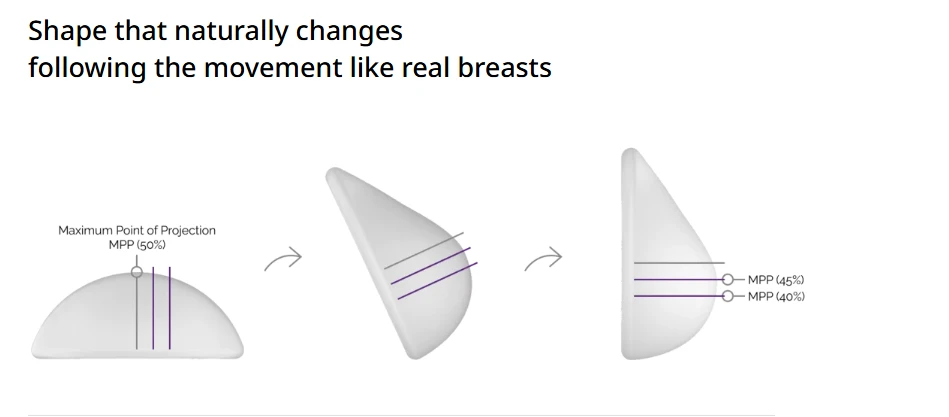
2. Implant Shapes
Round Implants:
- Advantages: Various size and projection options, cost-effective
- Disadvantages: May spread sideways when lying down
- Ideal candidates: Those wanting upper pole fullness, budget-conscious patients
Anatomical (Teardrop) Implants:
- Advantages: Natural breast contour, enhanced lower pole volume
- Disadvantages: Potential rotation risk, higher cost
- Ideal candidates: Those seeking very natural results
3. Surface Textures
Textured Implants: Currently not widely used due to BIA-ALCL concerns
- Previous advantages: Reduced implant movement and capsular contracture risk
- Current concerns: Associated with BIA-ALCL (Breast Implant-Associated Anaplastic Large Cell Lymphoma)
- Current status: Limited use due to safety considerations
Smooth Surface Implants:
- Advantages: Natural movement, lower BIA-ALCL risk
- Disadvantages: Potentially higher capsular contracture risk
- Ideal candidates: Those preferring natural movement and feel
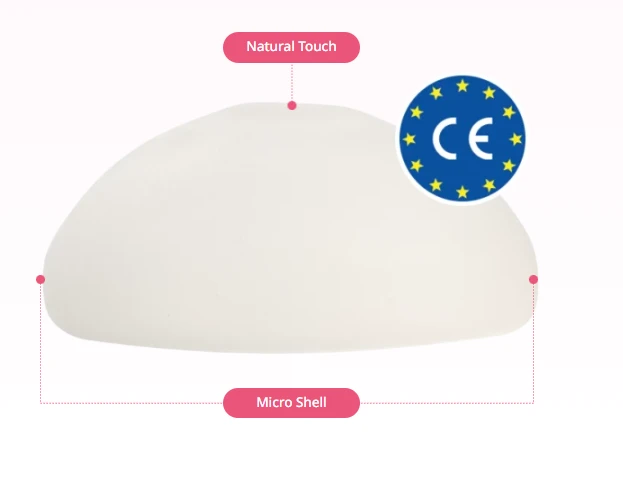
Microtextured Implants: Modern innovations balance reduced capsular contracture risk with natural movement
- Advantages: Balance between capsular contracture prevention and natural movement
- Disadvantages: Relatively new technology with limited long-term data
- Ideal candidates: Those seeking both safety and natural feel
Implant Placement Options
1. Subglandular Placement (Above Muscle)
- Advantages: Less surgical pain, shorter recovery, no implant distortion during activity
- Disadvantages: Higher capsular contracture rate, more visible implant outline
- Ideal candidates: Those with adequate breast tissue, athletes or bodybuilders
2. Submuscular Placement (Under Muscle)
- Advantages: Less visible implant outline, better mammography results, lower capsular contracture rate
- Disadvantages: More post-surgical pain, longer recovery, potential implant movement during muscle activity
- Ideal candidates: Those with thin breast tissue, those concerned about breast cancer screening
3. Dual Plane Placement
- Advantages: Combines benefits of both above and below muscle placement, most natural results
- Disadvantages: Requires high surgical skill and experience
- Ideal candidates: Those with breast ptosis, those seeking optimal natural appearance
Incision Location Characteristics
1. Periareolar Incision (Around Areola)
- Advantages: Scar hidden along areola border, least visible
- Disadvantages: May not be suitable for small areolas, potential nursing difficulties
- Ideal candidates: Those with adequate areola size, scar-sensitive patients
2. Inframammary Incision (Under Breast Fold)
- Advantages: Accommodates various implant sizes, direct surgical access for precise placement
- Disadvantages: Scar may be visible in clothing or swimwear
- Ideal candidates: Those wanting larger implants, revision surgery patients
3. Transaxillary Incision (Through Armpit)
- Advantages: No chest scarring, minimal psychological burden for young patients
- Disadvantages: Challenging precise placement, requires endoscopic equipment
- Ideal candidates: Those not wanting chest scars, smaller to medium implant sizes
Fat Transfer Breast Augmentation
Fat transfer breast augmentation is an increasingly popular method that enhances breast volume using the patient’s own fat tissue, offering natural results without foreign materials.
Fat Transfer Characteristics
- Advantages:
- Natural results without foreign materials
- Dual benefits of body contouring from donor sites
- No reaction to a foreign material, because the graft is your own tissue, and none of the implant-specific complications such as capsular contracture or shell rupture — but the procedure carries risks of its own, listed below
- Soft, natural feel and appearance
- Minimal scarring from small injection sites
- Disadvantages:
- Limited size increase (typically one cup size maximum)
- Unpredictable fat survival — a portion of the transferred fat is reabsorbed, and the final volume only settles after several months
- May require multiple sessions for desired results
- Requires adequate donor fat availability
- Generally higher cost than implant procedures
- Fat necrosis — firm lumps that can form where grafted fat does not survive
- Oil cysts, which sometimes need to be drained
- Calcifications that can show up on a mammogram and make the scan harder to read, sometimes requiring additional imaging or a biopsy to clarify
- Infection, and bruising, swelling or contour irregularity at the donor site
Using your own tissue removes the implant from the equation, but it does not remove every risk. Grafted fat that does not establish a blood supply can harden into fat necrosis or form oil cysts, and the calcifications that follow may appear on a later mammogram — which is why you should tell whoever reads your breast screening that you have had fat grafting, so the findings are interpreted correctly rather than investigated as something else.
Ideal Candidates for Fat Transfer
Fat transfer breast augmentation is particularly suitable for women seeking subtle enhancement using their own tissue:
- Those preferring to avoid implants
- Those wanting modest volume increase only
- Those desiring fat reduction in other body areas
- Those prioritizing natural feel above all else
- Those concerned about implant-related complications
Fat Transfer Process
- Fat Harvesting: Liposuction from abdomen, thighs, buttocks, or other areas
- Fat Purification: Removing impurities and concentrating healthy fat cells
- Fat Injection: Carefully placing purified fat into breast tissue
- Recovery Management: Post-procedure care to optimize fat survival rates
Hybrid Breast Augmentation
Hybrid breast augmentation combines implant placement with fat transfer, offering the advantages of both techniques for customized, natural-looking results.
Hybrid Augmentation Advantages
- Reliable volume increase from implants with predictable size results
- Natural contour and feel from fat grafting over implants
- Reduced implant visibility and rippling concerns
- Natural enhancement of upper chest and side areas
- Customizable results based on individual body characteristics
Hybrid Augmentation Disadvantages
- Higher cost due to combining two surgical techniques
- Potentially longer recovery period
- Variable fat survival rates affecting final results
- Potential complications from both implant and fat transfer procedures
Ideal Candidates for Hybrid Augmentation
- Those wanting significant volume increase with natural feel
- Those whose body type makes achieving natural contours difficult with implants alone
- Those with thin breast tissue where implant visibility is a concern
- Those prioritizing optimal results over cost considerations
Choosing the Right Breast Augmentation Method
Selecting the appropriate breast augmentation method requires considering multiple factors:
Body Type Considerations
- Thin Build with Minimal Breast Tissue:
- Smaller implants with dual plane placement
- Small implants combined with fat transfer (hybrid approach)
- Average Build with Moderate Breast Tissue:
- Various implant options available
- Placement choice depends on desired size
- Fuller Build with Adequate Fat Reserves:
- Fat transfer alone may achieve good results
- Consider implants plus lift if sagging is present
Why Pre- and Post-Surgery Care Matters
Good results and a smooth recovery depend just as much on how you prepare beforehand as on how carefully you follow instructions afterward — thorough pre- and post-surgical care is part of the operation, not an optional extra.
Pre-Surgery Preparation
- Stop all nicotine — cigarettes, vaping, and nicotine patches or gum — for at least 4 weeks before and 4 weeks after surgery. Nicotine narrows the small blood vessels that feed healing tissue, which raises the risk of wound-healing problems and of skin or nipple necrosis (tissue death) after breast surgery. Your surgeon may ask for a longer window.
- Avoid alcohol for at least 2 weeks before surgery
- Discontinue medications affecting blood circulation (consult with surgeon)
- Maintain adequate nutrition and hydration
- Prepare psychological and environmental support for recovery period
Post-Surgery Care
- Follow surgeon’s instructions for compression garment wear
- Perform prescribed massage and care routines
- Avoid sudden movements and vigorous exercise
- Get adequate rest and good nutrition
- Attend regular follow-up appointments
The comprehensive aftercare services at mineclinic include specialized post-breast surgery care with ultrasonic therapy, high-frequency management, and additional healing support aimed at giving you the smoothest recovery possible.
Frequently Asked Questions About Breast Augmentation
How long does breast augmentation recovery take?
Recovery time varies by surgical method and individual factors, but generally follows this timeline:
- Return to daily activities: About 1 week
- Light exercise: 2-3 weeks later
- Vigorous exercise: After 6 weeks
- Complete recovery and final results: 3-6 months
Submuscular implant placement typically requires longer recovery than subglandular placement. Fat transfer procedures must also consider donor site healing in the recovery timeline.
Which breast augmentation method has the least scarring?
Scarring depends more on incision location than surgical method:
- Periareolar incision: Most concealed as scars blend with areola border
- Transaxillary incision: No chest scarring but may be visible when arms are raised
- Inframammary incision: Hidden under the breast fold when clothed, but the scar is larger
- TUBA approach: No chest scarring, but limited to saline implants and involves challenging placement
Fat transfer requires only small injection sites, resulting in minimal scarring.
Who is a good candidate for fat transfer breast augmentation?
Fat transfer breast augmentation is ideal for women seeking natural enhancement using their own tissue:
- Those wanting modest volume increase (within one cup size)
- Those with adequate donor fat areas (thighs, abdomen, buttocks)
- Those preferring to avoid implants
- Those wanting concurrent fat reduction in other areas
- Those prioritizing natural feel and appearance
However, this method may not be suitable for those wanting dramatic size increases or very thin individuals without sufficient donor fat.
Conclusion: Finding Your Ideal Breast Augmentation Method
Breast augmentation is more than simply increasing breast size—it’s an important decision that enhances body proportions and boosts confidence. Achieving ideal results requires careful consideration of your body type, lifestyle, desired outcomes, and recovery process.
Breast implant augmentation offers predictable results and extensive size options, making it suitable for most patients. Fat transfer augmentation is ideal for those seeking natural results without dramatic size increases. Hybrid approaches can be considered when you want to combine the advantages of both methods.
Current trends in breast augmentation emphasize natural-looking results and personalized approaches rather than one-size-fits-all solutions. The most important factors are thorough research and consultation with qualified surgeons to select the method best suited to your individual needs.
At mineclinic, we provide personalized breast augmentation solutions tailored to each patient’s body type and requirements. Our expertise includes fat transfer breast augmentation, advanced Motiva implant procedures, and comprehensive implant replacement services. Our surgeons combine current implant and fat-grafting technology with individualized planning, and we talk through what is realistically achievable for your anatomy — along with the risks involved — during consultation.
For more detailed information and a personalized assessment, contact the specialists at mineclinic to discuss which approach suits your anatomy and your goals, and what each one would involve for you.
Was this article helpful? If you have questions or want to learn more, please leave a comment below! For more plastic surgery information, visit the mineclinic blog.
※ This content is for informational purposes only and does not replace professional medical advice, diagnosis, or treatment. Individual results may vary, and side effects may occur. Please consult with a board-certified plastic surgeon for personalized advice.