EN


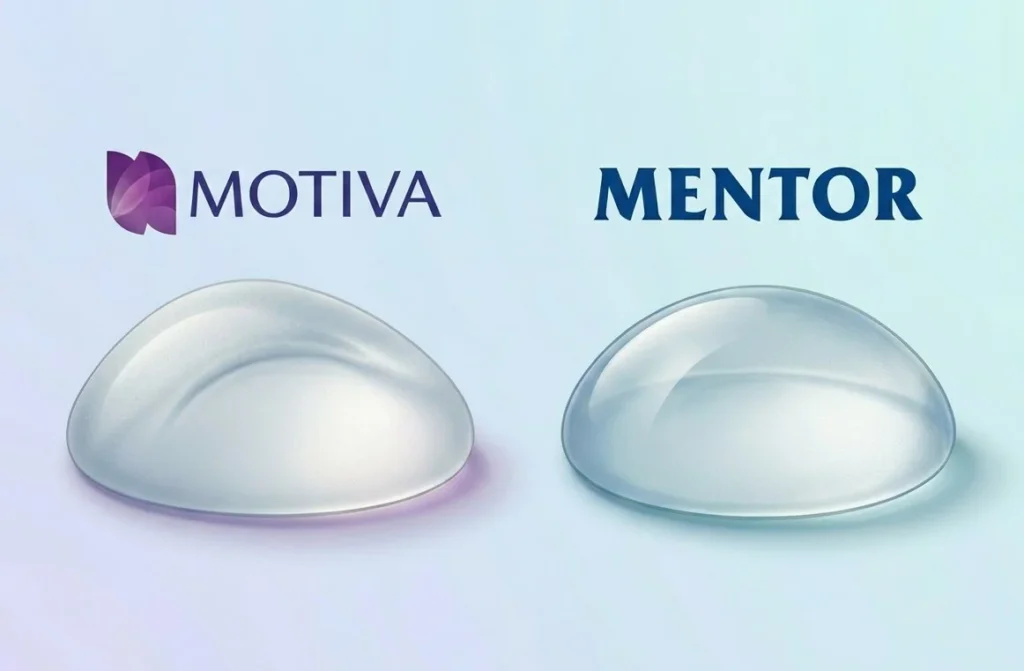
Motiva vs Mentor is a comparison of two silicone breast implant brands that differ in three ways: shell surface texture, gel behavior and the way the implant feels inside the breast. Neither is simply “better.” Your chest width and skin thickness decide which design fits you.
“It isn’t the surgery itself that worries me. Choosing the implant is what I can’t decide.” I hear some version of this in almost every breast consultation. Once the conversation starts, patients are hit with a wave of unfamiliar words: nanotexture, cohesive gel, round, teardrop. If you have narrowed your shortlist down to Motiva vs Mentor, you are already further along than most, and the remaining question is a fair one.
If you want the full picture of implant shapes, fills, longevity and safety, start with our complete breast augmentation implant guide. This article goes deep on one thing only: the Motiva vs Mentor head-to-head, and how to match each design to your body.
I’m Dr. Lee Sung-wook, a board-certified plastic surgeon at MINE Plastic Surgery in Gangnam, Seoul. I will explain the differences the way I explain them to patients in my consultation room, including the limits of what each implant can do.
Motiva vs Mentor at a Glance: Surface, Gel and Tracking
Both companies make silicone gel implants, and both brands are approved by Korea’s Ministry of Food and Drug Safety (MFDS) for use at our clinic. Where they differ is in design philosophy. The table below sums up the Motiva vs Mentor comparison on the points patients ask about most.
| Feature | Motiva | Mentor |
|---|---|---|
| Surface | SilkSurface (nano-texture) | Smooth or Siltex (imprinted texture; used on shaped CPG models) |
| Gel behavior | ProgressiveGel, viscoelastic: shifts with posture | MemoryGel, cohesive: holds its shape steadily |
| Typical feel | Very soft, moves naturally | Soft with a firmer, stable sense of shape |
| Device ID | Q Inside microtransponder on many models, plus implant card | Serial number and implant card |
| Long-term data | Newer generation; follow-up data still building | Long US FDA approval history; extensive follow-up data |
| Typical fit in our clinic (reference only) | Slim build, thin coverage, preference for soft movement | Some breast tissue, preference for predictable shape |
The last row reflects tendencies in my own practice, not a rule. The final choice is always narrowed down after measurement.
Surface: SilkSurface nanotexture vs Mentor Smooth and Siltex
Surface texture is usually the first thing people raise in a Motiva vs Mentor discussion. Manufacturers create texture in several ways: by vulcanization (heat curing), salt loss (pressing salt crystals into the shell and washing them out), imprinting (stamping a pattern from a mold), or proprietary nano-texturing.
Textbooks group these surfaces by how much real surface area the bumps create compared with a perfectly flat shell. In textbook classifications, smooth and nano-textured shells such as Motiva SilkSurface fall in the minimal surface-area band (a ratio under 2), while imprinted textures such as Mentor Siltex sit in the low band (2 to 3). Salt-loss and vulcanized surfaces are intermediate (3 to 5), and polyurethane foam is high (over 5). Why does this matter? A larger surface simply gives bacteria more places to settle.
On surface, the Motiva vs Mentor difference is nano-texture versus a choice of smooth or imprinted. Motiva also describes its shell as TrueMonobloc, meaning the shell and gel are bonded as one unit, according to the manufacturer. You can read about the models and how we use them on our Motiva breast implant surgery page.
In the Mentor vs Motiva comparison, Mentor offers a wider choice of surfaces: a smooth shell or its imprinted Siltex texture. CPG is not a surface type; it is Mentor’s anatomical (teardrop-shaped) model line, which uses the Siltex surface. Details are on our Mentor breast implants page.
Gel: ProgressiveGel (viscoelastic) vs MemoryGel (cohesive)
Almost every modern silicone implant uses cohesive gel, a form-stable gel that holds together rather than flowing like liquid. Within that family, though, firmness and elasticity vary by manufacturer and generation, and this is a real Motiva vs Mentor difference.
In the Motiva vs Mentor gel comparison, Motiva’s ProgressiveGel is viscoelastic, meaning it flows slightly and then springs back. When you lie down, the implant settles a little to the side, much like natural breast tissue. Mentor’s MemoryGel is a classic cohesive gel with steady firmness, so the implant keeps its outline more consistently whether you stand, sit or lie down.
Device tracking and long-term data
Motiva offers Q Inside Safety Technology on many of its models: a tiny radio-frequency microtransponder inside the implant that stores the device’s serial and identification data, readable from outside the body with a scanner. Mentor identifies each device with a serial number and an implant card.
On long-term evidence in the Motiva vs Mentor comparison, Mentor has the longer record. It has a long US FDA approval history and has built up many years of follow-up data. Motiva is a newer-generation device whose long-term data are still accumulating. FDA approval status for Motiva differs by model and country, so if this matters to you, ask your surgeon about the exact model being used.
How Motiva vs Mentor Implants Feel: Gel, Texture and Your Own Tissue
Feel is the question I get asked most, and it is where the Motiva vs Mentor debate is most often oversimplified. Three inputs shape how an augmented breast feels: the gel’s viscosity, the shell’s texture, and the thickness of your own skin and breast tissue covering the implant. Only the first two are brand differences.
Gel viscosity: moves with posture vs holds its shape
A viscoelastic gel such as Motiva’s tends to follow your posture. A cohesive gel such as Mentor’s tends to keep its form. Neither behavior is right or wrong. Some patients want the breast to move and soften when they lie down; others want a shape that looks the same every time they check the mirror.
Texture grade: grade 1 nano vs grade 2 imprint
Separate from the surface-area bands above, plastic surgery textbooks also rank texture by grade. Plastic surgery textbooks grade nano-texturing (such as Motiva) and smooth shells as grade 1, Mentor’s imprinted Siltex as grade 2, and salt-loss or ammonium carbonate textures as grade 3. The lower the number, the smoother the surface, so on texture grade, Motiva sits at grade 1 and Mentor Siltex at grade 2, the clearest numerical Motiva vs Mentor difference.
Textbooks also note that a more aggressive texture generally makes an implant more stable in its pocket, with less stretching of the lower breast over time. This is one reason surgeons sometimes reach for a textured device when tissue support is weak.
Tissue coverage: the variable patients overlook
Even the same implant feels different in different bodies. If your skin and breast tissue are thin, the implant’s edges are easier to feel, whichever brand you choose. Surgical literature adds an important point: with today’s highly cohesive gels, the difference in visible wrinkling between smooth and textured implants is described as more theoretical than real, and in a patient with a thin skin envelope, a smooth device may actually be the better choice.
That is why I say your tissue decides about half of the feel in any Motiva vs Mentor comparison. It is also why I ask every patient to hold real samples of both brands at consultation before we discuss which to use.
Choosing Between Motiva and Mentor by Chest Width and Skin Thickness
When the Motiva vs Mentor question is approached through measurements instead of marketing, the answer usually becomes much clearer. Two body measurements do most of the work: chest width and skin thickness.
Chest width comes before the brand
An implant’s base width should not exceed the width of your breast base on the chest wall. An implant that is wider than your chest tends to look unnatural and can stretch the tissue over time. Both brands make many combinations of width and projection (how far the implant extends forward), so the measurement narrows your candidates first. Brand comes second.
Thin skin and little soft tissue
When skin and soft tissue are thin, implant edges show and can be felt more easily, regardless of brand. In our clinic’s experience, softer viscoelastic gel and minimal-texture surfaces, such as Motiva’s, are often considered for these patients because they tend to move and settle more like natural tissue. Pocket choice and sizing matter just as much on a slim frame; we cover that planning in a separate article on Motiva implants for a slim frame.
Moderate breast tissue and a preference for predictable shape
If you already have some breast tissue to cover the implant and you value a stable, predictable outline, a cohesive-gel Mentor implant often fits well in our clinic’s experience. I find Mentor results easy to predict, which some patients value more than extra softness.
So in the Motiva vs Mentor choice, neither brand is superior. The measurements decide, and your preference for movement or stability breaks the tie.
How the Motiva vs Mentor Decision Is Made at Consultation
A good Motiva vs Mentor decision follows a set order. At our clinic, the consultation moves through five steps:
- Measure: chest width, skin pinch and soft-tissue thickness.
- Shortlist: realistic implant widths, sizes and profiles.
- Compare brands: discuss Motiva and Mentor, hold both samples and talk through your lifestyle.
- Agree on a goal: share a visual target using photos or simulation.
- Verify: confirm the genuine device by serial number, implant card and, where available, Q Inside.
Measure first: chest width, skin pinch, tissue thickness
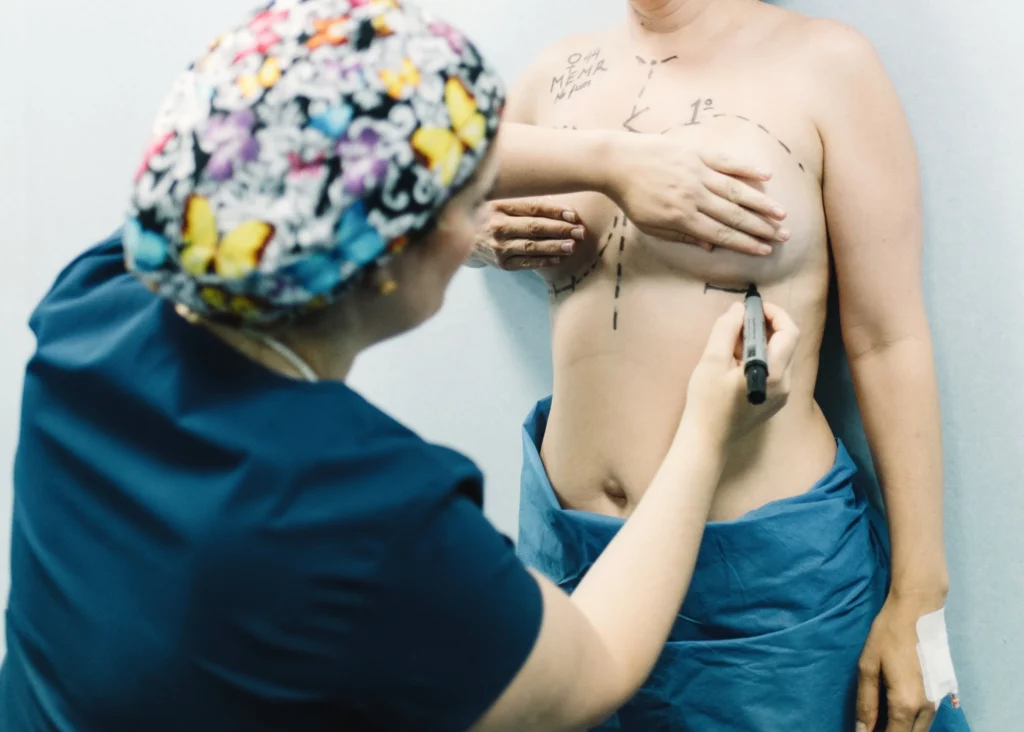
We measure your breast base width and the distance between key landmarks, then check soft-tissue thickness with a simple pinch test. These numbers tell us which implant widths are realistic and how much tissue will cover the implant. Brand is one input alongside pocket plane (above or below the chest muscle) and incision site.
Compare samples and discuss lifestyle
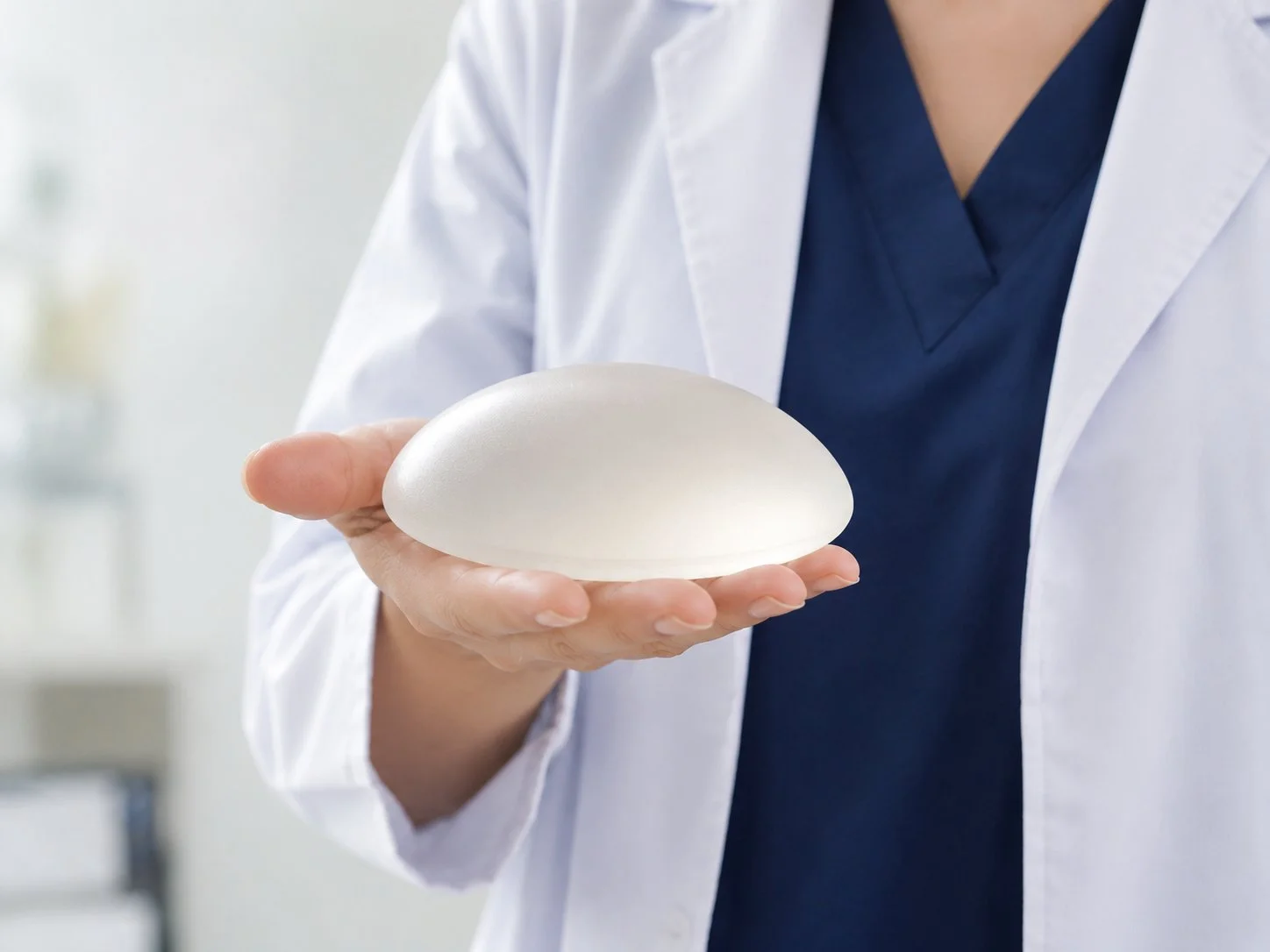
Next, you hold both implants. A hands-on Mentor vs Motiva comparison often tells you more than any brochure. Many patients are surprised by how different the gels feel in the hand. We also talk about your lifestyle: how active you are, whether you sleep on your front, and whether you want movement or a fixed shape.
Verify the genuine device: serial, card, Q Inside
Checking that your implant is genuine does not end on the day of surgery. The serial number and implant card are the records used later to identify the exact model and production details if rupture or exchange ever needs to be evaluated. Where available, Motiva’s Q Inside chip adds another way to confirm the device. Keep your card with your medical records.
Recovery After Motiva or Mentor Implants: Does the Brand Matter?
Brand changes the recovery timeline very little. Your surgical method, the type of work you do, whether you smoke, and how your body heals matter far more than whether you chose Motiva or Mentor.
As a general guide from our clinic, most patients return to desk work in about 1 week and resume strenuous exercise and heavy lifting after about 4 to 6 weeks. Swelling fades gradually, and the final shape usually settles over 3 to 6 months. Your own schedule may be shorter or longer, so follow your surgeon’s instructions rather than a fixed calendar.
During the first weeks, avoid lifting heavy objects, wear the support garment as instructed, and avoid smoking, since nicotine reduces blood flow to healing tissue.
Risks That Apply to Both Brands: Capsular Contracture, Rupture and BIA-ALCL
Whichever side of the Motiva vs Mentor choice you land on, breast augmentation is still surgery. I want patients to understand the risks as clearly as the benefits. General risks such as infection, bleeding (hematoma) and changes in nipple sensation apply to every implant; the full list is in our complete guide.
Three risks deserve a closer look for both brands:
- Capsular contracture: the scar capsule around the implant tightens and hardens.
- Rupture: rates rise with implant age and rupture is often silent, so imaging checks matter.
- BIA-ALCL: a very rare lymphoma whose risk depends on the type of surface texture.
Capsular contracture and surface texture
Capsular contracture means the scar capsule that naturally forms around any implant tightens and hardens. For years, textured surfaces were said to lower this risk, but the literature is split. One major breast surgery textbook notes that current evidence does not clearly show textured implants reduce capsular contracture, and textured surfaces can support more bacterial growth. What the sources agree on is this: once bacterial burden passes a certain threshold, it raises the risk of contracture regardless of texture. Learn more in our guide to capsular contracture symptoms and prevention.
Rupture and imaging checks
No implant lasts a lifetime. Surgical textbooks report that silicone gel implant rupture rates increase after about 6 to 8 years. Because modern cohesive gel tends to stay inside the shell, rupture is often silent, with no pain or visible change.
Rupture is diagnosed with ultrasound or MRI, and the same checks apply whether you have Motiva or Mentor implants. Textbooks describe high-definition ultrasound as the preferred first test because it costs less, and its findings closely match MRI. On timing, US FDA breast implant information and labeling updated in 2020 recommend a first ultrasound or MRI 5 to 6 years after surgery, then every 2 to 3 years, even without symptoms.
BIA-ALCL and texture type
Breast implant-associated anaplastic large cell lymphoma (BIA-ALCL) is a very rare cancer of the immune system that can develop in the capsule around an implant. Textbooks emphasize that its risk is linked not only to whether a surface is textured but to the type of texturing. Reported manufacturer-specific risk for Mentor Siltex has been far lower than for salt-loss or polyurethane textures, and the registries cited in breast surgery literature have not attributed cases to a history of smooth implants only. No separate figure for Motiva appears in these sources, so a numerical Motiva vs Mentor ALCL comparison cannot be made. The American Society of Plastic Surgeons also offers patient information on implant safety.
Motiva vs Mentor FAQ
What are the downsides of Motiva implants?
Motiva is a newer device, so its long-term follow-up data are shorter than Mentor’s. Its softer viscoelastic gel may show edges or rippling when tissue coverage is thin. Q Inside is not on every model, and approval status varies by model and country, so confirm the exact model.
Which is more expensive, Motiva or Mentor?
There is no single answer. The cost depends on the implant model, size and the scope of surgery, and it differs from clinic to clinic. Ask for an itemized quote for each Motiva vs Mentor option at consultation so you can compare like with like.
How long do Motiva and Mentor implants last?
Neither brand is a lifetime device. Textbooks report that silicone implant rupture rates rise after about 6 to 8 years. US FDA labeling (2020) recommends a first ultrasound or MRI at 5 to 6 years, then every 2 to 3 years, because rupture is often silent.
Which feels more natural, Motiva or Mentor?
Naturalness depends more on implant size, pocket plane and your skin thickness than on brand. In our clinic’s experience, slim patients with Motiva’s viscoelastic gel often find the breast looks softer when they lie down. This is a clinical tendency, not a textbook rule.
Are Motiva and Mentor implants approved?
Both brands are approved by Korea’s MFDS for use at our clinic. Mentor has a long US FDA approval history. Approval in other countries differs by model, so ask your surgeon which exact model is planned.
How can I check that my implant is genuine?
Mentor implants come with a serial number and implant card. Many Motiva models also carry a Q Inside microtransponder alongside the card. At MINE, we hand your implant card to you after surgery. Keep it with your medical records.
Choosing Motiva or Mentor Starts With Your Measurements
Whether you choose Motiva or Mentor, an implant is a tool. The result depends on how well that tool is designed around your chest structure, skin elasticity, lifestyle and aesthetic goals. Comparing catalogs alone will not settle the Motiva vs Mentor question; the answer only makes sense once your measurements are on the table.
If you are planning surgery in Korea, you can send photos through our online consultation or WhatsApp for a preliminary opinion, then book an in-person measurement consultation at our clinic in Gangnam, Seoul. Cost depends on your condition and the scope of surgery, so it is discussed individually. You can also call us at +82-2-516-1175.
Written and medically reviewed by Dr. Lee Sung-wook, board-certified plastic surgeon and medical director of MINE Plastic Surgery, Seoul.
※ This content is for informational purposes only and does not replace professional medical advice, diagnosis, or treatment. Individual results may vary, and side effects may occur. Please consult with a board-certified plastic surgeon for personalized advice.