EN
EN


Table of Contents
Understanding Breast Augmentation Recovery
Breast augmentation surgery is one of the most sought-after procedures for international patients visiting Korea. According to the American Society of Plastic Surgeons, breast augmentation consistently ranks among the top cosmetic surgeries worldwide, with millions of procedures performed each year.
However, what many patients underestimate is that the surgery itself is only half the journey — the recovery period is equally critical. What you do (and more importantly, what you avoid) in the days and weeks following your procedure directly impacts:
- The final shape and symmetry of your breasts
- Implant stability and positioning
- Scar quality and visibility
- Risk of complications like capsular contracture
For international patients who travel to Seoul specifically for K-Beauty surgery, understanding these restrictions is essential for a safe and successful outcome.
💡 Key Takeaway: Breast augmentation recovery requires disciplined lifestyle modifications for at least 3 months. Avoiding certain activities protects your investment and ensures beautiful, natural-looking results.
The Breast Augmentation Procedure at Mine Clinic
At Mine Clinic, we perform HD Endoscopic Breast Augmentation, a signature Korean technique that uses a high-definition endoscope to allow precise implant placement through minimal incisions. This approach reduces tissue trauma, lowers bleeding risk, and results in faster recovery.

We offer a selection of premium implants tailored to each patient’s body type, preferences, and long-term goals, including:
- Motiva Implants — known for their ergonomic gel and natural movement
- Mentor Implants — FDA-approved with a long track record
- Sebbin Implants — European craftsmanship with excellent durability
For patients preferring a natural alternative, we also offer Breast Fat Grafting.
Activities to Avoid After Breast Augmentation Surgery
This is the most critical section for your recovery. Here are the activities you should strictly avoid.
🚫 Activities to Avoid
During the first two weeks, your body is focused on initial wound healing and reducing inflammation. Avoid the following:
- Lifting Heavy Objects Do not lift anything heavier than 2–3 kg (approximately 5 lbs), including grocery bags, luggage, or pets. This includes avoiding lifting your arms above shoulder level, which can strain the pectoral muscle where the implant is placed. This also includes any pushing or pulling motions.
- Sleeping on Your Stomach or Side Sleep on your back with your upper body slightly elevated (use 2–3 pillows). This minimizes pressure on the implants and helps reduce swelling.
- Showering with Hot Water Hot water increases blood flow and can worsen swelling. Use lukewarm water only, and keep the incision area dry without soaking it.
- Smoking and Alcohol Smoking constricts blood vessels and severely impairs healing, while alcohol thins the blood and can increase bruising. Avoid both for at least 4 weeks.
- Driving You should not drive for at least 1–2 weeks, as sudden movements of the steering wheel strain the chest muscles.
- Strenuous Exercise No running, jumping, weightlifting, yoga, or Pilates. Light walking is encouraged, but no jogging/running up to 3 months.
- Chest Workouts of Any Kind Push-ups, chest presses, and any exercises engaging the pectoral muscles are strictly forbidden for the first 3 to 4 months. These can displace the implant or cause asymmetry, so reintroduce them gradually only with surgeon approval.
- Underwire Bras Wear only the medical post-surgical bra instructed by Mine Clinic. Underwires can press against healing tissues and interfere with implant settling. A sports bra may be worn from 1 month after surgery, and underwire bras from 3 months after surgery.
- Swimming and Saunas Public pools, hot tubs, saunas, and jjimjilbangs (Korean bathhouses) must be avoided due to infection risk until your incisions are fully closed.
- High-Impact Sports Tennis, golf with aggressive swings, martial arts, and contact sports should still be avoided. Even a minor impact can disturb the implant pocket for the first 5 to 6 months.
- Massages on the Chest Area Only perform implant massages as specifically instructed by your Mine Clinic surgeon. Unauthorized massage can cause implant malposition, so avoid massaging the area unless your surgeon directs it.
💡 Key Takeaway: The golden rule is: “If it hurts, stop.” Your body communicates its healing limits. When in doubt, contact your Mine Clinic care coordinator.
Why Choose Mine Clinic in Seoul, Korea
The K-Beauty Advantage
Korea is globally recognized as a leader in aesthetic plastic surgery. Seoul — particularly the Gangnam district — has become the epicenter of medical tourism. Here’s why Mine Clinic stands out:
1. Expertise in International Patient Care
We specialize in serving patients from around the world. Our International Service team provides full language support, airport pickup coordination, accommodation recommendations, and post-operative follow-up even after you return home.
2. Board-Certified Surgeons
Our lead surgeon, Dr. Lee Sung-wook, is a board-certified plastic surgeon with extensive experience in breast augmentation for diverse body types. Meet our full team on the Medical Staff page.
3. Advanced HD Endoscopic Technology
The endoscopic approach allows surgical precision that traditional blind-pocket techniques cannot match — resulting in reduced bleeding, better symmetry, and smaller scars.
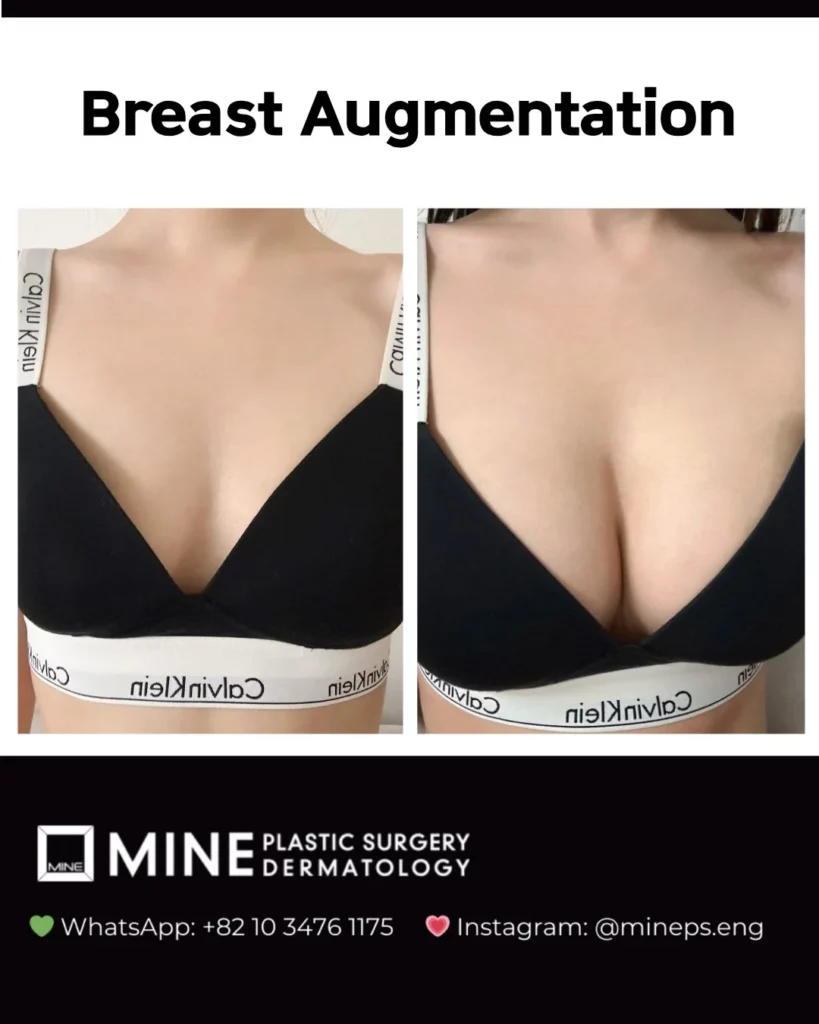
Important: Risks, Side Effects & Safety
As with any surgical procedure, breast augmentation carries risks. At Mine Clinic, we believe in complete transparency — because informed patients achieve better outcomes.
Common, Expected Side Effects
- Swelling and bruising (typically resolves in 2–4 weeks)
- Temporary numbness around the nipple or incision
- Tightness or “high-riding” appearance of implants (this settles over 2-3 months as the implants ‘drop and fluff’)
- Mild to moderate pain managed with prescribed medication
Potential Complications to Know About
While rare with proper surgical technique and aftercare, patients should be aware of:
- Capsular contracture — hardening of scar tissue around the implant
- Implant malposition — often linked to patients resuming activity too soon
- Infection — minimized through sterile technique and antibiotics
- Hematoma or seroma — fluid accumulation requiring drainage
- Changes in nipple sensation — usually temporary
How Mine Clinic Minimizes Risk
- Comprehensive pre-op blood work and health screening
- HD endoscopic visualization reduces tissue trauma
- Use of Keller funnel technique for sterile implant insertion
- 24/7 post-op care communication
- Clear, written aftercare instructions in English
For detailed information on post-operative protocols, visit our Post-Op Care page.
Recovery in Korea: Suggested Timeline
We recommend international patients plan to stay in Seoul for at least 7–10 days after surgery. Here’s a typical timeline:
| Day | Milestone | Activity Level |
|---|---|---|
| Day 0 (Surgery) | Procedure, compression bra | Bed rest |
| Day 1 | First follow-up to check healing | Light walking in hotel |
| Day 2~3 | Swelling is at its peak | Short walks, gentle activity |
| Day 3~4 | Second follow-up, tape removal, switch to different bra | Light sightseeing permitted |
| Day 7 | Final check-up before flying home | Cleared for long-haul flights |
| Week 4 | Resume light cardio | Walking, stationary cycling |
| Week 6–8 | Gradual return to normal exercise | No chest workouts yet |
| Week 12+ | Full activity clearance | Chest workouts with surgeon approval |
Can I Fly Home After Breast Augmentation?
Most international patients can fly home safely 7-10 days after surgery, provided they:
- Wear instructed garments during the flight
- Stay well-hydrated
- Avoid lifting carry-on luggage (ask for assistance)
Where to Stay in Seoul During Recovery
Mine Clinic is conveniently located in Gangnam, Seoul, surrounded by recovery-friendly hotels and serviced residences. Our international team can recommend accommodations. See our exact location and directions.
If you need help with booking hotels, ask MINE at +82 10 3476 1175 for assistance.
Final Thoughts
Breast augmentation is a life-changing procedure, but lasting results depend heavily on what you do — and don’t do — during recovery. By carefully avoiding the activities listed above, you protect your investment, minimize complications, and achieve the natural, beautiful outcome you traveled to Korea for.
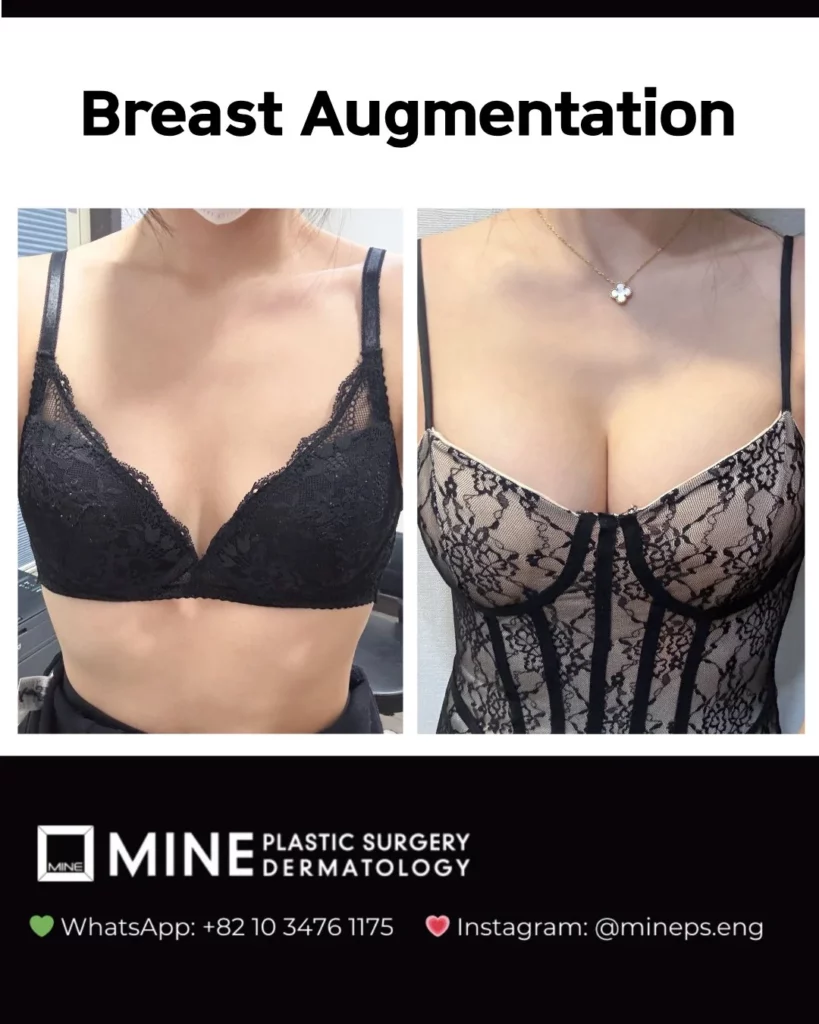
Explore more insights on our Breast Surgery Blog.
Frequently Asked Questions
How soon can I return to work after breast augmentation in Korea?
Most patients with desk jobs can return to work 7–10 days after surgery. If your work involves physical labor or lifting, plan for 4–6 weeks of modified duty. We provide medical certificates for international patients who need documentation for their employers.
When can I sleep on my side again after breast augmentation?
You should sleep on your back for the first 4–6 weeks. Side sleeping may be gradually reintroduced after 6 weeks with your surgeon’s approval. Stomach sleeping is typically restricted for at least 3 months to allow implants to fully settle.
Can I do yoga or Pilates after breast augmentation surgery?
Light yoga (without chest-engaging poses) may be resumed at 6 weeks, while full yoga and Pilates practices — including poses like chaturanga, plank, or downward dog — should wait until at least 8–12 weeks post-surgery. Always confirm timing with your Mine Clinic surgeon.
Is it safe to fly internationally 10 days after the procedure?
Yes, most patients are cleared for long-haul flights between days 10–14, following a final post-op check. We provide a flight safety protocol including compression wear recommendations and in-flight movement guidance to minimize DVT risk.
Does Mine Clinic offer follow-up care after I return to my home country?
Absolutely. We provide ongoing virtual consultations via WhatsApp, email, and video calls to monitor your healing progress. Our international coordinators stay in touch throughout your full recovery journey.
Interested in this procedure? Contact Mine Clinic today for a personalized online consultation. We are ready to assist you on WhatsApp and guide you through your K-Beauty journey in Seoul.
📅 Book Online Reservation | 💬 Request Online Consultation (Motiva breast implants)
Reviewed by Dr. Lee Sung-wook, Board Certified Plastic Surgeon at Mine Clinic.
Medical Disclaimer: This content is for informational purposes only and does not substitute professional medical advice. Always consult a qualified plastic surgeon for personalized recommendations.