EN
EN


Table of Contents
What Is an Endoscopic Forehead Lift?
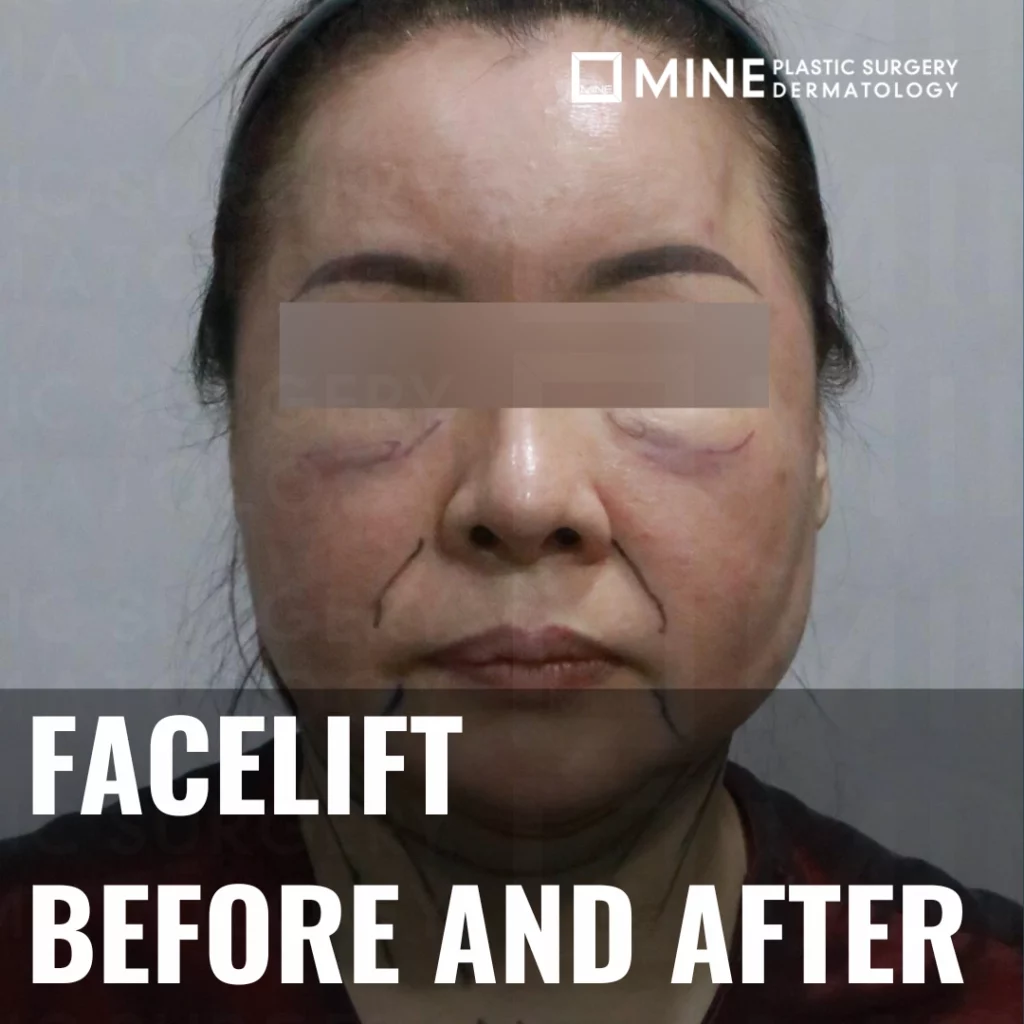
An endoscopic forehead lift, also known as an endoscopic brow lift, is a minimally invasive surgical procedure designed to rejuvenate the upper face. This advanced technique addresses sagging eyebrows, deep forehead wrinkles, and the heavy-lidded appearance that can make you look tired, angry, or older than you feel.
Unlike traditional open brow lift methods that require a long incision from ear to ear, the endoscopic approach uses several small incisions (typically 3 to 5) hidden behind the hairline. Through these incisions, your surgeon inserts a tiny camera called an endoscope, which allows for precise visualization of the underlying muscles and tissues. This minimally invasive technique results in less scarring, reduced swelling, and a faster recovery compared to conventional methods.
Key Takeaway: The endoscopic forehead lift is the modern gold standard for upper face rejuvenation, offering excellent results with minimal visible scarring and shorter downtime—making it ideal for international patients seeking K-Beauty treatments in Seoul.
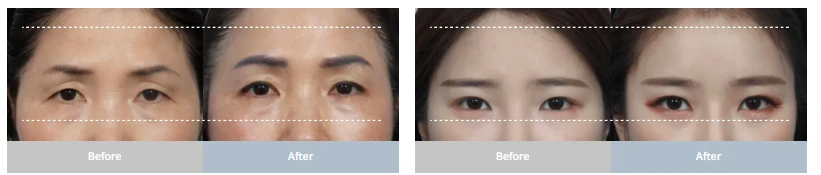
The procedure effectively addresses several concerns simultaneously. It elevates drooping eyebrows to a more youthful position, smooths horizontal forehead lines (worry lines), reduces the vertical furrows between the eyebrows (frown lines or “11 lines”), and opens up the eye area for a more refreshed, alert appearance.
Signs You May Need a Forehead Lift
Understanding whether a forehead lift is right for you begins with recognizing the common signs of upper facial aging. As we age, the effects of gravity, sun exposure, and repeated muscle contractions cause the soft tissues of the forehead to gradually descend, creating a tired or stern appearance.
Common indicators that you may benefit from an endoscopic forehead lift include:
You notice your eyebrows sitting lower on your face than they used to, sometimes resting on or below the orbital rim. This brow ptosis (drooping) can make you appear constantly fatigued or unhappy, regardless of your actual mood or energy level. You may find yourself unconsciously raising your eyebrows to see better or to achieve a more alert look, which only deepens the horizontal forehead creases over time.
Deep horizontal lines have developed across your forehead, becoming visible even when your face is at rest. These static wrinkles result from years of frontalis muscle activity—the muscle responsible for raising your eyebrows. Similarly, vertical furrows between your eyebrows (glabellar lines) have become prominent, giving you an unintentionally worried or angry expression.
Excess skin from your drooping forehead may be pushing down onto your upper eyelids, creating a hooded appearance that interferes with your eye makeup application or even affects your peripheral vision in severe cases. Some patients initially think they need upper eyelid surgery alone, only to discover during consultation that a forehead lift—or a combination procedure—better addresses the root cause of their concerns.
You have tried non-surgical treatments like Botox or fillers, which provided temporary improvement but no longer deliver the results you desire. While Botox injections remain excellent for dynamic wrinkles and can complement a surgical lift, they cannot address significant skin laxity or true brow ptosis.
Who is an ideal candidate? The best candidates for an endoscopic forehead lift are healthy non-smokers with realistic expectations about the outcomes. While the procedure is most commonly performed on individuals aged 40 to 60, younger patients with genetic predispositions to low, heavy brows or deep furrows may also benefit significantly.

How the Endoscopic Forehead Lift Is Performed at Mine Clinic
At Mine Clinic in Seoul’s Gangnam district, our board-certified plastic surgeons perform the endoscopic forehead lift using state-of-the-art techniques refined through years of experience with both Korean and international patients. Our approach prioritizes natural-looking results that harmonize with your overall facial features.
Pre-Operative Consultation
Your journey begins with a comprehensive consultation, where our surgeon evaluates your facial anatomy, discusses your aesthetic goals, and develops a personalized treatment plan. This consultation can be conducted online for international patients before traveling to Seoul. We use advanced imaging technology to help you visualize potential outcomes and set realistic expectations.
During this assessment, your surgeon will examine your brow position relative to the orbital rim, the degree of forehead skin laxity, the depth of your wrinkles, and your hairline position. This thorough evaluation ensures the endoscopic technique is appropriate for your specific needs—in some cases, a different approach or combination of procedures may better achieve your goals.
The Surgical Procedure
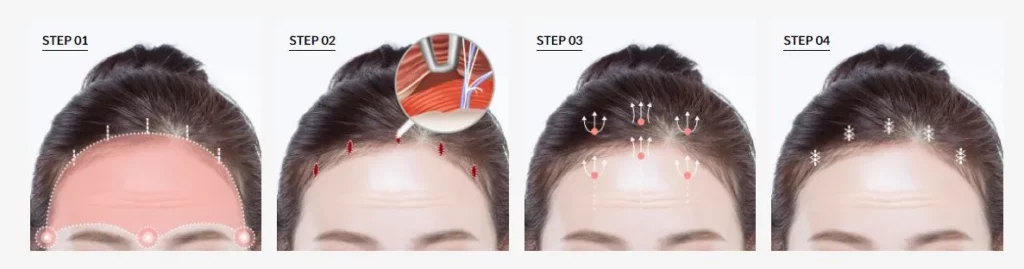
The endoscopic forehead lift at Mine Clinic typically takes 45 minutes to one hour and is performed under light general anesthesia for your comfort. Here is what happens during the procedure:
Incision Placement: Your surgeon makes 3 to 5 small incisions, each approximately 1 to 2 centimeters long, strategically placed behind your hairline. This positioning ensures the incisions remain virtually invisible once healed.
Endoscopic Visualization: A thin tube equipped with a tiny camera (endoscope) is inserted through one of the incisions. This provides your surgeon with a magnified, high-definition view of the underlying structures on a monitor, allowing for precise, controlled movements while minimizing tissue trauma.
Tissue Release and Elevation: Using specialized instruments inserted through the other incisions, your surgeon carefully releases the tissues that anchor the forehead and brow in their descended position. Key structures addressed include the arcus marginalis along the supraorbital rim, the zone of adhesion, and the conjoint tendon—understanding and releasing these anatomical structures is essential for achieving lasting results.
Muscle Modification: The corrugator supercilii and procerus muscles, which cause frown lines and vertical furrows, are precisely modified to reduce their activity. At Mine Clinic, our surgeons use meticulous techniques to weaken these muscles while preserving natural facial expression.
Fixation: Once the forehead and brows are elevated to the desired position, your surgeon secures them in place using advanced fixation methods. At Mine Clinic, we commonly use Endotine bioabsorbable fixation devices, which provide reliable, multipoint support during healing and naturally dissolve over time.
Closure: The small incisions are closed with sutures or staples, which are typically removed 7 to 10 days after surgery.
Combination Procedures
Many patients achieve optimal results by combining their endoscopic forehead lift with complementary procedures. Popular combinations at Mine Clinic include:
- Upper blepharoplasty for excess eyelid skin
- Ptosis correction for drooping upper eyelids
- SMAS facelift for mid and lower face rejuvenation
- Thread lift for additional non-surgical support
Your surgeon will discuss whether any combination procedures would benefit your individual case during your consultation.
Why Choose Korea and Mine Clinic for Your Forehead Lift
South Korea has earned its reputation as the global capital of aesthetic medicine for compelling reasons. When you choose Korea—and specifically Mine Clinic—for your endoscopic forehead lift, you benefit from a unique convergence of surgical expertise, advanced technology, and exceptional patient care that is difficult to find elsewhere.
World-Class Surgical Expertise
Korean plastic surgeons perform more facial rejuvenation procedures per capita than their counterparts anywhere in the world. This extraordinary volume of experience translates to refined techniques, keen aesthetic sensibilities, and the ability to handle diverse facial anatomies with precision. At Mine Clinic, our surgeons are board-certified specialists who dedicate their careers to facial plastic surgery, ensuring you receive care from true experts in their field.
The Korean approach to facial aesthetics emphasizes natural harmony and subtle enhancement rather than an obviously “done” appearance. This philosophy aligns perfectly with what most international patients desire—looking refreshed and rejuvenated while still looking like themselves.
Advanced Technology and Techniques
Korean clinics invest heavily in the latest medical technology and continuously refine their surgical techniques. At Mine Clinic, we utilize high-definition endoscopic equipment, advanced Endotine fixation systems, and comprehensive safety monitoring protocols that meet or exceed international standards.
Our clinic facilities are equipped with state-of-the-art operating theaters, comfortable recovery areas, and dedicated post-operative care services designed specifically for international patients.
Comprehensive Care for International Patients
We understand that traveling abroad for surgery involves unique considerations. Mine Clinic’s international patient services provide end-to-end support, including English-speaking coordinators who guide you through every step of your journey, airport pickup services, translation during consultations and post-operative appointments, and assistance with accommodation near our clinic.
Our post-operative care program ensures you receive attentive follow-up throughout your recovery in Korea, with our team available to address any concerns that arise.
Exceptional Value
While cost should never be the primary factor in choosing a surgeon, it is worth noting that high-quality plastic surgery in Korea often costs significantly less than comparable procedures in Western countries—even after factoring in travel expenses. At Mine Clinic, we offer transparent pricing and personalized consultations to help you understand the full investment in your care. Specific pricing requires a consultation for your individual needs, as each patient’s treatment plan is customized.
Important: Risks, Side Effects, and Safety Considerations
At Mine Clinic, we believe in complete transparency about both the benefits and potential risks of any surgical procedure. Understanding these factors empowers you to make an informed decision and sets realistic expectations for your recovery.
Common Side Effects
Most patients experience temporary side effects that resolve within the first few weeks. Swelling and bruising are normal responses to surgery and typically peak around days 2 to 4 before gradually subsiding. You may notice swelling extending to the eyes and cheeks, which is also normal. Applying cold compresses as directed and keeping your head elevated significantly reduces these symptoms.
A sensation of tightness across the forehead is expected and indicates the tissues are healing in their new position. Some temporary numbness of the forehead and scalp commonly occurs due to nerve manipulation during surgery. In most cases, normal sensation returns gradually over weeks to months as the nerves regenerate. According to the American Society of Plastic Surgeons, some patients may experience temporary itching sensations as nerve function returns.
Mild discomfort is manageable with prescribed pain medication, and most patients describe the recovery as less uncomfortable than they anticipated.
Rare but Potential Risks
While serious complications are uncommon when surgery is performed by experienced, board-certified surgeons using proper techniques, patients should be aware of potential risks.
Temporary or prolonged numbness: Some patients experience numbness that persists longer than expected. Most cases resolve within one year, but rare instances of permanent sensory changes can occur.
Asymmetry: Minor asymmetries in brow position may occur, as no face is perfectly symmetrical. Significant asymmetries that require revision are rare.
Nerve injury: The temporal branch of the facial nerve, which controls forehead movement, runs near the surgical area. Injury to this nerve is uncommon (approximately 1% of cases) when surgery is performed by skilled surgeons, but it can result in temporary or, rarely, permanent weakness of eyebrow movement.
Scarring and hair loss: While endoscopic incisions are small and usually heal inconspicuously, some patients may develop wider scars or localized hair loss (alopecia) around the incision sites.
Infection and bleeding: These risks exist with any surgery but are minimized through sterile technique and proper pre-operative preparation.
How Mine Clinic Minimizes Risks
Our commitment to patient safety encompasses every aspect of care. We conduct thorough pre-operative evaluations to identify potential risk factors. Our surgeons use meticulous technique honed through extensive experience. We employ advanced safety monitoring systems throughout the procedure. Detailed post-operative instructions and accessible follow-up care support your recovery.
We encourage all patients to discuss their complete medical history, current medications, and any concerns with their surgeon during consultation. This open communication is essential for achieving safe, optimal outcomes.
Recovery in Korea: Your Day-by-Day Timeline
Planning your recovery stay in Seoul is an essential part of your medical tourism journey. International patients typically need to remain in Korea for approximately 10 to 14 days following an endoscopic forehead lift. This timeline allows for proper initial healing, suture or staple removal, and a post-operative evaluation before flying home.
Days 1–3: Immediate Post-Operative Period
Immediately after surgery, you will have a protective dressing or compression bandage around your forehead and scalp to minimize swelling and support healing tissues. You may have small drains in place, which are typically removed within the first day or two.
Rest is essential during this phase. Keep your head elevated—even while sleeping—using extra pillows to reduce swelling. Apply cold compresses to your eyes and cheeks (not directly on bandaged areas) as directed to ease discomfort. Your surgeon will prescribe pain medication and antibiotics to manage discomfort and prevent infection.
Swelling and bruising are at their peak during days 2 to 3. Your eyes may appear puffy, and bruising can extend to the cheeks. This is completely normal and temporary.
Days 4–7: Early Recovery
During this period, swelling begins to subside noticeably. Your protective bandages may be removed, revealing the small incisions hidden in your hairline. You can gently cleanse your hair as instructed by your surgeon.
You will likely feel a sensation of tightness across your forehead and may experience numbness in certain areas—both indicate healing is progressing normally. Avoid any activities that require bending over, straining, or heavy lifting, as these can increase swelling and potentially affect your results.
Days 7–10: Suture Removal and Evaluation
Sutures or staples are typically removed 7 to 10 days after surgery during a follow-up appointment at Mine Clinic. At this visit, your surgeon will evaluate your healing, address any questions, and clear you for return travel if appropriate.
By this point, most visible bruising has faded or can be easily concealed with makeup. Many patients feel comfortable being seen in public with sunglasses and minimal concealer.
Day 10–14: Preparing to Travel Home
Most international patients can fly home approximately 10 to 14 days after surgery. Before departure, you will have a final check-up to ensure healing is progressing well.
When can you fly? While specific recommendations may vary based on your individual healing, most patients are cleared for air travel by day 10 to 14. The key factors include adequate wound healing, resolved risk of significant swelling, and no signs of complications. Your surgeon will provide personalized guidance based on your progress.
Weeks 2–6: Continued Recovery at Home
Once home, continue following your surgeon’s aftercare instructions. Most patients return to work within 1 to 2 weeks, depending on their job demands. Avoid strenuous exercise and heavy lifting for at least 3 weeks.
Residual swelling continues to resolve over the following weeks. Some tightness, numbness, or occasional tingling sensations are normal and indicate nerves are regenerating. Final results become fully apparent around 3 to 6 months post-surgery, once all swelling has resolved and tissues have settled into their new position.
Frequently Asked Questions
How long do the results of an endoscopic forehead lift last?
The results of an endoscopic forehead lift are long-lasting. Most patients enjoy their refreshed appearance for 5 to 10 years or more. While the procedure cannot stop the natural aging process, it effectively turns back the clock, and you will continue to look younger than you otherwise would have without the surgery. Factors such as genetics, sun exposure, and lifestyle habits influence how long your results last. Complementary treatments like Botox or skin rejuvenation procedures can help maintain and extend your results over time.
Will I have visible scars after the procedure?
One of the primary advantages of the endoscopic technique is minimal scarring. The small incisions (typically 1 to 2 cm each) are placed behind the hairline, where they are concealed by hair. Once fully healed, these scars are virtually invisible. At Mine Clinic, our surgeons take great care with incision placement and closure techniques to optimize scar healing.
Can an endoscopic forehead lift be combined with other procedures?
Yes, combining procedures is very common and can provide more comprehensive rejuvenation. Popular combinations include upper eyelid surgery (blepharoplasty), facelift, and ptosis correction. Combining procedures allows you to address multiple concerns in a single surgical session and recovery period—a significant advantage for international patients who have limited time in Korea. Your surgeon will discuss the best combination approach for your goals during consultation.
Is the endoscopic forehead lift painful?
The procedure is performed under anesthesia, so you will not feel pain during surgery. Afterward, most patients describe the discomfort as mild to moderate and manageable with prescribed pain medication. Many patients report that recovery is less uncomfortable than they expected. Tightness and numbness are more common sensations than actual pain.
At what age should I consider a forehead lift?
There is no single “ideal” age for a forehead lift. Most patients are between 40 and 60 years old, but younger individuals with inherited heavy brows or pronounced forehead lines may benefit from earlier intervention. The best candidates are those who have noticed changes in their brow position and forehead that bother them and are seeking lasting improvement. A consultation with a qualified surgeon is the best way to determine if the timing is right for you.
Take the Next Step Toward Rejuvenation
An endoscopic forehead lift offers a powerful solution for sagging eyebrows, deep forehead wrinkles, and the tired appearance that can age your entire face. At Mine Clinic in Seoul, Korea, our experienced, board-certified plastic surgeons combine world-class expertise with compassionate care to help international patients achieve natural, refreshed results. (endoscopic forehead lift in Korea)
Interested in this procedure? Contact Mine Clinic today for a personalized online consultation. Our team is available on WhatsApp to assist you and guide you through your K-Beauty journey in Seoul.
Learn more about our medical staff, explore our clinic facilities, or view real patient stories to see the transformations we have achieved. You can also find our clinic easily by checking our directions to our Gangnam location.
Medical Disclaimer: This content is for informational purposes only and does not substitute professional medical advice. Individual results may vary. All surgical procedures carry inherent risks, and outcomes depend on many factors including individual anatomy and healing. Please consult directly with a qualified medical professional for personalized recommendations regarding your care.
Reviewed by Dr. Lee Sung-wook, Board Certified Plastic Surgeon at Mine Clinic.