EN


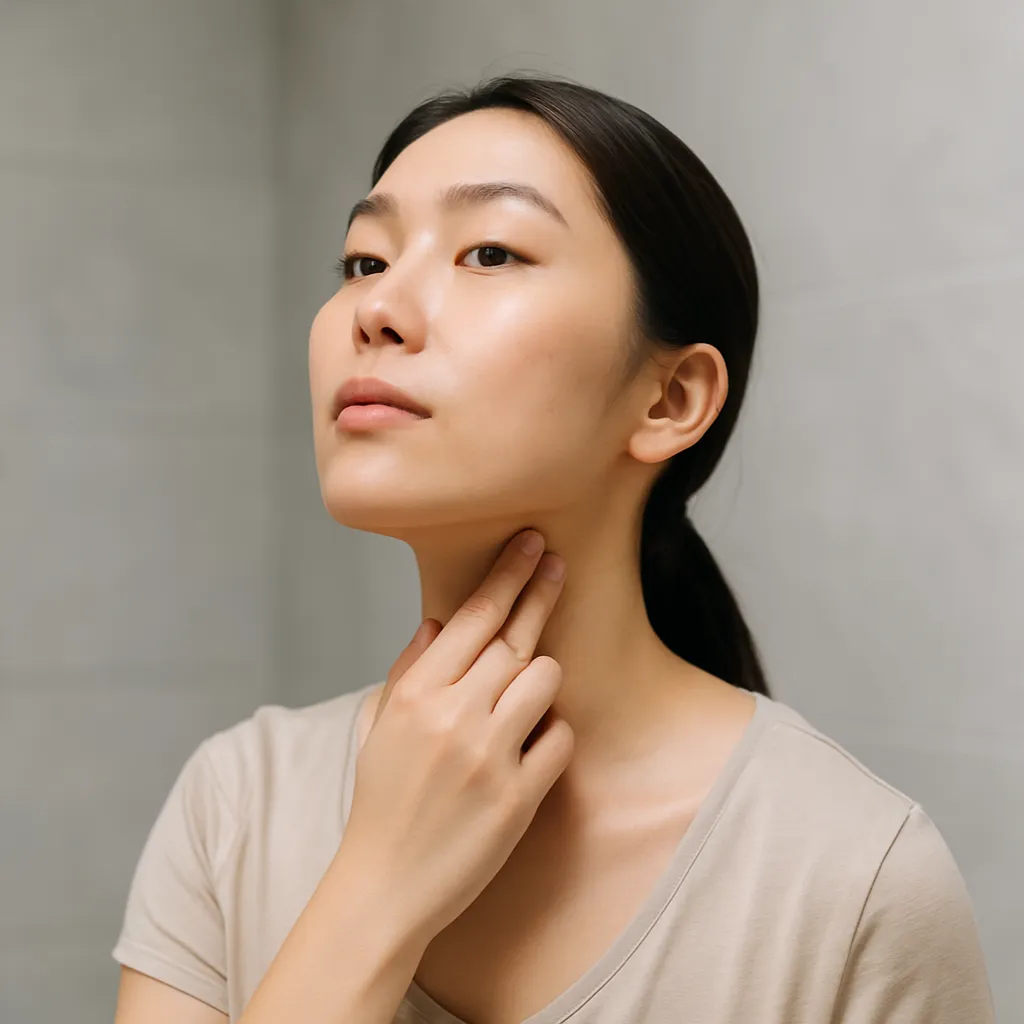
“I’ve lost the weight, but my jaw is still full.” I hear this in clinic almost every week. People diet hard, their cheeks and waist slim down, yet the area under the jaw stays stubbornly rounded. Very often, the reason is not fat at all.
Salivary gland hypertrophy is an enlargement of the salivary glands themselves — the glands that make and release saliva — rather than a build-up of fat, which is why it often stays put even after weight loss. Because it is gland tissue, neither dieting nor liposuction reliably shrinks it.
In this guide I’ll answer the question patients ask me most — “What is salivary gland hypertrophy, really?” — the way I explain it at the consultation desk: which glands are involved, why they get bigger (including medicines and medical conditions worth knowing about), how to check yourself, and how Botox can actually make a gland smaller.
What Is Salivary Gland Hypertrophy?
In medical terms, salivary gland hypertrophy is usually called sialadenosis (also “sialosis”). Salivary gland textbooks describe it as a long-standing, even enlargement of the glands caused by growth of the acinar cells (the cells that actually produce saliva). It is not an infection, not inflammation and not a tumor. It is typically painless and usually affects both sides of the face.
So if you have typed “what is salivary gland hypertrophy” into a search bar after noticing a full jaw, the short answer is: bigger saliva-making cells, not extra fat. The both-sides point matters too: a soft, symmetrical fullness present for months is very different from a sudden, painful lump on one side.
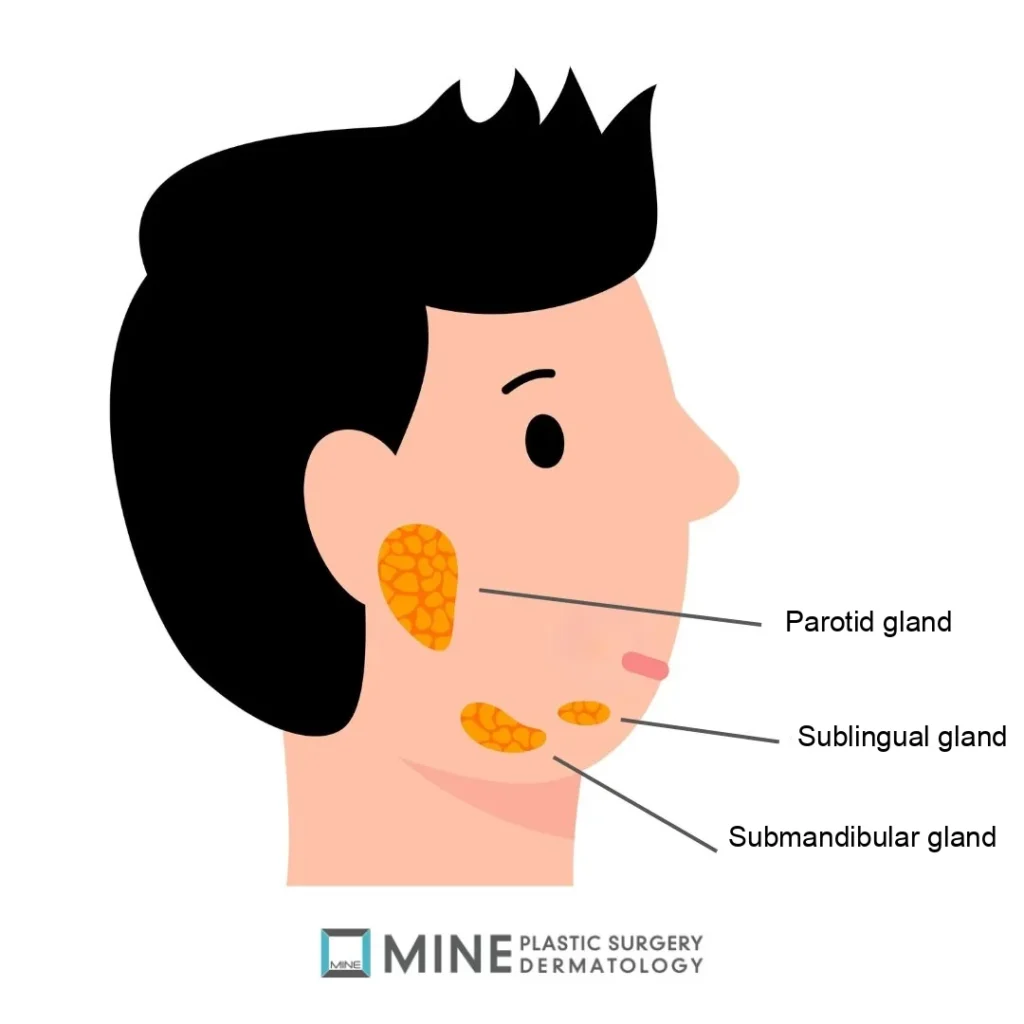
The three major salivary glands and where they sit
We each have three pairs of major salivary glands — one of each on the left and right side:
- Parotid glands — the largest pair, sitting in front of and just below each ear, wrapping around the back edge of the jawbone.
- Submandibular glands — tucked under the lower border of the jaw on each side, roughly halfway between the chin and the angle of the jaw.
- Sublingual glands — the smallest pair, lying under the tongue on the floor of the mouth.
Hundreds of tiny “minor” salivary glands also line the lips, cheeks and palate, but they don’t affect face shape.
How much saliva each gland makes
According to salivary gland textbooks, at rest the submandibular glands produce about 65% of your saliva, the parotid glands about 20% and the sublingual glands about 5%, with the minor glands making up the rest. The balance shifts when you eat: medical textbooks note that the parotid glands’ share rises to more than half of total saliva during meals, because they release a watery saliva that helps you chew and swallow.
In plain English, the submandibular glands are the “always on” workers, while the parotid glands are the “mealtime” workers. Both can grow when kept busy, and both can change your facial outline.
Gland tissue is not fat — why that matters
Here is the key idea behind the whole topic, and the most practical answer to the question “What is salivary gland hypertrophy?” for anyone who has been dieting. A salivary gland is a working organ made of secretory cells, not a storage depot like fat. When you lose weight, your body burns stored fat, but it has no reason to shrink a gland that still has a job to do.
In fact, weight loss often makes enlarged glands more visible, because the gland stands out once the fat layer over it thins. That is why some of my patients tell me their jawline looked “worse” after a successful diet. The same logic explains why liposuction alone may disappoint when the real bulk is gland tissue sitting under the fat layer.
Parotid vs Submandibular: Which Gland Changes Your Face Shape?
Where an enlarged gland sits decides what you see in the mirror.
Parotid enlargement: a wider, squarer lower face and “bull neck”
Clinically, textbooks describe parotid enlargement as a soft swelling behind and over the angle of the jawbone that blurs the border between the face and the neck. Doctors sometimes call this a “bull neck” appearance — a purely descriptive medical term for a lower face that flows straight into the neck without a clear jaw angle. From the front, the lower face can look wider or squarer.
This is easy to mistake for a strong jaw muscle (the masseter). A simple test I use in clinic: clench your back teeth and feel the area in front of your ear. If it turns firm and pushes outward, the masseter muscle is the likely cause. If it stays soft and doughy even while you clench, a gland is more likely. I explain this distinction in more detail in my guide to the parotid gland vs masseter muscle. In practice, parotid and masseter treatments are often combined when both contribute to a wide lower face.
Submandibular enlargement: the blunted line under the jaw
In my clinical experience, the submandibular glands are behind most of the under-jaw fullness that brings patients in for cosmetic reasons. When they enlarge or sag slightly with age, they fill the space just below the jawbone. The result is a jawline that looks soft or “blunted” from the side, even in a slim person, and a shape that is often mistaken for a double chin.
Interestingly, salivary gland textbooks note that true sialadenosis most often involves the parotid glands, and the submandibular glands less commonly. Cosmetically, however, even a modest submandibular gland can be very noticeable because it sits right where we judge the sharpness of a jawline.
Why the sublingual gland rarely matters for contour
The sublingual glands are small and sit deep under the tongue, so they almost never affect the outer shape of the face. When they do enlarge, it is usually a medical issue (such as a fluid-filled swelling under the tongue) rather than a contour concern.
What Causes Salivary Gland Hypertrophy?
Patients often ask, “What is salivary gland hypertrophy, and did I do something to cause it?” The honest answer is that there is rarely a single cause. It helps to think in three groups: everyday habits, the glands you were born with, and secondary causes such as medicines or medical conditions.
Everyday habits: chewing, spicy/salty food, teeth grinding, alcohol
Habits that keep the glands working hard may contribute to enlargement over time. These include frequent gum or hard-food chewing, teeth grinding or clenching (bruxism), spicy or salty food, regular drinking, smoking and long-term stress. None is proven to cause enlargement on its own, but I often see several together in patients with noticeable glands.
Genetics and anatomy
Some people simply inherit larger glands, or glands that sit lower and further out under the jaw. This often shows more after puberty and again with age, as supporting tissues loosen and the submandibular glands drop slightly.
Secondary causes: medications and medical conditions
This is the part most cosmetic articles skip when they answer “What is salivary gland hypertrophy?”, and it matters. Medical textbooks list blood-pressure medicines (antihypertensives) as the most prominent drug group linked to sialadenosis, alongside conditions such as diabetes, thyroid disorders and Sjögren’s disease. Some psychiatric medicines, including certain antidepressants, have also been reported.
The textbook list of associated conditions is broader than most people expect:
- Hormonal and metabolic: diabetes, thyroid disorders such as an underactive thyroid (hypothyroidism), obesity and liver cirrhosis (long-term scarring of the liver).
- Nutritional: heavy alcohol use and eating disorders such as bulimia and anorexia.
- Autoimmune: Sjögren’s disease, a condition in which the immune system attacks the glands that make saliva and tears, causing dry mouth and dry eyes.
- Medicines: as above — blood-pressure drugs most prominently, plus some psychiatric drugs.
Just as important: in many people no clear cause is ever found. Doctors call this “idiopathic”, and it is common.
Two other problems can make a gland swell, but they are different conditions from hypertrophy. Salivary stones (sialolithiasis) are small, hard deposits that block the duct, and sialadenitis is an infection or inflammation of the gland. Both tend to cause swelling that comes and goes with meals, pain, tenderness or a bad taste in the mouth. For general background, the MedlinePlus overview of salivary gland disorders is a helpful starting point.
When swelling needs a medical check before any cosmetic treatment
If your glands are enlarged and you have diabetes, a thyroid condition, dry eyes and dry mouth together, an eating disorder, or you take regular medication, the first step is diagnosis — not a cosmetic procedure. The same applies to swelling that is painful, one-sided, hard, growing quickly or linked to meals.
Please don’t stop a prescribed medicine on your own because you suspect it is affecting your glands. Talk to the doctor who prescribed it; there is often an alternative, and stopping suddenly can be risky.
Symptoms of Enlarged Salivary Glands: An 8-Point Self-Check
If you are still asking yourself, “What is salivary gland hypertrophy, and do I have it?”, start with the signs. The hallmark is jaw fullness that doesn’t respond to dieting. Most people have no pain at all — they simply notice the shape.
The 8-point checklist
The more of these that apply to you, the more likely a gland is involved:
- My jaw fullness hasn’t gone down despite dieting.
- There is a soft bulge below my ears or under my jaw.
- Jaw (masseter) Botox made little difference.
- My jaw looks more prominent since I lost weight.
- The border between my jawline and neck looks blurred.
- I often have a dry mouth or bad breath.
- I love spicy food or chew gum frequently.
- I feel discomfort under my jaw when chewing or swallowing.
The self-check has 8 points, and in my experience three of them together — no change with dieting, a soft bulge you can feel, and no response to jaw (masseter) Botox — make gland enlargement more likely. Even so, this list is only a guide. A reliable diagnosis needs a specialist to feel the area and confirm it with ultrasound.
Gland, fat or both?
A complete answer to “What is salivary gland hypertrophy?” also covers what it is not. A double chin made of fat usually grows and shrinks with your weight and feels evenly soft across the whole area under the chin. Gland fullness sits more to the sides, below the jaw line, and doesn’t follow your weight. Many people have both, which is why the plan should be based on what an ultrasound actually shows. For a side-by-side breakdown, see my article on double chin vs salivary gland differences.
How Does Botox Shrink a Salivary Gland?
Once patients have the answer to “What is salivary gland hypertrophy?”, the next question is usually about Botox. Many are surprised that an injection best known for relaxing wrinkles can make a gland smaller. The explanation is simple once you know how a gland is “switched on”.
Acetylcholine: the “make saliva” signal
Your salivary glands work on instructions from nerves. When you smell food or start chewing, the nerve endings next to the gland release a chemical messenger called acetylcholine (a neurotransmitter, or nerve signal chemical). Acetylcholine tells the gland cells: “make saliva now”. The more often that signal arrives, the harder the gland works.
Blocking the signal at the nerve–gland junction
Botulinum toxin type A (the active ingredient in Botox and similar products) works at the exact point where the nerve meets the gland — the nerve–gland junction. Medical literature describes how it blocks the release of acetylcholine from these nerve endings, so the “make saliva” message is turned down.
Think of the gland as a busy factory. Botox doesn’t damage the factory; it simply cuts the work orders coming in. With less to do, the gland becomes less active and, over the following weeks, gradually smaller. Studies have reported a reduction in gland volume after injection, and this matches what we see on ultrasound and in the mirror.
Because the injection targets the gland, not the muscle, it is placed precisely into the parotid or submandibular gland — usually guided by careful anatomical marking or ultrasound.
Why the gland shrinks gradually — and how long it lasts
Botox for salivary glands typically lasts about 3 to 6 months before the nerve endings recover, the gland gradually returns toward its previous size and a repeat session is needed. The change builds slowly, not overnight, because the gland shrinks as its workload drops.
There are limits, too. Glands that are very large or structurally enlarged — for example, those that have dropped low under the jaw with age — may respond only partly to Botox. A temporary dry mouth or a mild feeling of fullness under the jaw can occur after treatment. I cover these in detail in my guide to the effects and side effects of Botox for salivary glands.
What Comes Next: Choosing a Treatment
Once you know the answer to “What is salivary gland hypertrophy?” and what is causing your own fullness, the treatment question becomes much easier. The right option depends on how large the glands are, why they enlarged and what result you are hoping for.
I’ve written a separate guide on how to choose between Botox and gland reduction, including recovery and risks. If you’d like to see the surgical option itself, you can read about salivary gland reduction at MINE.
Frequently Asked Questions About Salivary Gland Hypertrophy
What is salivary gland hypertrophy, exactly?
It is an enlargement of the saliva-producing glands themselves, medically called sialadenosis. It is not fat, not an infection and not a tumor; it is usually painless and affects both sides. Because it is gland tissue, it needs a gland-specific diagnosis, typically with ultrasound.
Why are my salivary glands enlarged if I’m not overweight?
Gland size has little to do with body fat. Genetics, chewing and diet habits, certain medicines and conditions such as diabetes, thyroid disorders or Sjögren’s disease play a bigger role. Slim faces can actually show enlarged glands more clearly, because there is less fat covering them.
Can medication cause salivary gland enlargement?
Yes. Blood-pressure medicines are the most prominent drug group linked to it, and some psychiatric medicines, including certain antidepressants, have also been reported. Never stop a prescribed medicine on your own — discuss it with the doctor who prescribed it.
How does Botox make salivary glands smaller?
Botox blocks the release of acetylcholine, the nerve signal that tells the gland to make saliva. With less stimulation, the gland works less and gradually reduces in size. The effect usually lasts about 3 to 6 months and then needs repeating.
How is salivary gland hypertrophy diagnosed?
A specialist examines the area by touch and uses ultrasound to measure the glands and tell them apart from fat and muscle. If a medical cause is suspected — for example, diabetes, a thyroid problem or a medicine — further checks come before any cosmetic treatment.
Book a Consultation at MINE Plastic Surgery
Answering the question “What is salivary gland hypertrophy?” is only the first step; the next is finding out whether it applies to you. Two people with the same “full jaw” can have completely different causes — gland, fat, muscle or a mix of all three. At MINE Plastic Surgery in Seoul, I examine each patient in person and use ultrasound to see exactly what is there before recommending anything — including the option of doing nothing at all.
If you’d like to find out whether your jaw fullness comes from your salivary glands, please call us at +82-2-516-1175 (Mon–Fri 10:00–19:00, Sat 10:00–16:00 KST) or send us an online consultation request. We’re happy to answer questions before you travel.
Written and medically reviewed by Dr. Lee Sung-wook, Board-Certified Plastic Surgeon (Korea), MINE Plastic Surgery.
※ This content is for informational purposes only and does not replace professional medical advice, diagnosis, or treatment. Individual results may vary, and side effects may occur. Please consult with a board-certified plastic surgeon for personalized advice.