EN
EN

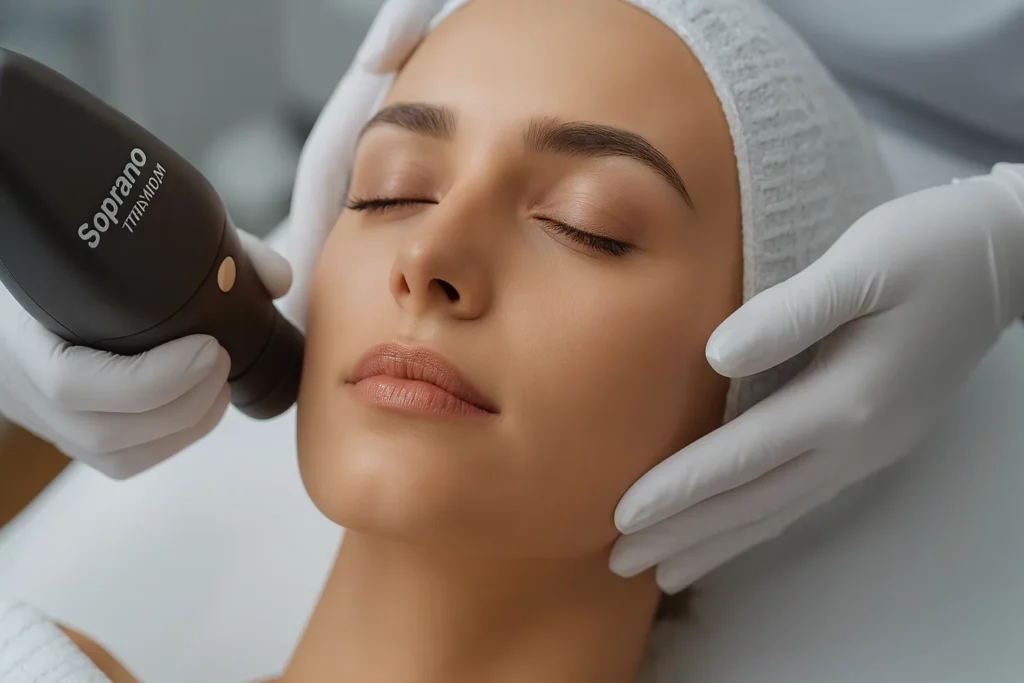
Table of contents
What is titanium lifting?
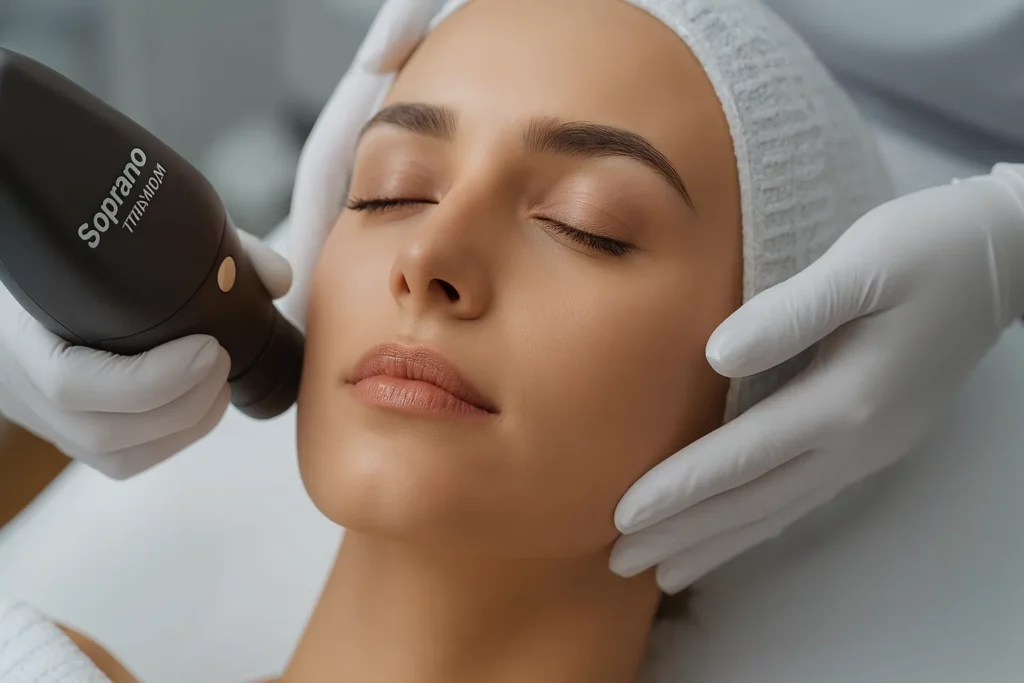
Titanium lifting is a non-surgical, energy-based skin tightening procedure that uses controlled heat from a multi-wavelength diode laser to firm sagging skin and rebuild collagen — and it has become one of the most popular forms of Korean laser treatment for facial lifting. Instead of cutting or injecting anything, the device warms the deeper layers of your skin to a precise temperature, which tightens the collagen that is already there and signals your body to grow new collagen over the following weeks.
If you have read our broader overview of how the procedure feels and what the day looks like, this article takes a different angle. Here we focus on the mechanism — how the laser energy works inside your skin — and on the Korean clinical perspective: why clinics in Seoul adopted this device, how they set it up, and how it fits alongside other energy treatments. Think of this as the “how and why it works” companion piece.
How does laser energy actually tighten skin?
Every energy-based lifting treatment — whether it uses laser, radiofrequency (RF), or ultrasound — relies on one simple idea: heat changes collagen. Your skin is held up by a mesh of collagen and elastin fibers in the dermis (the layer beneath the surface). As we age, that mesh loosens and the skin begins to droop. Controlled heat works on this mesh in two stages.
- Immediate tightening (collagen contraction). When collagen in the dermis is heated into roughly the 50–75°C range, the fibers denature and shrink. This contraction of the connective tissue gives the small, instant firming you can sometimes see on the same day.
- Gradual rebuilding (neocollagenesis). The heat also creates a tiny, controlled injury that switches on your skin’s natural repair process. Within about 72 hours an inflammatory response begins, and over the following weeks fibroblast cells use the building blocks proline and lysine to lay down brand-new collagen and elastic fibers. Dermatology textbooks call this neocollagenesis and neoelastinogenesis — in plain terms, fresh scaffolding that thickens and firms the skin.
This two-step pattern — instant contraction followed by slow rebuilding — is why energy lifting gives a small result right away and a bigger, more natural result a couple of months later. It is also why the temperature has to be controlled so carefully: too little heat does nothing, while too much can harm the surface. The whole craft of a good Korean laser treatment is delivering enough heat deep in the dermis while keeping the top of the skin safe.
Laser vs RF vs ultrasound: the energy behind a lift
Titanium lifting is a laser device, but it is helpful to see where it sits among the three main energy families used for tightening, because they all aim at the same collagen target by different routes.
- Laser (light energy) — such as titanium lifting — delivers photothermal heat. Different wavelengths are absorbed at different depths, so a multi-wavelength laser can warm several layers in one pass.
- Radiofrequency (RF) — such as Thermage — uses volumetric heating. The energy makes water molecules in the dermis vibrate millions of times per second, and that friction creates heat. RF does not depend on skin color, which is one reason it suits a wide range of skin tones.
- Ultrasound — such as Ultherapy — focuses sound waves to create pinpoint heat zones deep in the tissue, reaching the supporting layer below the skin.
None of these is simply “best.” Laser platforms like titanium lifting are valued for comfort and an even, surface-friendly warmth; RF is prized for deep, broad firming; ultrasound reaches the deepest support layer. Many Korean clinics combine modalities — for example pairing a laser session with a thread lift for structural support, or with a skin booster for hydration and texture — because the mechanisms complement rather than repeat each other.
The triple-wavelength approach explained
What makes the titanium platform distinctive is that it fires three laser wavelengths at once through a single handpiece. Because each wavelength is absorbed at a slightly different depth, the device can warm the skin from the surface down to the deeper structural layers in one smooth motion. This is the mechanism behind the nickname “BTS laser” — for Brightening, Tightening, and Sculpting.
- 755 nm (brightening) — absorbed in the upper skin, this wavelength targets pigment and helps even out tone.
- 810 nm (tightening) — reaches the dermis, where the heat drives the collagen contraction and rebuilding described above.
- 1064 nm (sculpting) — the deepest of the three, it warms the lower layers and is used to refine contour along the jaw and lower face.
The handpiece is usually moved in two ways during a session: a gliding “in-motion” pass that spreads gentle heat evenly, and a stationary “stacking” technique that concentrates energy on specific spots such as the jawline or areas of looser skin. Combining both lets the practitioner build overall warmth while still focusing power where the lift is needed most.
Why this Korean laser treatment became a Gangnam signature
Interestingly, the technology started life as a laser hair-removal system. Korean dermatologists noticed that the deep, comfortable heat it produced also firmed and lifted the skin, and they re-purposed and re-tuned the device for facial rejuvenation. That clinic-driven experimentation is a big part of why titanium lifting matured into a polished Korean laser treatment.
A few things stand out about the Korean clinical approach:
- Settings tuned for Asian skin and the “V-line” goal. Korean practitioners often emphasize the deeper 1064 nm sculpting pass along the jaw and lower face to refine the slim, V-shaped contour many local patients ask for.
- Low-and-steady energy with high repetition. Rather than a few intense pulses, the typical protocol layers many gentle, well-cooled passes — a style that prioritizes comfort and consistency.
- Treatment as part of a routine. In Korea the procedure is commonly booked as a quick “maintenance” visit and combined in planned cycles with other treatments, rather than as a one-off.
None of this changes the underlying physics, but it explains why the same device can feel like a different experience in a Seoul clinic: the value is in how the energy is dialed in and sequenced for each face. Years of high patient volume have given Korean practitioners a feel for the smallest details — how many passes a given skin type tolerates, where the jaw needs extra stacking, and how to keep the warmth comfortable from start to finish. That accumulated, hands-on experience is what turns a capable machine into a dependable Korean laser treatment, and it is a big reason patients travel to Seoul specifically for it.
What results to expect on the collagen timeline
Because the mechanism has two stages, the results arrive on a predictable timeline. Understanding it helps set realistic expectations.
- Day of treatment to 2 weeks. The immediate collagen contraction can give a subtle firming and a brighter, smoother look. This early effect is real but modest.
- 2 to 12 weeks. As neocollagenesis kicks in, firmness and definition keep improving. Most of the visible benefit builds during this window.
- Up to about 6 months. Collagen remodeling continues, so the skin can keep refining well after the session.
Results are not permanent because skin keeps aging, so clinics generally plan a short initial series followed by occasional maintenance. Healthy habits — daily sunscreen, not smoking, good hydration — protect the new collagen and help the lift last longer. This is a natural-looking enhancement, not a substitute for a surgical facelift; the goal is firmer, fresher skin rather than dramatic structural change. It is also why titanium lifting is treated as an ongoing Korean laser treatment rather than a single event: each session adds another layer of fresh collagen, so the cumulative effect over a planned series is usually stronger and longer-lasting than any one visit on its own.
Is it safe? Epidermal cooling and skin tone
The main safety challenge for any heat-based laser is protecting the surface of the skin while sending energy deep. Titanium platforms handle this with a contact-cooling tip that chills the skin’s surface as the laser fires, so the dermis heats up while the epidermis stays protected. This cooling is also why most people describe the session as a warm, hot-stone-massage sensation rather than something painful, and why numbing cream is usually unnecessary. That comfort-first design is a defining feature of titanium lifting as a Korean laser treatment, and it is what makes the procedure easy to repeat on a regular schedule.
Side effects are usually limited to mild redness or a feeling of warmth that settles within about 20–30 minutes, with no real downtime. Because part of the energy targets pigment, areas with dark spots, melasma, recent bruising, or moles need a careful assessment first, and people with very deep skin tones should be treated with conservative settings by an experienced practitioner. As a rule, the treatment is well tolerated across a range of skin types when the device is set and operated correctly.
※ This content is for informational purposes only and does not replace professional medical advice, diagnosis, or treatment. Individual results may vary, and side effects may occur. Please consult with a board-certified plastic surgeon for personalized advice.
Who is titanium lifting best for?
Because the mechanism is gentle and gradual, this Korean laser treatment tends to suit people who want firmer, fresher skin without surgery or injections. It is most rewarding for early-to-moderate skin laxity rather than severe sagging, where a surgical lift may be more appropriate. A consultation is the only reliable way to know which category you fall into, but the following profiles respond especially well.
- Early aging (late 20s to 40s). If you are starting to notice a softer jawline or mild looseness, the collagen-building effect is a natural fit for slowing and softening those changes.
- Busy schedules. With essentially no downtime, the procedure works as a “lunchtime” appointment — one reason it became a staple Korean laser treatment for working professionals in Gangnam.
- People who prefer non-injectable options. If you would rather avoid fillers or surgery, heat-based tightening offers a gradual, natural-looking route.
- Those building a combination plan. It layers well with other modalities, so it suits anyone planning a longer-term skin program rather than a single fix.
It is less suitable if you are pregnant, have an active skin infection or open lesion in the treatment area, or are looking for the dramatic change only surgery can deliver. A board-certified specialist will weigh your skin type, history, and goals before recommending a plan — and may suggest a different energy device entirely if it better matches your needs.
Frequently asked questions
Is titanium lifting a laser or an RF treatment?
It is a laser treatment. It uses three diode-laser wavelengths to heat the skin, whereas RF devices such as Thermage create heat with radio waves. Both aim at the same collagen target, just through different energy types.
Does the heat actually build new collagen?
Yes. Controlled dermal heating both contracts existing collagen for an immediate effect and triggers a repair response that produces new collagen and elastin over the following weeks — the process dermatologists call neocollagenesis.
How is this Korean laser treatment different from Ultherapy?
Titanium lifting uses laser light absorbed at several depths and is known for comfort, while Ultherapy uses focused ultrasound to reach the deeper support layer. They are often used together because their mechanisms complement each other.
How many sessions will I need?
Most clinics suggest a short initial series spaced a few weeks apart, then maintenance every several months. Your practitioner will tailor this to your skin and goals during consultation.
Is there any downtime?
Generally no. Mild redness or warmth can appear but usually fades within half an hour, and most people return to normal activities — including makeup and light exercise — the same day.