EN


There is no single best age for facelift surgery. Most people who choose a facelift are in their 40s to 70s, but the right time depends on you, not on your birth year. It comes down to how much your skin and the deeper support layer (the SMAS) have loosened, your general health and your goals. This guide explains how timing works, which type of lift tends to suit each stage, and when it is wiser to wait. If you are weighing a combined procedure, see our face, neck and forehead lift guide.
Table of contents
Understanding Facelift Surgery
Facelift surgery, also known as rhytidectomy, is an operation that lifts sagging tissue of the lower face and neck and removes excess skin. A modern facelift does not just pull the skin: the surgeon repositions the SMAS (superficial musculoaponeurotic system), a layer of fibrous tissue and muscle under the skin, so that the result looks natural and lasts longer.
The facelift chapters of a standard plastic surgery reference text (Plastic Surgery, Volume 2: Aesthetic Surgery) describe facial aging as a change in every layer at once: skin, superficial fat, the SMAS, deep fat and even bone. That is why two people of the same age can look very different, and why age alone is a poor guide to timing.
Many people considering a facelift wonder about the right time to have it. Is there an ideal age? What matters more than the number? The sections below answer these questions so you can make an informed decision.
Is There an Ideal Age for a Facelift?

What is the best age for facelift surgery?
There is no single “perfect age” for facelift surgery. The ideal timing varies from person to person with genetics, sun exposure, smoking history, weight changes and personal goals.
Most facelift patients are middle-aged or older, and healthy people from their 40s into their 70s and beyond can be good candidates for one type of lift or another. The deciding factor is the degree of laxity you actually have, not your chronological age.
As a rough guide to the best age for facelift surgery, the table below shows which type of lift usually suits each life stage:
| Age range | Typical change | Option often considered |
|---|---|---|
| 30s to early 40s | Early laxity, first signs of jowls | Non-surgical treatments, thread lift or, if laxity is clear, a mini facelift |
| Mid-40s to 60s | Visible sagging of the cheeks, jawline and neck | Full facelift with SMAS lifting |
| 60s and older | More advanced descent of deep tissues | Deep plane facelift may be considered |
| Any age | Neck skin and bands are the main concern | Neck lift, alone or with a facelift |
| 70s and beyond | Thinner skin, more health factors | Possible after a thorough health assessment |
The same reference text also notes that more patients now choose a facelift at a younger age, while healthy older patients continue to seek surgery. In other words, facelift patients span a wide range of ages.
Best Age for Facelift Surgery: Starting Too Early vs. Waiting Too Long
Thinking about the best age for facelift surgery is really about balance. Both extremes have drawbacks, and a good surgeon will tell you honestly which side of the line you are on.
- Too early: If laxity is still mild, a facelift adds incisions, recovery time and cost for only a small visible change. Dr. Lee Sung-wook, the board-certified plastic surgeon who leads MINE Plastic Surgery, notes that patients under 40 are often better served by thread lifting, a mini lift or a non-surgical option until real sagging appears.
- Too late: Waiting many years is not dangerous in itself, but skin becomes thinner and less elastic, and the chance of other health problems rises with age. The result can still be good, yet the change may be less dramatic and recovery slower.
- A second lift later: The same reference text notes that people who have a facelift at a younger age and stay healthy may later return for a secondary facelift, because aging continues after surgery. If you start in your 40s, it is reasonable to expect that you may want another procedure in the future.
In practice, the best age for facelift surgery is when three things line up: the sagging bothers you, non-surgical options no longer help much, and your health is stable enough for surgery and recovery.
Health matters more than age
When determining facelift candidacy, overall health matters far more than chronological age. At MINE Plastic Surgery, a good candidate is someone who is:
- In good general health, without a serious, poorly controlled chronic illness
- A non-smoker, or willing to stop before surgery, because smoking harms healing and results
- Realistic about what surgery can and cannot change
- Making the decision for themselves, not because of pressure from others
The reference text points out that patients seeking facial rejuvenation are usually middle-aged or older, which raises the chance of hidden medical problems. Blood pressure, smoking and any medicines or supplements that increase bleeding must be checked before surgery. Uncontrolled high blood pressure is a reason to postpone a facelift, while well-controlled blood pressure is not.
Signs You’re Ready for a Facelift (Beyond Age)
How do I know if I’m ready for a facelift?
Rather than focusing only on age, look for these physical signs. For a step-by-step mirror check, see our guide to the signs that you might need a facelift.
- Significant skin laxity: Noticeable sagging along the jawline (jowls) or neck is one of the most common reasons people seek facelift surgery. This kind of laxity usually cannot be corrected with non-surgical treatments.
- Deep facial folds: Pronounced nasolabial folds (lines from the nose to the corners of the mouth) or marionette lines (lines from the corners of the mouth to the chin) that create a tired look.
- Loss of facial volume: As we age, facial fat diminishes, which can create a hollow appearance. Fillers can help temporarily, but marked volume loss combined with sagging may be better treated with a facelift, sometimes with fat grafting.
- Non-surgical treatments no longer satisfy: If fillers, Botox or thread lifts no longer give the result you want, it may be time to consider surgery.
- Neck laxity: Loose skin or excess fat in the neck area (often called a “turkey neck”) can be addressed with a facelift or a neck lift.
Beyond these physical signs, you should also consider:
- Emotional readiness: You should feel psychologically prepared for surgery and its recovery, with realistic expectations about outcomes.
- Time for recovery: You will need to set aside time to recover. Most people need about two to three weeks before they feel comfortable being seen in public.
Facelift Options for Different Age Groups
What type of facelift is right for my age?
Depending on your age and the extent of facial aging, different facelift procedures may be recommended. The options below are general guidelines; the best procedure for you depends on your own anatomy and aging pattern. For a direct comparison of the two most common choices, read mini facelift or full facelift: which is right for me?
Mini Facelift
A mini facelift is often suitable for patients from their 30s to their early 40s who are just beginning to show sagging. It works mainly on the mid and lower face (cheeks, jowls and jawline) through a shorter incision, but it still lifts the SMAS layer, not just the skin. The best age for a mini facelift is therefore set by early but real laxity, not by a birthday.
Benefits of a mini facelift include:
- Shorter recovery time
- A shorter incision that is easier to hide
- Subtle improvement for those who want a natural change
- Treating early laxity before it becomes more advanced
Full Facelift
A full facelift (also called a traditional or standard facelift) is typically more appropriate from the mid-40s into the 60s, when sagging is more obvious. This comprehensive procedure addresses the mid-face, lower face and neck, and lifts the SMAS layer together with the skin.
A full facelift can:
- Tighten sagging facial skin
- Soften deep folds
- Reposition descended facial fat and muscle
- Reduce jowls and improve the neckline
- Give longer-lasting results than less invasive options
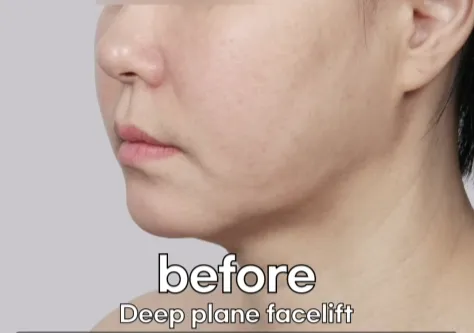
For patients in their 60s and older with more advanced descent, a deep plane facelift, which releases and repositions deeper tissue layers, may be considered.
Neck Lift
For patients mainly concerned with the neck, a neck lift may be performed alone or together with a facelift. The best age for a face and neck lift follows the same rule as for a facelift alone: it depends on how loose the neck skin and muscle have become. Surgeons grade the neck by how much loose skin, fat and muscle banding there is, and choose the technique to match.
A neck lift can:
- Tighten loose neck skin
- Remove excess fat under the chin and neck
- Soften vertical neck bands (platysmal bands)
- Create a more defined jawline
Mid-Face Lift
The mid-face lift focuses on the cheek area and can help patients with significant mid-face descent. This procedure can:
- Elevate descended cheek tissues
- Soften prominent nasolabial folds
- Improve the transition between the lower eyelids and cheeks
- Address mid-face volume loss
Can You Be Too Old for a Facelift?
Is there an upper age limit for facelift surgery?
There is no strict upper age limit for facelift surgery. Candidacy depends on physical health, skin quality and realistic expectations, not on age alone. Healthy patients in their 70s can be suitable, but they need a more thorough health check first.

Before surgery, an older patient’s assessment at MINE covers:
- Heart and circulation
- How well chronic conditions such as diabetes and high blood pressure are controlled
- Current medicines, especially blood thinners
- Overall physical function and ability to recover
Older patients should also be aware of these points:
- Recovery time: Healing can take longer than in younger patients, and swelling and bruising may last longer. Plan to have help with daily tasks for the first few days.
- Bleeding risk: Hematoma (a collection of blood under the skin) is by far the most common complication of facelift surgery. A 1994 study in Plastic and Reconstructive Surgery reviewed 1,236 consecutive facelifts: hematomas needing surgical drainage occurred in 1.86% of cases, and patient age did not independently affect that rate. A later study of 1,078 facelifts in the British Journal of Plastic Surgery found that higher systolic blood pressure, taking aspirin or other anti-inflammatory painkillers, and smoking were each linked to a higher risk of hematoma. Good blood pressure control before and after surgery is therefore essential at any age.
- Skin quality: Older skin is often thinner and less elastic, which affects the surgical plan. Sometimes a staged approach with smaller procedures is recommended instead of one large operation.
- Realistic expectations: A facelift can refresh the face, but it cannot stop aging. Results in older patients may be less dramatic than in younger patients, and the goal is a natural, stable improvement without an over-pulled look.
For a fuller list of risks and how to lower them, read our guide to facelift side effects and precautions.
Facelift Recovery at Different Ages
Whatever the best age for facelift surgery turns out to be in your case, recovery follows a similar pattern at every age, although older patients often move through each stage more slowly:
| Stage | What to expect | Typical timing |
|---|---|---|
| Early recovery | Swelling, bruising and discomfort are at their peak | 1 to 2 weeks |
| Return to social life | Most swelling and bruising have faded, and what remains can be covered with makeup | After 2 to 3 weeks |
| Middle recovery | Remaining swelling settles and the result looks more natural | 1 to 3 months |
| Final result | All swelling resolves and the final result appears | 6 to 12 months |
If you are traveling to Seoul for surgery, plan your trip around the first one to two weeks, when swelling and bruising peak, and allow two to three weeks after surgery before you return to social life.
How to Choose the Right Facelift Surgeon
Choosing the right plastic surgeon is one of the most important decisions in your facelift journey. The surgeon’s skill and experience shape the result at any age and with any technique.
When choosing a facelift surgeon, look for someone who:
- Is board-certified in plastic surgery. In the US, the American Society of Plastic Surgeons lists its members. In Korea, look for a certified plastic surgery specialist; the Korean Society of Plastic and Reconstructive Surgeons is the national professional society.
- Has extensive experience with facelift procedures specifically
- Uses SMAS-based techniques that produce natural-looking results
- Can show you before and after photos of their own facelift patients
- Makes you feel comfortable and heard during your consultation
- Checks your health and medicines carefully before agreeing to operate
During your consultation at MINE Plastic Surgery, feel free to ask about the surgeon’s experience and the specific technique proposed for your face.
Key Takeaways
- There is no single best age for facelift surgery; the amount of sagging and your health decide the timing.
- 30s to early 40s: a mini facelift may suit early laxity that is clearly visible; if sagging is still mild, non-surgical options may be enough.
- Mid-40s to 60s: a full facelift with SMAS lifting is often recommended.
- 60s and beyond: a deep plane facelift may be considered, and healthy patients in their 70s can still be candidates after a careful health check.
- Controlled blood pressure, no smoking and realistic expectations matter more than the number on your birth certificate.
Best Age for Facelift: Frequently Asked Questions
At what age should I consider a facelift?
There is no fixed best age for facelift surgery, so the question is really when your laxity justifies it. Most specialists suggest waiting until at least the mid-40s for a full facelift, because younger patients often do not yet have enough laxity to need one. Below that age, a mini lift, thread lift or non-surgical treatment is often more suitable.
What is the best age for a mini facelift?
A mini facelift is usually considered from the 30s to the early 40s, once early jowls or cheek sagging appear that non-surgical treatments cannot fix. The timing depends on the amount of laxity, not on age alone.
What is the best age for a face and neck lift?
Just as there is no single best age for facelift surgery in general, there is no set age for a face and neck lift. It depends on how loose the neck skin and muscle have become, whether neck bands are visible and how much fat sits under the chin. When the jowls and neck sag together, a neck lift is often done with a facelift, and the same health checks apply.
Can I have a facelift in my 70s?
Yes, if you are in good health. The best age for facelift surgery depends on your health, not on an upper age limit. A thorough preoperative health check is essential, recovery may take longer and expectations should be realistic.
How long does a facelift last?
It depends mainly on the technique, your skin and your lifestyle, including smoking and sun exposure. Aging continues after surgery, so the face keeps changing. See how long a facelift lasts by technique for details.
Can I delay a facelift with non-surgical treatments?
Early sagging can be partly improved with treatments such as Ulthera, Thermage, thread lifts or fillers. For moderate or more advanced sagging, however, surgery is usually the more effective option.
※ This content is for informational purposes only and does not replace professional medical advice, diagnosis, or treatment. Individual results may vary, and side effects may occur. Please consult with a board-certified plastic surgeon for personalized advice.