EN
EN

Table of contents
You may need a facelift when your facial aging is driven mainly by sagging and descent of the deeper soft tissues of the face and neck—not just surface skin texture or lost volume. In that situation, lifting and repositioning those tissues is what restores a younger, rested look, and creams or fillers cannot do the job.
If you have been studying your reflection and wondering whether you need a facelift, this guide will help you self-assess. We will walk through the real signs to watch for, the medical reasons behind them, and a simple at-home check you can do before you ever book a consultation.
The key question is not “How old am I?” but “What kind of aging am I seeing?” That distinction is what tells you whether you need a facelift or would do better with a non-surgical treatment.
The 6 signs at a glance. Use this table as a quick checklist; each sign is explained in detail further down.
| Sign | What you notice in the mirror | What it usually points to |
|---|---|---|
| 1. Sagging lower face and jowls | Heavy, droopy skin along the jaw; deeper nose-to-mouth folds | Descent of the deeper tissues: the main reason people need a facelift |
| 2. Blurred jawline | The jaw edge is no longer crisp from the side | Loosened SMAS (the support layer under the skin) and neck muscle; often treated with a facelift plus a neck lift |
| 3. Midface descent | Cheeks sit lower; you look tired even when you are well rested | Either descent (a lift helps) or simple deflation (filler may be enough) |
| 4. Persistent deep folds | Filler results seem to fade sooner and folds return | A structural problem rather than surface lines |
| 5. Looser neck or neck bands | Loose skin under the chin, vertical cords, a softer neck angle | Neck laxity; usually assessed together with the face |
| 6. Feeling self-conscious | Avoiding photos, hiding the jaw or neck | A valid reason to get an assessment, not a diagnosis |
Understanding Facial Aging: When You Need a Facelift

Before we look at the telltale signs, it helps to understand what is happening beneath the skin. Aging changes the face on several layers at once:
- Loss of Elasticity: The skin makes less collagen and elastin—the proteins that keep it firm and springy—so it no longer snaps back the way it used to. Dermatology textbooks report that the skin’s total collagen content falls by roughly 1% a year in adulthood. Research on the aging face places the start of these skin changes at around age 30.
- Soft-Tissue Descent: The fat pads and support layers slide downward under gravity, draining the upper and middle face while adding heaviness to the jowls and neck.
- Volume Loss and Volume Shift: The cheeks flatten as midface fat melts away, while the lower third of the face can paradoxically look fuller and heavier.
- Sun and Lifestyle Damage: Years of UV exposure, smoking, and stress speed up wrinkling and discoloration on top of everything else.
Here is the part that matters most for self-assessment. Medical texts on facial aesthetic surgery describe the aging face as three things happening together: soft tissue sliding downward (called ptosis), a loss of volume in the upper and middle face, and a gain of heaviness in the jowls and neck.
In plain terms, the top of the face empties out while the bottom sags and gets weighed down. A big reason is that two support structures lose their grip.
The first is the SMAS (the superficial musculoaponeurotic system—a sheet of muscle and connective tissue that acts like the scaffolding under your skin). The second is a set of retaining ligaments that anchor the face in place. As both stretch and loosen, the deeper tissues drift down.
This is the core insight. A true facelift lifts and repositions that deeper scaffolding, which is something creams, skin tightening, or fillers cannot do. If your aging is mostly this kind of structural sagging, you likely need a facelift. If it is mostly fine lines or lost volume with good underlying support, you may be better served elsewhere.
Key Signs You Need a Facelift
With that anatomy in mind, let’s translate it into signs you can actually look for in the mirror. The clearer and more numerous these signs, the stronger the case for surgery. None of them alone is a verdict—think of them as a checklist that builds a picture.
1. Sagging Skin in the Lower Face and Neck
The single most recognizable sign you need a facelift is loose, sagging skin in the lower face and neck. It tends to show up in a few familiar ways:
- Jowls: Loose skin and descended fat along the jawline that create a droopy, heavy look.
- “Turkey Neck”: Excess, hanging skin under the chin that resembles a wattle.
- Deep Nasolabial Folds: Pronounced lines running from the nose to the corners of the mouth.
- Marionette Lines: Vertical lines extending from the corners of the mouth down toward the chin.
Jowls deserve a special note, because they are the clearest sign that surface treatments will not be enough. They form when the SMAS and retaining ligaments lose tension and let lower-face fat slide down past the jawline.
This is exactly the descent a deep facelift is designed to correct—and exactly what a skin-only tightening cannot fix, because the heaviness lives below the skin, not in it.
The neck is worth watching especially closely. In aesthetic surgery literature, neck laxity is described as one of the earliest signs of facial aging, and it usually appears alongside the other signs rather than on its own.
So if you are a younger reader noticing the neck go first, you may need a facelift sooner than you think—acting early, before the changes become advanced, often gives the most natural result. For a fuller picture of how surgeons think about these changes, our comprehensive guide to facelift surgery walks through effects, recovery, and side effects in detail.
If you gently pull the skin of your cheeks and neck up and back toward your ears in the mirror and like the lifted result, that is a meaningful clue. Want to know how dramatic the change can be? See how much younger a facelift can really make you look before you decide.
2. Loss of Definition in the Jawline
A crisp jawline reads as youthful and energetic. As we age, several things blur it:
- Skin and soft tissue drifting downward over the jaw
- Fat accumulating beneath the chin
- Loosening of the platysma—the thin, ribbon-like muscle that sheets across the front of the neck
That platysma muscle is why you may see two vertical cords standing out down the front of the neck when you tense it. Surgeons call this platysmal banding, and it is a classic sign that the neck needs attention, not just the face.
During a facelift, gentle upward traction on the SMAS lifts and tightens this muscle layer. That is part of why a well-planned procedure can sharpen the jaw and smooth the neck at the same time.
If your once-sharp jawline now looks soft or “blurred” under sagging skin, you likely need a facelift to restore the contour. Many patients combine it with a neck lift to treat both zones together.
3. Midface Descent
The midface—your cheeks and the area around the eyes—is the other major place aging shows. Key indicators include:
- Flattening or hollowing of the cheeks
- Deepening tear troughs (the hollows under the eyes)
- Nasolabial folds growing more pronounced as cheek fat slides down into them
Here is a subtle but important clue: when the cheek fat descends and the midface empties, people often look tired even when they are well rested. Friends may ask if you are feeling okay when you feel perfectly fine.
That “always look tired” impression is a recognized signal of midface descent combined with jowling—the brain reads the drooping pattern as fatigue.
It is worth being honest about what is descent versus what is volume loss, because they are treated differently. If your cheeks have clearly dropped, a technique such as a deep plane facelift or a dedicated midface lift can reposition them. At MINE Plastic Surgery in Seoul, these are the two approaches our surgeons usually consider for true midface descent.
If the cheeks have simply deflated with good support still intact, a filler may suit you better than surgery—which is precisely why a professional eye matters.
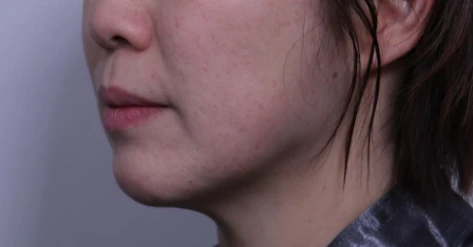
4. Persistent Wrinkles and Folds
Not every wrinkle calls for surgery. Many lines respond beautifully to non-surgical treatments, so part of deciding whether you need a facelift is knowing which is which. Consider the difference:
- Static vs. Dynamic Wrinkles: Dynamic wrinkles (caused by muscle movement, like frown lines) respond well to neuromodulators, while static wrinkles visible at rest often need more comprehensive treatment.
- Depth of Folds: Very deep folds may not be fully corrected with fillers alone.
- Longevity of Results: If injectables now give shorter-lived results and more frequent touch-ups, the underlying cause may be structural descent rather than surface lines.
This is one of the most useful self-tests: ask what your treatments are actually fighting. Fillers and energy-based skin tightening work on volume and skin quality. A facelift works on sagging and descent.
If you find yourself chasing diminishing returns from injectables season after season, it can be a sign you need a facelift instead—the real problem has moved deeper than they can reach. Our breakdown of the differences between a facelift and fillers, comparing effects and duration, lays this trade-off out clearly.
5. A Looser Neck or Visible Neck Bands
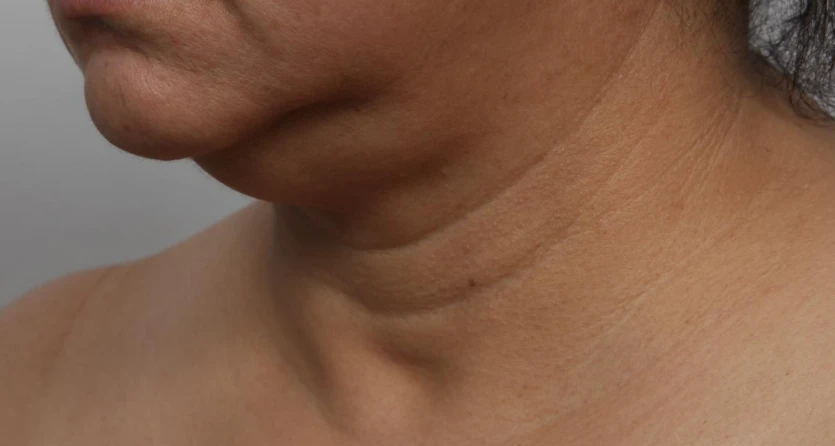
As noted under sign 1, the neck often changes early. Plastic surgery textbooks describe a youthful neck as having a crisp lower jaw border and a neck-to-chin angle of roughly 105–120 degrees. As the platysma muscle loosens from the deeper neck tissues, that angle opens up and the jaw edge starts to blend into the neck.
Check your side profile in a photo or a second mirror and look for:
- Loose, crepey skin under the chin that gathers when you look down
- Two vertical cords that stand out down the front of the neck when you grimace or tense up
- A softer, rounder angle between the chin and the neck than in older photos
- Fullness under the chin that has crept in over the years even though your weight has stayed about the same, a hint that loosening tissue rather than weight gain may be behind it
One nuance is worth knowing. The same textbooks point out that not every vertical line in the neck is muscle; some are simply folds of loose skin. Telling the two apart takes an in-person exam, and it matters because muscle bands and loose skin are handled differently in surgery.
If your neck shows several of these changes together with jowls, you may need a facelift combined with neck work rather than a neck-only treatment.
6. Feeling Self-Conscious About Your Appearance
Perhaps the most personal sign is how you feel. Emotional indicators carry just as much weight as physical ones when you are weighing whether you need a facelift. Ask yourself the following:
- Do you avoid photos or social situations because of how your face looks?
- Does your face fail to reflect how young and energetic you feel inside?
- Are you constantly using makeup, scarves, or camera angles to hide certain features?
- Has your confidence taken a hit as your facial appearance has changed?
If you answered yes to any of these, it is reasonable to explore your options with a qualified professional. Wanting to look like the energetic person you feel like inside is a perfectly valid reason to investigate whether you need a facelift—as long as your expectations stay realistic and your health is sound.
Self-Assessment: Do You Need a Facelift?

To gauge whether you might need a facelift, work through these simple at-home checks. They are a starting point for a conversation, not a diagnosis.
- The Mirror Pull Test:
- Stand in front of a well-lit mirror.
- Gently pull the skin of your cheeks and neck upward and back toward your ears.
- Watch what happens to your jowls, neck, and nasolabial folds.
- If lifting up-and-back creates a clear improvement, you may need a facelift.
- Photo Comparison:
- Gather photos of yourself from 5–10 years ago.
- Compare them with recent photos, watching for changes in jawline definition, neck contour, cheek volume and position, and the depth of facial folds.
- Significant change across these areas is a strong sign you need a facelift.
- Skincare Efficacy Check:
- Review your current skincare and non-invasive treatments.
- Be honest about whether they still hold your desired look.
- When good products and lasers no longer move the needle, the cause is often structural rather than skin-deep.
- Lifestyle Reflection:
- Think about how your facial appearance affects your confidence at work and socially.
- Consider whether you have the time and support for a recovery period.
- Professional Consultation:
- Book a consultation with a board-certified plastic surgeon.
- Discuss your concerns and goals, and undergo a hands-on assessment of your facial anatomy.
- Learn which options suit you and how to choose the right specialist, surgical or non-surgical.
One important caution before you act on a self-test alone. The mirror pull is informative because pulling tissue up and back roughly mimics what a surgeon does when repositioning descended tissue—but it cannot tell you which technique you need.
Skin-only “skin lift” approaches that merely drag skin tighter can actually push neck wrinkles up over the jawline and look unnatural. That is why, even after a positive self-check, you still need a specialist to match the right method to your anatomy.
According to the American Society of Plastic Surgeons, a facelift improves visible signs of aging in the face and neck, such as sagging skin, deepening folds between the nose and mouth, jowls, and loose neck skin, but it cannot stop the aging process. Because every face ages differently, the most natural results come from a plan tailored to your own anatomy.
Understanding Facelift Options
“Facelift” is not a single, one-size-fits-all operation, which is why two people with the same concern can require very different procedures. The main types include:
- Traditional (Full) Facelift: Addresses the mid-to-lower face and neck.
- Mini Facelift: Focuses on the lower face with shorter incisions—often suited to a younger person with early sagging. If you are torn between the two, our guide to choosing a mini facelift or full facelift compares them side by side.
- Deep Plane Facelift: Works beneath the SMAS layer to reposition the deeper tissue and midface, favored for more advanced descent.
- Mid-Face Lift: Targets the cheek area specifically.
- Neck Lift: Concentrates on the neck and under-chin area, often paired with a facelift.
- Thread Lift: A less invasive option using dissolvable threads, sometimes a fit for an early, mild case or someone not ready for surgery.
Because each technique solves a different problem, the right choice depends on whether your dominant issue is skin laxity, deep tissue descent, neck banding, or lost volume. A skilled surgeon reads your anatomy and recommends the approach—or combination—that fits your goals while keeping the result natural.
Preparing for a Facelift Consultation
If your self-assessment suggests you need a facelift, a consultation is the natural next step. Make the most of it by:
- Writing down your questions about the procedure, recovery, and realistic results.
- Bringing photos of yourself from 5–10 years ago to show your goals.
- Being ready to discuss your full medical history, including medications and supplements.
- Thinking through the time you can set aside for recovery.
- Asking about risks such as bleeding, temporary nerve weakness, and scarring, and how your surgeon manages them.
If you are considering surgery in Seoul, you can review facelift options at MINE Plastic Surgery before you book. A good consultation should leave you feeling informed, not pressured. The surgeon should confirm whether you really need a facelift, explain why a given technique suits you, and be candid about what surgery can and cannot achieve for your face.
Conclusion
There is no single “right” age or rigid checklist for surgery. The decision is deeply personal and should rest on your individual goals, your concerns, and your overall health.
What points you toward surgery, rather than non-surgical care, is the type of aging at play—structural sagging and descent of the deeper tissues, rather than surface texture or volume alone.
By understanding the signs we covered—jowls, neck laxity and banding, a blurred jawline, midface descent, persistent deep folds, and the emotional toll—and by running through the self-assessment, you can walk into a consultation already knowing what to ask. From there, a board-certified plastic surgeon can confirm whether you need a facelift and help you choose the path that lets the outside finally match how young you feel inside.
Frequently Asked Questions
At what age do you usually need a facelift?
There is no fixed age. Many people first consider it somewhere between their 40s and 60s, but whether you need a facelift depends on the kind of aging you show—structural sagging of the face and neck—rather than a number on your birth certificate. Some develop early neck laxity in their 40s, while others keep firm support into their 60s. Our guide on the right age for a facelift covers timing in more depth.
How can I tell if I need a facelift or just fillers?
As a rule of thumb, fillers and energy devices address lost volume and skin quality, while a facelift corrects sagging and descent of the deeper tissues. If your main concern is loose jowls, a heavy neck, or a blurred jawline that improves when you pull the skin up and back in the mirror, you likely need a facelift. If it is mostly hollow cheeks with good support, a filler may suit you better.
Is the mirror pull test reliable for self-assessment?
It is a useful clue, not a diagnosis. Pulling tissue up and back loosely mimics how a surgeon repositions descended tissue, so liking the result is a real signal. But it cannot tell you which technique you need, so always confirm with a board-certified plastic surgeon.
Can a facelift fix wrinkles and skin texture too?
A facelift primarily lifts and repositions sagging tissue; it is not designed to erase fine surface lines or sun damage on its own. Many patients combine surgery with skin-resurfacing treatments to address texture, while deeper folds caused by descent improve with the lift itself.
Do neck bands mean I need a facelift?
Not on their own. Vertical neck bands can come from a loosened platysma muscle or simply from folds of loose skin, and the two are treated differently. When bands appear together with jowls and a blurred jawline, a facelift with neck work is often considered; isolated bands may need a smaller, targeted approach. A surgeon can tell which you have in a short exam.
How many of the 6 signs mean I should book a consultation?
There is no magic number. One clear structural sign, such as distinct jowls or a neck that has lost its angle, is already worth a professional look. Several signs together, especially if they improve when you lift the skin up and back in the mirror, make it more likely that you need a facelift rather than injectables alone.
※ This content is for informational purposes only and does not replace professional medical advice, diagnosis, or treatment. Individual results may vary, and side effects may occur. Please consult with a board-certified plastic surgeon for personalized advice.