EN
EN

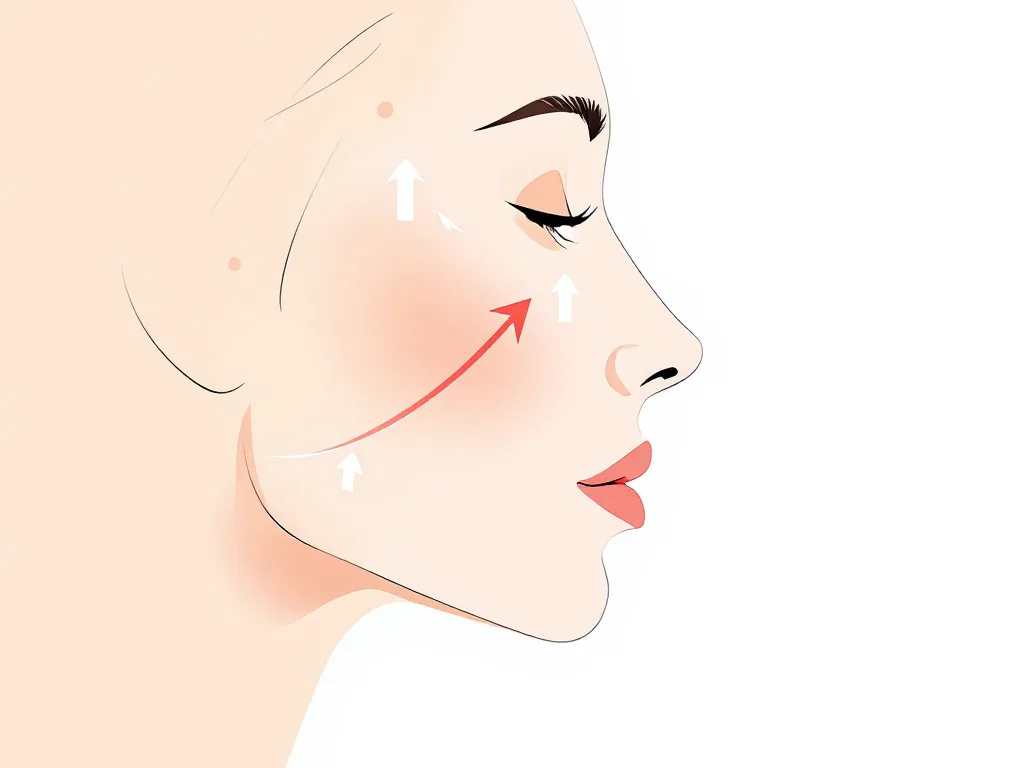
A facelift (rhytidectomy) is a surgical procedure that repositions the SMAS — the fibromuscular layer beneath the facial skin — along with the overlying tissue to restore a more youthful contour. How long a facelift lasts depends primarily on which technique is used: deep plane facelifts typically last around 8–10 years, while traditional SMAS lifts last about 5–7 years.
If you are researching facelift surgery, the same question comes up again and again: how long does a facelift last? Two people can have what looks like the same operation, yet one set of results holds for half a decade and another for nearly ten years. The difference is not luck — it comes down to how deeply the surgeon works beneath the skin.
This article was written by Dr. Lee Sung-wook, a board-certified plastic surgeon at Mine Plastic Surgery in Seoul, based on plastic surgery textbook references and current clinical practice. We’ll walk through the core principle that determines longevity, the main facelift techniques, and a realistic recovery timeline — explained in plain language, with the medical terms unpacked as we go.
Table of Contents
- What Is a Facelift — and Why Does Longevity Vary?
- 5 Types of Facelift Surgery — From Skin-Only to Deep Plane
- How Long Does a Facelift Last? Longevity by Technique Explained
- Facelift Recovery Timeline — Week by Week Guide
- Mine Plastic Surgery’s Dual-Tight Facelift — 4 Customised SMAS Options
- Facelift vs Thread Lift — Which Option Suits You?
- Frequently Asked Questions About Facelift Longevity
What Is a Facelift — and Why Does Longevity Vary?
A facelift is not simply a matter of pulling the skin tight. Just beneath the surface of your face sits a thin sheet of tissue that wraps around the muscles responsible for your expressions. Surgeons call this the SMAS (superficial musculo-aponeurotic system — the fibromuscular layer that supports the face). A facelift lifts this SMAS together with the overlying skin, moving sagging tissue back toward where it sat in your younger years.
Facial rejuvenation surgery has a long history worldwide, and the facelift is recognized by ISAPS (International Society of Aesthetic Plastic Surgery) as the standard surgical approach to restoring a youthful facial contour. As with any operation, however, temporary swelling, bruising, and altered sensation are possible, so a thorough consultation should always come first.

The role of the SMAS (the face’s hidden support layer)
Think of the SMAS as a soft, continuous scaffold sitting between your skin and the deeper muscles. Because it is connected to both, lifting it allows a surgeon to reposition the deeper structure of the face rather than just stretching the surface. This is why a well-performed facelift looks natural in motion — the support layer is doing the work, not the skin alone.
How retaining ligaments drive facial aging
Throughout the face, small bands of tissue tether the skin and SMAS firmly to the underlying bone. These are the retaining ligaments (the zygomatic, masseteric, and mandibular ligaments — think of them as anchoring cables for your soft tissue). In a youthful face these cables hold everything snugly in place. According to plastic surgery textbooks, age-related loosening of these ligaments is a key driver of facial aging: as the anchors slacken, the cheeks slide downward and the nasolabial folds (the lines running from the nose to the corners of the mouth) deepen.
The takeaway is simple but important: facial aging is not only a surface problem. It begins in the deeper structural layers. That is exactly why pulling on skin alone has limits, and why addressing the SMAS and the retaining ligaments is what produces a natural, lasting result.
5 Types of Facelift Surgery — From Skin-Only to Deep Plane
Facelift techniques are grouped by how deeply they work on the SMAS. Because the right approach depends on how much sagging is present and how much recovery time a patient can manage, it helps to compare the main options side by side.
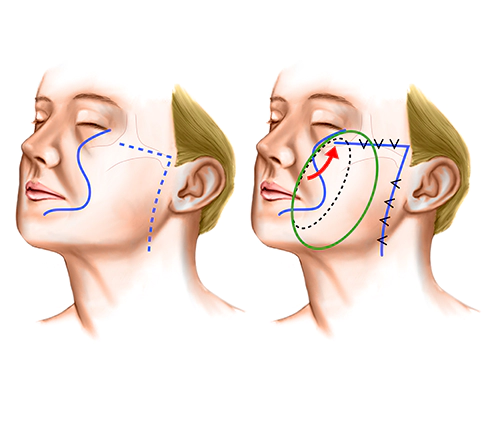
SMAS plication and SMASectomy — well suited to mild to moderate sagging
SMAS plication folds and stitches the SMAS without separating (dissecting) it from the deeper tissue. Plastic surgery textbooks note that when the SMAS is thin, plication is a sound alternative to fuller dissection. Because the incisions and dissection are limited, recovery tends to be quicker, which makes it a good fit for mild to moderate laxity.
SMASectomy removes a small strip of excess SMAS tissue and then closes it, producing a cleaner jawline contour. It suits patients whose sagging is a little more pronounced.
High SMAS and deep plane — targeting mid-face and deeper layers
High SMAS raises the SMAS flap (the sheet of tissue being lifted) from a higher point above the cheekbone, which is effective for restoring volume to a flattened mid-face (the central zone running from below the eyes to the mouth).
The deep plane technique works at the deepest level. When the retaining ligaments are fully released, the SMAS is freed from its anchoring cables and can move as one unit with the skin to a higher position, where it is re-secured. According to surgical anatomy references, it is only after this ligament release that the surgeon can precisely redistribute the facial fat vertically. The trade-off is technical difficulty — the deep plane demands considerable surgical experience. If you want a closer look at this approach, see our guide to the deep plane Korean facelift.
Mini facelift — reduced incision option for early laxity
The mini facelift uses minimal incisions and suits early sagging or partial correction. With a lighter recovery burden, it can be recommended as a gradual, lower-commitment starting point for patients who feel a full procedure is too much at this stage.
One reassuring point across every technique: the incision lines are designed to follow the natural creases in front of and behind the ear and along the temporal hairline. Once healing is complete, scars are virtually invisible from the front.
How Long Does a Facelift Last? Longevity by Technique Explained
This is the question most patients care about most: how long does a facelift last? It is genuinely confusing that one facelift might hold for five years while another lasts close to ten. The answer comes down to a single factor — how completely the retaining ligaments were released.

Why retaining ligament release determines duration
Recall that the retaining ligaments are the cables tethering the SMAS to bone. When these cables are fully released (as in the deep plane technique), the SMAS can move freely and be re-anchored at a higher position. Once it reattaches firmly in that new spot, it resists gravity far better, so re-sagging takes much longer to appear. By contrast, when the ligaments are left intact and all the lifting weight rests on a single fixation point, that one point bears the entire load — and the result tends to relax sooner. Surgical anatomy texts describe how, after deep plane dissection, the released anchors reattach during healing and resume their natural job of opposing gravity, which is the structural reason this approach lasts.
Longevity comparison: thread lift vs SMAS plication vs deep plane
Here are the benchmarks commonly used in clinical practice. Keep in mind these are averages — individual skin elasticity and lifestyle can shift the numbers in either direction.
- Thread lift (non-surgical): the weight rests on only a few fixation points, so sagging often recurs after about 1–2 years.
- Traditional SMAS lift (plication): roughly 5–7 years is the clinical benchmark.
- Deep plane facelift: approximately 8–10 years, because full ligament release allows higher fixation and the anchors re-establish their anti-gravity function as they heal.
In short, the more deeply the retaining ligaments are addressed, the longer results tend to last. That said, a deeper operation also carries more technical difficulty and a heavier recovery — so the deepest technique is not automatically the right answer for everyone.
Lifestyle factors that extend facelift results
Two patients can have the same surgery and still see different longevity, depending on how they care for their skin afterward. The single most impactful factor is sun protection: ultraviolet light breaks down skin elasticity and accelerates aging. Add not smoking and a stable, healthy weight, and you can enjoy your result for longer. Rapid weight changes deserve particular caution, because they alter facial volume and can affect the contour you worked to achieve.
Facelift Recovery Timeline — Week by Week Guide
Every facelift moves through a predictable series of recovery stages, from the day of surgery to the final result. Knowing what to expect at each stage makes the whole process feel far more manageable.

Week 1: Maximum swelling and bruising — absolute rest
The first week is when swelling and bruising peak. During this period, avoid anything that raises your blood pressure — strenuous exercise, saunas, and alcohol — and rest completely. Keeping your head slightly elevated helps reduce swelling.
Weeks 2–4: Returning to daily life
From the second week, you can ease back into light daily activities. Diligent sun protection is essential whenever you go out, and you should take care not to irritate the incision areas. By weeks three to four most of the bruising has resolved and a return to social activities becomes possible. Going back to work is typically possible 2–3 weeks after surgery, though this varies with the physical demands of your job.
3–6 months: Final results emerge
Visible swelling largely subsides within the first month, but it takes about six months for the tissues to settle fully and the final contour to emerge. The true result is most accurately judged at the six-month mark, so it’s worth being patient rather than evaluating too early. When neck sagging is also being corrected, a neck lift may be performed alongside the facelift. For a full day-by-day breakdown, see our facelift recovery guide.
Throughout recovery, temporary numbness, bruising, and swelling are expected, and in rare cases inflammation or scarring can occur — so following your medical team’s guidance closely during the healing period is important.
Mine Plastic Surgery’s Dual-Tight Facelift — 4 Customised SMAS Options
Mine Plastic Surgery’s Dual-Tight Korean Facelift is distinguished by the way it treats the face’s separate layers individually. The skin layer, the subcutaneous fat layer, and the SMAS layer are each dissected and tensioned on their own. This makes it possible to correct precisely where correction is needed while preserving natural facial expression.

Layer-by-layer dissection for natural expression
The face is not a single block of tissue — it is several layers stacked on top of one another. Pulling all of them at once can leave expressions looking stiff, but adjusting the tension layer by layer lets the surgeon lift firmly where lift is needed and stay gentle where natural movement matters most.
Choosing between plication, SMASectomy, Low SMAS, and High SMAS
Mine works with four ways of handling the SMAS — plication, SMASectomy, Low SMAS, and High SMAS — selected according to each patient’s degree of sagging and facial structure. When the jaw and neck line need improvement, Low SMAS is used; when the cheeks and mid-face need lifting, High SMAS comes into play. Incisions are placed along the natural creases around the ear to keep scarring to a minimum.
Facelift vs Thread Lift — Which Option Suits You?
The comparison patients raise most often when considering a facelift is the thread lift. The two are fundamentally different in their approach.
Limitations of non-surgical thread lifting
A thread lifting procedure places absorbable threads under the skin to lift sagging tissue — a non-surgical method with the advantage of a light recovery. However, because the load rests on only a few fixation points, sagging commonly returns after 1–2 years, and the effect is limited for moderate or more significant laxity.
How to choose based on age, degree of sagging, and recovery tolerance
If you are in your late forties or older with pronounced mid- and lower-face sagging and deep nasolabial folds, a facelift can be the more economical choice over the long run. Factoring in longevity, a single surgery may ultimately prove more efficient than repeated non-surgical treatments. If full surgery still feels like a big step, beginning with a mini facelift and progressing gradually is also an option. The most accurate way to decide which approach fits is an in-person examination of your sagging pattern and skin condition — our self-assessment of the signs you might need a facelift can be a helpful starting point.
Frequently Asked Questions About Facelift Longevity
How long does a facelift last on average?
It depends on the technique. A deep plane facelift lasts roughly 8–10 years, a traditional SMAS plication lift about 5–7 years, and a non-surgical thread lift around 1–2 years. Individual skin quality and lifestyle — especially sun exposure and weight stability — also influence how long results hold.
Does a deep plane facelift really last longer than a standard facelift?
Yes. A deep plane facelift fully releases the retaining ligaments, so the SMAS can be repositioned higher and re-anchor naturally as it heals. Because the relocated support layer resumes its job of resisting gravity, the result holds against sagging more effectively over time than a standard lift.
How long is facelift recovery?
Recovery follows a clear sequence: absolute rest in week one, a gradual return to daily life over weeks two to four, social activities by weeks three to four, and the final result confirmed at around six months. Most patients return to work 2–3 weeks after surgery, depending on the demands of their job.
What can I do to make my facelift results last longer?
Daily sun protection is the single most impactful habit, since UV breaks down skin elasticity. Beyond that, avoid smoking and keep a stable weight, as sudden weight changes alter facial volume and can affect your contour. Following your surgeon’s aftercare guidance closely also supports a durable result.
What is the difference between a deep plane facelift and a standard facelift?
A deep plane facelift fully releases the retaining ligaments so the SMAS and skin can be moved as one unit to a higher position. A standard SMAS lift folds or removes the SMAS without fully releasing those ligaments. The deep plane offers better mid-face restoration and longer longevity, but it is a more technically demanding procedure that requires an experienced surgeon.
Consult One-on-One with Mine Plastic Surgery
A facelift is a procedure where the right technique shifts with your sagging pattern, skin condition, and the result you want. At Mine Plastic Surgery, Dr. Lee Sung-wook personally examines each patient and designs a tailored Dual-Tight Korean Facelift plan one-on-one. Many of our international patients travelling to Seoul for facelift surgery have the very same questions about longevity and recovery covered in this guide.
If you’re wondering about how long results last, what recovery involves, or which technique suits you, you’re welcome to reach out for a consultation. Call +82-2-516-1175 to book, or request a consultation today.
Written and reviewed by Dr. Lee Sung-wook, Board-Certified Plastic Surgeon (Korean Board of Plastic and Reconstructive Surgery), Mine Plastic Surgery, Seoul.
※ This content is for informational purposes only and does not replace professional medical advice, diagnosis, or treatment. Individual results may vary, and side effects may occur. Please consult with a board-certified plastic surgeon for personalized advice.