EN


Table of contents
What is MTS Method Skin Booster?
Microneedling is a skin treatment that uses very fine needles to make thousands of tiny channels in the skin, which switches on the skin’s natural repair process and new collagen production. MTS (Microneedle Therapy System) is simply another name for this method, and it covers both roller-type and pen-type devices. The tiny channels also let a skin booster, such as hyaluronic acid, soak in far more easily.
Does microneedling hurt? With a numbing cream applied 30–60 minutes beforehand, most people feel mild pressure or prickling rather than sharp pain; thin-skinned areas such as the forehead can feel a little more. The sensation fades soon after the needles stop, and the skin is left feeling warm, much like a mild sunburn.
This technique, also known as collagen induction therapy, has gained wide popularity for treating various skin concerns with minimal downtime and discomfort. Its low-pain reputation comes from careful preparation and technique that keep discomfort manageable during treatment, rather than from the needles themselves being painless.
Cosmetic dermatology textbooks describe microneedling as an established method with relatively few side effects. The tiny wounds close quickly, and the repair process that follows works much like normal wound healing: the skin lays down fresh collagen over the following weeks, which is what gradually firms and smooths the surface.
How is MTS Different from Traditional Microneedling?
The process of microneedling penetrates the skin and triggers the body’s natural healing response, which in turn increases collagen production. MTS is not a separate machine — it is another name for medical microneedling, whether a roller or a pen is used. What sets a clinic MTS treatment apart from a home roller is how it is carried out:
- Needle length chosen for the goal — shorter needles when the aim is to help a skin booster absorb, longer needles when treating scars
- Sterile, single-use needle heads handled by a doctor
- A skin booster applied during treatment, so the product enters through freshly opened channels
Does Microneedling Hurt? How MTS Keeps Pain Low
Microneedling is not completely painless, but three things keep discomfort low: a topical numbing cream, fine needles of the right length, and a needle depth adjusted to each part of your face.
Topical Numbing Cream
After your face is cleansed, a lidocaine-based numbing cream is applied. Clinical skin-care textbooks recommend leaving this kind of cream on for 30–60 minutes before needling, and note that covering the cream with a thin plastic film (an occlusive dressing) can help it absorb and work better. Even with good numbing, areas where the skin is thin, such as the forehead, may still feel a little prickly — this is normal and usually brief.
If you have ever reacted to a local anesthetic or numbing product, tell the team before treatment so a suitable option can be chosen. The cream is wiped off completely before needling begins, so it does not mix with the skin booster.
Fine Needles and the Right Length
The needles used in microneedling are very fine, and their length decides how deep the channels go. When the main goal is to help a skin booster absorb, short needles are usually enough. They only reach the upper layers of the skin, which is a big reason the treatment often feels milder than people expect.
Cosmetic dermatology textbooks explain the principle behind this: research microneedles are kept under about 0.9 mm (900 micrometers) so they stay above the layer where blood vessels and nerve endings sit, without stimulating pain receptors. This describes how microneedles are designed in general, not the specification of a particular device, but it shows why shallow needling is gentler.
Optimal Depth Settings
Your doctor sets the needle depth based on your skin thickness, the area being treated and your goal. Thin areas such as the forehead and around the eyes are treated more shallowly to reduce discomfort, while thicker cheek skin or scarred areas may need more depth. Textbooks also link skin thickness and needle length to how easily products pass into the skin, so the right depth supports both comfort and results.
Microneedling Pain Level: 4 Factors That Change How It Feels
If you are wondering how much microneedling pain to expect, the honest answer is that it depends. The same treatment can feel quite different from one person to the next, and even from one part of the face to another. These four factors make the biggest difference.
1. Needle Length
Needle length is the single biggest factor. Short needles used to help a skin booster absorb only touch the surface layers, so most people describe a light scratching or prickling feeling. Longer needles, such as those used for acne scar treatment, reach deeper and are felt more clearly. Textbooks note that the depth reached depends on both needle length and the number of passes, so your doctor balances the two for your goal.
2. Numbing Time
Numbing cream needs time to work. Waiting the full 30–60 minutes makes a noticeable difference, and removing it too early is a common reason people feel more than they expected. If you know you are sensitive to pain, let the team know before your session so they can allow enough numbing time and check the area before starting.
3. Treatment Area
Not every part of the face feels the same. Areas where the skin is thin or sits close to bone, such as the forehead, the skin around the eyes and the sides of the nose, tend to be more sensitive than the cheeks, which have more natural cushioning. Your doctor usually treats these zones with a lighter touch and fewer passes.
4. Passes and Technique
During MTS, the device is moved over the same area several times — horizontally, vertically and diagonally — so the channels are spread evenly. More passes mean more stimulation and slightly more sensation. A doctor adjusts the number of passes and the pressure for each zone, keeping sensitive areas gentle while giving more attention to the areas that need it most.
What it feels like: So, does microneedling hurt once the skin is numbed? Most people describe pressure, light prickling or a sandpaper-like feeling rather than sharp pain. Right after treatment, the skin usually feels warm and tight, similar to a mild sunburn, for a few hours up to about a day.
Benefits of MTS Skin Booster Treatment
Enhanced Product Absorption
Microneedling increases the skin’s permeability, allowing for better absorption of topical treatments. In laboratory studies described in cosmetic dermatology textbooks, microneedles raised skin permeability by several orders of magnitude, helping larger molecules pass into the skin instead of staying on the surface.
This is why microneedling pairs so well with a hyaluronic acid skin booster. Hyaluronic acid binds water, so the skin looks more hydrated almost straight away, while the new collagen triggered by microneedling builds over the following weeks. According to the textbook literature, combining the two gives a faster and longer-lasting result than either one alone.
Multiple Skin Concerns Addressed
What can MTS skin booster treat?
- Acne scars and textural irregularities
- Fine lines and wrinkles
- Enlarged pores and uneven skin tone
- Hyperpigmentation and sun damage
- Stretch marks and minor scarring
- Overall skin texture and firmness
Minimal Downtime
Downtime is minimal, and most people can return to work or daily activities the same day. Redness usually settles within 1–3 days, and light flaking or dryness typically clears within 3–5 days.
Skin Boosters Commonly Combined with MTS
Because the channels created by microneedling help products absorb, MTS is usually paired with a skin booster chosen for your skin’s needs. These are the options most often discussed during consultation. In most sessions only one or two are used, and your doctor chooses between them based on whether your main goal is hydration, repair after sun damage or firmer skin, then explains how each option fits your skin type and schedule.
Exosome-Enhanced Microneedling
Exosomes are tiny particles that carry growth factors and other signaling molecules. They are applied after microneedling with the aim of supporting recovery and skin repair, although the scientific evidence is still building. You can read more about how exosome treatment is used in Korea.
PDRN Skin Regeneration
PDRN (polydeoxyribonucleotide, a regenerative ingredient derived from salmon DNA) is a K-beauty favorite used alongside MTS to support skin regeneration and hydration, and it is often chosen for crepey, dry or sun-damaged skin. To see how this ingredient works, read our guide to PDRN and Rejuran.
Multi-Modal Hyaluronic Acid Infusion
Some products contain hyaluronic acid of 3 different molecular weights designed for different effects: high molecular weight for moisturizing, medium molecular weight for bio-restructuring, and low molecular weight for deep stimulation.
How long do results from MTS skin booster last?
Results typically become visible within 2-4 weeks after treatment, with optimal outcomes appearing after 3-6 months as collagen continues to regenerate. After a course of treatments for specific skin concerns, improved skin elasticity can last for longer periods, and the interval between maintenance sessions is decided with your doctor based on your skin’s condition.
Who Can Benefit from MTS Treatment?
Ideal Candidates
MTS Facial Treatment is versatile and suitable for a wide range of skin concerns, including acne scars, signs of aging, hyperpigmentation, enlarged pores, and stretch marks.
The plan is matched to your main concern. If your skin mostly looks dull or dehydrated, shorter needles combined with a hydrating skin booster are usually enough. Deeper textural concerns such as acne scars generally need longer needles and more sessions, so your doctor will explain what to expect after examining your skin.
Safety Considerations
You might not be a good candidate for microneedling if you have active acne or are taking medication for acne, have blood disorders or are on anticoagulants, have cancer and are receiving chemotherapy or radiation therapy, or have skin conditions such as eczema or psoriasis.
Professional vs. At-Home Treatment
Unlike professional microneedling, most home derma rollers don’t puncture the skin deep enough to draw blood. While this might seem less painful, you may not achieve the same results. Professional treatments offer superior safety and efficacy when performed by experienced practitioners.
Treatment Process and Recovery
What to Expect During Treatment
Pre-Treatment Preparation
- Thorough skin cleansing and assessment
- Application of topical numbing cream (30–60 minutes)
- Selection of appropriate needle depth and serum combination
During the Procedure The microneedling treatment takes 15-20 minutes for the face, with the device creating controlled micro-channels while specialized serums are applied to ensure optimal absorption.
In practice, the skin booster is spread over the face first, and the needles then pass over each area in several directions so the product is drawn into the freshly opened channels. Your doctor checks the skin as they go and eases off over thinner, more sensitive zones.
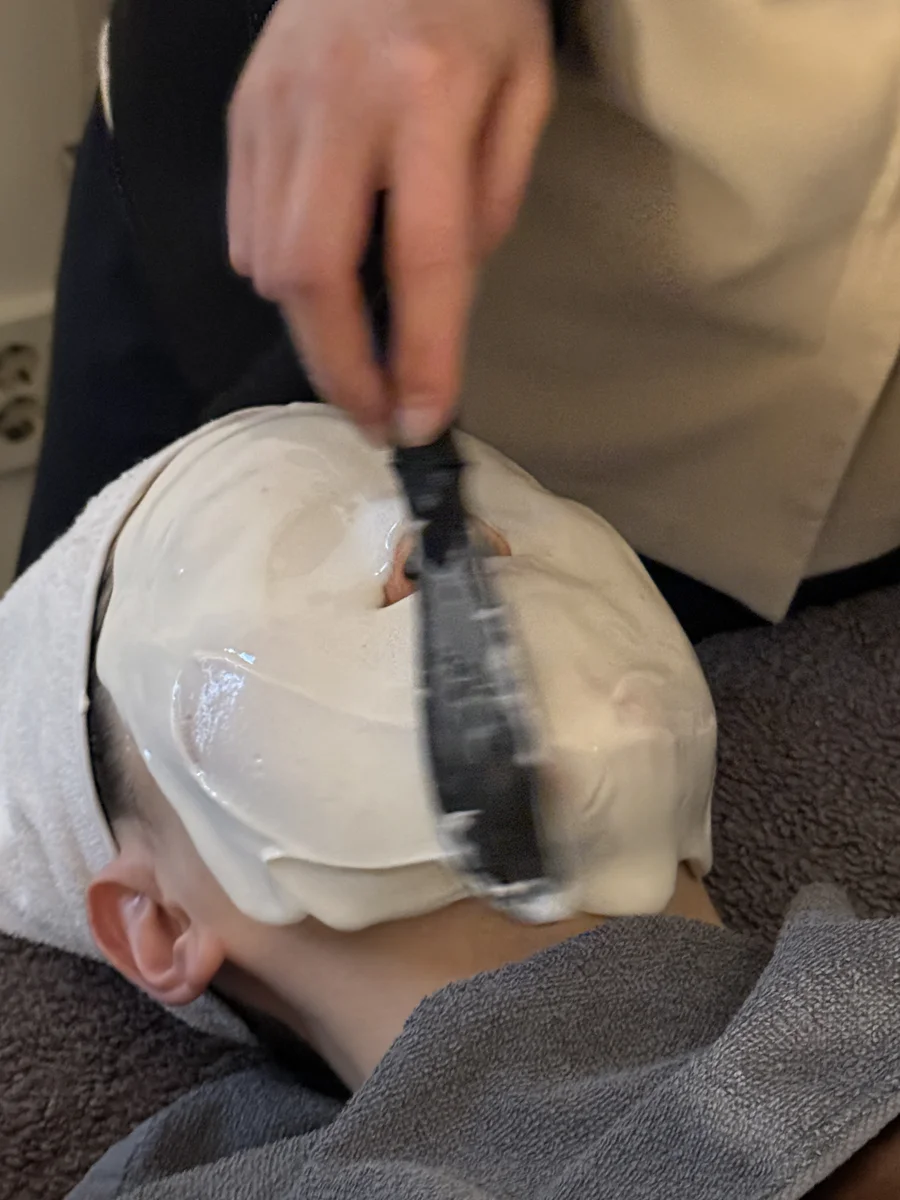
Post-Treatment Care A soothing peptide mask is applied to treated skin for about 10 minutes. Downtime is minimal: mild redness usually settles within 1–3 days, and any dryness or light peeling within 3–5 days.
Recovery Timeline
- Day 1-2: Mild redness and sensitivity (similar to mild sunburn)
- Day 3-5: Slight flaking or dryness as skin renews
- Week 2-4: Initial improvements in texture and tone
- Month 2-3: Continued collagen production and visible results
According to the Korean Society of Plastic and Reconstructive Surgeons, proper aftercare and follow-up are essential for optimal results and safety in any aesthetic procedure.
Simple aftercare helps the skin settle. Keep the treated area clean and moisturized, skip heavy makeup, scrubs and exfoliating acids for the first day or two (or as long as your doctor advises), and wear sunscreen every day, because freshly treated skin is more sensitive to sunlight.
Is microneedling suitable for all skin types?
Microneedling suits most skin types, including darker skin tones. People with darker skin tones may prefer microneedling to laser therapy because of safety concerns associated with certain types of laser treatments on skin of color. Darker skin can still develop temporary pigmentation after treatment, so the right needle depth and careful sun protection afterwards are important. This makes MTS a useful option for individuals who may not be suitable candidates for laser treatments.
Frequently Asked Questions
Does microneedling hurt?
After numbing cream, microneedling usually causes more discomfort than pain. Most people notice pressure, light scratching or prickling, and thin-skinned areas like the forehead may feel slightly stronger. The feeling eases as soon as treatment ends, leaving the skin warm for a few hours.
Does microneedling hurt without numbing cream?
Yes, it feels noticeably sharper without numbing, even with short needles, and the longer needles used for scars would be uncomfortable for most people. That is why a topical numbing cream is a standard step for microneedling in a clinic.
How long should numbing cream stay on before microneedling?
Usually 30–60 minutes. The clinic may cover the cream with a thin film to help it work better, and thin areas such as the forehead may still feel slightly sensitive even after full numbing.
How many sessions are needed for optimal results?
Most people need 4-6 treatments to see a significant difference. Sessions are typically spaced 4-6 weeks apart to allow for proper healing and collagen development between treatments.
What makes MTS method different from regular microneedling?
In a clinic setting, MTS treatment includes:
- Needle length chosen for your goal for consistent results
- Specialized serum infusion during treatment
- Advanced numbing protocols for comfort
- Sterile single-use needle heads used by a doctor
Can I combine MTS with other treatments?
Doctors sometimes combine microneedling with other collagen stimulators, energy-based devices or laser resurfacing for complementary results. However, combination treatments should always be planned and supervised by experienced practitioners.
Conclusion: A More Comfortable Way to Get Skin Booster Results
MTS method skin boosters offer a practical way to improve skin texture, hydration and firmness with little downtime. Microneedling is not completely painless, but numbing cream, short needles and a depth adjusted to each area of the face keep discomfort low for most people, and any warmth afterwards usually settles within a day.
Considering MTS skin booster treatment? A consultation lets the doctor examine your skin and decide which needle length and skin booster suit your goals — for example, whether a regenerative option such as Rejuran treatment at MINE would pair well with MTS. At MINE Plastic Surgery & Dermatology in Seoul, each step is planned around both your results and your comfort.
※ This content is for informational purposes only and does not replace professional medical advice, diagnosis, or treatment. Individual results may vary, and side effects may occur. Please consult with a board-certified plastic surgeon for personalized advice.