EN
EN


Comparing implant vs fat transfer breast volume and scars is really about one trade-off: an implant adds a fixed, chosen volume (about 100 to 600cc or more) through a single hidden incision, while fat transfer adds roughly one cup per session using your own fat, leaving several tiny entry marks instead of one scar.
“Doctor, should I get implants or fat?” I hear this in almost every breast consultation, usually after conflicting advice from friends and forums.
It becomes much easier once we split it into two smaller questions: how much bigger can I realistically get in one surgery, and exactly where will the scars be? This guide compares implant vs fat transfer breast volume and scars on those two points only. If you would like the broader picture first, read our full comparison of fat transfer and implants.
- Implant vs Fat Transfer Breast Volume and Scars at a Glance
- How Much Bigger Can Each Method Make You?
- Where the Scars Go: One Incision vs Several Small Entry Points
- Who Fits Which Method: Dr. Lee’s Body-Based Decision Frame
- Recovery Timeline: Implants vs Fat Transfer
- Risks and Precautions That Change Your Final Volume or Scars
- Frequently Asked Questions
- Plan Your Breast Consultation at MINE Plastic Surgery
Implant vs Fat Transfer Breast Volume and Scars at a Glance
Both methods make the breasts fuller, but by completely different mechanisms — which is exactly why the volume ceiling and the scar pattern differ.
| Point | Breast implants | Fat transfer |
|---|---|---|
| Volume gain | Large and predictable; size chosen in cc | Usually about one cup per session |
| Feel | Depends on the implant and your own tissue cover | Very natural, because it is your own fat |
| Longevity | Volume stays unless the implant is replaced | About 50–70% of injected fat survives; the rest is absorbed |
| Main complications | Capsular contracture, rare rupture | Fat necrosis, calcification, uneven take |
| Scars | One incision, placed to be hidden | Several small entry points at donor site and breast |
| Recovery | About 2–4 weeks | About 1–2 weeks, plus the donor site |
| Best fit | Clear, larger volume increase | Natural, modest increase |
How Implants Add Volume: A Fixed Size in cc
A breast implant is a medical-grade silicone gel device placed either beneath the breast tissue or beneath the chest muscle (the pectoralis major). Its volume is measured in cubic centimeters (cc), and the number you choose before surgery is, in practical terms, the volume you get.
How Fat Transfer Adds Volume: Only Surviving Fat Stays
Fat transfer uses liposuction to take fat from places such as the abdomen, thighs or flanks. The fat is purified and then injected into the breast in many thin threads. The catch is simple: injected fat is living tissue, and only the part that picks up a new blood supply stays.
Dr. Lee’s key point: neither method is simply “better”. Your tissue, your body fat and your goal decide which one fits.
How Much Bigger Can Each Method Make You?
Volume is where most expectations go wrong. When you weigh implant vs fat transfer breast volume and scars, the two methods differ not only in how much they add but in how certain that volume is.
Implants: 100cc to 600cc+ With a Predictable Result
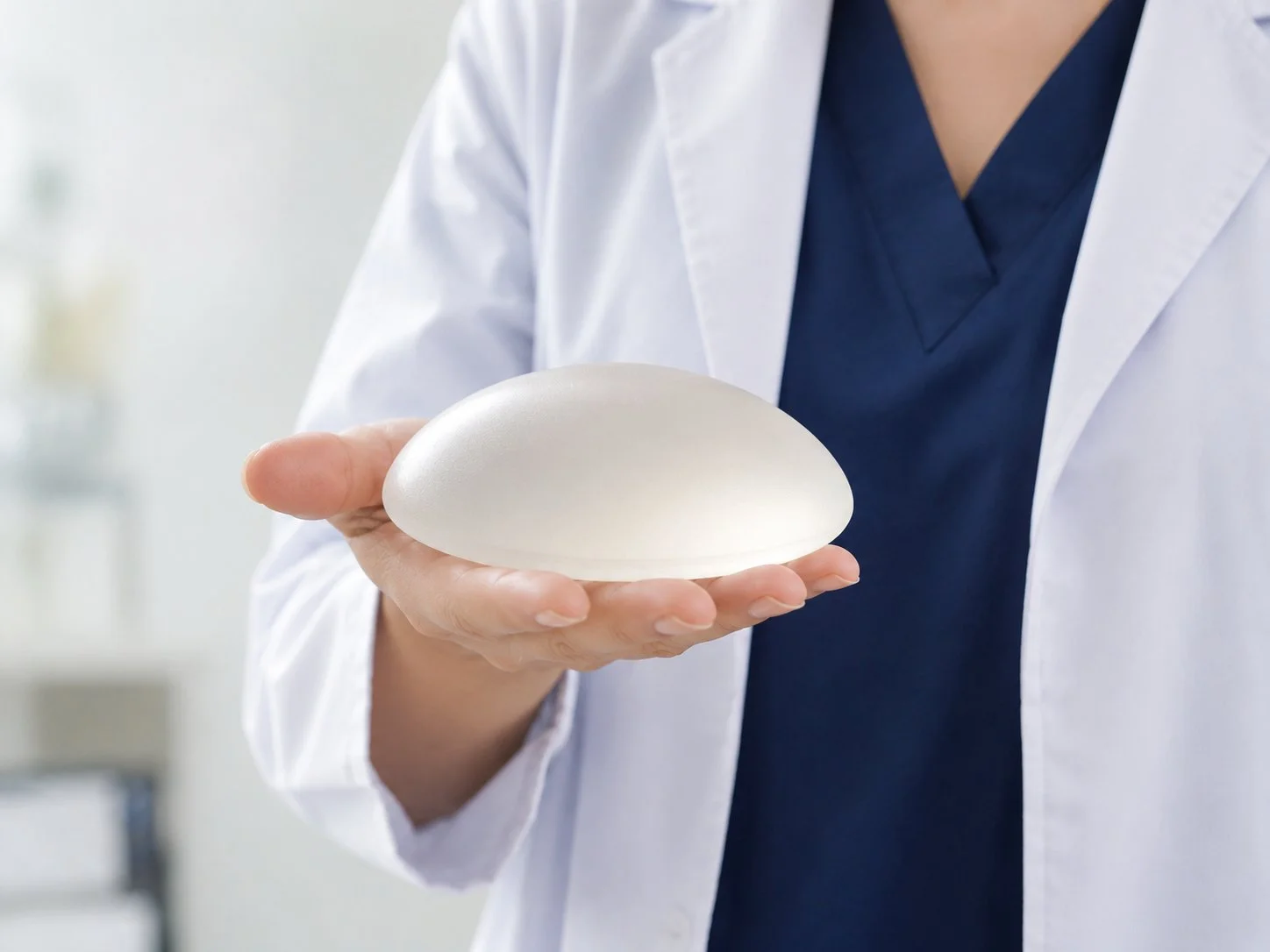
Breast implants are selected in fixed sizes from about 100cc to over 600cc, and the volume stays the same unless the implant is replaced. That is why implants are the better tool when someone wants a clear, larger change, or wants to choose the size precisely in advance.
What limits implant size is your own body: chest width and how much skin and breast tissue you have to cover the implant. I do not convert cc into cup sizes, because cup size depends on band size and bra brand. The size you pick is the size you keep, so choosing it carefully matters most.
Fat Transfer: About One Cup per Session
In practice, a single fat transfer session realistically adds about one cup, because roughly 50–70% of the injected fat survives. The rest is gradually absorbed by the body over the first few months.
Larger studies give a similar picture. In a 2024 systematic review in Plastic and Reconstructive Surgery (Seth et al.), which pooled 35 studies and 3,757 women, an average of 58% of grafted breast fat survived, with results ranging from 44% to 83%. The same review reported an average injected fat volume of about 300 mL, with a range of 134 to 610 mL.
Medical textbooks on breast surgery are direct about this. Patients should be told that fat grafting cannot guarantee volume in the way an implant can, because each body absorbs and loses fat differently. You accept a less predictable volume in exchange for a result made only of your own tissue.
Why Overfilling Fat Lowers Survival
“Just inject more fat” does not work. Grafted fat has no blood vessels of its own at first; it survives on nutrients from the surrounding tissue until new vessels grow in, so thin threads of fat survive best.
When too much fat is packed into one area, the fat in the center is too far from that blood supply. It dies instead of taking, which lowers survival and raises the chance of fat necrosis (firm lumps of dead fat) and calcification.
That is why, in my clinical experience, aiming for two or more cups with fat alone is not realistic. When a patient wants more than one session can safely give, the honest options are a second, staged fat transfer once the first result has settled over a few months, or an implant.
Where the Scars Go: One Incision vs Several Small Entry Points
Scars are the second half of comparing implant vs fat transfer breast volume and scars, and the question is not “scar vs no scar” — both leave something. It is one hidden incision versus several small ones in more places.
Implant Incisions: Armpit, Breast Fold or Areola Edge
An implant goes in through a single incision on each side, placed in one of three locations:
- Armpit (transaxillary): no incision on the breast itself.
- Breast fold (inframammary): in the crease under the breast, usually covered by the breast and underwear.
- Areola edge (periareolar): along the border of the darker areola, where the color change helps it blend.
At MINE we choose the incision that keeps the scar most discreet for each body. The scar is pink at first and fades gradually over the following months.
Fat Transfer Marks: Donor Site Plus Breast
Fat transfer has no single incision, but it leaves marks in two areas: small entry points where fat is collected (usually the abdomen, thighs or flanks) and small entry points on the breast where it is injected. Each mark is small, but there are several, on at least two parts of the body.
Which Scar Pattern Suits You?
I ask patients which matters more: the number of marks or the size of a single mark. One hidden scar points to implants; several tiny dots spread across the donor area and breast point to fat transfer.
Who Fits Which Method: Dr. Lee’s Body-Based Decision Frame
Once you have compared implant vs fat transfer breast volume and scars, the choice narrows quickly — and your body, not online opinion, decides it.
When Implants Make More Sense
- You want a clear increase of more than one cup.
- You have little body fat, so there is not enough donor fat for a meaningful transfer.
- You want to set the size and shape precisely in advance.
If this sounds like you, you can read more about endoscopic breast augmentation with implants at MINE.
When Fat Transfer Makes More Sense
- You want a natural, modest increase without a foreign device.
- You would also like to slim areas such as the abdomen or thighs.
- A natural feel is your top priority.
Textbooks also note a practical advantage here: because fat is placed into the soft layer under the skin of the upper breast, it puts less weight on the lower part of the breast than an implant does. For details on technique, see breast fat grafting at MINE.
What I Measure Before Recommending Either
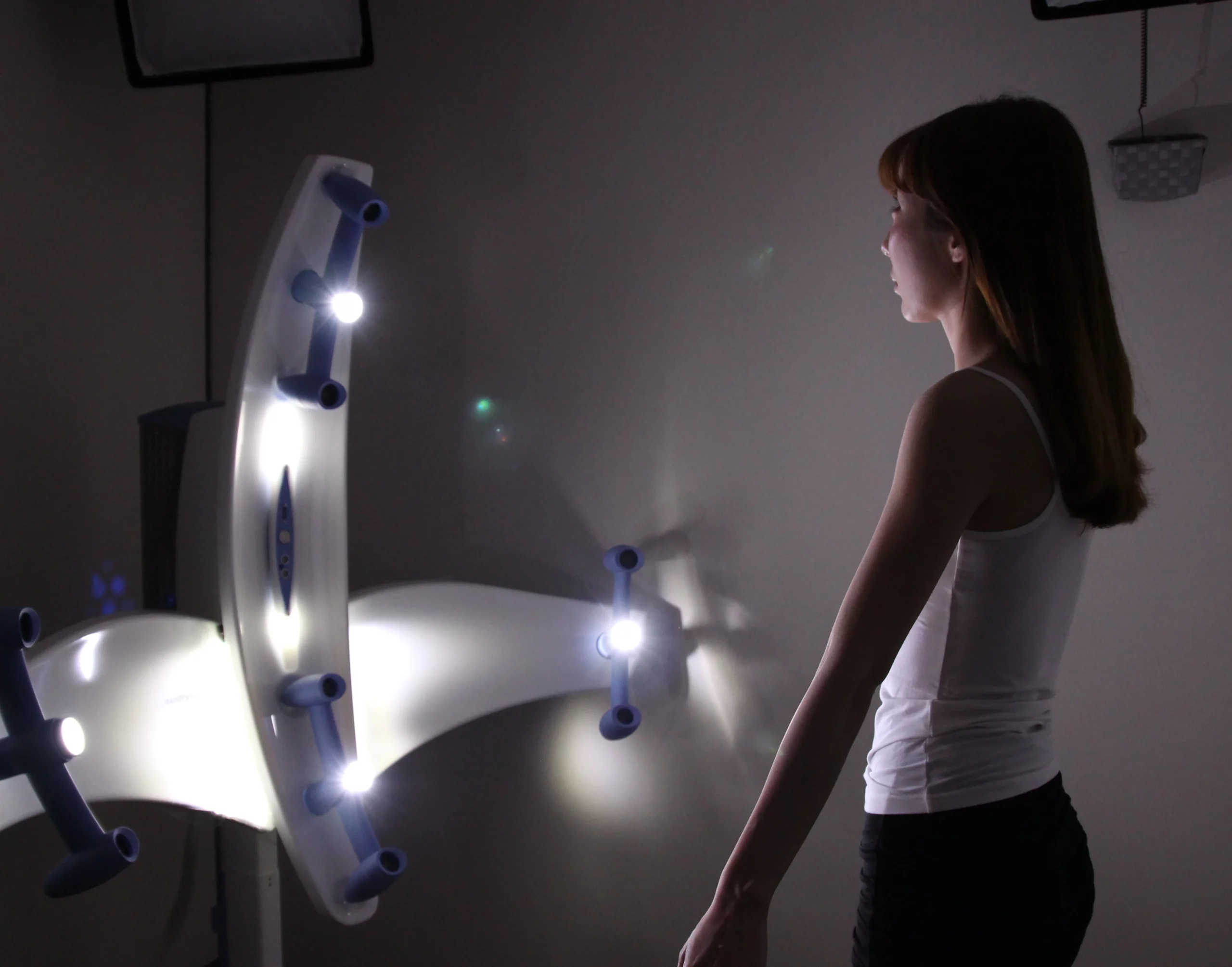
Before I recommend anything, I assess the thickness of the existing breast tissue myself, both by touch and with precise measurements. That thickness is the key factor in two decisions: which implant will be covered well enough to look and feel natural, and whether fat transfer is a realistic option at all.
I also weigh your donor fat, skin elasticity, target volume and scar priority. A 3D body analysis during consultation shows the expected change visually, so we agree on the same result rather than a vague “bigger”.
Recovery Timeline: Implants vs Fat Transfer
Beyond comparing implant vs fat transfer breast volume and scars, recovery time is the practical question, especially if you are traveling to Seoul for surgery.
| Stage | Implants | Fat transfer |
|---|---|---|
| Peak swelling | Days 3–5 | Days 2–3 |
| Light daily activities | 1–2 weeks | 1 week |
| Full daily routine | 3–4 weeks | 2 weeks |
| Final result | 3–6 months | 3–6 months |
Most patients return to light daily activities about 1–2 weeks after implants and about 1 week after fat transfer; the final shape of both is assessed at 3–6 months.
Implant Recovery: 2 to 4 Weeks
Swelling and discomfort are strongest in the first 1–2 weeks, especially when the implant sits under the muscle. Strenuous exercise usually waits until 4–6 weeks. In the early weeks the implants often sit a little high; they settle into a more natural position over 3–6 months, so the size you see in week one is not yet the final look.
Fat Transfer Recovery: 1 to 2 Weeks Plus the Donor Site
The breasts recover quickly, but the liposuction area brings its own bruising and swelling, so a compression garment is worn there. The breasts may feel firm for a while and look fullest right after surgery, then shrink as part of the fat is absorbed.
Risks and Precautions That Change Your Final Volume or Scars
When comparing implant vs fat transfer breast volume and scars, the complications below matter because each can change the volume you keep or how your breasts look.
Implant Risks: Capsular Contracture and Rupture
The body naturally forms a thin scar capsule around any implant. In capsular contracture (when that capsule thickens and tightens around the implant), the breast can become firm, painful or misshapen. Rupture is rare and usually linked to strong external force. Changes in sensation can occur, usually temporarily. For details, read our guide to capsular contracture symptoms and prevention.
Implant replacement is commonly considered 10–15 years after surgery, depending on the implant’s condition and natural aging. Surgical textbooks also describe an option for problem cases: removing the implant and grafting fat in the same operation, which can keep some volume while removing the source of the contracture.
Fat Transfer Risks: Fat Necrosis and Calcification
Fat necrosis happens when grafted fat does not get enough blood supply and turns into a firm lump you may be able to feel. Over time, some of these areas can calcify (harden with tiny calcium deposits). Uneven survival between the two sides can also leave some asymmetry. In the same review, fat necrosis appeared on imaging in 9.4% of patients and calcification in 1.2%.
Fat transfer has none of the implant-related problems, but calcification matters for breast screening: on a mammogram it can look like a finding that needs checking. This does not mean fat transfer raises cancer risk; the radiologist simply needs to know about it to read your images correctly. More detail is in our guide to breast fat transfer side effects and precautions.
Before and After Surgery: What Protects Your Result
Before surgery:
- Stop smoking at least 2 weeks before surgery.
- Pause aspirin, omega-3 and vitamin E 2 weeks before.
- For fat transfer, keep your weight stable before and after surgery.
- Tell us about every medication and allergy at consultation.
After surgery:
- Avoid strenuous exercise and pressure on the chest for 4–6 weeks, and keep incisions out of direct sun.
- After fat transfer, do not massage the grafted breast; wear compression on the liposuction area.
- After implants, avoid vigorous arm movements for 1–2 months and sleep slightly propped up at first.
- Take prescribed medication as directed and attend every follow-up visit.
Come in straight away if you develop a fever, severe pain or swelling on one side only.
Frequently Asked Questions
How much fat is injected into each breast during fat transfer?
A 2024 systematic review reported an average injected volume of about 300 mL, ranging from 134 to 610 mL. Less than that remains once the fat settles, so the usual gain is about one cup per session.
Can fat transfer alone increase breast size by two cups?
In one session, not realistically. Aiming for two cups or more with fat alone means overfilling, which lowers fat survival and raises the risk of fat necrosis. A staged second session or an implant is the safer route to that size.
Does fat transfer to the breast affect mammograms?
It can. Some grafted fat may calcify, and calcifications can look like findings that need further checking. This does not increase your cancer risk, but you should always tell the radiologist about your surgery so the images are read correctly.
Which leaves less noticeable scars, implants or fat transfer?
It depends on what you count. Implants leave one incision per side, hidden in the armpit, breast fold or areola edge. Fat transfer leaves several small entry points at the donor site and on the breast. Both fade over time.
Will my breasts get bigger if I gain weight after fat transfer?
They can. Grafted fat behaves like the fat it came from, so your breasts may grow with weight gain and shrink with weight loss. A stable weight protects the result.
How long does it take to see the final volume after implants or fat transfer?
For both, about 3–6 months: implants need time to settle into position, and transferred fat needs time to stabilize after partial absorption.
Plan Your Breast Consultation at MINE Plastic Surgery
I tell patients that online information is a reference, but the right method for your body is found by examining it. Before you book, note your target volume and how much the scar pattern matters — with that and an examination, we can weigh implant vs fat transfer breast volume and scars together and decide.
If you are planning to travel to Seoul, you can start with an online consultation request and I will review it personally, or call MINE Plastic Surgery at +82-2-516-1175.
Written and medically reviewed by Dr. Lee Sung-wook, Board-Certified Plastic Surgeon, member of the Korean Society of Plastic and Reconstructive Surgeons, MINE Plastic Surgery & Dermatology, Seoul. Published October 4, 2026. Last reviewed October 4, 2026.
※ This content is for informational purposes only and does not replace professional medical advice, diagnosis, or treatment. Individual results may vary, and side effects may occur. Please consult with a board-certified plastic surgeon for personalized advice.