EN



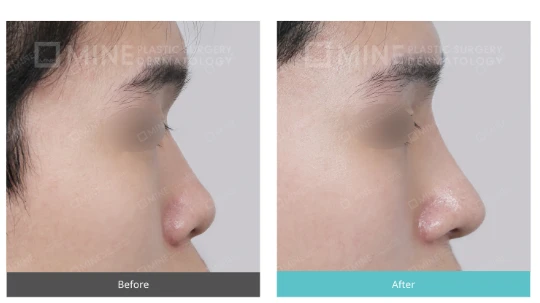
Short nose surgery is a structural rhinoplasty that lengthens the nose and lowers an over-rotated tip by extending the caudal septum with cartilage. Short nose surgery recovery typically means stitches out in 5–7 days, a return to daily life in about a week and a final shape at 3–6 months.
Maybe you have noticed it in side-profile photos: the nose looks a little short, the tip points upward, and more of the nostrils show than you would like. Many people who come to see me say the same thing. They are less worried about the operation itself than about what happens afterward. How long will I look swollen? When can I fly home? What can go wrong?
This guide to short nose surgery recovery answers those questions in order. First, how to tell whether your nose is truly short or simply has a low tip. Second, why lengthening works and why filler does not. Third, a week-by-week short nose surgery recovery timeline, followed by the risks that are specific to nose lengthening and when you should call your surgeon.
What Is Short Nose Surgery — and Is Your Nose Actually Short?
A short nose is one with too little length from the bridge to the tip and a tip that is rotated upward. Because the tip tilts up, the nostrils are more visible from the side and from below than they are from the front. Some patients tell me friends have said their face looks a little harsh in profile, even though the nose looks fairly ordinary straight on.
Short nose surgery corrects two things at once: the length of the nose and the angle of the tip. It does this by building a longer, stronger support at the front of the septum (the wall of cartilage and bone that divides the two nostrils), so the tip can sit lower and further forward.
Short nose vs. a low nasal tip: how surgeons tell the difference
Not every nose that looks “small” is a short nose. A low tip that simply lacks projection (it does not stick out far enough from the face) can look similar in photos, but it is a different problem with a different fix.
- Short nose: the distance from the top of the nose to the tip is short, and the tip is rotated upward, so the nostrils show.
- Low nasal tip: the length may be normal, but the tip sits close to the face. The nostrils are not especially visible.
The first job in consultation is to work out which of these you have, because raising a low tip without lengthening a short nose can make the upturn look even worse. A short nose also often comes with other concerns, such as a hump or a deviated nose. If you are comparing several issues at once, our overview of rhinoplasty options by nose type is a useful starting point.
Four structural causes of a short nose
Most short noses are something you are born with. They come from the way the inner framework of the nose developed. In my clinical experience, the causes fall into four groups:
- Underdeveloped cartilage. The septal cartilage and the alar cartilages (the two curved cartilages that shape the tip) are short, so the tip never comes down far enough.
- A short caudal septum. The caudal septum is the lower front edge of the septum, the part that props up the tip. When it is short, the tip has little support and tilts upward.
- Tight skin and soft tissue. If the skin and tissue around the tip are taut, they pull the tip up like a drawstring.
- Natural facial structure. In many East Asian patients, the septal cartilage is relatively short and the tip cartilages are relatively soft compared with typical Western noses.
Because these are structural causes, they show up most clearly in profile and from below, which is why many people only notice the problem in photos.
Dr. Lee’s Key Point: A short nose is almost always a question of cartilage and soft-tissue structure, so an accurate diagnosis of the cause comes before any choice of technique.
Who Needs Structural Lengthening (and Why Filler or Threads Fall Short)
Good candidates
You may be a good candidate for lengthening if:
- your nose looks short and the tip points upward in profile;
- your nostrils show more than you would like from the side or from below;
- your septal cartilage is short or your tip feels soft and poorly supported;
- you had an earlier rhinoplasty, often with a silicone implant, and the nose has become shorter or more upturned since.
That last group, the “secondary” short nose, deserves special care. Plastic surgery textbooks describe cases in which a patient still had a severely short nose after a silicone implant, and the correction required removing the implant and rebuilding the support with the patient’s own rib cartilage. These cases need a more detailed assessment than a first operation.
The filler and thread-lift misconception
One of the most common misunderstandings I hear is that a short nose can be fixed with tip filler or a thread lift. Filler adds volume; threads add a little temporary lift. Neither changes the length of the cartilage framework or the angle of the tip.
In fact, filler placed in the tip tends to push the tip forward and upward, which can make a short nose look shorter. When the cause is short cartilage, the fix has to be structural: the support itself needs to be made longer.
How Septal Extension Lengthens a Short Nose
There are several ways to lengthen a nose, but they share one principle: you cannot pull a short nose longer from the outside. You have to extend the internal framework the tip rests on.
The septal extension graft in plain language
Think of the septum as the central pole of a tent and the tip as the fabric at the top. In a short nose, the pole is too short. A septal extension graft is a small, carefully shaped piece of cartilage fixed to the front edge of the septum. It works like an extension piece on that pole, giving the tip a longer, firmer post to sit on. The surgeon can then set the tip lower (to reduce the upturn) and slightly further forward.
Plastic surgery textbooks note that the septal extension graft was originally developed to correct the contracted, or short, nose, and that rhinoplasty surgeons in Asia adopted it widely to bring an upturned tip back down.
Rhinoplasty literature describes five principal techniques for lengthening a short nose: a “flying buttress” graft linked to a columellar strut (a small cartilage post between the nostrils), caudal septal grafts, tip grafts, radix grafts at the top of the nose, and small interposition grafts between the upper and lower cartilages (Naficy and Baker, “Lengthening the short nose”). Most patients need only one or two of these, chosen to fit their anatomy. For a closer look at how we combine them, see our page on short and upturned nose surgery techniques.
When septal, ear or rib cartilage is used
The graft has to come from somewhere, and the right source depends on what you have available:
- Septal cartilage is the first choice when there is enough of it. It is thin, straight and already in the nose.
- Ear cartilage is curved and softer, so it is often used to shape the tip rather than to carry the main support.
- Rib cartilage becomes necessary when the septum is too small, has already been used, or when the nose needs major rebuilding, as in many revision cases.
Textbooks also advise avoiding artificial implant materials in this area of the nose, because the tip is under constant pressure and the skin is thin. With thin skin, the edges of each graft are smoothed so they do not show through. If you would like to compare cartilage sources in more depth, our guide to rhinoplasty with your own cartilage covers each one.
Why tip-only surgery often relapses
It is tempting to treat a short nose by working only on the tip. The problem is that the tight skin keeps pulling the tip back up. Without a longer, stable support underneath, the tip slowly rotates back toward where it started. When the tip cartilages are also small, some patients choose to have their nostrils narrowed at the same time, which is planned separately.
Dr. Lee’s Key Point: Correcting a short nose is not a tip touch-up. Structural lengthening with well-secured septal cartilage is what keeps the result from relapsing.
Short Nose Surgery Recovery Timeline: Day 1 to Month 6
This is the part most patients plan their trip around. Short nose surgery recovery follows a fairly predictable pattern, although every patient heals at a slightly different pace depending on skin thickness, the grafts used and general health.
| Time after surgery | What usually happens | What is normal |
|---|---|---|
| Days 1–3 | Splint on the nose, packing or tubes if used, peak swelling | Stuffy nose, mild bleeding, tightness, bruising around the eyes |
| Days 5–7 | Stitches and splint removed | Nose looks swollen and a little “stiff” |
| About 1 week | Return to desk work and daily life | Bruising fading, swelling still visible up close |
| About 2 weeks | Heavy swelling settles | Tip still firm and slightly full |
| 1–3 months | Shape gradually refines | Swelling comes and goes, especially in the morning |
| 3–6 months or longer | Final nasal line settles | Tip softens and the length and angle become clear |
The first week of short nose surgery recovery: splint, stitches and swelling
Stitches are usually removed 5–7 days after short nose surgery, along with the external splint. During this first week, swelling and bruising are at their highest, and breathing through the nose may feel blocked. Most of the swelling and bruising settles considerably within 1–2 weeks.
Sleeping with your head raised, keeping cold compresses near (not on) the nose, and resting help this phase pass faster. For international patients, this is the most important week to spend in Seoul: plan on at least seven days so the stitches and splint can be removed and the nose checked before you fly.
Weeks 2–4: back to normal life
In a typical short nose surgery recovery, most patients return to daily activities after about 1 week, and heavy swelling settles around 2 weeks. By this point most people feel comfortable being seen in public, although the nose still looks fuller than it will eventually be, particularly at the tip.
The tip often feels firm, tight or slightly numb. This is a normal part of short nose surgery recovery, because the skin is stretched over a new, longer support and the graft has not yet settled. These sensations usually ease over the following months, though how quickly varies from person to person.
Months 3–6: when the final shape appears
The last stage of short nose surgery recovery is the slowest: the final nasal line usually takes 3–6 months or longer to settle. Plastic surgery textbooks stress that cartilage grafts and the surrounding soft tissue need time to stabilize, which is why the final result is judged at 3–6 months rather than in the first few weeks. Swelling at the tip is the last to leave, especially if your skin is thick.
If rib cartilage was used, keep in mind that the chest donor site may stay sore for longer than the nose. Plan lighter activity and avoid heavy lifting until your surgeon clears you.
Warning signs during short nose surgery recovery
Call the clinic promptly, rather than waiting for your next check-up, if you notice any of the following:
- fever, or redness and warmth spreading over the nose;
- swelling that suddenly increases after it had been settling;
- severe pain on one side only, or pain that gets worse instead of better;
- discharge with a bad smell, or bleeding that does not stop with gentle pressure;
- a sudden change in the shape of the tip after a knock or bump.
For general background on how nose surgery and healing work, the ASPS overview of rhinoplasty is a helpful patient resource.
Dr. Lee’s Key Point: In short nose surgery recovery, visible swelling mostly settles in 1–2 weeks, but the final line takes 3–6 months. Please judge your result at three months or later, not by how fast the swelling goes down.
Risks Specific to Short Nose Lengthening
Like any operation, nose lengthening carries risks. Most are temporary, but knowing which ones are an expected part of short nose surgery recovery, and which need attention, helps you stay calm.
Common and temporary: swelling, bruising, numbness
These are the effects almost everyone notices during short nose surgery recovery:
- Swelling and bruising around the nose and eyes, mostly settling within the first two weeks.
- Temporary numbness or a “foreign body” feeling at the tip, which usually fades as the nerves recover.
- Tightness or firmness at the tip, because the skin is stretched over the new support.
Less common: cartilage resorption, warping and asymmetry
Cartilage is living tissue, and grafts can change slightly as they heal. Medical textbooks describe three graft-related problems that surgeons work to prevent:
- Resorption: part of the graft is gradually absorbed by the body, which can let the tip shorten again.
- Warping: a graft, especially rib cartilage, bends slightly over time, which can tilt the tip.
- Asymmetry or visible graft edges: in thin skin, the outline of a graft can show through if it is not smoothed carefully.
Infection is uncommon but possible, so fever or spreading redness at any stage of healing should be reported. Careful graft carving, secure fixation and good aftercare reduce each of these risks, and most can be corrected if they occur.
Rib donor-site pain and scarring
If rib cartilage is taken, the chest donor site is a second wound to look after. It is usually sore for some time, and textbooks list fluid collection (seroma) or a blood collection (hematoma) at the donor site among possible complications. A small scar remains on the chest, typically placed where it is easy to hide under clothing.
Preparing for Surgery and Protecting Your Result Afterwards
Before surgery: four checks
Much of a smooth short nose surgery recovery is decided before the operation. Four checks matter most:
- Get the diagnosis right. Confirm whether you have a short nose or simply a low tip, because the plans are different.
- Stop smoking and alcohol at least 2 weeks before surgery. Both slow healing and increase swelling.
- Review your medications. Tell your surgeon about aspirin or any other drug that affects blood clotting, well before the date.
- Check the inside of the nose. Assessing the septum for problems such as deviation helps prevent revision surgery later.
After surgery: daily care tips
These habits make short nose surgery recovery more comfortable and protect the new support while it settles:
- Avoid resting glasses on the nose for the first 1–2 weeks of short nose surgery recovery, or use a support that keeps the weight off it.
- Do not blow your nose hard, and avoid pressing or rubbing it.
- Sleep with your head raised and get plenty of rest to help swelling go down.
- Keep every follow-up appointment so healing can be checked; our after-care team will guide you through each visit.
Dr. Lee’s Key Point: For a smooth short nose surgery recovery, good preparation and patient, consistent aftercare matter as much as the surgery. Give the nose at least three months before deciding how it looks.
Short Nose Surgery Recovery FAQ
How long does short nose surgery recovery take?
Short nose surgery recovery usually follows this pattern: stitches are removed at 5–7 days, most people return to daily life in about a week, and heavy swelling settles at around two weeks. The final shape takes 3–6 months or longer to settle, and the exact pace varies from person to person.
How is short nose surgery different from tip rhinoplasty?
Short nose surgery uses cartilage to lengthen the nose’s internal support, so the length and tip angle both change. Tip rhinoplasty refines the shape and height of the tip. If the cause is a short nose, reshaping the tip alone usually cannot fix it.
Do I need rib or ear cartilage to lengthen a short nose?
It depends on your septal cartilage. If there is enough, septal cartilage alone may be sufficient. If it is too small, or you have had surgery before, rib or ear cartilage may be added; with rib cartilage, short nose surgery recovery also includes caring for the chest donor site. Your surgeon can only decide this after examining you.
Will short nose surgery leave a visible scar?
When the surgery is done mainly through incisions inside the nose (a closed approach), there is often no visible external scar. If rib cartilage is used, a small scar remains at the chest donor site.
Can a short nose be corrected again after a previous rhinoplasty?
Yes. Because the tissue and cartilage have already been operated on, they need a careful re-evaluation first. When a silicone implant has left the nose shorter, the implant is often removed and the support rebuilt with rib cartilage. Learn more about revision rhinoplasty.
Why can’t filler fix a short nose?
A short nose is a problem of cartilage length and tip angle. Filler only adds volume, so it cannot make the framework longer or rotate the tip down. In the tip, it can even push the nose upward and make it look shorter.
Planning Short Nose Correction in Seoul
A short nose combines two linked problems, nasal length and tip rotation, so there is no single technique that suits everyone. The plan should be built around your own cartilage, skin thickness and facial structure, and your short nose surgery recovery should be planned with the same care, including enough time in Seoul for the first week of healing.
If you are considering surgery, Dr. Lee Sung-wook, a board-certified plastic surgeon, can assess the cause of your short nose and talk you through a realistic short nose surgery recovery plan. Costs depend on the grafts and any combined procedures, so they are explained individually after consultation. You can book an online consultation at any time.
※ This content is for informational purposes only and does not replace professional medical advice, diagnosis, or treatment. Individual results may vary, and side effects may occur. Please consult with a board-certified plastic surgeon for personalized advice.
Written and medically reviewed by Dr. Lee Sung-wook, board-certified plastic surgeon, MINE Plastic Surgery, Seoul.