EN
EN


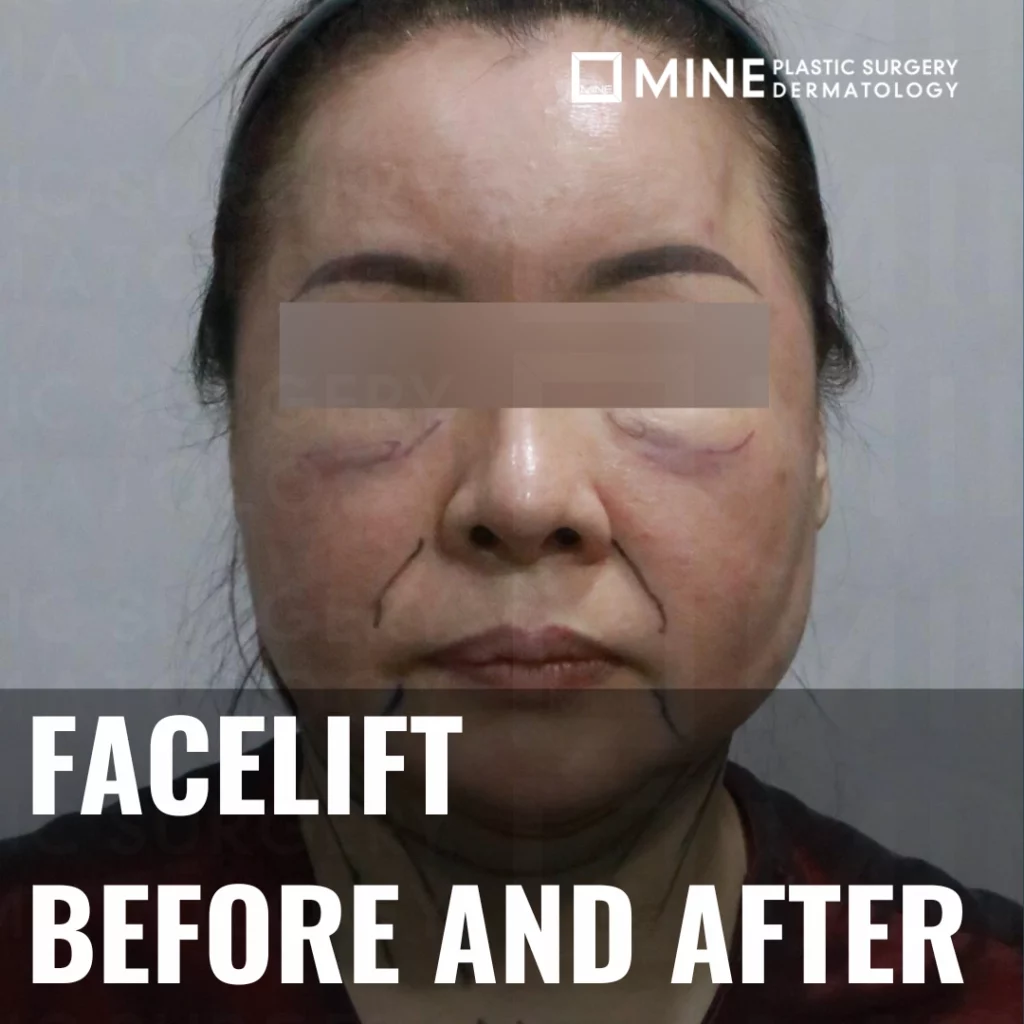
A deep plane facelift is a surgical facelift technique that lifts the skin, fat, and SMAS muscle layer together as one composite unit by releasing the face’s retaining ligaments beneath the SMAS, repositioning the tissue at a higher, more natural vector than a traditional skin- or SMAS-only lift.
Deep plane facelift recovery typically follows a predictable arc: sutures come out at 7–10 days, most patients feel comfortable stepping out in public by weeks 2–3, daily routines resume around weeks 4–6, and the tissue fully settles into its final, natural-looking position by the 3-month mark. The deep plane technique releases retaining ligaments — delivering results that last roughly 10–12 years, compared to 5–7 years for traditional SMAS facelifts.
If you are researching facelift surgery in Korea and want to understand exactly what the recovery process looks like, why the deep plane approach produces longer-lasting results, and what the real complication rates are, this guide covers everything — backed by textbook data from over 3,500 surgical cases.

Table of Contents
What Is Facelift Surgery? The 5-Layer Face Anatomy & SMAS Explained
To understand why different facelift techniques produce such different outcomes, you first need a clear picture of what the face actually looks like beneath the skin. The face is composed of five distinct layers stacked on top of one another, and the layer a surgeon chooses to work in determines everything — longevity, naturalness of result, and recovery experience.
The five layers, from outermost to deepest, are:
- Skin — the visible surface
- Subcutaneous fat — the soft padding beneath the skin
- SMAS (Superficial Musculoaponeurotic System) — a continuous sheet of muscle and fascia running from the scalp all the way across the face
- Loose connective tissue (the glide plane) — a critical slip layer that allows the layers above to move over the deeper structures
- Deep fascia — the anchoring foundation layer over the muscles of facial expression
The SMAS is the structural workhorse of modern facelift surgery. It is not just a passive membrane — it is actively connected to the muscles that move your face. Surgeons who work at the SMAS level (or deeper) can reposition the underlying architecture of the face rather than simply pulling the skin.
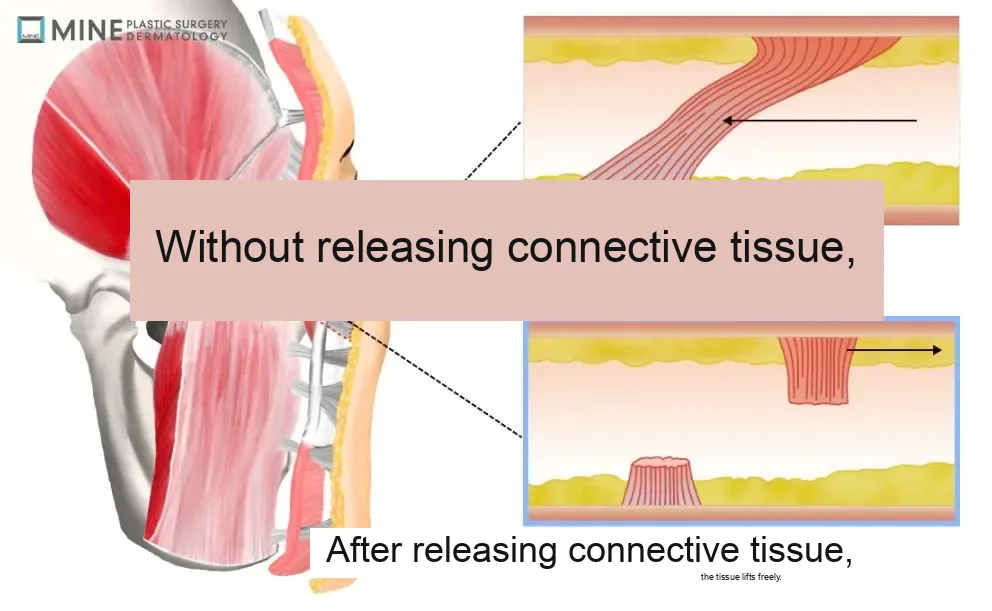
Equally important are the retaining ligaments — fibrous anchoring structures (zygomatic, masseteric, and mandibular ligaments) that tether the skin and SMAS to the underlying bone. These ligaments are the primary reason faces sag with age: as they stretch and weaken, the soft tissues above them descend. According to a foundational surgical anatomy paper (Surgical Anatomy, 2000), these retaining ligaments also serve as anatomical landmarks for the branches of the facial nerve — meaning surgeons must understand their precise location to operate safely in the deep plane.
Dr. Lee’s Key Point #1: The retaining ligaments are not simply obstacles to navigate — they are the map. Their positions mark exactly where the facial nerve branches travel in the deep plane. A surgeon who truly understands this anatomy can work safely and efficiently at depth, which is what separates an experienced deep plane surgeon from one who simply reaches deeper.
Deep Plane vs SMAS Facelift: Key Differences, Longevity & Results
The distinction between a traditional SMAS facelift and a deep plane facelift is not merely a matter of surgical depth — it is a difference in the fundamental mechanical approach to facial rejuvenation. Understanding this difference will help you have a much more informed conversation with your surgeon, and help you assess what kind of result you can realistically expect. For a detailed overview, see our guide to deep plane facelift in Korea.
In a traditional SMAS facelift, the surgeon separates the skin flap and the SMAS flap and then advances each in a slightly different direction. The SMAS is tightened or plicated (folded) to create lift, and the skin is re-draped over it. Because the retaining ligaments are left largely intact, the underlying soft tissue is not fully liberated — the repair must hold the lift against the full pull of gravity and ligament tension from day one.
In a deep plane facelift, the surgeon works beneath the SMAS in the loose connective tissue glide plane, systematically releasing the retaining ligaments. A landmark 50-cadaver anatomy study published in Plastic and Reconstructive Surgery (July 2024) provides the clearest explanation of why this matters: releasing the deep retinacula that connect the SMAS to the deep fascia allows the tissue to be repositioned at a higher, more anatomically correct vector. Critically, as the tissue heals, those retinacula reattach in their new position — and then resume their natural function of opposing gravity. The repair doesn’t bear all the weight alone; the anatomy itself maintains the result.
| Feature | Traditional SMAS Facelift | Deep Plane Facelift |
|---|---|---|
| Surgical layer | On top of SMAS (or SMAS plication) | Beneath SMAS in the glide plane |
| Retaining ligament release | Partial or none | Full release (zygomatic, masseteric, mandibular) |
| Tissue repositioning | Skin and SMAS lifted separately | Skin + SMAS + fat lifted as one composite unit |
| Natural appearance | Good | More natural — no skin tension distortion |
| Longevity | ~5–7 years | ~10–12 years |
| Surgeon expertise required | Moderate | High (proximity to facial nerve) |
| Initial swelling duration | Moderate | Slightly longer — broader dissection |
| Best suited for | Early to moderate facial aging | Moderate to advanced facial aging; demanding patients |
For a full breakdown of how long each approach lasts, see our detailed article on how long a facelift lasts.
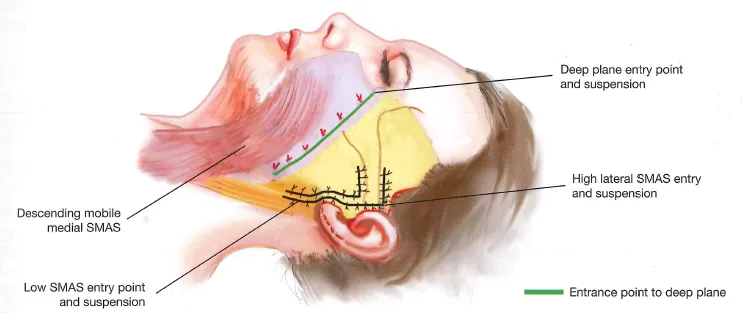
Dr. Lee’s Key Point #2: The reason deep plane results look more natural is not just about depth — it is about unit cohesion. In a traditional SMAS facelift, skin and underlying tissue are lifted at different vectors, and a subtle tension line can develop between them. In the deep plane, the entire composite of skin, fat, and SMAS moves as one. There is no opposing force within the layers, so the result settles into an expression that looks like the patient simply aged in reverse — not like they had surgery.
MINE Plastic Surgery’s Dual-Tight Facelift: 4 Technique Approaches
At MINE Plastic Surgery in Seoul, Dr. Lee Sung-wook performs the Dual-Tight Facelift — an approach that combines dual-layer SMAS manipulation with individualized technique selection based on each patient’s anatomy, degree of aging, and goals. Rather than applying one fixed method to every patient, the Dual-Tight system offers four distinct approaches that can be applied alone or in combination.
The four approaches are:
- Deep Plane Lift — Full subSMAS dissection with retaining ligament release; the most powerful repositioning for advanced aging and deep nasolabial folds
- Extended SMAS Lift — SMAS elevation extended into the cheek fat compartment for patients who need significant midface volume repositioning
- High SMAS Lift — SMAS tightening with a superior vector for patients with jowling and lax neck but preserved midface volume
- Composite Lift — Combined SMAS and orbicularis oculi muscle mobilization for patients with significant lower eyelid and cheek laxity
Many patients also benefit from pairing the facelift with a complementary face and neck lift to address platysmal banding and submental fullness, which the facelift alone does not address. Dr. Lee evaluates the neck during every facelift consultation to determine whether a combined approach will produce a more harmonious overall result.
MINE Plastic Surgery is a member of ISAPS (International Society of Aesthetic Plastic Surgery), and Dr. Lee holds certification from the Korean Board of Plastic and Reconstructive Surgery — the national body that sets safety and training standards for plastic surgeons in Korea.
Deep Plane Facelift Recovery Timeline: Week-by-Week Guide
One of the most common questions international patients ask before booking facelift surgery in Korea is: how much time do I need to set aside? The honest answer is that the core recovery — where you feel comfortable being out in public and resuming most activities — takes approximately 4–6 weeks. Full tissue maturation, where the final result is clearly visible, takes about 3 months.
Because the deep plane involves broader tissue dissection than a traditional SMAS facelift, initial swelling may be slightly more pronounced in the first week. However, this resolves on the same general timeline, and the final result is worth the early patience.

| Timeframe | What to Expect | Key Milestones |
|---|---|---|
| Day 1–3 | Significant swelling and bruising; drain (if placed) removed by day 1–2; compression dressing worn continuously; rest at home required | First post-op check; drain removal |
| Days 4–7 | Swelling peaks around day 3–4 then begins to reduce; bruising starts shifting to yellow/green; mild tightness and numbness in cheeks and neck is normal | Swelling begins to resolve |
| Days 7–10 | Suture removal — a major milestone; bruising largely faded; moderate swelling remains but face looks significantly better | Sutures removed (7–10 days) |
| Weeks 2–3 | Most patients are comfortable stepping outside for light activities and casual errands; residual swelling now mainly in the lower face and neck; concealer can cover any remaining bruising | Light outings resume (2–3 weeks) |
| Weeks 4–6 | Return to work (desk/office) and most daily activities; avoid strenuous exercise; swelling now subtle — visible mainly in photos | Daily life resumes (4–6 weeks) |
| Months 2–3 | Remaining swelling resolves; skin sensation returns; final result becomes clearly visible; scar lines fade to a fine, skin-colored line within the hairline and natural skin folds | Full tissue settlement (~3 months) |
| 6–12 Months | Scars continue to mature and soften; final, settled result is fully established; most patients are delighted by this point | Scar maturation complete |
Dr. Lee’s Key Point #3: Do not judge your result before the 3-month mark. In the first few weeks, swelling can create asymmetry or an overly tight appearance that patients find alarming. This is completely normal. The tissue needs time to drape naturally over its new structural foundation. I tell every patient: the person looking back at you in the mirror at 3 months is the real result — and it is almost always far more natural and more youthful than what they saw in the early weeks.
Facelift Side Effects: Real Complication Rates from 3,500 Cases
One of the most anxiety-inducing aspects of researching facelift surgery is navigating the range of stated complication rates online — some reassuringly low, others alarmingly high. The most reliable data comes not from individual clinic claims but from large case series published in surgical textbooks. For a broader overview of what to expect, our comprehensive guide to facelift surgery covers the full spectrum of effects and outcomes.
The table below is drawn directly from Plastic Surgery Aesthetic (Neligan & Hamra, eds.) — the field’s standard reference textbook — which reports complication incidence data from 3,500 lateral SMASectomy facelifts:
| Complication | Incidence Rate | Clinical Notes |
|---|---|---|
| Hematoma (female patients) | 1.5% | Most common serious complication; typically appears within 24 hours; requires drainage |
| Hematoma (male patients) | 4.0% | Higher rate due to thicker, more vascular skin; blood pressure control critical |
| Facial nerve weakness | 0.1% | All cases resolved within 6 months — no permanent nerve injuries reported in this series |
| Skin slough (tissue necrosis) | 2.0% | Risk significantly increased by smoking; mandatory pre-op smoking cessation required |
| Infection | 1.0% | Managed with antibiotics; rarely requires surgical intervention |
| Earlobe scar revision | 2.0% | Minor revision procedure; does not affect overall facelift result |
A few important points about this data. First, hematoma — the most common serious complication — is heavily influenced by factors within the patient’s control: stopping blood-thinning medications (aspirin, ibuprofen, vitamin E, fish oil) at least two weeks before surgery, controlling blood pressure, and avoiding alcohol in the post-op period. Second, the 0.1% facial nerve weakness rate is a temporary finding — every single case in this 3,500-patient series resolved fully within six months. Permanent facial nerve injury from facelift surgery performed by an experienced, board-certified plastic surgeon is exceptionally rare.
Third, and most urgently: smoking is the single largest modifiable risk factor for skin slough (tissue death at the wound edges). If you smoke, you must stop completely — typically at least four weeks before surgery and four weeks after. This is not a soft recommendation; most board-certified surgeons, including Dr. Lee, will decline to operate on active smokers.
Dr. Lee’s Key Point #4: The complication rate table is often the part of a facelift consultation that patients find most reassuring once they actually see the numbers. The biggest fear — permanent nerve damage — has a reported incidence of 0.1%, and in large textbook series, every case resolved. The risks that are more common, like hematoma, are largely controllable through pre-op preparation. My job is to make sure every patient understands which risk factors they can address before we ever set a surgery date.
Pre- and Post-Op Care: Dr. Lee’s Essential Instructions
Whether you are traveling to Korea for facelift surgery or consulting locally, the quality of your preparation and your adherence to post-operative instructions have a meaningful impact on both your safety and the quality of your result. The following are Dr. Lee Sung-wook’s standard pre- and post-operative guidelines for facelift patients.
Before Surgery
- Stop blood thinners — aspirin, ibuprofen, naproxen, vitamin E supplements, fish oil, and gingko biloba should be discontinued at least 2 weeks before surgery. Warfarin and other prescription anticoagulants require a separate plan in consultation with your prescribing physician.
- Stop smoking completely — at minimum 4 weeks before surgery. No exceptions. Nicotine patches and gum also impair healing.
- Blood pressure control — patients with hypertension should have their blood pressure well-managed before surgery. Uncontrolled hypertension is the leading driver of post-operative hematoma.
- Lab work and medical clearance — standard pre-operative bloodwork, ECG (for patients over 45), and physician clearance are required for all facelift patients.
- Arrange transportation and care — you will not be able to drive home after surgery. Arrange for an escort and, if traveling from abroad, arrange accommodation near the clinic for the first post-operative week.
- Prepare your recovery space — stock your accommodation with soft foods, neck-support pillows, and button-front shirts (avoid anything pulled over the head).
After Surgery
- Keep your head elevated — sleep with your head elevated at 30–45 degrees for at least the first two weeks to minimize swelling.
- Wear your compression garment — this is non-negotiable; the garment reduces swelling and supports tissue adhesion.
- Cold compresses — apply gently (never directly on the skin) for the first 48–72 hours to reduce bruising.
- No strenuous activity — avoid any activity that raises your heart rate or blood pressure for at least 4 weeks. This includes gym workouts, heavy lifting, bending over, and sexual activity.
- Sun protection — avoid direct sun exposure on the face for 3 months. UV exposure during scar maturation can cause permanent pigmentation changes. Wear SPF 50+ whenever outdoors.
- No alcohol — alcohol causes vasodilation and increases hematoma risk for the first 2 weeks post-op.
- Gentle scar care — once incision lines are closed and healed (typically by week 3–4), silicone gel or silicone tape can be applied to support scar maturation.
For international patients, Dr. Lee recommends planning a minimum stay of 10–14 days in Seoul before flying home. The first post-operative check is typically at days 1–2, with suture removal at days 7–10. Flying before sutures are removed is not advised, and pressurized cabin air can worsen swelling if you fly too soon after surgery.
FAQ: 5 Most-Asked Questions by International Facelift Patients
How long does deep plane facelift recovery actually take before I can travel home?
Most international patients plan to stay in Seoul for a minimum of 10–14 days. Sutures are removed at days 7–10, which is the key milestone before travel. By the 2-week mark, most patients are presentable in public with light makeup and feel comfortable in a pressurized aircraft cabin. If your schedule allows, staying 3 weeks provides a more comfortable buffer and allows one additional post-operative check with Dr. Lee before departure.
What is the difference between a deep plane facelift and a mini facelift?
A mini facelift uses a shorter incision and addresses only mild, early-stage laxity — primarily the jowl area. It does not release the retaining ligaments or reposition deep tissue. A deep plane facelift is a comprehensive procedure that addresses the midface, nasolabial folds, jowls, and neck through full subSMAS dissection and retaining ligament release. The deep plane produces more dramatic and longer-lasting results but requires a longer recovery. Most patients in their late 40s and beyond are better candidates for a full deep plane facelift than a mini facelift.
Is facelift surgery in Korea safe? What credentials should I verify?
Korea has a highly developed plastic surgery infrastructure and is one of the most popular destinations globally for aesthetic procedures. When choosing a surgeon for facelift surgery in Korea, verify board certification from the Korean Board of Plastic and Reconstructive Surgery, membership in ISAPS or ASPS, and review before-and-after case photos specifically for facelift surgery (not just rhinoplasty or eye procedures). Dr. Lee Sung-wook at MINE Plastic Surgery holds all of these credentials. A thorough virtual consultation before travel is also strongly recommended.
Will a facelift look natural, or will I look “done”?
A well-performed deep plane facelift should not look “done.” The hallmark of a poorly performed facelift — the windswept, skin-tight look — occurs when the skin is pulled laterally under excessive tension, usually as a result of skin-only or SMAS-only tightening. When the deep plane technique properly releases the retaining ligaments and repositions tissue as a single composite unit, the result is a face that appears genuinely younger: better-defined jawline, lifted midface, and restored volume in the cheeks, without the tell-tale tightness or distorted earlobe. The goal is for people to notice you look refreshed, not operated on.
How much does a deep plane facelift cost in Korea compared to the US or UK?
Deep plane facelift costs in Korea are generally significantly lower than in the United States or United Kingdom for procedures of comparable technical complexity, while still being performed by board-certified plastic surgeons in accredited facilities. The exact fee at MINE Plastic Surgery depends on the specific technique combination, whether neck work is included, and anesthesia arrangements — all of which are discussed in detail during your consultation. When factoring in travel and accommodation costs, many international patients still find that having surgery in Korea represents meaningful savings over their home country, alongside access to a surgeon who performs facelifts as a primary specialty focus.
※ This content is for informational purposes only and does not replace professional medical advice, diagnosis, or treatment. Individual results may vary, and side effects may occur. Please consult with a board-certified plastic surgeon for personalized advice.