EN
EN

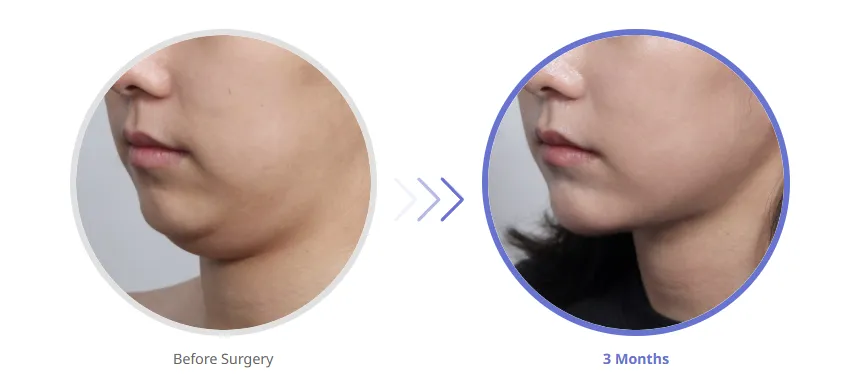
Table of contents
Submuscular fat — known medically as subplatysmal fat — is the deeper layer of fat that sits beneath the platysma muscle in the neck, below the more familiar surface fat that most people picture when they think of a double chin. Because this deeper fat lies under a sheet of muscle and close to important nerves and glands, it often stays behind even after liposuction or fat-dissolving injections that only reach the surface. For some patients, that leftover submuscular fat is the real reason a double chin refuses to budge.
This guide explains what submuscular fat is, why surface-only treatment can fall short, and how a surgeon decides whether the deeper layer needs to be addressed. The goal is to help you ask better questions and set realistic expectations — not to suggest that everyone needs the deepest possible procedure.
What Is Submuscular Fat?
The area under the chin, called the submental region, is not a single block of fat. It is built in layers. Submuscular fat is the portion that sits below the platysma, the thin sheet of muscle that runs across the front of the neck. Surgeons also call it subplatysmal fat, and the two terms mean the same thing.
This deeper fat behaves differently from surface fat in a few important ways:
- It is harder to reach. Submuscular fat sits under the muscle, near nerves, blood vessels, and the salivary glands, so it cannot be treated through the skin alone.
- It resists non-surgical methods. Diet, exercise, cooling devices, and injectables mainly act on the surface layer, so submuscular fat often stays put.
- It shapes the deeper contour. When this layer is full, the neck can look heavy even in someone at a healthy weight.
Genetics, aging, and weight changes all influence how much submuscular fat a person carries. This is why two people of the same weight can have very different neck shapes, and why a double chin can persist in someone who is otherwise slim.
The Two Fat Layers Behind a Double Chin
Most double chins involve two distinct fat compartments separated by the platysma muscle. Understanding both makes it much easier to see why treatment plans differ from person to person.
Superficial (preplatysmal) fat lies between the skin and the muscle. It is the dense, fibrous fat that creates the classic double chin look, and it is the layer that standard liposuction and injectables can reach.
Submuscular (subplatysmal) fat lies underneath the platysma. It tends to be softer and is tucked among deeper structures, which is exactly why it is more demanding to treat and why it is left untouched by surface-only methods.
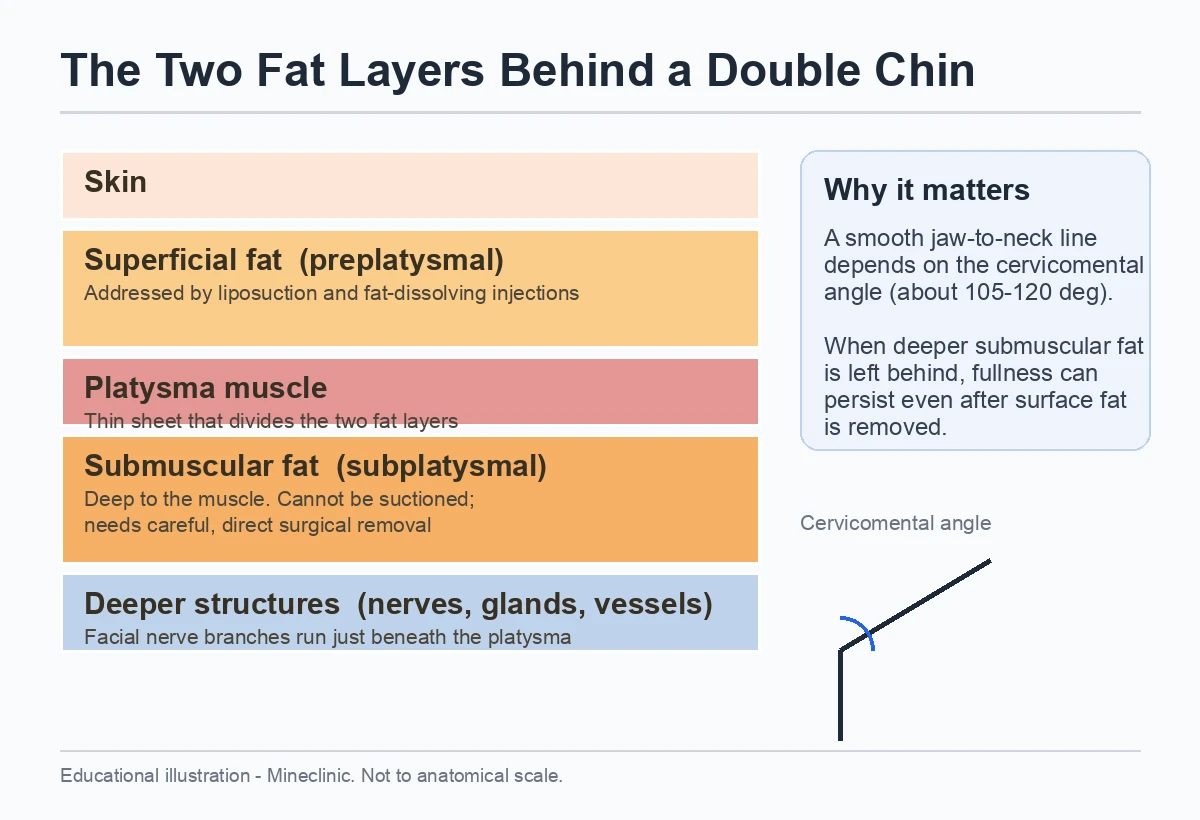
A youthful neckline depends largely on the cervicomental angle — the angle where the underside of the chin meets the neck. A crisp angle reads as slim and defined; a soft, obtuse angle reads as fullness or “heaviness.” Fat in either layer can blur this angle, but deeper fat is often the part that surface treatment cannot fix.
It is also worth knowing that fat is not always the only cause. In some people, the small digastric muscles or the position of the submandibular salivary glands add to the fullness. A careful exam tells the surgeon how much of the problem is truly submuscular fat versus something else.
Why Surface-Only Fat Removal Often Falls Short
When a procedure removes only superficial fat but a meaningful amount of submuscular fat remains, the result can disappoint. Common issues include:
- A double chin that lingers despite treatment, because the deeper bulk is still there.
- Little change in the cervicomental angle, so the jaw-to-neck line still looks soft.
- Contour irregularities, where removing the top layer alone leaves the surface uneven over the deeper fat.
- A wish for a second procedure to finally reach what was left behind.
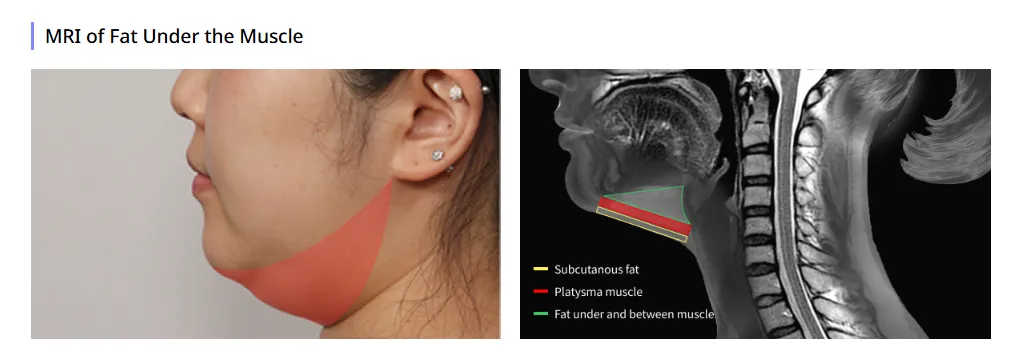
This does not mean every double chin needs deep surgery. For a patient whose fullness is mostly superficial, conservative liposuction or an injectable may be the right, lower-risk choice. The point is that the plan should match the anatomy. When deeper fat is clearly driving the fullness, treating only the surface is what leads to that frustrating “barely changed” feeling. You can read more about the surface approach on our double chin liposuction page.
How Submuscular Fat Removal Is Performed
Because the deeper layer sits among delicate structures, submuscular fat removal is a precise procedure that should be carried out by an experienced, board-certified plastic surgeon. It usually unfolds in a few clear steps.
Assessment first
Surgeons stress that the surface fat can hide how much deeper fat is present, so it is hard to judge submuscular fat from the outside alone. Your surgeon will examine the skin, the muscle tone, and how the neck moves, and may open or assess beneath the platysma during surgery to gauge the deeper layer accurately.
A small, hidden incision
Access is usually gained through a tiny incision in the natural crease just under the chin. Surface fat is treated first, often with fine-cannula liposuction. The surgeon then carefully works through or around the platysma to reach the submuscular fat.
Conservative, direct removal
Here the approach is deliberately careful. Submuscular fat cannot simply be suctioned the way surface fat can; it is removed directly and conservatively under clear vision. Surgeons remove only what is needed, because branches of the facial nerve run just beneath the platysma and over-removal can create a hollow, irregular, or “operated” look. Restraint is part of a good result, not a shortcut.
Refining the muscle
When loose or separated muscle bands contribute to the shape, the platysma may be tightened — a step called platysmaplasty — to sharpen the final contour. Our guide to platysmaplasty explains how muscle tightening complements fat removal. The incision is then closed in layers to support smooth healing.
Benefits of Treating Both Fat Layers
When the anatomy calls for it, addressing both the superficial and submuscular fat — rather than the surface alone — tends to give a more complete and durable result.
- A more defined jawline. Treating the deeper layer can sharpen the cervicomental angle that surface work alone leaves soft.
- A smoother profile. Removing fat from both layers in balance helps avoid the bulges or dents that come from clearing only the top.
- Longer-lasting change. Fat cells that are surgically removed do not grow back, so a carefully treated submuscular layer is unlikely to refill on its own.
- Less chance of a revision. Matching the plan to the anatomy the first time reduces the odds of needing a second procedure.
It is worth repeating that “more removal” is not automatically “better.” The benefit comes from removing the right fat in the right amount, guided by your individual anatomy.
Who Is a Good Candidate?
Submuscular fat removal tends to suit people who share a few characteristics:
- Persistent fullness under the chin that has not responded to weight loss, especially when a surgeon suspects a meaningful deeper fat component.
- Good general health, so surgery and anesthesia can be undergone safely.
- A stable weight, since large weight swings after surgery can change the result.
- Reasonable skin quality, because skin needs to redrape over the slimmer contour. When skin laxity is significant, a neck lift may be combined to tighten loose tissue.
Just as important is who should pause. Significant medical conditions, very loose skin that needs a larger lift, active infection in the area, or expectations that no surgery can meet are all reasons to reconsider or choose a different plan. A candid consultation should sort this out before any procedure is scheduled.
Recovery and Results
Recovery from submuscular fat removal is gradual, and a little patience goes a long way. A typical timeline looks like this:
- First few days: mild to moderate swelling and bruising, possible numbness, and a compression garment to support the tissues.
- First week or two: swelling begins to settle, and many people return to desk work and light activity.
- Two to four weeks: most normal activities and exercise resume as comfort allows.
- Three to six months: the final contour appears as deep swelling fully resolves and the skin softens over the new shape.
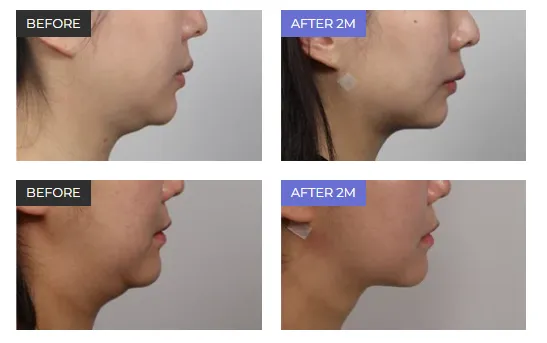
Because the removed fat cells are gone for good, results are long-lasting. They are not, however, immune to future weight gain or natural aging — remaining cells can still enlarge, and skin continues to change over time. Keeping a steady weight helps protect your result.
Risks and Choosing the Right Surgeon
Submuscular fat removal is generally safe in experienced hands, but like any surgery it carries risks worth understanding:
- Nerve irritation: the marginal mandibular nerve, which helps move the lower lip, runs nearby; careful technique is used to protect it.
- Bleeding or hematoma: a collection of blood under the skin can occasionally form, especially with certain medications.
- Infection: uncommon, and reduced by good surgical care.
- Contour irregularity: taking too much deep fat can leave a hollow or uneven look, which is why conservative removal matters.
Surgeon selection is the single biggest factor you control. Look for someone who is board-certified, experienced specifically with neck and facial contouring, operating in an accredited facility, and willing to show relevant before-and-after photos. Professional bodies such as the American Society of Plastic Surgeons offer helpful checklists for vetting a surgeon. A surgeon who recommends a conservative plan when that is appropriate is often the safer choice.
Non-Surgical Options: What They Can and Cannot Do
Non-surgical treatments have a real place — they are just aimed at a different target than submuscular fat.
Fat-dissolving injections (such as deoxycholic acid) and cooling-based fat reduction work on the superficial layer. They can refine a mild double chin made mostly of surface fat, but they do not meaningfully reach fat that sits beneath the muscle.
These options may suit someone with a small amount of surface fullness, predominantly superficial fat, a wish to avoid surgical recovery, or a health reason to avoid surgery. When the fullness is clearly driven by the deeper layer, though, non-surgical treatment is unlikely to deliver the change the person is hoping for — and a surgical plan that includes the submuscular fat becomes the more honest recommendation.
Frequently Asked Questions
How long does submuscular fat removal take?
The procedure usually takes about one to two hours, depending on how much work is needed and whether it is combined with other steps such as platysmaplasty. It is typically done on an outpatient basis under sedation or general anesthesia.
Will I have a visible scar?
The incision is small and placed in the natural crease under the chin, where it is well hidden. Most people find that it fades and becomes hard to notice within several months to a year of healing.
When can I return to work?
Many people return to desk work within three to five days, while more physical jobs may need one to two weeks. A compression garment is usually worn during the early healing period to support the tissues.
Can submuscular fat come back after removal?
The fat cells that are removed do not regenerate. However, the fat cells that remain can still enlarge with significant weight gain, and aging continues to affect the skin and tissues over time, so a stable weight helps preserve the result.
Is the procedure painful?
Most patients describe mild to moderate tightness or soreness rather than sharp pain in the first few days, and it is usually well controlled with prescribed medication.
The Bottom Line
Submuscular fat removal can be the missing piece in double chin surgery when the deeper, subplatysmal layer is what keeps the neck looking full. By treating both fat layers — and, when needed, refining the platysma — a surgeon can reach a more complete and lasting contour than surface treatment alone can offer.
At the same time, more is not always better. The safest, most natural results come from a plan matched to your anatomy, performed conservatively by an experienced surgeon who respects the nerves and structures of the neck. If a stubborn double chin has not responded to other efforts, a thorough consultation at Mineclinic can clarify whether superficial treatment, submuscular fat removal, or a combined approach is genuinely right for you.
Ready to understand your own neck anatomy? Book a personalized consultation with the board-certified specialists at Mineclinic to discuss your goals and the option that fits your case. (submuscular fat removal)
※ This content is for informational purposes only and does not replace professional medical advice, diagnosis, or treatment. Individual results may vary, and side effects may occur. Please consult with a board-certified plastic surgeon for personalized advice.