EN
EN

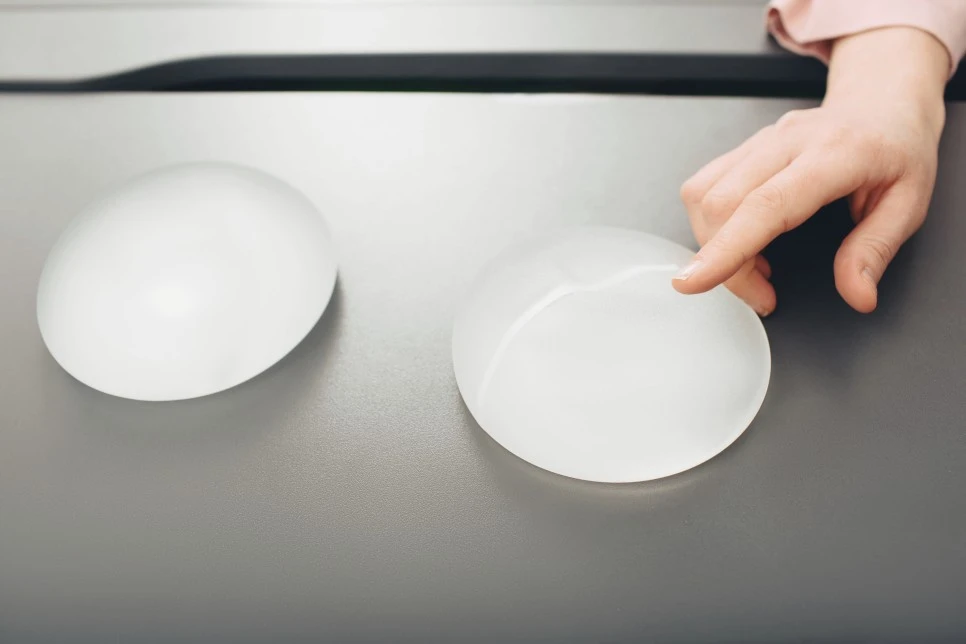
Table of contents
What is Breast Implant Rupture?
Breast implant rupture is a tear or hole in the outer shell of an implant that lets the filler inside begin to leak. It is one of the more important complications that can follow breast augmentation. With a silicone gel implant, neither you nor your doctor may notice anything at first, because most silicone implant rupture cases cause no obvious symptoms. Doctors call these “silent ruptures.”
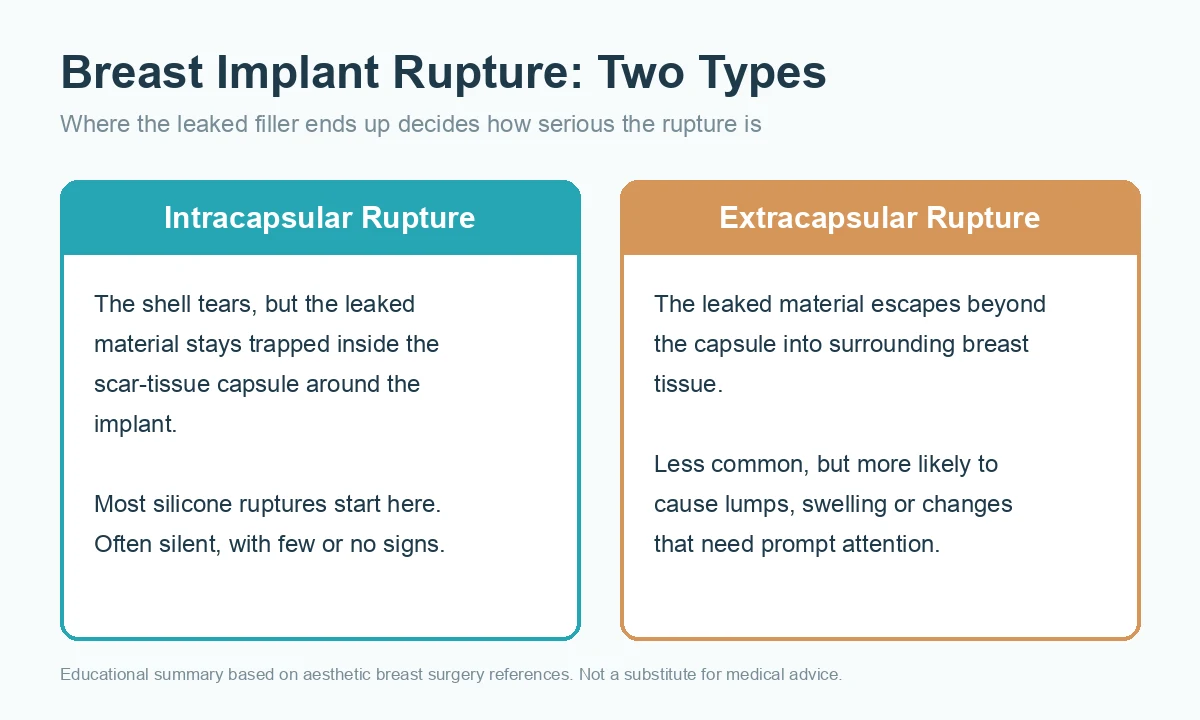
An implant rupture is usually described in one of two ways. In an intracapsular rupture, the shell breaks but the leaked material stays trapped inside the scar-tissue capsule that the body naturally forms around every implant. This is the most common pattern with silicone gel. In an extracapsular rupture, the material escapes beyond that capsule into the surrounding breast tissue. The difference matters because it guides how closely you and your surgeon need to act.
Surgical references note that damage caused during a procedure, sometimes called iatrogenic damage, is an important contributor to early implant failure. In other words, a rupture is not always about the device wearing out on its own. The wider point for anyone considering breast augmentation, or already living with implants, is simple: rupture is a known risk worth understanding rather than fearing.
The chance of implant rupture also tends to rise the longer an implant has been in place. Implants are not designed to last a lifetime, and shells gradually weaken with years of normal use. Published rupture rates vary widely between studies and implant models, so there is no single number that fits everyone. Regular monitoring, rather than a fixed expiry date, is the practical way to stay ahead of the problem.
Causes of Breast Implant Rupture and Leakage
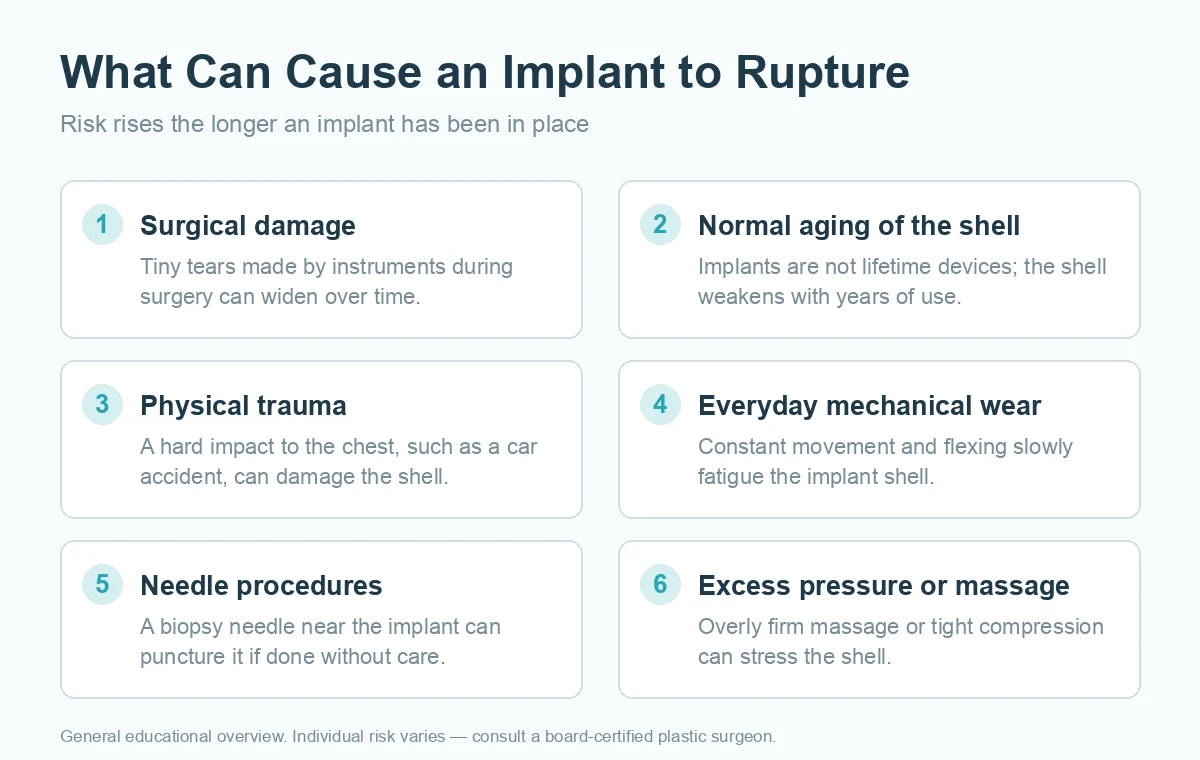
Knowing what leads to an implant rupture helps you make informed choices and take sensible precautions. No single cause explains every case, but a few recurring factors stand out. Here are the main reasons an implant can fail.
1. Surgical-Related Factors
A frequent cause of early rupture is damage during the original operation or a later procedure. Surgical instruments can leave microscopic nicks in the shell that slowly widen, sometimes leading to failure within the first year. This is why an experienced surgeon and careful technique matter so much.
2. Natural Aging of Implants
The American Society of Plastic Surgeons is clear that implants are not “lifetime devices.” Every breast implant degrades over time, and the shell becomes more vulnerable as the years pass. Constant flexing and the body’s internal environment gradually weaken the material.
3. Physical Trauma
A strong impact to the chest, such as a car accident or sports injury, can damage an implant immediately. Even seemingly minor trauma can weaken the shell and contribute to a rupture later on.
4. Pregnancy and Breastfeeding Changes
During pregnancy and breastfeeding, the breasts change a great deal. Expanding milk ducts and growing tissue raise the internal pressure around an implant, which can place extra stress on the shell.
5. Mechanical Wear
Everyday activities create constant movement and pressure on the breasts. Over many years, this repeated mechanical stress fatigues the shell and can eventually lead to failure.
6. Medical Procedures
A needle biopsy of the breast is generally safe for people with implants, but it has to be done carefully. If the needle reaches the implant, it can puncture the shell. An experienced clinician who knows an implant is present can plan the procedure to avoid this.
7. Improper Massage and External Pressure
Excessive or forceful breast massage, overly tight compression garments, or prolonged pressure can all stress the shell and may contribute to a rupture. Gentle, surgeon-approved aftercare is far safer.
Symptoms of Breast Implant Rupture
Spotting the signs of an implant rupture early makes timely diagnosis and treatment possible. Saline ruptures are usually easy to notice, while silicone implants tend to produce “silent” ruptures that creep up quietly. Symptoms differ from person to person and depend on the implant type.
1. Changes in Breast Size or Shape
- Breast asymmetry or an uneven look between the two sides
- Volume loss or a change in how far the breast projects
- Shape distortion or unusual contours
- Visible rippling or wrinkling of the skin
2. Textural Changes
Many people notice that their breasts feel different. A ruptured saline implant can leave small lumps or ripples. The affected breast may feel softer than usual because of volume loss, or unexpectedly firmer if scar tissue tightens around it.
3. Pain and Discomfort
- Persistent breast pain or a dull aching feeling
- Burning or stinging sensations
- Tenderness in the breast or nearby areas
- Sharp or shooting pains that may travel to the arm or back
4. Capsular Contracture Development
A rupture can sometimes trigger capsular contracture, where the scar-tissue capsule tightens and hardens. This makes the breast feel unusually firm and can distort its shape. If the breast also looks pushed out of position, our guide to breast implant malposition explains how surgeons tell these problems apart.
5. Silent Rupture Characteristics
A silent rupture usually does not change how an implant looks or feels, and a physical exam alone may miss it. This is especially common with silicone gel implants, which is exactly why routine imaging is so valuable.
6. Lymph Node Changes
If silicone gel travels to nearby lymph nodes, you may notice swelling in the armpit or tender nodes. Once silicone reaches a lymph node, the body cannot clear it on its own.
7. Skin Changes
The skin over the implant may look thin, shiny, or slightly discolored. Some people notice more visible veins or a feeling of tightness in the area.
Patients often describe these early clues in everyday words: “something just felt wrong,” “it feels different in the shower,” or “there’s a small ache that worries me.” Subtle changes like these are worth a professional check.
Silicone vs Saline Implant Rupture Differences
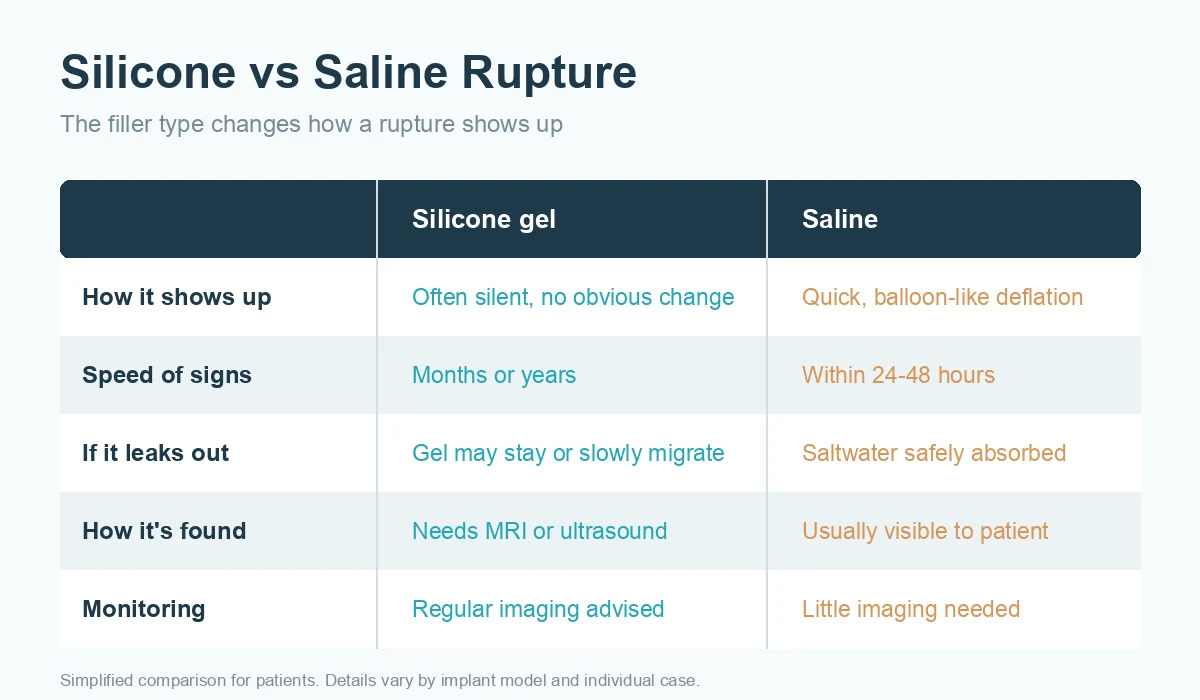
The filler inside an implant strongly shapes how a rupture appears and how quickly you notice it. Understanding these differences helps both patients and clinicians respond appropriately.
Silicone Gel Implant Rupture
Modern silicone implants use a highly cohesive gel, often nicknamed “gummy bear” implants because they hold their shape even when the shell is cut. This stickier gel changes how a rupture behaves.
- Often silent: Most silicone implant rupture cases cause no symptoms, because the cohesive gel tends to stay put even after the shell gives way.
- Slow, gradual change: Unlike saline, the gel does not disappear. It may migrate slowly over months or years, so detection usually needs imaging.
- Intracapsular first: Most silicone ruptures begin inside the capsule; only if the gel spreads beyond it does it become an extracapsular rupture.
- More involved removal: Cleaning up leaked gel can be demanding, and complete removal may require careful, thorough surgery.
- Imaging matters: The FDA advises screening silicone implants with MRI or ultrasound starting five to six years after placement, then every two to three years.
Saline Implant Rupture
Saline-filled implants hold sterile salt water, which the body absorbs harmlessly if it leaks.
- Quick to notice: A ruptured saline implant deflates like a balloon, and the change is usually obvious within a day or two.
- Reassuring safety profile: The leaking fluid is just sterile salt water that the body absorbs, with no concern about toxic material spreading.
- Visible deflation: Rapid loss of volume causes clear size reduction and asymmetry that both patient and doctor can see.
- Simpler to manage: A saline rupture calls for prompt implant replacement but avoids the complex cleanup that leaked gel can require.
- Less routine imaging: Because deflation is so visible, saline implants do not need the regular scans recommended for silicone.
How is Breast Implant Rupture Diagnosed?
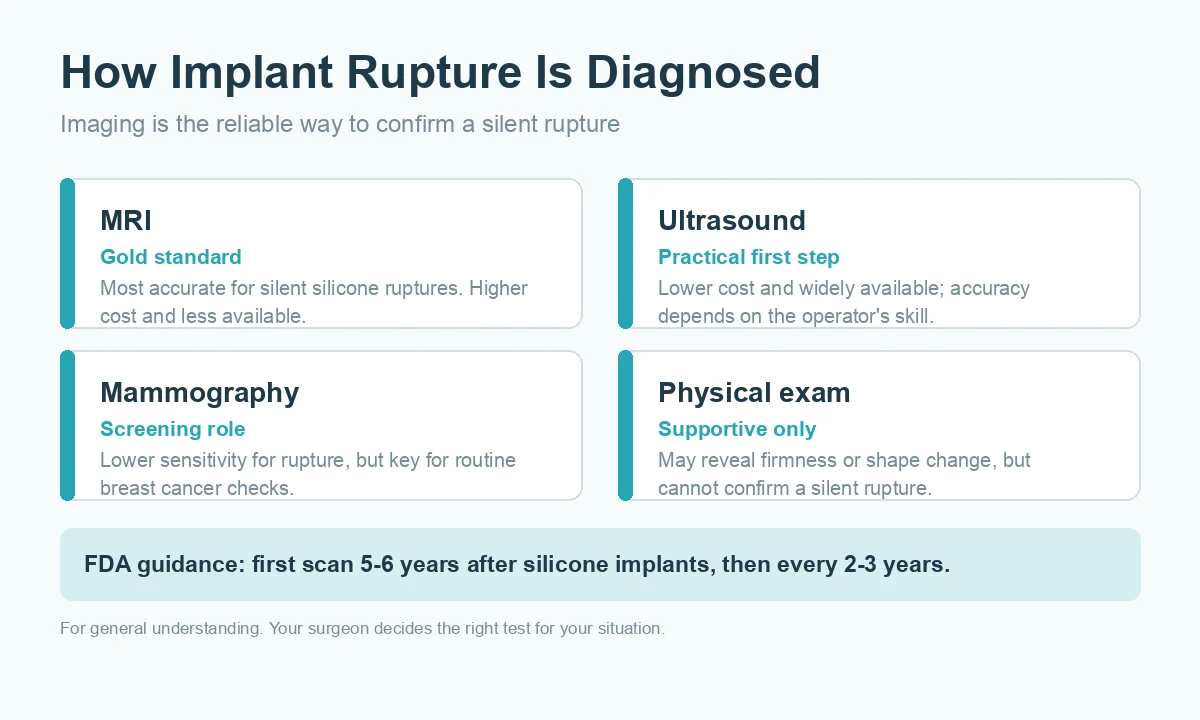
Diagnosing an implant rupture combines a clinical exam with imaging. For silent silicone ruptures, imaging does the heavy lifting, and MRI is considered the most reliable tool for confirming them.
1. MRI (Magnetic Resonance Imaging)
The FDA recommends screening your breast implants with MRI or ultrasound five to six years after silicone placement, then every two to three years. MRI is widely regarded as the gold standard for catching silent ruptures.
Why MRI is so useful:
- High accuracy for both intracapsular and extracapsular ruptures
- Excellent soft-tissue detail for seeing the implant shell clearly
- Can find silent ruptures that cause no symptoms at all
- A full look at the breast tissue to rule out other issues
The trade-offs include higher cost, a scan that takes longer, limited availability in some areas, and discomfort for anyone who feels claustrophobic.
2. High-Resolution Ultrasound
Ultrasound is an accepted alternative for screening, and references note a high level of agreement between ultrasound and MRI when an experienced team performs it. It is often a sensible first step.
Benefits of ultrasound:
- Lower cost and wider availability than MRI
- Real-time imaging for a dynamic look at the implant
- No radiation and no contrast agent needed
- Comfortable and convenient for routine checks
One caveat: ultrasound results depend heavily on the skill of the person performing it, so specialised experience in implant imaging really counts.
3. Mammography (Breast X-ray)
Mammography is less sensitive than MRI or ultrasound for detecting a rupture, so it should not be the only test used. It still plays an important role in routine breast cancer screening for people with implants.
4. CT Scanning
CT scans may be an option when MRI cannot be used, though they show soft tissue in less detail than MRI does.
5. Clinical Physical Examination
On exam, a surgeon may notice a tight breast, tenderness over a palpable capsule, tethering, or a skin dimple. A normal implant usually rotates a little within its pocket, while a hardened, contracted one tends to feel fixed in place.
Physical exam findings can include:
- Asymmetry in breast size or shape
- Palpable lumps or irregularities
- Changes in firmness or mobility
- Skin changes such as dimpling or rippling
- Swollen lymph nodes in the armpit
At Mineclinic, we combine careful clinical assessment with modern imaging and experienced radiologists, so patients get a clear, reliable answer before making any treatment decision.
What Should You Do if Your Implant Ruptures?
Suspecting a rupture is stressful, but a calm, step-by-step response leads to the best outcome. Here is a practical guide to handling it well.
1. Stay Calm and Assess the Situation
Try not to panic. The FDA has not found a link between silicone gel implants and connective tissue disease, breast cancer, or reproductive problems. Most ruptures are not medical emergencies, which leaves time for thoughtful decisions.
2. Seek Professional Medical Consultation
Contact a board-certified plastic surgeon as soon as you can. At Mineclinic, our specialists provide a full assessment and a treatment plan tailored to your situation.
3. Undergo Appropriate Diagnostic Testing
Follow your surgeon’s advice on imaging, usually MRI or ultrasound, to confirm the rupture and see how far the material has spread.
4. Consider Your Treatment Options
Depending on the findings, you may be able to choose between:
- Implant removal only (explantation)
- Implant replacement with a new device
- Alternative options such as fat transfer for volume
- Watchful observation in select silent, intracapsular cases
5. Understand Emergency Situations
Most ruptures are not emergencies, but seek prompt care if you have:
- Sudden severe pain or swelling
- Signs of infection such as fever, redness, or warmth
- Major breast changes with feeling generally unwell
- Marked asymmetry with discomfort
6. Review Your Options with Your Surgeon
Surgery is generally advised if you have capsular contracture (a hardened breast), pain around the implants, imaging that shows a leak, or if you simply no longer want your implants or wish to exchange them.
7. Consider Timing for Surgery
Non-urgent cases leave room for careful planning, while an extracapsular rupture with spreading gel may call for more prompt surgery to limit complications.
8. Manage Psychological Concerns
It is normal to feel anxious. If worry becomes overwhelming, a counselor, therapist, or peer support group can make the process easier to handle.
9. Document Your Implant History
Keep clear records of your implant type, manufacturer, size, and past surgeries. This information is valuable for warranty claims and future care.
10. Explore Financial Options
Look into manufacturer warranty programs, which may help cover the cost of replacing a ruptured implant. Many companies offer limited warranties that can ease out-of-pocket expenses.
Breast Implant Replacement and Revision Surgery
When an implant rupture is confirmed, surgery often becomes the next step. Knowing the options and the recovery path makes it easier to decide with confidence.
1. Timing of Surgery
Non-emergency cases allow time to plan. Because leaked gel usually stays inside the capsule, most intracapsular ruptures do not need immediate surgery, though references suggest planned removal is still wise.
An extracapsular rupture with significant gel migration may need quicker action to limit spread and allow thorough cleanup.
2. Surgical Approach Options
A) Implant Replacement
An implant exchange removes the ruptured device and puts a new one in its place. You can usually choose to:
- Keep the same type of implant
- Switch types (for example, silicone to saline or the reverse)
- Change the size or profile
- Upgrade to newer form-stable technology
B) Implant Removal Only (Explantation)
Removing the implant without replacing it may suit people who:
- No longer want breast augmentation
- Wish to avoid future implant-related issues
- Have concerns about breast implant illness (BII)
- Prefer a more natural look
C) Combination with Other Procedures
Some patients combine surgery with:
- Breast lift (mastopexy) to address sagging after removal
- Fat transfer for natural volume
- Capsulectomy to remove scar tissue when needed
3. Capsule Management
A key goal of removal surgery is taking out the implant along with any scar tissue that needs to go.
Keeping the capsule may be reasonable when:
- There is no capsular contracture
- The capsule looks healthy and thin
- You prefer a simpler, less invasive operation
Removing the capsule (capsulectomy) is advised when:
- The capsule is thick or contracted
- There are signs of infection or inflammation
- Leaked silicone gel needs full removal
- You request complete implant and capsule removal
4. Surgical Access Points
Incision choices include:
- Inframammary fold (most common for revision)
- Periareolar (around the nipple)
- Transaxillary (through the armpit)
- An existing scar where possible, to limit new scarring
The right choice depends on implant size, how complex the surgery is, and your anatomy.
5. Recovery Timeline
A typical recovery looks like this:
- First 24-48 hours: rest and initial recovery
- First week: limited activity, pain control, wound care
- 2-3 weeks: a gradual return to daily routines
- 4-6 weeks: clearance for exercise and heavy lifting
- 3-6 months: full healing and final results
Recovery is often quicker than the first augmentation, particularly when the capsule does not need to be removed.
6. Warranty and Financial Considerations
Many implant makers offer warranty programs that can cover replacement surgery after a rupture. Check what coverage you have and keep your paperwork for any claim.
7. Choosing New Implants
If you choose replacement, it helps to think about:
- Newer technology available since your first surgery
- Improved cohesive gels with lower rupture risk
- Different shapes and sizes for the result you want
- Long-term care needs for each implant type
At Mineclinic, we use up-to-date surgical techniques and trusted implant options to treat breast implant rupture safely, caring for patients from diagnosis through full recovery.
Prevention and Importance of Regular Monitoring
You cannot prevent every implant rupture, but steady monitoring and good care lower the risk and help catch problems early.
1. Adhering to Recommended Screening Schedules
Regular imaging is the most effective way to find a rupture early, especially a silent one. The FDA recommends MRI or ultrasound five to six years after silicone placement, then every two to three years.
A simple schedule to follow:
- 1 year after surgery: first follow-up check
- 5-6 years: first imaging study for silicone implants
- Every 2-3 years after that: ongoing surveillance
- Right away if symptoms appear: any worrying change deserves a check
2. Regular Self-Examination
A monthly self-check helps you notice changes in:
- Size or shape asymmetry
- Texture or firmness
- New lumps or irregularities
- Skin changes or dimpling
- Pain or discomfort patterns
Write down anything new and mention it to your provider promptly.
3. Protecting Implants from Physical Trauma
Lower your risk by:
- Wearing a seatbelt properly in the car
- Using protective gear during sports
- Being careful with high-impact activities
- Watching out for pets that might scratch your chest
4. Proper Breast Support
A well-fitted bra eases stress on implants by:
- Spreading weight evenly across the chest
- Limiting movement during activity
- Giving support without crushing pressure
- Reducing wear on the shell over time
5. Informed Medical Care
Always tell your providers about your implants when:
- Having procedures or biopsies
- Getting imaging done
- Planning other surgery near the chest
6. Understanding Implant Lifespan
Implants do not last forever. Many people have theirs removed or replaced somewhere between 10 and 20 years after the first surgery, for a mix of medical and personal reasons.
Plan ahead by considering:
- Manufacturer guidance on device life
- Personal risk factors that affect longevity
- Changing preferences over the years
7. Maintaining Proper Documentation
Keep good records, including:
- Implant details (maker, model, size, lot number)
- Surgical reports from each procedure
- Imaging results and reports
- Warranty information
8. Lifestyle Considerations
Healthy habits support implant longevity:
- Keeping a stable weight
- Not smoking, which slows healing
- Managing chronic conditions
- Following aftercare carefully
9. Staying Informed About Implant Safety
Stay up to date by:
- Following FDA updates on breast implants
- Staying in touch with your surgeon
- Reading credible medical sources
10. Planning for the Future
Thinking ahead can include:
- Setting aside funds for possible future surgery
- Checking insurance coverage
- Discussing plans with family and your surgeon
At Mineclinic, we provide long-term care for implant patients, with structured follow-up and clear education to support good outcomes and early detection.

FAQ: Common Questions About Breast Implant Rupture
Q: How long do breast implants typically last?
A: Implants are not lifetime devices, and the risk of rupture tends to rise the longer one stays in place. Many people keep their implants for a decade or more, and some far longer, but it is wise to plan for eventual replacement. The American Society of Plastic Surgeons takes the same view. Actual longevity depends on the implant type, your body, and your lifestyle.
Q: How can I tell if my breast implant has ruptured?
A: It depends on the filler. A saline rupture is usually obvious, because the implant deflates and the breast quickly loses size. A silicone implant rupture is often silent, so imaging such as MRI or ultrasound is needed to confirm it. Any change in shape, size, texture, or comfort is worth a professional check.
Q: Is breast implant rupture dangerous to my health?
A: Most ruptures are not immediately dangerous. The FDA has not found a link between silicone gel implants and connective tissue disease, breast cancer, or reproductive problems. That said, an extracapsular silicone rupture can cause local inflammation, so a professional assessment still matters. A saline rupture poses no health risk, since the body simply absorbs the sterile fluid.
Q: Do I have to remove a ruptured breast implant immediately?
A: Not always. Removal is generally advised if you have capsular contracture, pain, imaging that shows a leak, or if you no longer want your implants. A silent, intracapsular silicone rupture may be watched for a time, though planned removal is usually recommended. Extracapsular or symptomatic ruptures tend to need more prompt surgery.
Q: What is the recovery time after breast implant replacement surgery?
A: Recovery from a replacement is often shorter than the first augmentation. Many people return to light activity within 2-3 weeks and resume full activity, including exercise, by about 6 weeks. Lingering pain or unusual swelling should prompt a follow-up. Recovery can take longer if extensive capsule removal is involved.
Q: Can breast implant rupture be prevented?
A: No rupture can be ruled out completely, but you can lower the risk with regular monitoring, protection from trauma, good support, and following medical advice. Routine imaging confirms whether an implant is still intact and flags problems like leakage early. Sticking to the recommended scan schedule is the single most effective step.
Q: Does pregnancy or breastfeeding increase rupture risk?
A: Pregnancy and breastfeeding bring big changes, including tissue growth and higher internal pressure, which can stress the shell. These changes are not a direct cause of rupture, but they may add to wear over time. It is sensible to watch for breast changes during and after pregnancy.
Q: Will my insurance cover breast implant rupture treatment?
A: Coverage varies a lot. Many policies pay for removal when it is medically necessary but may not cover replacement for cosmetic reasons. Manufacturer warranty programs can help offset replacement costs after a rupture. Check both your policy and your implant warranty to understand your options.
Q: What are the latest advances in breast implant technology?
A: Form-stable “gummy bear” implants hold their shape even if the shell is cut. Modern cohesive gels are designed for better durability and a lower chance of the gel escaping compared with older designs. Recent improvements focus on stronger shells, better gel formulas, and steadier shape retention.
Conclusion
Breast implant rupture is a significant but manageable complication. Early detection through regular monitoring and prompt, professional treatment are the keys to a good outcome. Because many ruptures cause no symptoms, routine screening is what makes early detection possible.
Understanding how silicone and saline ruptures differ, recognising the warning signs, and keeping up regular follow-up with qualified clinicians gives you the best chance of managing this condition well. Today’s imaging and surgical options make effective treatment very achievable.
At Mineclinic, our experienced plastic surgeons care for breast implant complications using advanced imaging and proven surgical techniques, from the first assessment through full recovery. If you have concerns about an implant rupture or notice symptoms that worry you, reach out for a professional consultation. (breast augmentation in Korea)
※ This content is for informational purposes only and does not replace professional medical advice, diagnosis, or treatment. Individual results may vary, and side effects may occur. Please consult with a board-certified plastic surgeon for personalized advice.