EN
EN

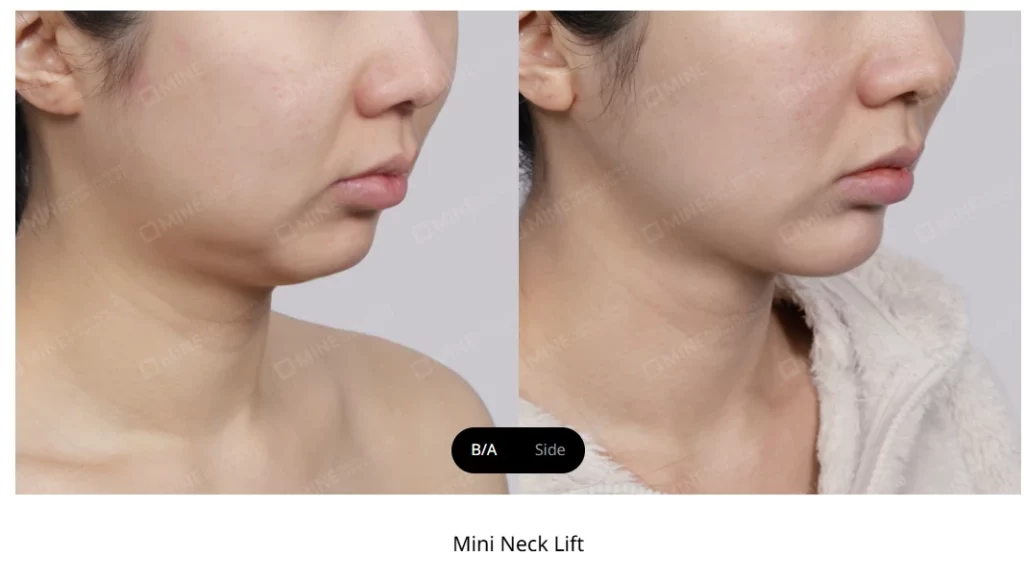
Table of contents
Understanding Sagging Jawline After Surgery
A sagging jawline after contouring surgery is the loss of a crisp border between the lower face and the neck once the underlying bone or fat has been reduced, leaving the overlying skin and muscle without enough support to redrape. It is a recognized secondary concern rather than a sign that the first operation failed, and it is usually correctable.
Jawline contouring surgery enhances facial structure and balance, but a sagging jawline is a relatively common concern that affects some patients. This post-surgical change can be frustrating, especially when the goal was to achieve a more defined facial profile.
The good news is that effective solutions exist for addressing sagging jawline issues. The most successful treatments include double chin surgery, platysma muscle tightening, submuscular fat removal, and mini-neck lift procedures. These surgical interventions directly target the underlying structural causes of jawline sagging, providing long-lasting definition and youthful contours.
Why Does the Jawline Sag After Contouring?
Understanding the root causes of post-contouring jawline sagging is essential for selecting the most appropriate treatment. Several factors contribute to this condition:
- Reduced skin elasticity: Age-related collagen loss or naturally less elastic skin cannot properly retract after surgery
- Aggressive fat reduction: Removing too much fat too quickly may leave skin without adequate support
- Post-surgical inflammation: Prolonged swelling can temporarily exaggerate the appearance of sagging
- Muscle laxity: Weak platysma muscles fail to provide proper structural support
- Genetic predisposition: Some individuals naturally have thinner skin or weaker connective tissues
- Inadequate aftercare: Failing to follow post-surgical guidelines can compromise healing and results
The anatomy behind it. Surgical textbooks describe the fat of the under-chin area as sitting in three separate layers: above the platysma (the thin sheet-like muscle that covers the front of the neck), between the two halves of that muscle, and beneath it. Facial contouring usually addresses only the most superficial layer, so a deeper pad or a slack muscle can remain and continue to blur the jawline.
There is also a simple geometric reason why a sagging jawline appears. When a soft, obtuse neck angle is converted into a sharp, defined one, the skin has to travel a longer path around the new contour — so the same skin that looked adequate before surgery can suddenly read as excess. This is why skin quality is assessed as carefully as fat volume before any correction.
Did you know? Reference texts on aesthetic surgery of the neck consistently note that swelling and scarring in this area settle more slowly than elsewhere in the face, and that residual bands or contour irregularities are among the most frequent reasons patients return for secondary surgery. Patient information from the American Society of Plastic Surgeons makes the same point about individual variation in results.
Is Your Sagging Jawline Swelling or True Laxity?
Short answer: swelling and true laxity look alike but behave differently. Swollen tissue feels firm, is worst on waking and softens week by week; lax tissue feels soft, lifts easily between the fingers and looks the same morning and night. A sagging jawline that is unchanged at 6 months is far more likely to be laxity than swelling.
This is the single most useful question to answer before booking any corrective procedure, because a sagging jawline caused by lingering swelling will improve on its own, while true tissue laxity will not. Rushing into a second operation while the tissues are still settling is one of the most common regrets patients describe.
- Timing: Swelling-related fullness peaks in the first weeks and steadily improves; a sagging jawline that is still unchanged at six months is far more likely to be structural
- Daily pattern: Fluid retention is typically worse on waking and softens through the day, whereas true laxity looks the same morning and evening
- Texture: Swollen tissue feels firm and slightly tense; lax tissue feels soft and can be gently lifted with the fingers
- Position: Swelling is usually diffuse across the whole under-chin area, while sagging tends to collect at the jowl and along the front of the neck
- Response to head position: A sagging jawline caused by muscle banding becomes more visible when the chin is lifted or the neck is tensed
Photographs taken in the same lighting and at the same angle every few weeks are far more reliable than memory. Bring that sequence to your consultation — it lets the surgeon see the trajectory of your sagging jawline rather than a single snapshot, and it often changes the recommended plan.
Most Effective Surgical Solutions
There is no single best operation for a sagging jawline — the right one depends on which layer is at fault. Excess fat is treated with double chin surgery or submuscular fat removal, a slack platysma with muscle tightening, and genuinely loose skin with a mini-neck lift. These causes often coexist, so two steps are frequently combined in one session.
1. Double Chin Surgery (Submentoplasty)
Double chin surgery specifically targets excess fat and loose skin in the submental region, directly addressing a sagging jawline after contouring surgery. This procedure:
- Removes persistent fat deposits beneath the chin
- Tightens underlying tissues for improved definition
- Creates a sharper transition between the neck and jawline
- Provides long-lasting structural improvement
The work is carried out through a short incision hidden in the natural crease under the chin. Because all three fat layers of the neck can be reached from that single access point, an experienced surgeon can treat a sagging jawline conservatively — thinning where volume is genuinely excessive and leaving a protective cushion where the skin is thin.
Best candidates: Patients with moderate to significant submental fullness and visible sagging after initial contouring.
2. Platysma Muscle Tightening (Platysmaplasty)
The platysma muscle plays a crucial role in jawline definition. When this muscle becomes lax, it contributes significantly to jawline sagging. Platysma tightening:
- Corrects muscle band separation that causes neck banding
- Creates internal support for the lower face
- Prevents progressive sagging by establishing a muscular “sling”
- Enhances the effects of other jawline procedures
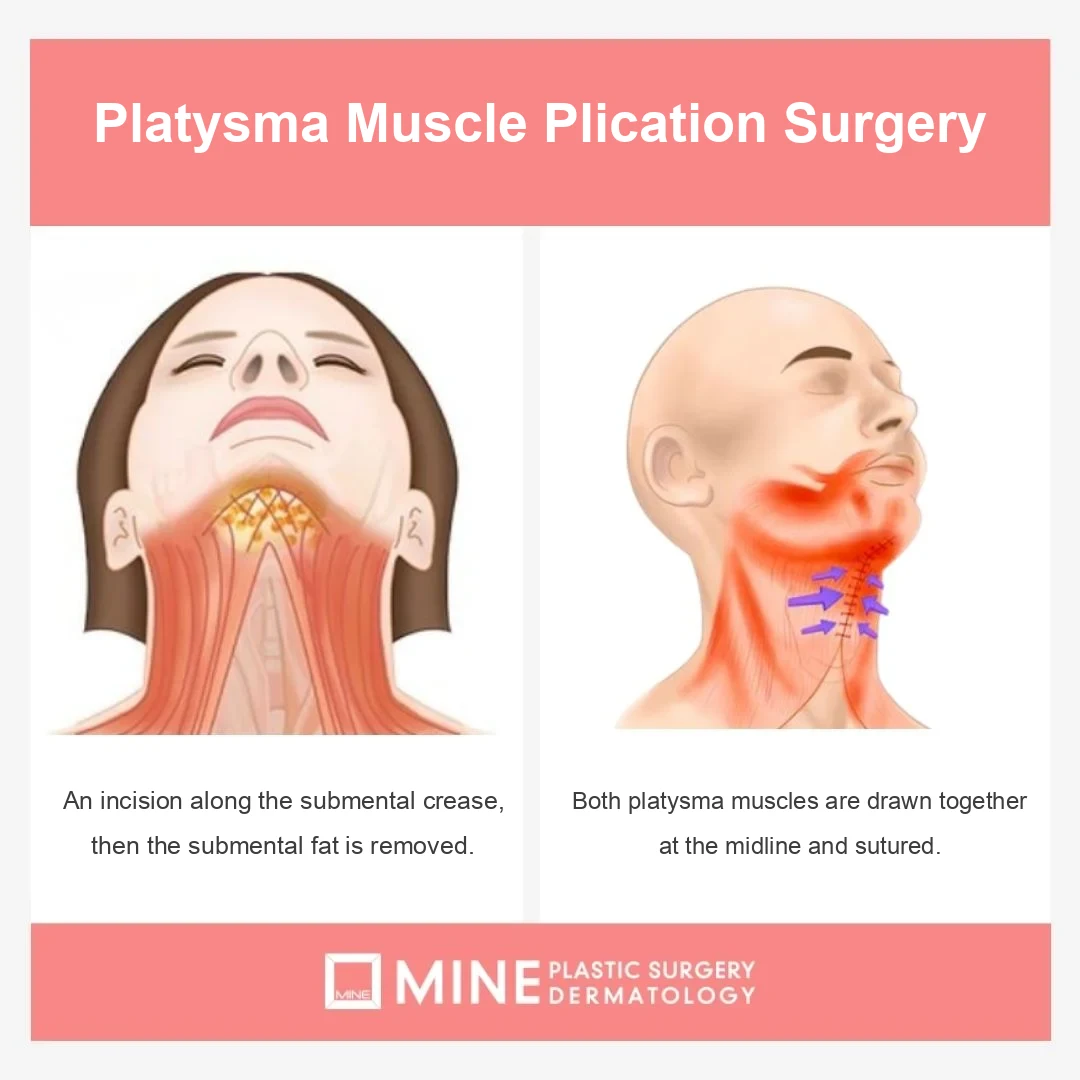
In practice the two halves of the muscle are drawn toward the midline and stitched together, creating an internal corset. Aesthetic surgery literature describes this midline plication through a small under-chin incision as one of the most durable techniques for restoring a defined jawline, and it is frequently the missing element when a previous operation improved volume but not shape.
What to expect: Muscle tightening improves the sharpness of the neck angle and softens visible bands, but it does not remove excess skin. When both problems coexist, it is combined with a skin-tightening step rather than used alone.
3. Submuscular Fat Removal
Often overlooked, deep fat deposits beneath the platysma muscle can significantly impact sagging jawline contours. Submuscular fat removal:
- Targets deep fat layers not addressed in standard liposuction
- Creates more dramatic jawline definition
- Improves the neck-jaw angle for a more youthful appearance
- Can be performed with minimal external scarring
This layer matters most in revision cases. Textbook guidance on secondary neck surgery is explicit that treating only the superficial fat and the skin is often not enough — deep fat, a drooping submandibular salivary gland and a bulky digastric muscle can each keep a sagging jawline looking heavy no matter how much surface fat is taken. Identifying which of these applies to you is a consultation task, not a self-diagnosis.
4. Mini-Neck Lift
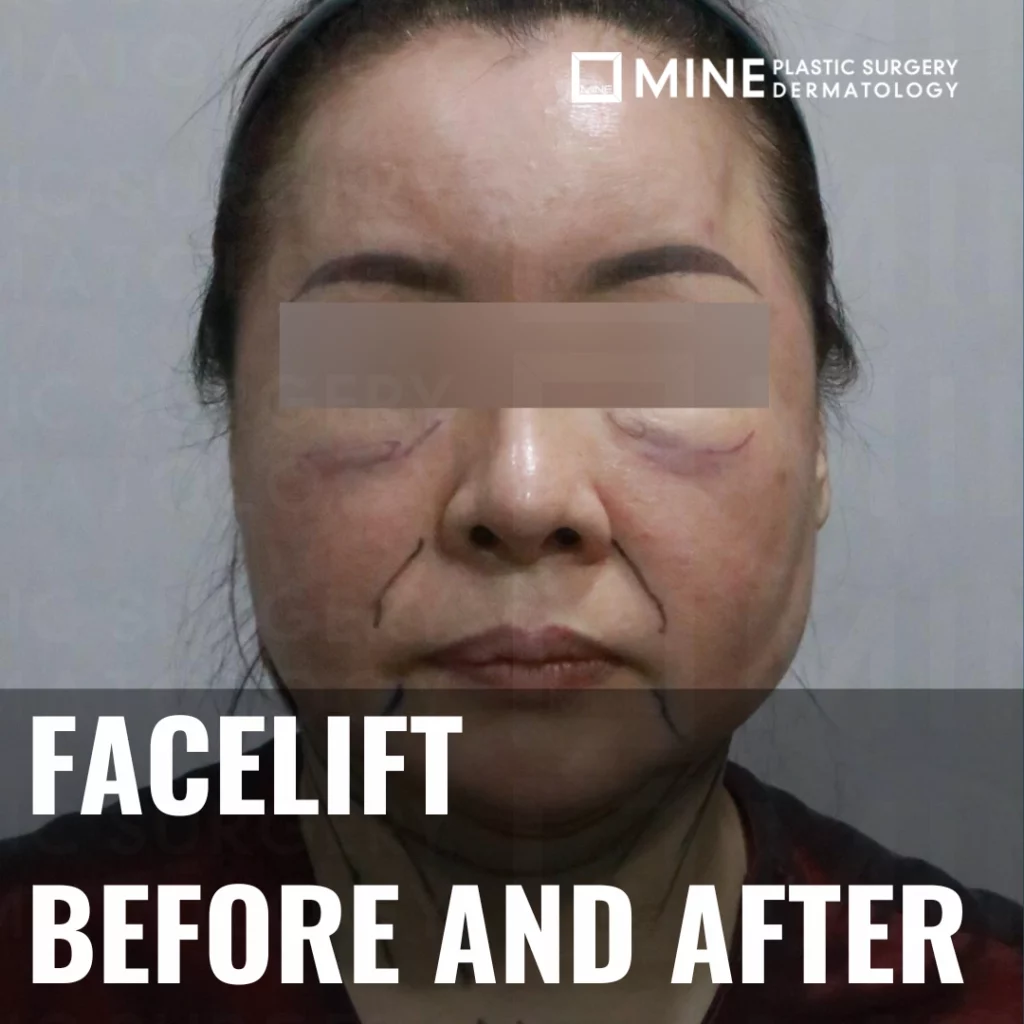
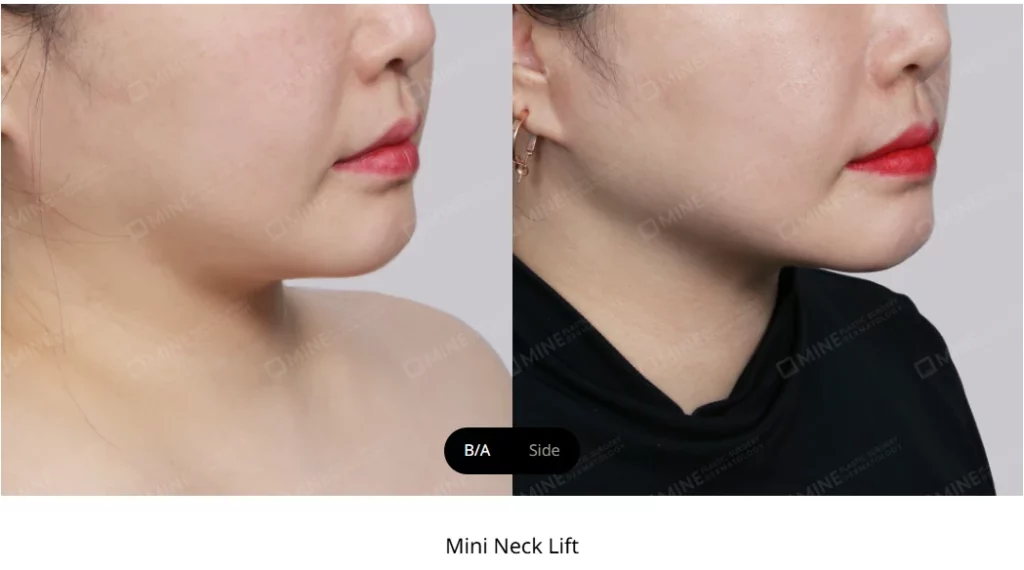
For patients with more significant skin laxity, a mini-neck lift provides comprehensive correction for a sagging jawline with less downtime than a full facelift:
- Addresses both skin and underlying structures
- Tightens jawline from ear to ear
- Corrects jowl formation and “turkey neck” appearance
- Creates natural-looking rejuvenation
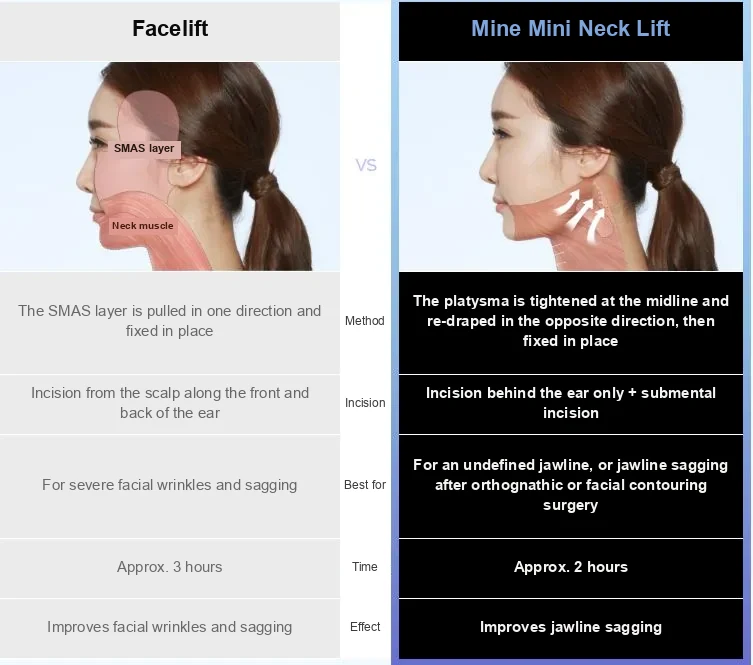
The distinction matters because a full facelift is designed around the cheek and midface. Aesthetic surgery literature observes that lifting the deeper facial layer alone has limited influence on a hanging or banded neck over time, which is exactly why a targeted neck procedure is often the better answer for a sagging jawline that appeared after contouring rather than with age.
Recovery time: Most patients are back to routine activities in 7–10 days, and the most obvious swelling has usually settled by 4–6 weeks. The contour keeps refining for another three to six months, and the scars go on fading for about a year.
How Do These Surgical Options Compare?
Each procedure targets a different layer of a sagging jawline: double chin surgery addresses fat above the platysma, platysma tightening the muscle itself, submuscular fat removal the deep pad beneath it, and a mini-neck lift loose skin. Social downtime ranges from about 1–2 weeks for the least involved option to 2–3 weeks for a mini-neck lift.
| Procedure | Best For | Social Downtime | How Long the Result Lasts | How Invasive |
|---|---|---|---|---|
| Double Chin Surgery | Excess fat above the platysma | 1–2 weeks | Fat that is removed does not come back, but the contour keeps aging with you | Moderate — a small incision under the chin |
| Platysma Tightening | Visible neck bands, a slack neck angle | 1–2 weeks | Durable, although bands can partially recur | Moderate — the same under-chin incision, with the muscle sutured |
| Submuscular Fat Removal | Deep fat left behind after superficial liposuction | 2–3 weeks | Fat that is removed does not come back | More involved — the platysma has to be opened to reach the deep layer |
| Mini-Neck Lift | Significant skin laxity | 2–3 weeks | Several years, depending on skin quality and how you age | Moderately invasive — under-chin plus behind-the-ear incisions |
These are typical ranges rather than promises — downtime and durability differ from person to person. In real cases these options overlap rather than compete. A sagging jawline driven mainly by deep fat may need one step; a sagging jawline with slack muscle and loose skin usually needs two or three performed in the same session. The comparison above is a starting point for the conversation, not a menu to choose from alone.
Risks and Limits of Sagging Jawline Correction
Any operation on an area that has already been operated on carries more uncertainty than the first procedure, and an honest discussion of that is part of good care. Correcting a sagging jawline involves the following recognized risks:
- Bleeding and hematoma: Blood collecting under the skin flap is the most time-critical early complication and may require prompt treatment
- Infection and delayed healing: Uncommon but possible, particularly where scar tissue has reduced blood supply
- Altered sensation: Numbness or tingling around the chin and neck is normal for several weeks to a few months, and it occasionally persists
- Nerve injury affecting movement: The marginal mandibular nerve runs just below the jawline, and stretching or bruising it can temporarily weaken one side of the lower lip, making the smile look uneven. It almost always recovers within weeks to months, but lasting weakness is a recognized, if uncommon, risk
- Skin healing problems: The skin over the neck is lifted on a delicate blood supply, so smoking or heavy scarring from the first operation can lead to delayed healing and, rarely, to skin loss at the incision
- Contour irregularity: Over-aggressive fat removal in thin skin can leave hollows or ridges and may even accentuate a sagging jawline
- Incomplete band correction: Platysmal bands are notoriously difficult to eliminate entirely and can partially recur
- Fluid collection and residual skin: Seroma and leftover loose skin are documented reasons for a further minor revision
- Scarring: Incisions are hidden under the chin and behind the ear, but healing quality varies between individuals
There are limits as well as risks. Corrective surgery works with tissue that has already been altered, so the realistic goal for a sagging jawline is a clear improvement rather than a perfectly restored contour. Smoking, uncontrolled diabetes, bleeding disorders and certain medications materially raise complication rates — never stop or change a prescribed medicine on your own, and disclose everything you take, including supplements, at consultation.
Supplementary Non-Surgical Treatments
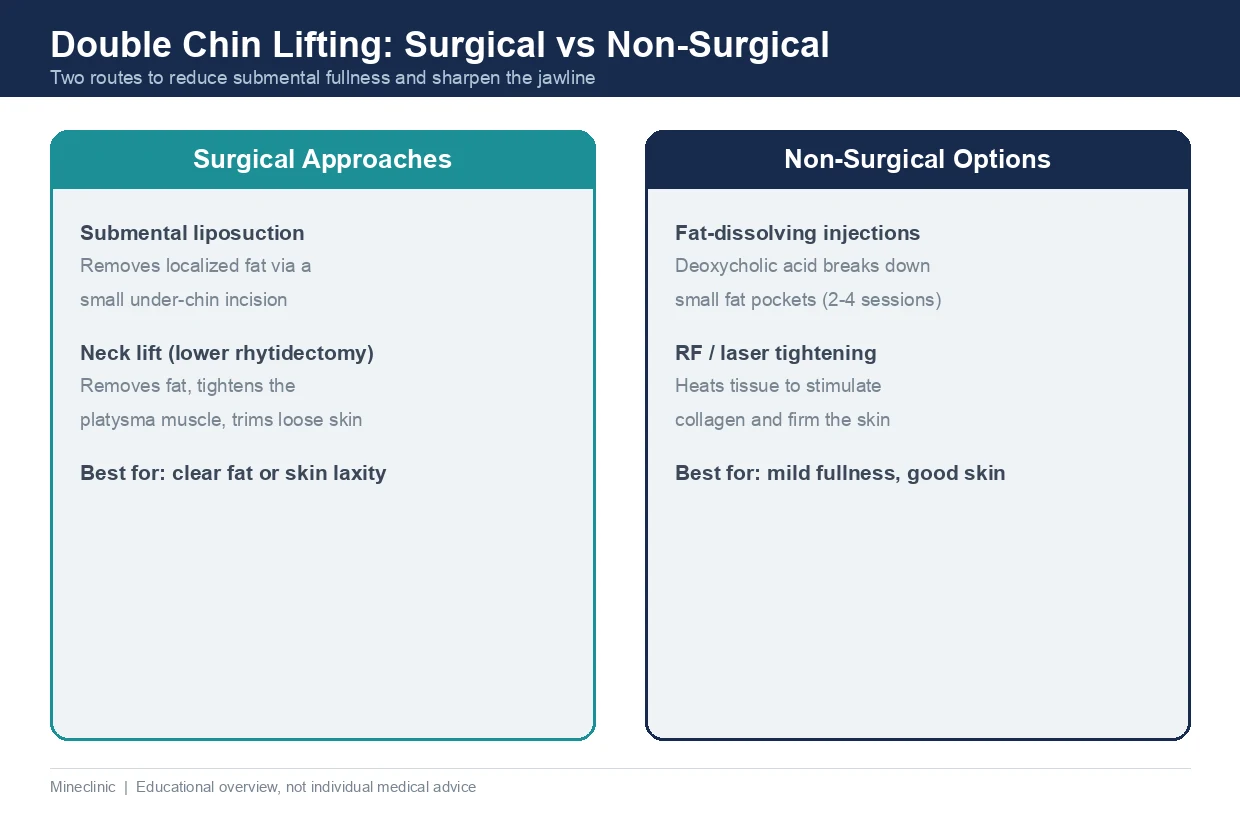
While surgical methods offer the most dramatic improvement for a sagging jawline after contouring surgery, several non-surgical approaches can enhance results or serve as maintenance treatments:
1. Energy-Based Skin Tightening
Several technologies can stimulate collagen production and improve skin texture:
- Ultherapy: Uses focused ultrasound to tighten skin from deep layers
- Radiofrequency treatments: Thermage and similar technologies heat tissue to induce collagen remodeling
- Laser skin tightening: Fractional lasers create controlled damage that triggers healing and tightening
Effectiveness: These treatments produce a modest, gradual firming effect and are best understood as complementary. Results vary considerably between individuals, and they cannot lift tissue that has genuinely descended.
2. Targeted Facial Exercises
Everyday habits can help you hold on to a surgical result, but expectations here should stay modest:
- Posture: Keeping your head over your shoulders instead of jutting forward keeps the front of the neck lengthened, which flatters the jawline in daily life
- Gentle chin tucks: A slow tuck of the chin toward the throat stretches the front of the neck without forcefully contracting it
- Sleep position: Sleeping on your back keeps you from pressing one side of the face and neck into the pillow for hours at a time
One important caveat: there is no good evidence that muscle-toning exercises tighten a sagging jawline, and routines that repeatedly tense the platysma can make neck bands more prominent rather than less — the standard treatment for visible bands is to relax that muscle, not to strengthen it. Start any neck routine only once your surgeon confirms that healing is complete.
3. Advanced Skincare Protocols
Post-surgical skincare can significantly impact long-term results:
- Retinoid treatments: Prescription-strength retinoids accelerate cell turnover and collagen production
- Peptide serums: Signal skin to increase collagen synthesis
- Growth factor products: Support tissue regeneration and healing
- Professional lymphatic drainage: Reduces persistent swelling and promotes circulation
Prescription retinoids and any active treatment applied near a healing incision should be introduced only with your surgeon’s approval, since starting them too early can irritate fresh scar tissue rather than improve it.
Recovery Timeline and Expectations
How Long Does It Take to See Improvements?
When addressing a sagging jawline after contouring surgery, patients should understand the typical timeline for visible results:
- Immediate post-surgery: Swelling may temporarily mask improvements
- 2-4 weeks: Initial healing reveals preliminary contour changes
- 1-3 months: Most swelling resolves, revealing significant improvement
- 6 months: Final results become apparent as all healing completes
The neck is genuinely slower than the rest of the face. Surgical texts note that swelling and scar maturation in this region settle over an extended period, so a jawline that still looks soft at three months is often simply mid-course. Wearing the compression garment exactly as instructed, sleeping with the head elevated and avoiding heavy lifting all shorten that curve.
Important: Individual recovery varies based on age, procedure type, skin quality, and aftercare compliance. Contact your clinic promptly if you notice rapidly increasing swelling on one side, severe pain, fever or spreading redness.
Preventing Future Jawline Sagging
Maintaining your rejuvenated jawline requires ongoing attention to:
- Sun protection: UV damage accelerates collagen breakdown; use SPF 30+ daily
- Collagen-supporting nutrition: Consume foods rich in vitamin C, zinc, and amino acids
- Weight stability: Fluctuations can compromise skin elasticity and fat distribution
- Proper hydration: Maintains skin plumpness and supports cellular function
- Tech neck prevention: Minimize looking down at devices to prevent neck band formation
- Regular maintenance treatments: Schedule periodic skin tightening sessions as recommended
None of these habits will stop aging, but together they slow the return of a sagging jawline and protect the investment you have already made. Weight stability is the one most patients underestimate: repeated gain and loss stretches the same skin that was just tightened.
Frequently Asked Questions
How Long After Jawline Contouring Can Sagging Develop?
Sagging may become apparent anywhere from 3 months to several years after contouring surgery, depending on individual factors like age, skin elasticity, and genetic predisposition. Younger patients with good skin elasticity typically maintain results longer than older patients or those with naturally thin skin.
Are Non-Surgical Treatments Effective for Severe Sagging?
For a moderate to severe sagging jawline after contouring surgery, non-surgical treatments alone rarely provide satisfactory correction. While they can enhance surgical results or address very mild sagging, patients with significant laxity generally require surgical intervention for meaningful improvement.
How Can I Choose Between Different Surgical Options?
The ideal surgical approach depends on:
- The specific anatomical issues causing your sagging
- The degree of skin laxity versus fat accumulation
- Your recovery availability
- Previous surgical history
- Age and skin quality
A consultation with a board-certified facial plastic surgeon specializing in secondary contouring procedures is essential for customized recommendations.
What’s the Recovery Process Like for Corrective Jawline Surgery?
- 1-3 days of significantly limited activity
- 7-10 days before returning to normal social activities
- Mild swelling for 2-4 weeks
- Compression garment wear for 1-2 weeks
- Full restriction of strenuous activity for 3 weeks
How Long Should I Wait Before Revision Surgery?
Most surgeons prefer to wait until swelling has fully settled and the tissues have softened before operating again — commonly around six months, and sometimes longer where scarring is significant. Operating too early on a sagging jawline risks judging the contour while it is still changing, and inflamed tissue is technically harder to work with. Your own surgeon’s assessment of how your tissues are healing takes precedence over any general timeframe.
Will Correcting a Sagging Jawline Leave a Visible Scar?
Yes — a scar is unavoidable, but it is short and deliberately hidden, and in most patients it matures into a fine pale line. Healing quality varies between individuals, so no clinic can guarantee an invisible result.
The main access point for a sagging jawline correction is a short incision placed in the natural crease under the chin, where it is hidden by the shadow of the jaw in normal conversation. When skin also needs to be redraped, an additional incision is tucked behind the ear. Scars fade gradually over roughly a year, and sun protection plus the scar care your clinic recommends makes a measurable difference to the final appearance.
Expert Recommendations
For optimal results when addressing a sagging jawline after contouring surgery, consider these expert recommendations:
- Choose a specialist: Select a surgeon with specific experience in revision and secondary facial contouring
- Comprehensive evaluation: Ensure your surgeon assesses both skin quality and underlying structural issues
- Realistic expectations: Understand that corrective procedures may not match the results possible with a primary approach
- Combined approaches: The most successful outcomes often involve addressing multiple tissue layers simultaneously
- Long-term perspective: Invest in maintenance protocols to preserve your results
Come to the consultation with your original operative record if you have it, a set of dated photographs and a written list of what specifically bothers you about your sagging jawline. Those three things shorten the assessment considerably and make the plan far more precise.
At MINE Plastic Surgery & Dermatology in Gangnam, Seoul, Dr. Lee Sung-wook and our board-certified plastic surgeons handle complicated post-surgical concerns such as a sagging jawline with customized, multi-modal plans that prioritize natural-looking results.
Conclusion
Addressing a sagging jawline after contouring surgery requires a strategic approach that targets the specific structural causes of your condition. Double chin surgery, platysma tightening, submuscular fat removal, and mini-neck lifts offer the most effective solutions by directly correcting the underlying anatomical issues.
While non-surgical options provide valuable support and maintenance, they generally cannot replace the comprehensive correction achieved through surgical intervention for moderate to severe cases. The key to successful correction lies in choosing the right combination of procedures tailored to your unique anatomy and concerns.
Above all, resist the urge to act on a sagging jawline before the tissues have settled, and have the layer causing your particular problem identified properly. Those two decisions influence the outcome more than the choice of technique itself.
With careful treatment selection and the experience of the specialists at MINE Plastic Surgery & Dermatology in Seoul, a sagging jawline can be improved to a defined, natural-looking contour that restores facial harmony.
Have questions about your own post-contouring concerns? Contact MINE Plastic Surgery & Dermatology in Seoul for a personalized consultation on correcting a sagging jawline.
※ This content is for informational purposes only and does not replace professional medical advice, diagnosis, or treatment. Individual results may vary, and side effects may occur. Please consult with a board-certified plastic surgeon for personalized advice.