EN


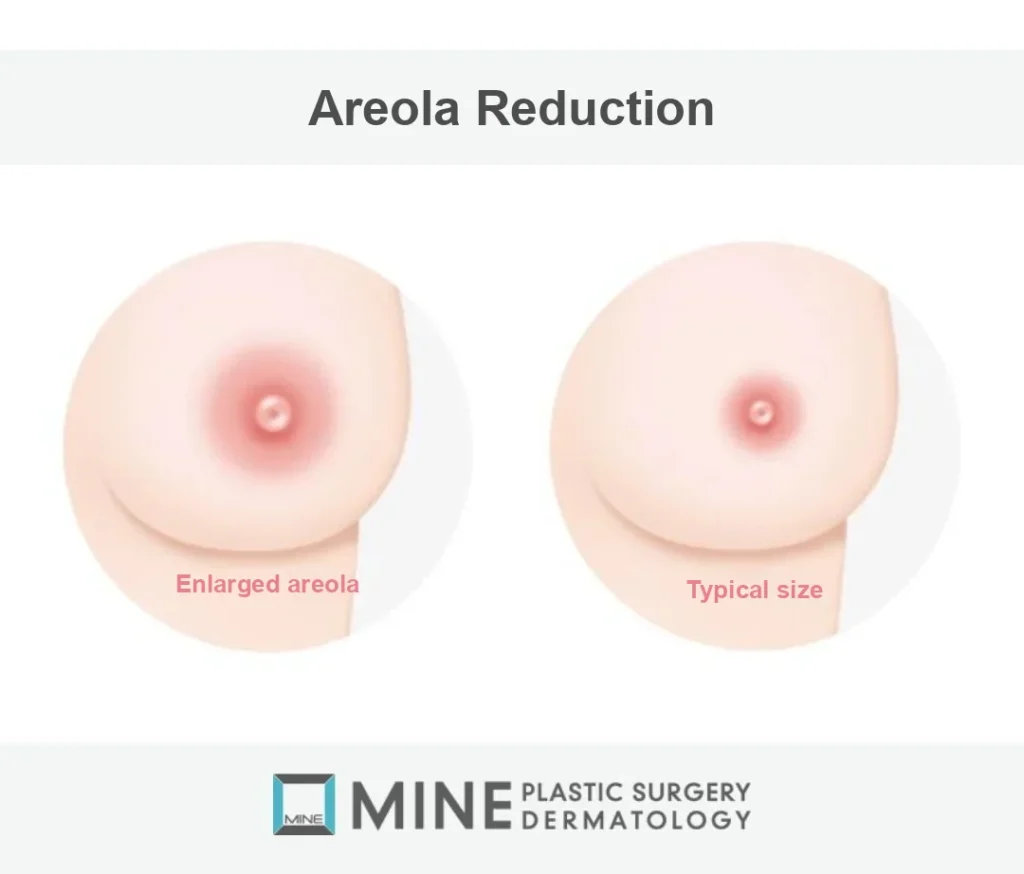
Areola reduction surgery is a short outpatient procedure that removes a ring of excess pigmented skin and re-sets a smaller, rounder areola border, usually through an incision hidden at the color edge or around the nipple. It is done under local anesthesia, and most people go home the same day.
This guide is for readers who have already decided that areola reduction surgery is the right route. It covers what happens in the operating room, where the scar ends up, how the surgeon limits re-widening, and how to plan your recovery and your trip to Seoul. If you are still weighing what causes enlarged areolas and when it’s worth waiting, start there first.
I’m Dr. Lee Sung-wook, a board-certified plastic surgeon at MINE Plastic Surgery & Dermatology in Seoul.
What Is Areola Reduction Surgery?
The areola is the darker, round area of skin around the nipple. Areola reduction surgery removes a planned ring of that pigmented skin and then closes the edge so the areola sits smaller, rounder and more in proportion with the breast. The aim is a natural size for your body, not the smallest possible circle.
What Counts as an Enlarged Areola?
A typical areola measures about 3.5–4.5 cm (about 1.4–1.8 in) across, and textbooks reserve periareolar-only reduction for breasts with minimal sagging (roughly 2 cm or less of nipple descent). That diameter is useful context, not a diagnostic cut-off. What matters more is how the areola looks in proportion to your breast, whether the two sides match, and whether the size bothers you.
Areolas usually stretch for a few familiar reasons: pregnancy and breastfeeding, weight gain or loss, aging skin, genetics, and the pull of a sagging breast. Because these causes are covered in detail elsewhere, I’ll keep this to one paragraph. The rest of this guide focuses on the operation itself.
Areola Reduction vs. a Breast Lift
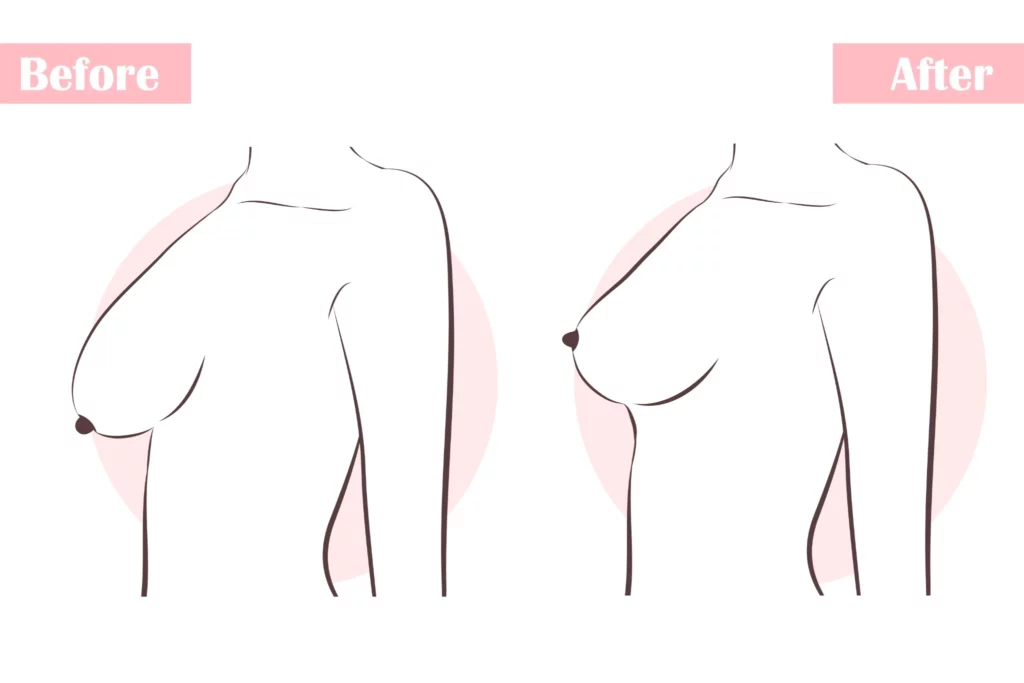
Sometimes the areola is not simply large; it sits low because the whole breast has dropped. Doctors call this sagging “ptosis.” Plastic surgery textbooks advise keeping incisions limited to the areola edge for large areolas with only mild sagging, because pushing a periareolar-only approach to fix more droop tends to flatten the breast and stretch the scar.
If your nipple sits well below the fold under the breast, a lift may be needed instead of, or together with, areola reduction surgery. You can compare the breast lift incision options to see how those scars differ.
Who Is a Good Candidate?
Most people who ask about areola reduction surgery are healthy adults whose areolas have changed over time. Suitability is decided at an in-person consultation, but the lists below give you a realistic starting point.
Good Fit
- Your areolas stretched after pregnancy, breastfeeding, weight change or aging.
- One areola is clearly larger or less round than the other.
- Your weight has been stable for some time.
- You have finished having children or are not planning a pregnancy soon.
- Your breast position is reasonably good, with little or mild sagging.
When to Pause or Choose a Different Approach
- You plan to breastfeed. Depending on the technique, the incision can affect milk ducts, so talk this through before you book.
- Your breast sags significantly. A lift pattern usually gives a better and longer-lasting result.
- You smoke. Smoking reduces blood flow to healing skin and raises the risk of wound problems.
- You expect a large weight change. Gaining or losing a lot of weight afterward can stretch the areola again.
If the nipple is also large or long, it is often treated in the same session. Our guide to nipple reduction surgery explains how that part works.
How Areola Reduction Surgery Is Performed: 2 Incision Options
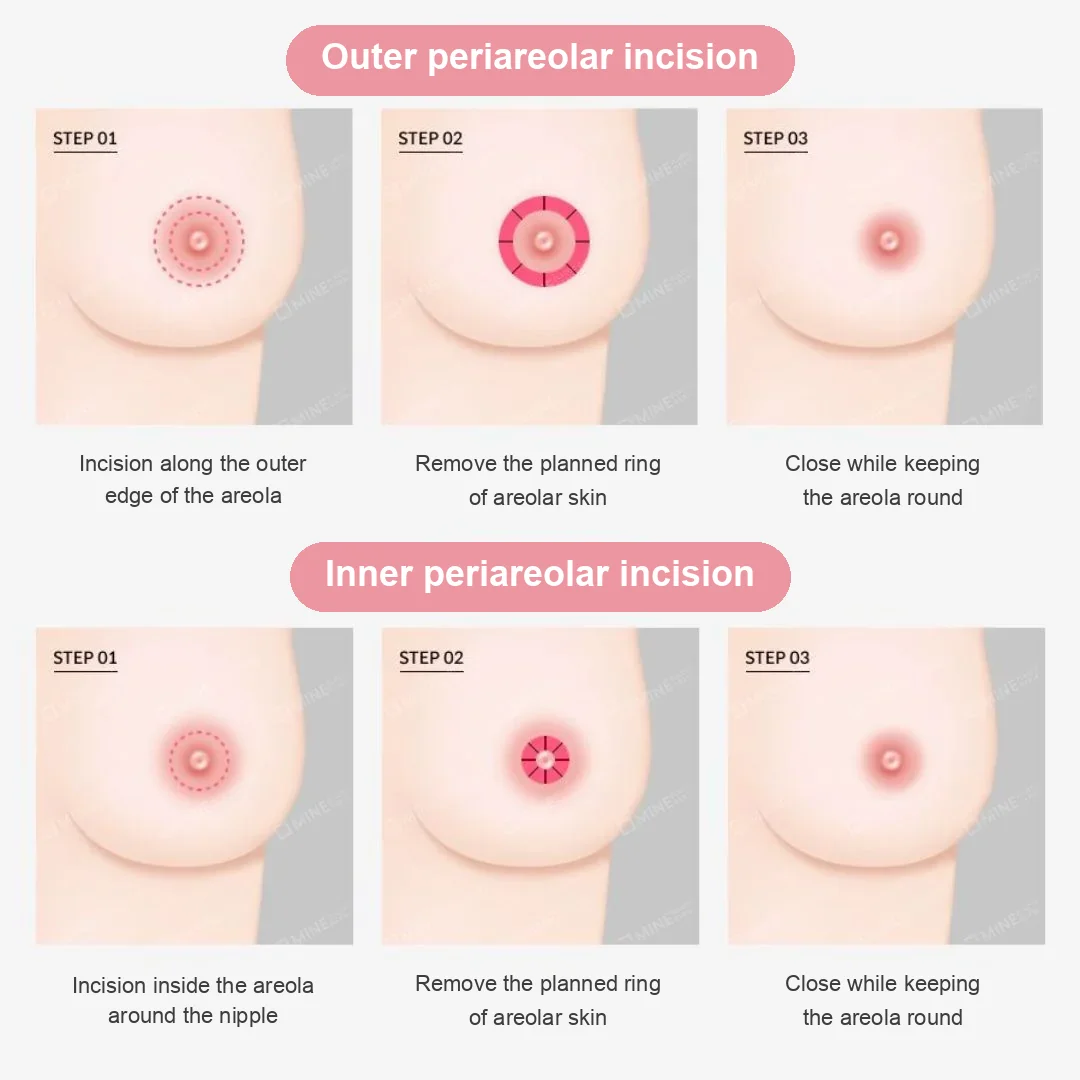
“Periareolar” simply means “around the areola,” and both techniques used in areola reduction surgery are periareolar. There are two incision options. Most often the incision follows the outer edge of the areola, where darker skin meets breast skin (outer periareolar incision), which is used for clearly enlarged areolas. When the areola is only moderately enlarged, an incision inside the areola around the base of the nipple (inner periareolar incision) may be used instead.
Either way, areola reduction surgery follows the same basic flow:
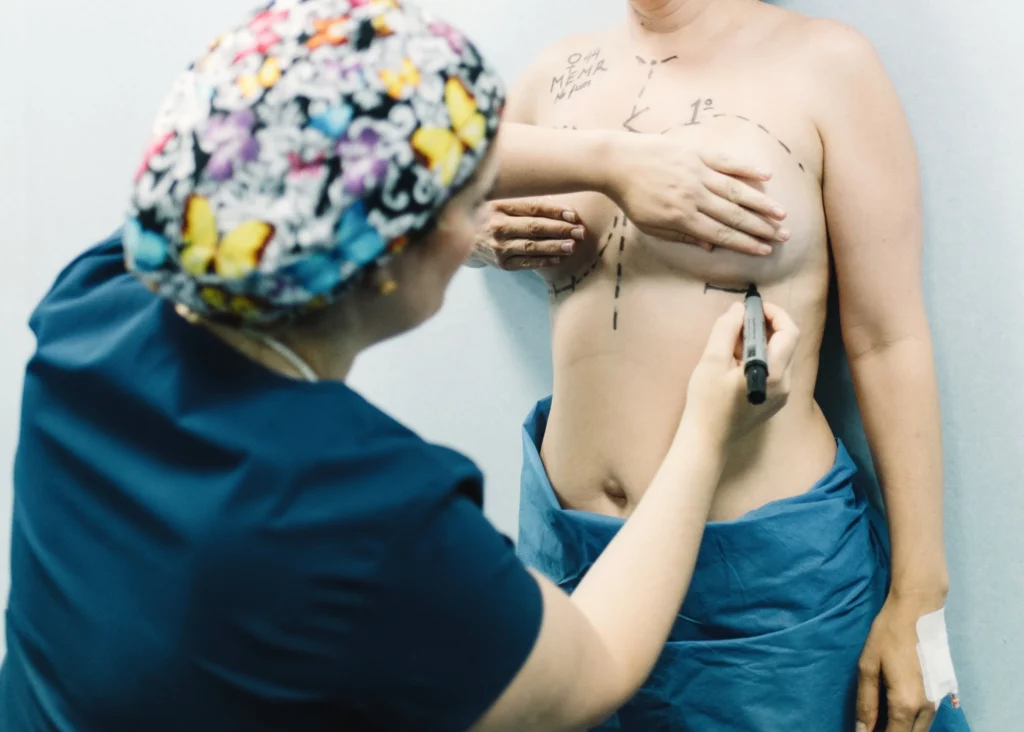
- Mark the new areola size and measure both sides so they match.
- Make the incision along the planned line.
- Remove the planned ring of areolar skin.
- Close the edge while keeping the areola round.
Outer Periareolar Incision (at the Color Border)
With the outer technique, the incision runs along the natural boundary between the pigmented areola and the lighter breast skin. A ring of darker skin is removed from the outside edge, and the breast skin is brought in to meet the new, smaller border. Because the scar sits exactly where the color changes, it tends to blend into that line as it fades. This is the more common choice for areola reduction surgery when the areola is clearly enlarged.
Inner Periareolar Incision (Around the Nipple)
With the inner technique, the incision is placed inside the areola, around the base of the nipple. The ring of skin is removed from within the areola, so the scar sits in the darker skin next to the nipple rather than at the outer edge. It suits areolas that are only moderately enlarged, and it pairs naturally with nipple reduction because both work in the same area.
The Purse-String Stitch That Limits Re-Widening
Here is the part of areola reduction surgery many patients have never heard of, and it matters most for the long-term result. When a surgeon removes a ring of skin, a larger outer circle has to be joined to a smaller inner circle. That join sits under constant tension, and the natural tendency is for the areola to slowly stretch wider again and for the scar to spread.
Plastic surgery textbooks identify re-widening of the areola as the main long-term problem of periareolar closure, and from the mid-1980s onward surgeons developed the purse-string and “round-block” stitches specifically to counter it. A purse-string suture is a circular stitch that works like a drawstring on a bag. It is woven around the new edge in the dermis (the deeper, sturdier layer of skin) and gently drawn in, so the deep stitch carries the tension instead of the thin surface skin.
Textbooks also point out a second rule: the drawstring must not be pulled too tight. Over-tightening can squeeze the blood supply to the areola and nipple, and it can bunch the skin into pleats. That is why the goal of areola reduction surgery is a natural reduction rather than the maximum possible one. A purse-string closure reduces the risk of re-widening; it does not remove that risk entirely, and future pregnancy or weight change can still affect the result.
Surgeon’s note: In my practice, the question I hear most is “Will it stretch back?” My honest answer is that the risk is real but manageable. Choosing a sensible new size, anchoring the edge deep in the skin and not over-tightening it do more for a lasting result than removing as much skin as possible.
Anesthesia, Operating Time and Same-Day Discharge
The operation usually takes about 30 minutes to an hour under local anesthesia, and you go home the same day. Expect the shorter end if only the areola is treated, and longer if nipple surgery is combined. You stay awake but comfortable, and you will not need an overnight stay. If you’d like to see how the two procedures are planned together, read about nipple and areola reduction at MINE.
Areola Reduction Recovery: Week-by-Week Timeline
Recovery from areola reduction surgery is usually gentle compared with larger breast operations. Stitches are typically removed after about 7–14 days, and swelling and bruising usually settle within 1–2 weeks. Most people are back at a desk job within about 3 days to 1 week, while strenuous upper-body exercise and heavy lifting should wait until the incision has settled.
Recovery Timeline at a Glance
| When | What to expect |
|---|---|
| Day of surgery | Local anesthesia, about 30 min–1 hr; go home the same day |
| Days 1–7 | Swelling and bruising peak, then ease; most people return to desk work and light routines within about 3 days to 1 week |
| Days 7–14 | Stitches removed (unless absorbable); swelling and bruising largely settled by about 2 weeks |
| Weeks 2–6 | Resume exercise gradually; no heavy lifting or strenuous upper-body work until the incision has settled. Follow your surgeon’s clearance |
| Months 1–3 | Temporary numbness usually improving gradually |
| Months 6–12 | Scar fades and matures; final contour assessed |
How the Scar Matures
An areola reduction scar typically matures and fades over about 6–12 months. In the first weeks it may look pink and slightly raised. Over the following months it usually softens, flattens and becomes paler. How it ends up depends on your skin type, genetics, tension on the wound and aftercare.
To help the areola reduction scar settle well, protect it from the sun and use silicone gel or scar tape as your surgeon directs. Avoid stretching the area with tight, underwired bras until you are cleared. If you’d like more detail, our article on how periareolar scars mature walks through the same healing stages.
Planning Your Trip to Seoul
For international patients, the schedule for areola reduction surgery usually runs like this: consultation, surgery (often on the same or the next day), then a follow-up check and stitch removal about 7–14 days later. As a practical guide, plan to stay in Seoul long enough for that stitch-removal visit, which means about 1–2 weeks. If your time is tight, ask during your consultation whether absorbable stitches are suitable for you, since they don’t need to be taken out.
Book your flight home before you travel, leaving a few spare days after your stitch-removal visit, and avoid lifting heavy luggage yourself in the first days after surgery. Many patients find a carry-on and a hotel porter make the trip much easier.
Risks, Side Effects and Pre/Post-Op Precautions
Areola reduction surgery is a small operation, but like any surgery it carries risks. Knowing what is normal, and what isn’t, helps you recover with less worry.
Possible Side Effects
| Side effect | What it is | Usual course |
|---|---|---|
| Swelling / bruising | Around the incision | Usually eases over 1–2 weeks |
| Scar | Along the incision line | Matures and softens over about 6–12 months |
| Sensation change | Temporary numbness of the nipple/areola | Usually improves gradually over months |
| Re-widening | Skin tension stretches the areola again | Purse-string closure reduces the risk |
| Inflammation / infection | Uncommon; a risk of any incision | Contact the clinic promptly |
Choosing the right surgeon is part of making areola reduction surgery safer. Before booking, check that your surgeon is a board-certified plastic surgeon; in Korea, you can confirm membership through the Korean Society of Plastic and Reconstructive Surgeons.
Before Surgery
- Prescription medicines: If you take aspirin, other blood thinners or antiplatelet medicines, don’t stop them on your own. Talk to the doctor who prescribed them first; they decide whether and when to pause.
- Supplements: Supplements that raise bleeding risk, such as red ginseng and vitamin E, are usually stopped 1–2 weeks before surgery.
- Smoking: Stop smoking well before surgery, because it slows healing.
- Tell your surgeon: Mention your menstrual cycle, whether you are breastfeeding, and any plans for future pregnancy.
After Surgery
- Avoid strenuous upper-body exercise and heavy lifting until the incision has settled and your surgeon clears you.
- Use any prescribed antibiotics or ointment exactly as directed.
- Don’t remove or change dressings yourself unless you’ve been shown how.
- Protect the scar from the sun and use scar gel or tape as advised.
- Contact the clinic if you develop a fever, severe or worsening pain, discharge or pus.
If you hope to breastfeed in the future, raise it before surgery, because the incision and closure can affect milk ducts depending on the technique. Our article on breastfeeding after nipple surgery explains the trade-offs. Keep in mind, too, that another pregnancy or a large weight change can stretch the areola again.
Areola Reduction Surgery FAQ
How long does areola reduction surgery take?
Areola reduction surgery usually takes about 30 minutes to 1 hour under local anesthesia. It is closer to 30 minutes when only the areola is reduced and longer when nipple surgery is combined. You go home the same day, so an overnight hospital stay isn’t usually needed.
Will areola reduction surgery leave a visible scar?
Every incision leaves a scar, but its position helps it blend in. With the outer technique, the scar sits on the natural color border of the areola. It usually fades and softens over about 6–12 months, although the final look varies with skin type, tension on the wound and aftercare.
Can the areola stretch again after surgery?
Yes, it is possible, because skin tension pulls on the new edge. A purse-string stitch placed in the deeper skin layer reduces that risk but can’t remove it completely. A future pregnancy or a large weight change can also stretch the areola again, so timing the operation well helps.
Can I breastfeed after areola reduction?
Many people can, but the incision and closure may affect milk ducts depending on the technique used. If you plan to breastfeed, tell your surgeon before the operation so the approach can be chosen with that in mind. The decision is best made together at consultation.
When can I go back to work and exercise?
Most people return to desk work and light daily routines within about 3 days to 1 week. Strenuous upper-body exercise and heavy lifting should wait until the incision has settled and your surgeon has cleared you, which is usually a gradual return over the following weeks.
How long should I stay in Korea for areola reduction?
Plan your stay around the stitch-removal check, which usually takes place about 7–14 days after areola reduction surgery. That means staying about 1–2 weeks in Seoul. If your schedule is short, ask at consultation whether absorbable stitches, which don’t need removing, are suitable for you.
Planning Areola Reduction Surgery in Seoul
The right technique for areola reduction surgery depends on how enlarged your areola is, how much the breast sags, the size of your nipple and whether you plan to breastfeed. These points are best decided at an in-person consultation, where your surgeon measures both sides and talks through a realistic new size with you.
Cost depends on the technique and whether nipple surgery is combined, and you’ll receive a personalized quote at consultation. To start planning, learn more about nipple and areola reduction at MINE, send us a message through our online consultation form, or call +82-2-516-1175.
Written and reviewed by Dr. Lee Sung-wook, Board-Certified Plastic Surgeon, MINE Plastic Surgery | 813 Nonhyeon-ro, Gangnam-gu, Seoul | Last reviewed November 11, 2026
※ This content is for informational purposes only and does not replace professional medical advice, diagnosis, or treatment. Individual results may vary, and side effects may occur. Please consult with a board-certified plastic surgeon for personalized advice.