EN



Breastfeeding after nipple reduction is usually possible when the surgeon narrows or shortens the nipple while keeping the milk ducts connected — a duct-sparing, Regnault-type reduction. Techniques that cut through the ducts, such as V-wedge resection or duct division for inverted nipples, generally make nursing from that side impossible.
Nipples that sit inward, look larger than you would like, or don’t match each other are a private but common concern. If you hope to have children, one question usually comes first: “If I have surgery now, can I still nurse my baby later?”
In my practice, many of the women who ask about nipple surgery are still planning a family, so the worry is completely reasonable. The answer depends less on having surgery than on which technique is used. That is why breastfeeding after nipple reduction is a question to settle before, not after, the operation.
Why the Technique, Not the Surgery, Decides Whether You Can Breastfeed
Many patients assume any nipple operation ends nursing for good. It doesn’t. What matters is what happens to one structure: the milk ducts.
What milk ducts do — and why cutting them stops milk on that side
Milk is made in glandular tissue spread throughout the breast. It then travels through a network of small channels, the milk ducts (lactiferous ducts), which gather together and open at the center of the nipple. If those channels are cut just beneath the nipple, milk made in that breast has no way out, so nursing from that side becomes very difficult. The other breast is unaffected unless it is treated the same way.
Duct-sparing vs duct-dividing: the one question to ask your surgeon
Nipple surgery falls into two broad groups: inverted nipple correction and nipple reduction. Each group includes techniques that preserve the ducts and techniques that divide them. So the single most useful question you can ask at a consultation is, “Will this method keep my milk ducts connected?” If the answer is yes, nursing remains a realistic option after either a reduction or an inverted nipple repair.
One honest caveat about breastfeeding after nipple reduction: keeping the ducts open protects the pathway, but no surgeon can promise how much milk your body will make.
Dr. Lee’s Key Point: Breastfeeding after nipple reduction depends on the technique, not on the surgery itself — so share your family plans before a technique is chosen.
Who Considers Nipple Surgery: Enlarged Nipples and Inverted Nipples
Most patients come for one of two reasons: nipples that are too large or long, or nipples that point inward.
Enlarged nipples (nipple hypertrophy), often after pregnancy and nursing
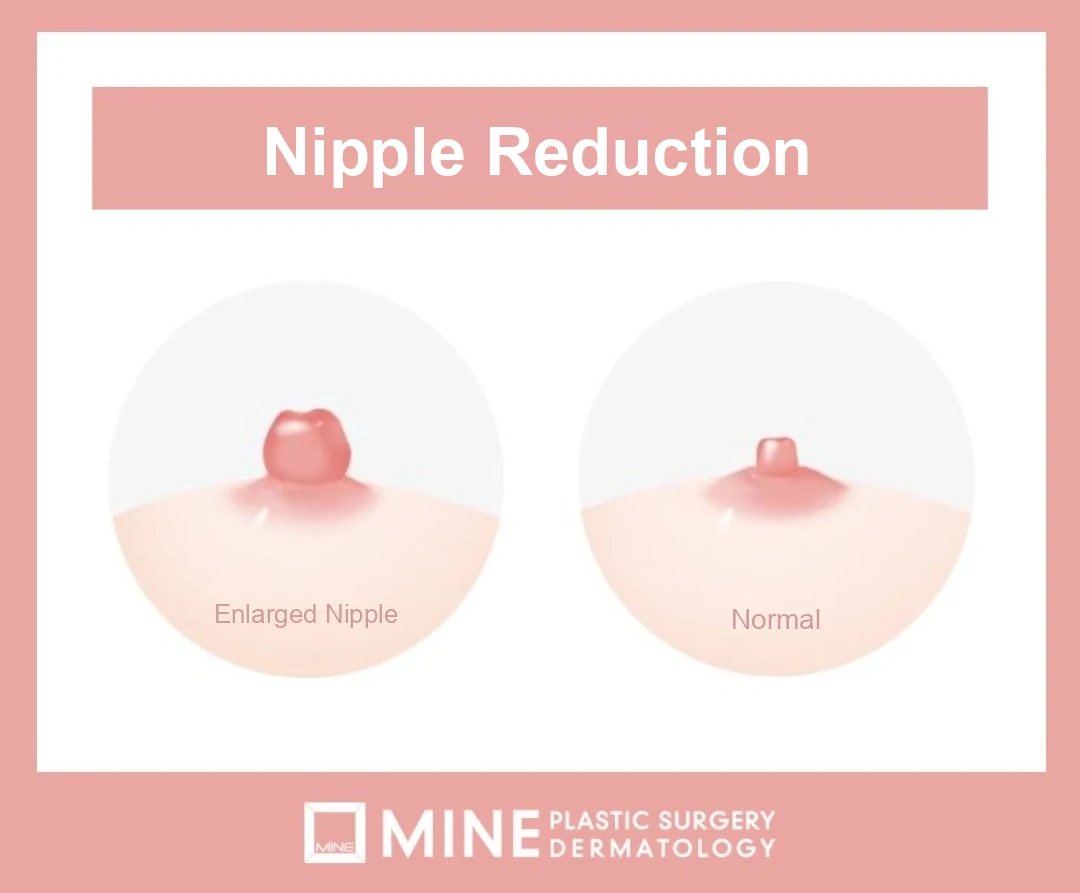
A typical nipple measures about 1–1.5 cm across and 0.7–1 cm in height; clearly larger nipples can be reduced surgically. Some women are born with larger nipples, but often the change appears after pregnancy and nursing, when the nipple stretches or begins to droop. A breast surgery textbook describes exactly this situation: a patient whose nipples drooped after breastfeeding had a nipple reduction to shorten how far they projected and correct the droop.
Inverted nipple grades at a glance
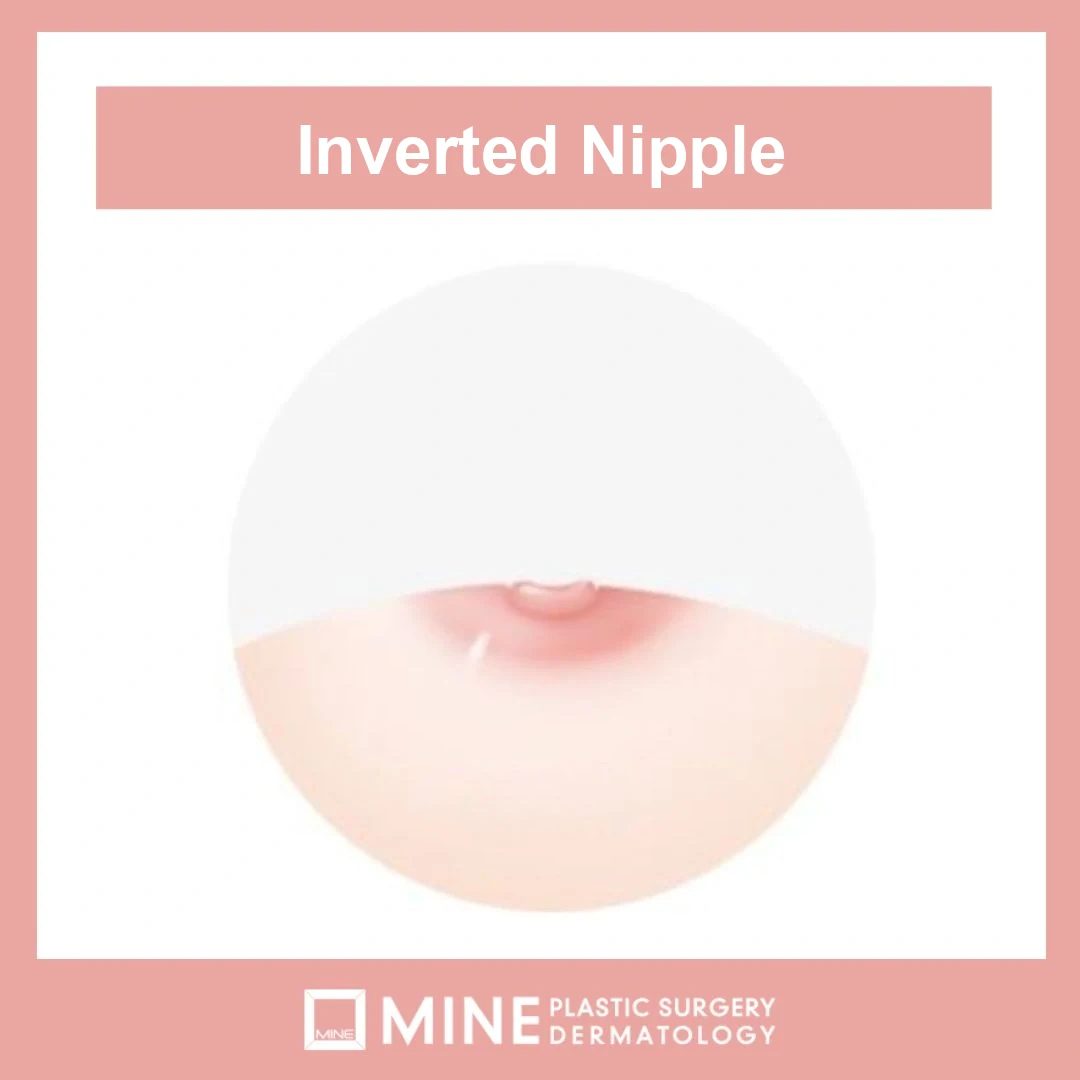
An inverted nipple is one that sits at or below the surface of the areola instead of projecting outward. The surgical literature grades it from 1 to 3:
| Grade | What you notice | Usual approach |
|---|---|---|
| Grade 1 (mild) | Pulls out easily and stays out | Often manageable without surgery |
| Grade 2 (moderate) | Comes out when pulled but soon retracts | Surgery usually recommended |
| Grade 3 (severe) | Barely comes out even when pulled | Surgery needed |
Most inverted nipples are present from birth, caused by too little supporting tissue under the nipple or milk ducts that are too short and tether it inward. Later in life, mastitis (breast infection), duct ectasia (widened, inflamed ducts) or scar tissue after breast surgery can have the same effect. For grading and every treatment option in one place, see our complete guide to nipple reduction and inverted nipple correction in Korea.
Surgery is worth considering when:
- An inverted nipple is hard to keep clean and keeps getting inflamed
- A baby would struggle to latch on during feeding
- The nipples are unusually large, long or drooping
- The two nipples differ clearly in shape or size
- You simply want a more balanced appearance
Breastfeeding After Nipple Reduction: Regnault-Type vs V-Wedge Techniques
Nipple reduction can shrink width, length or both. At MINE, we call the three duct-sparing options below “Regnault-type” reduction. In my practice, all three leave the central ducts untouched, so you can generally still breastfeed after these methods.
Width correction (duct-sparing)
A small vertical section of the nipple is removed to reduce its width, and the remaining tissue is drawn toward the center and stitched into a slimmer shape. The ducts in the middle are left in place, so nursing remains an option. The limitation is that this approach does not shorten the nipple at the same time.
Length correction (duct-sparing)
For a nipple that projects too far, the middle portion is cut and shortened, then closed. Because the ducts are not damaged, this method suits women who have not yet had children or who plan to. It has limits when the nipple is also very wide.
Combined size correction: shortening and narrowing together
Here the length is reduced first, then a little more tissue is trimmed to reduce width, so both height and thickness come down. The risk to the ducts stays low, and it works well for nipples that look broad and blunt. The trade-off is a larger surgical area, so swelling and recovery can take slightly longer. These are the methods I recommend when breastfeeding after nipple reduction is a priority.
V-wedge (wedge) resection: why it usually ends nursing on that side
In a V-wedge resection, a pie-slice segment is cut out of the nipple and the edges are sewn together. It reduces size efficiently, but the cut passes through the ducts, so in my practice I reserve it for women whose family is complete. If breastfeeding after nipple reduction is still part of your plans, one of the Regnault-type methods above is the better fit. You can read more about duct-sparing nipple reduction at MINE on our procedure page.
Inverted Nipple Correction: Purse-String, Triangular Flap, or Duct Division
Inverted nipple repair follows the same logic: two methods preserve the ducts, and one divides them for a more permanent correction. For the operation itself, see how inverted nipple surgery is performed in Korea.
Purse-string suture (duct-sparing): grades 1–2
Through a tiny incision at the base of the nipple, the fibrous bands that hold it inward are released. A special stitch is then placed around the base, much like the drawstring on a pouch, so the nipple stays out. Nursing remains possible, scarring is minimal and recovery is quick. It is less suited to severe inversion, and the nipple can retract again over time.
Triangular flap (duct-sparing): grade 2
Small triangular flaps of areolar skin are raised and tucked beneath the nipple to add the supporting tissue it lacks — like adding a firm cushion under a tent pole. The ducts are preserved, so breastfeeding is still possible, and the chance of the nipple sinking back is lower. The operation takes a little longer than a purse-string repair.
Duct division: for severe inversion when nursing is no longer planned
The textbook method releases the nipple through a 3 mm incision at its base. The short ducts and fibrous bands are cut, and the base is narrowed from inside so it cannot sink back. Recurrence is rare, but breastfeeding on that side is no longer possible. In my practice, I offer it to women with severe inversion who have finished having children.
Breastfeeding Verdict by Technique: Side-by-Side Comparison
When it comes to breastfeeding after nipple reduction or inverted nipple repair, three of the five common techniques keep nursing possible (purse-string, triangular flap, Regnault-type reduction) and two do not (duct division, V-wedge resection). The table below reflects how we perform and recommend them at MINE.
| Procedure | Technique | Breastfeeding | Recurrence risk | Best suited for |
|---|---|---|---|---|
| Inverted nipple correction | Purse-string suture | ✅ Possible | Can recur | Grade 1–2; planning children |
| Inverted nipple correction | Triangular flap | ✅ Possible | Lower | Grade 2; planning children |
| Inverted nipple correction | Duct division | ❌ Not possible on that side | Rare | Severe inversion; family complete |
| Nipple reduction | Regnault-type (width / length / size correction) | ✅ Possible | — | Not yet had children / planning to |
| Nipple reduction | V-wedge resection | ❌ Not possible on that side | — | Family complete |
Whether you are considering a nipple reduction or an inverted nipple repair, the dividing line is the same: ducts kept or ducts cut. For a broader overview of how each type of nipple surgery affects nursing, including areola procedures, see our companion article.
Planning a Pregnancy? How to Choose Between Duct-Sparing Surgery and Duct Division
For breastfeeding after nipple reduction or inversion repair, there is no single right technique, only the right one for your stage of life. In my experience, plans for children matter most.
If you may breastfeed in the future
Choose a duct-sparing method. For inversion, that means a purse-string or triangular flap repair; for enlarged nipples, it means a Regnault-type width, length or combined correction rather than a V-wedge. The trade-off is that an inverted nipple corrected this way has a somewhat higher chance of retracting again, because the short ducts that caused the problem are left in place. Good technique and enough tissue support keep that risk down. To learn more, read why inverted nipples come back and how to prevent it.
If your family is complete
If you have finished having children and nursing, or never plan to, duct division or V-wedge resection offers a more definitive correction with a low chance of recurrence.
What to tell your surgeon at the consultation
- Whether you want children, and roughly when
- Whether you have nursed before and how it went
- Any history of mastitis, breast surgery or keloid scarring
Your age, the degree of inversion or enlargement, and your family plans together point to the best method. For general, non-surgical guidance on nursing, the MedlinePlus breastfeeding resource from the U.S. National Library of Medicine is a reliable place to start.
Dr. Lee’s Key Point: Whether you plan to breastfeed is the most important factor in choosing a technique. Please tell your surgeon clearly at the very first consultation.
Recovery Timeline and Possible Side Effects
Nipple surgery takes about 30–40 minutes under local anesthesia, and most patients return to daily life within 1–3 days, whichever technique is used.
Recovery at a glance
| Item | Typical timeframe |
|---|---|
| Surgery time | About 30–40 minutes (local anesthesia) |
| Hospital stay | Same-day discharge |
| Return to daily life | 1–3 days |
| Showering | After 2–3 days |
| Swelling and bruising | 1–2 weeks |
| Final result | About 1–3 months |
Common and less common side effects
- Swelling and bruising: common for 1–2 weeks and usually fade on their own.
- Discomfort: mild pain is well controlled with prescribed pain relief.
- Reduced sensation: temporary loss of nipple sensation usually recovers within 6–12 months; permanent numbness is rare.
- Scarring: nipple and areola skin hides scars well, though healing varies from person to person.
- Infection: uncommon when the wound is kept clean.
- Recurrence: mainly after duct-sparing inverted nipple repair.
- Slight asymmetry: can be refined if needed.
None of these side effects changes the basic rule for breastfeeding after nipple reduction: what matters is whether the ducts were preserved during the operation itself.
Pre-Surgery Checklist If You Want to Breastfeed Later
If breastfeeding after nipple reduction matters to you, the steps below help protect it.
Before surgery
- Share your pregnancy and nursing plans so surgery can be planned around your ducts.
- Stop smoking 2 weeks ahead. Smoking slows healing of delicate nipple tissue.
- Review your medications. Aspirin, vitamin E and other supplements that increase bleeding are usually paused 1 week before. If a doctor prescribed a blood thinner or antiplatelet medicine for a heart or circulation condition, never stop it on your own — ask both your prescribing doctor and your surgeon first.
- Have a breast ultrasound to confirm your breast health before the procedure.
After surgery
- Keep the nipple protected with gauze and tape for as long as instructed.
- Keep the area clean and apply the prescribed ointment carefully.
- Avoid strenuous exercise and anything that rubs or presses on the nipple for 1–2 weeks.
- Attend your follow-up visits so healing can be checked.
Frequently Asked Questions
Can you breastfeed after nipple reduction?
Usually, yes. Breastfeeding after nipple reduction is generally possible when a duct-sparing, Regnault-type method (width, length or combined size correction) is used. A V-wedge resection cuts through the ducts, so nursing from that side is usually no longer possible. Tell your surgeon about your plans before the technique is chosen.
Can you breastfeed after inverted nipple correction?
It depends on the method. Purse-string suture and triangular flap repairs keep the ducts connected, so nursing remains possible. Duct division cuts the short ducts that pull the nipple inward, which means you will not be able to nurse from that breast afterward.
Is an inverted nipple more likely to come back after duct-sparing surgery?
Somewhat, yes. Because the ducts stay in place, the nipple can retract again, though careful technique and tissue support keep that risk low. For severe inversion when nursing is no longer planned, duct division makes recurrence rare.
Should I wait until after having children to get nipple surgery?
Not necessarily. With a duct-sparing method, you can have surgery before pregnancy and still be able to breastfeed later. Because nipples often enlarge or droop after nursing, some women prefer to wait and have one reduction once their family is complete.
Will nipple surgery leave visible scars?
Nipple and areola skin is naturally textured and darker, so scars tend to blend in well, and most patients barely notice them once healed. If you tend to form keloids, mention it at your consultation.
How much does nipple surgery cost in Korea?
Cost depends on the technique, the degree of inversion or enlargement, and whether other procedures are combined, so we provide a personal quote after consultation.
Talk to Dr. Lee About Your Family Plans Before Choosing a Technique
Nipple surgery affects hygiene, nursing and self-confidence, not just appearance, and the technique decides whether you can breastfeed in the future. A detailed conversation with a board-certified plastic surgeon matters more than any single method.
At MINE in Gangnam, Seoul, I examine each patient personally, ask about family plans first, and explain which options will let you breastfeed after a reduction or inverted nipple repair. You can start with an online consultation or call +82-2-516-1175.
※ This content is for informational purposes only and does not replace professional medical advice, diagnosis, or treatment. Individual results may vary, and side effects may occur. Please consult with a board-certified plastic surgeon for personalized advice.