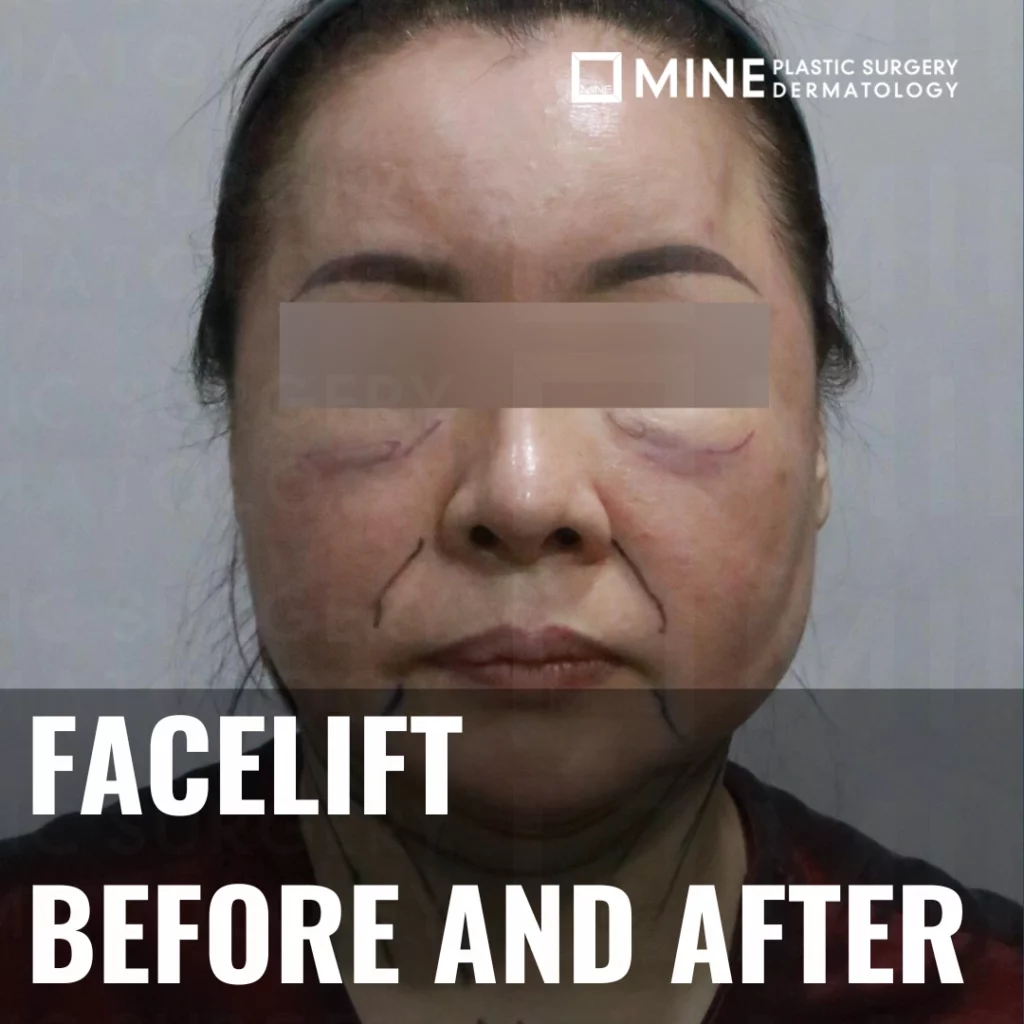
EN


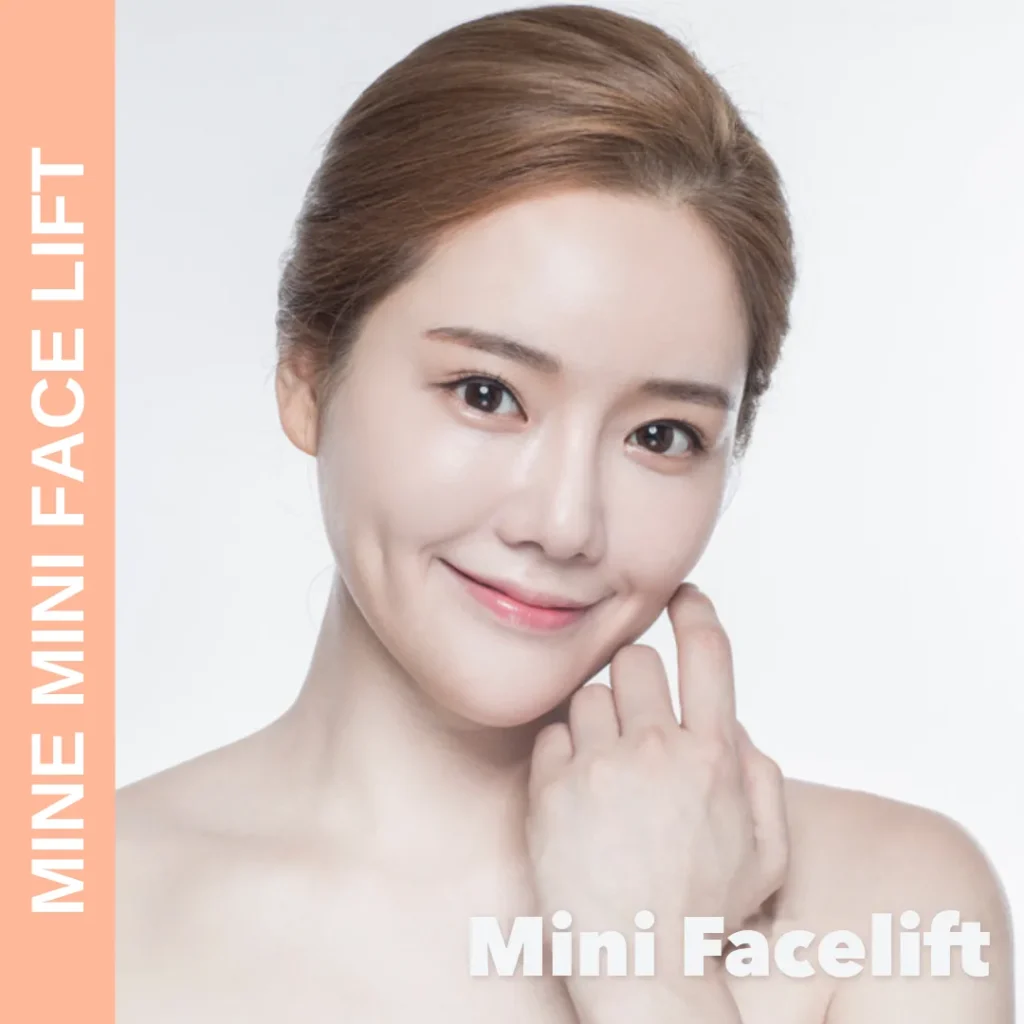
There is no fixed mini facelift age. A mini facelift is a short-incision surgery that lifts the sagging SMAS layer of the mid and lower face, and the right time for it depends on how far your face has sagged, how elastic your skin still is, and whether your neck has started to sag — not on your age alone.
“I’m 38. Isn’t that too young for surgery?” “I’m 55. Have I already missed my chance?” I hear both questions in my consultation room almost every week. They sound like opposite worries, but they come from the same assumption: that there is a correct mini facelift age, and you are either before it or after it.
In my clinic, most people who ask about a mini facelift are between their late 30s and early 50s. Yet two patients of the same age can need completely different surgery. This article explains what actually decides the timing, what usually fits in your 30s, 40s, 50s and 60s, and where a mini facelift stops and a full facelift or neck lift takes over. If you want to understand why cheeks drop in the first place, I’ve covered that separately in why cheeks sag and what a mini facelift changes.
Is There a Right Mini Facelift Age?
The short answer is no. There is no single mini facelift age: no birthday makes you a candidate, and no birthday rules you out. What decides it is where your face has sagged, how much, how well your skin still springs back, and whether the neck is involved.
What a mini facelift lifts (in brief)
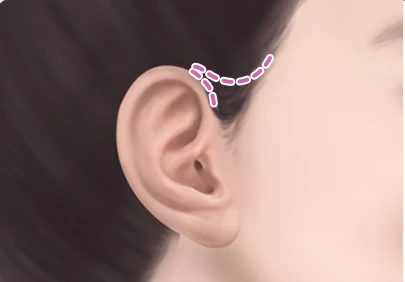
Under your skin and fat sits the SMAS (a thin, supportive layer of fibrous tissue that holds the cheek up like a sling). With age, this layer stretches and the cheek drifts down. At MINE, the mini facelift is done through a small incision that runs from the temporal scalp (the hair-bearing skin at the temple) to the top of the ear.
Through that small opening, the SMAS is released widely over the cheekbone, the upper and lower cheek, and the jowl and jawline. It is then lifted up and back, in the opposite direction to the sagging, and fixed to a deeper layer separately from the skin. The skin itself is not pulled tight; it is simply redraped and closed without tension. In other words, “mini” describes the incision, not the lift. The SMAS lifting range is close to that of a full facelift.
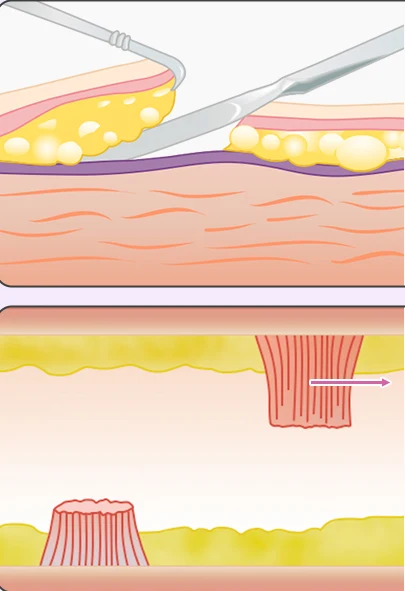
At MINE, a mini facelift takes about 1 hour under sedation, patients go home the same day, and most return to daily life in about 5 days. The whole course usually involves 3 clinic visits. You can read more about our mini facelift procedure on its own page.
What plastic surgery textbooks say about timing
Facelift textbooks note that the traditional timing for facial rejuvenation surgery was the mid-50s to mid-60s. That timing came from older skin-only techniques, which had to wait until there was plenty of loose skin to remove. Once surgeons began lifting the SMAS itself, the ideal timing moved earlier: when aging changes are present but still early, which for many women is the early 40s.
Plastic surgery textbooks also describe the typical short-scar facelift candidate as being in their 40s to 60s. I treat that as a reference range, not a cutoff. It tells you where most candidates fall, not who is allowed in. Think of it as a typical age range rather than a rule.
One more point I always make: a small incision does not mean a simple operation. The surgeon has to release and fix the SMAS precisely through a limited view, so experience matters more, not less.
3 Factors That Matter More Than Your Age
When someone asks me about mini facelift age, I look at three things before I even think about the number on their chart.
1. How far the sagging has traveled
Has the cheek fat dropped below the jawline? Is the smile line (nasolabial fold) getting deeper? The key question is whether the sagging has stayed above the jawline or has continued down into the neck. Sagging that stays in the mid and lower face is what a mini facelift is designed for.
2. Skin elasticity
Try this at home: gently pinch and lift the skin of your cheek, then let go. Skin that snaps back quickly still has good elasticity. Skin that settles back slowly has lost more of its spring. Elasticity is often why two people of the same age get different advice. This is only a rough self-check; I make the final judgment by examining the skin in person.
3. Bone structure and fat distribution
Your cheekbones, the shape of your jaw and where your facial fat sits all change how sagging shows. Two faces with the same amount of laxity can look very different, and the same lift can help one more than the other.
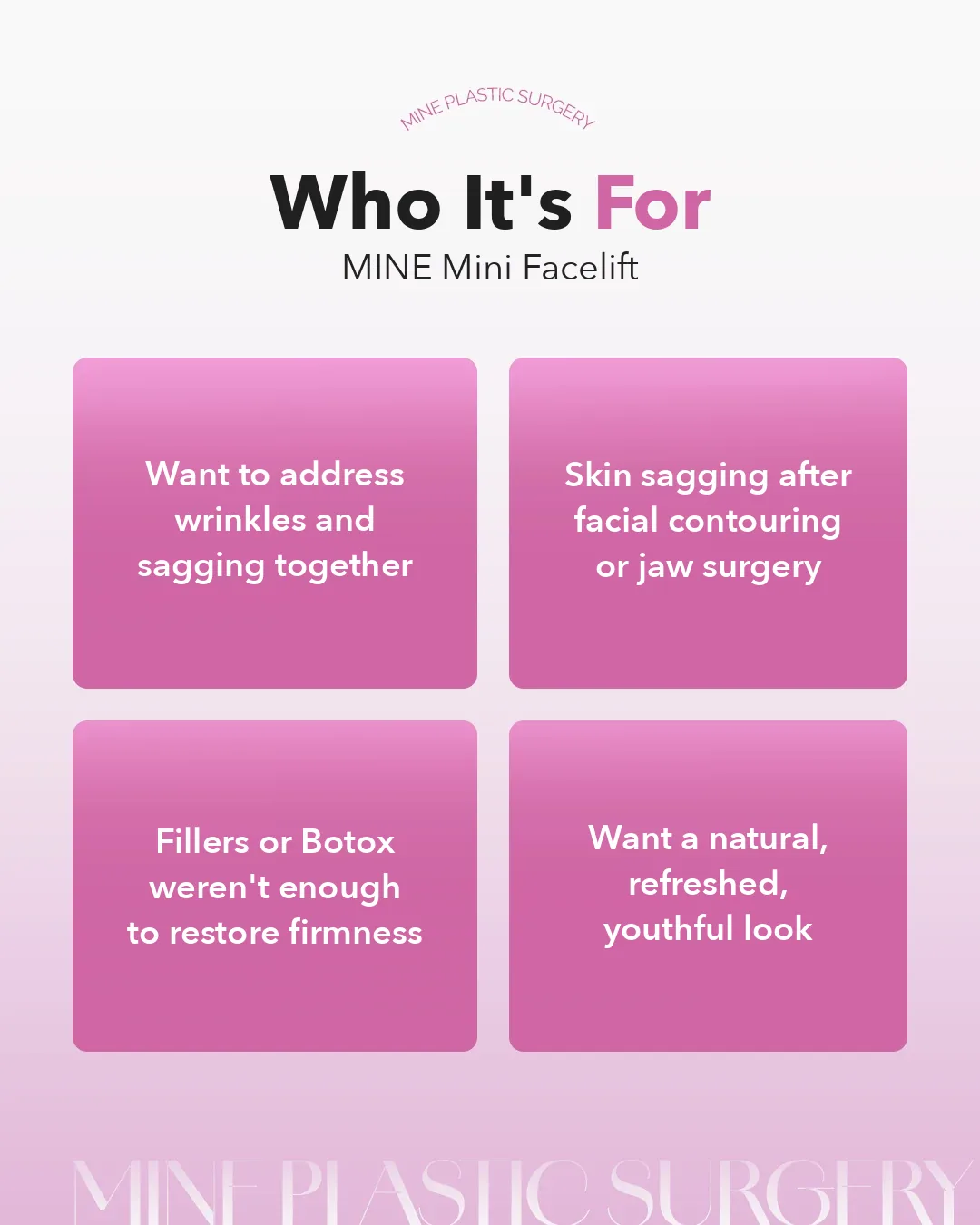
In my clinic, patients asking about a mini facelift range from about 35 to 65, and the 40s are the most common age group. Some decide on surgery in their late 30s. Others are in their 60s but have a firm neck and good skin elasticity, so a mini facelift is still a reasonable option for them.
Dr. Lee’s key point: “Is this the right surgery for my face now?” is a far more useful question than “How old should I be?”
Face Condition vs Age: When to Consider Lifting Surgery
The right moment to think about lifting surgery is not a birthday. It is when treatments such as laser, radiofrequency, HIFU (focused ultrasound) or a thread lift no longer hold the sagging the way they used to. Here is how face condition and age usually line up in my consultations.
| Face condition | Common age range (reference only) | What to consider first |
|---|---|---|
| Some loss of firmness, almost no sagging | Late 20s to early 30s | Non-surgical skin tightening (laser, radiofrequency, HIFU) |
| Early cheek drop, smile lines starting to deepen | Mid-to-late 30s | Thread lift or a mini facelift consultation |
| Clear cheek sagging and a blurred jawline, neck still fairly firm | Late 30s to early 50s | Mini facelift |
| Facial sagging plus loose neck skin or neck bands | More common after 50 | Full facelift, or a neck lift alongside |
These ranges are simply what I commonly see; they are not rules. Someone in their 30s can sag early after rapid weight loss or facial contouring surgery. Someone in their 50s with a firm neck may need nothing more than a mini facelift.
Mini Facelift Age by Decade: 30s, 40s, 50s and 60+
Age still gives useful clues about what is likely going on. Here is what I typically see in each decade, and how it shapes the conversation about mini facelift age.
Mini facelift in your 30s: early, targeted lifting
Most people in their 30s don’t have much sagging yet, so if you’re asking “am I too young for a mini facelift?”, the honest answer is: it depends on your face, not your age. A mini facelift can make sense in this decade for people with early aging, skin laxity after rapid weight loss, or sagging after facial contouring or jaw surgery. Typical signs include:
- A smile line that has started to deepen
- A jawline that looks softer than it used to
- A thread lift that no longer seems to be enough
Mini facelift in your 40s: the most common age
The 40s are the decade I see most often for mini facelift consultations. This is usually when loss of skin firmness and cheek sagging start to show together, and many people feel non-surgical treatments have reached their limit. Common signs are:
- Volume loss and sagging in the midface at the same time
- A blurring jawline and an early double chin
- HIFU or thread lift results that fade faster than before
This also matches the textbook view that SMAS-based lifting works best when aging is present but still early. A mini facelift in your 40s often lands right in that window.
Mini facelift in your 50s: the borderline decade
The 50s show the biggest differences between individuals. Many people in this decade sit right on the line between a mini facelift and a full facelift, so age tells you the least here and an in-person exam matters most.
- Neck sagging present: outside the mini facelift range, so a full facelift or a neck lift alongside is considered
- Good skin elasticity: a mini facelift may be enough
- Extensive sagging across the face: a full facelift is usually recommended
If you are weighing a full facelift, my article on facelift age limits and timing covers that side of the decision.
Mini facelift at 60 and beyond: tissue and health decide
From 60 onward, age matters less than tissue quality. I assess skin thickness, elasticity, healing capacity and the neck together. Neck sagging is common at this age, so a full facelift is often needed. But if the sagging is still limited to the cheeks and jawline, a mini facelift remains an option. If you have high blood pressure or diabetes, we also check that it is well controlled before surgery.
Dr. Lee’s key point: I see people in their 40s most often, but the right mini facelift age for you is set by where your sagging is and how your skin behaves, not by the decade you’re in.
Where a Mini Facelift Stops: The Neck
The neck is the clearest boundary in any discussion of mini facelift age, because it is the one area a mini facelift does not treat. According to plastic surgery textbooks, a short-incision facelift is less effective when there is excess neck skin, so neck sagging usually means a full facelift or a neck lift. The same textbooks note that severe neck laxity or visible neck bands are better corrected surgically than with ultrasound devices.
That is why MINE’s mini facelift does not include the neck in its range. If your neck has also sagged, we discuss a full facelift that extends into the neck, or a face and neck lift, instead of or alongside it.
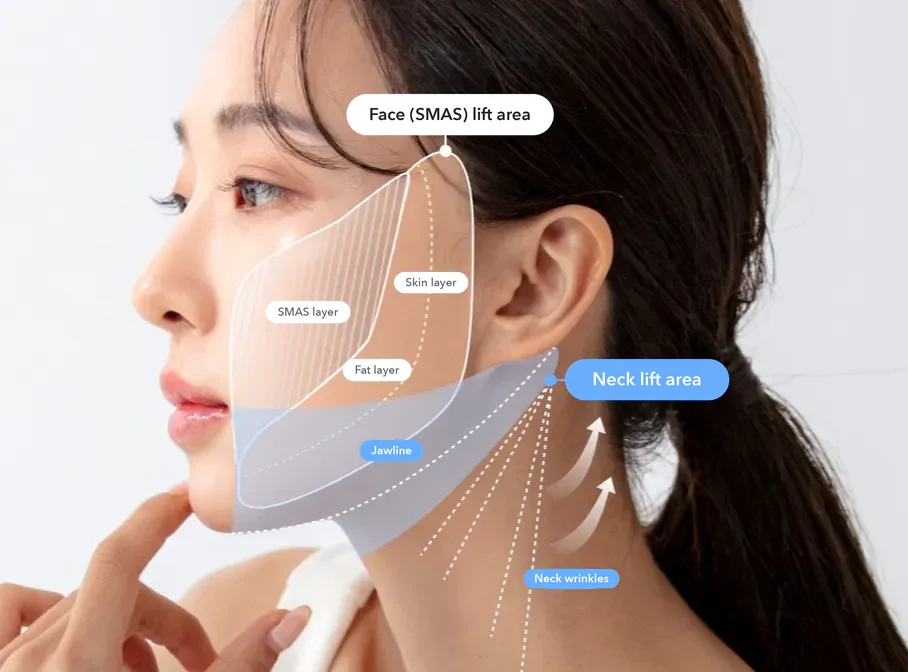
Dr. Lee’s key point: Look at your neck in the mirror. If the sagging stays above the jawline, you are probably in mini facelift range. If it has reached the neck, a full facelift is more likely. The final call is always made by examination.
Mini facelift vs full facelift and neck lift at a glance
| Mini facelift (MINE) | Full facelift | |
|---|---|---|
| Incision | Short: temporal scalp to the top of the ear | Longer: in front of and behind the ear, into the back hairline |
| SMAS lift range | Mid and lower face (close to a full facelift) | Mid and lower face, can extend to the neck |
| Surgery time | About 1 hour | About 3–5 hours |
| Return to daily life | About 5 days | About 2–4 weeks |
| Neck | Not in range | Neck dissection, or a neck lift alongside |
| Common consulting age (reference) | Late 30s to early 50s | After 50 |
For a fuller side-by-side breakdown, see mini facelift or full facelift. For general patient information on facelift surgery, the American Society of Plastic Surgeons facelift overview is a helpful starting point.
Two people, same age, different surgery
Choosing surgery by age alone can leave you with the wrong procedure. A 50-year-old who has looked after her skin for years may need only a mini facelift. A 45-year-old whose face has sagged heavily after rapid weight change, or simply because of genetics, may be better suited to a full facelift.
That’s why, at MINE, I examine the face by sight and touch — how far the sagging has come down, how elastic the skin is and how the neck looks — and then decide on the surgery together with the patient.
Recovery and Risks: Does Age Change Anything?
Recovery timeline
| Time after surgery | What to expect |
|---|---|
| Surgery day | Home the same day with a compression dressing |
| Days 3–5 | Swelling and bruising are at their peak |
| About 5 days | Back to your daily routine |
| 2–3 weeks | Bruising mostly gone; social activities resume |
| 1–3 months | The final shape becomes clear |
Mini facelift age does make a difference to recovery. After 50, tissue often heals more slowly than in the 30s or 40s, so I suggest building some extra time into your plans.
Possible side effects
Every surgery carries some risk, and it is worth understanding these before you decide:
- Bruising and swelling: usually last 1–2 weeks and vary from person to person
- Numbness: temporary numbness around the ear, which mostly recovers within 3–6 months
- Scar: along the short incision at the temple and upper ear; it usually fades over 6–12 months, depending on skin type (more in mini facelift scars)
- Asymmetry: rare, and reassessed once the swelling has settled
- Hematoma or seroma (a collection of blood or fluid): can occur early and is managed with proper drainage
- Infection: very rare, but possible
Before and after surgery
- 2 weeks before: stop aspirin, omega-3 and other medicines or supplements that raise bleeding risk
- 1 week before: avoid alcohol and smoking (smoking reduces blood flow and slows healing)
- Surgery day: fast for 8 hours and come in without makeup
- First 48 hours: use cold compresses to reduce swelling and bruising
- For 2 weeks: no strenuous exercise, saunas or hot rooms
- When sleeping: keep your head slightly raised to help swelling go down
- After surgery: stay smoke-free for at least 4 weeks, ideally for good
Frequently Asked Questions
How old do you have to be to get a mini facelift?
Any adult can technically be a candidate. In my clinic, the most common mini facelift age for a first consultation is the late 30s to early 40s, but the degree of sagging and skin elasticity matter more than age. Even someone in their 20s with significant sagging after major weight loss may qualify.
Am I too young for a mini facelift in my 30s?
Not necessarily. If sagging has started early, for example after weight loss, facial contouring or simply because of genetics, and a thread lift no longer holds, a mini facelift can be considered. If you only have some loss of firmness, non-surgical tightening is usually the first step.
Is a mini facelift enough in your 50s?
Often, yes, if your skin elasticity is good, the sagging is moderate or less and your neck is fairly firm. If the neck has sagged or the skin is very loose, I usually recommend a full facelift or a neck lift alongside. An in-person exam is the best way to tell.
Can I get a mini facelift if my neck is sagging?
MINE’s mini facelift does not include the neck. The cheeks and jawline improve, but loose neck skin and neck bands stay as they are. As covered in the neck section above, a short incision does not deal well with excess neck skin, so a neck lift or a full facelift is the better fit.
Should I get a thread lift or a mini facelift in my 40s?
They suit different people. A thread lift lifts tissue with dissolvable threads, has little downtime, and its effect usually lasts about 1–2 years. A mini facelift releases, repositions and fixes the SMAS, with about 5 days before you’re back to daily life, although some bruising or swelling can linger for 1–2 weeks. If the sagging is mild and you’d rather avoid surgery, start with a thread lift; if cheek sagging and a blurred jawline are clear, a mini facelift consultation makes more sense.
How long does a mini facelift last?
Surgery doesn’t stop aging, so how long results last varies from person to person. Because the SMAS itself is repositioned, results usually last for years, but skin type, lifestyle, sun exposure and weight change all play a part. Sun protection, good skin care and not smoking help results last.
Not Sure Which Lift Fits Your Age? Talk to Dr. Lee
To sum up: there is no fixed mini facelift age. A mini facelift can be considered anywhere from the late 30s into the 60s, and what decides it is where the sagging is (the face only, or the neck too) and how elastic your skin still is.
If sagging cheeks or a softening jawline have been on your mind, don’t wait until you reach a particular age; a consultation is the quickest way to find out which approach suits your face. At MINE Plastic Surgery in Nonhyeon-dong, Gangnam, Seoul, I examine every patient in person and decide on the plan together with them. You can reach us through our online consultation form or WhatsApp, or call +82-2-516-1175. We’re happy to answer your questions before you travel.
Written and medically reviewed by Dr. Lee Sung-wook, Board-Certified Plastic Surgeon (Korea), MINE Plastic Surgery · 813 Nonhyeon-ro, Gangnam-gu, Seoul.
※ This content is for informational purposes only and does not replace professional medical advice, diagnosis, or treatment. Individual results may vary, and side effects may occur. Please consult with a board-certified plastic surgeon for personalized advice.