EN
EN

Table of contents
Many patients seeking jawline improvement consider submandibular salivary gland liposuction to address their double chin concerns. However, a significant number experience disappointing results despite undergoing the procedure. This isn’t due to surgical incompetence or poor technique—there are fundamental anatomical and medical reasons why liposuction cannot effectively treat enlarged salivary glands. Put simply, submandibular salivary gland liposuction is designed to remove fat, but an enlarged submandibular gland is dense glandular tissue that suction cannot extract.
Understanding the anatomical differences between salivary glands and fat tissue is crucial for anyone considering submandibular salivary gland liposuction or double chin treatment. This comprehensive guide explains why submandibular salivary gland liposuction fails and explores proven alternatives for achieving the defined jawline you desire.
Understanding Submandibular Salivary Glands
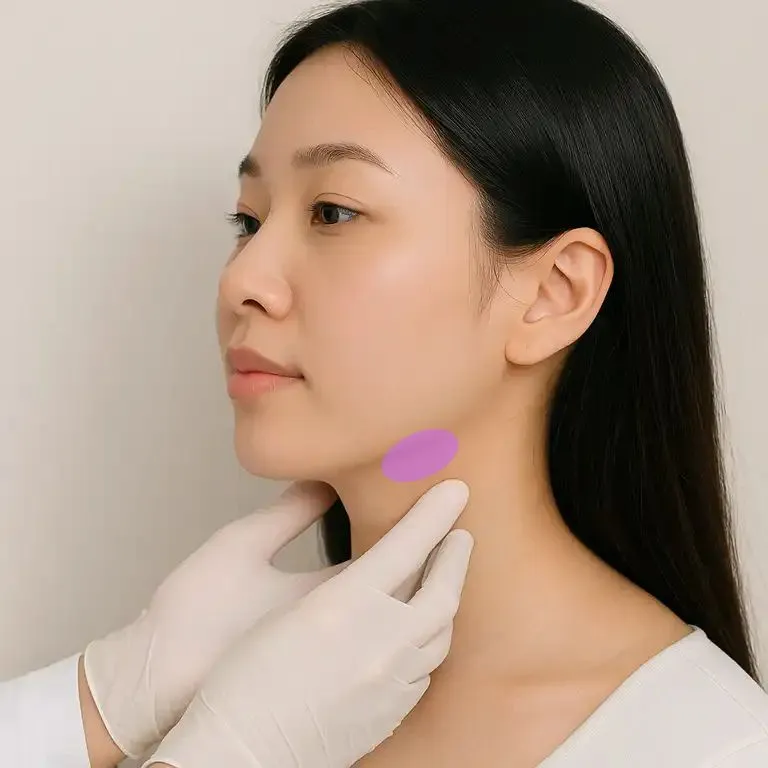
Submandibular salivary glands are the second-largest salivary glands in your body, weighing approximately 15 grams each. These glands contribute 70% of total saliva in the unstimulated state, the parotid glands 22%, and the sublingual glands approximately 8%.
Key Characteristics of Submandibular Glands
- Location: Positioned below and behind the lower jawbone in the submandibular triangle
- Size: Approximately 3-4 cm along the main axis, weighing 10-15 grams each
- Structure: Divided into superficial and deep portions separated by the mylohyoid muscle
- Function: Primary saliva production for digestion and oral hygiene maintenance
The glands’ prominence can vary significantly between individuals, and aging, genetics, and certain medical conditions can cause them to become more noticeable beneath the jawline.
Why Submandibular Salivary Gland Liposuction Fails
There are three core reasons submandibular salivary gland liposuction cannot deliver the jawline it promises: the tissue itself is not fat, the physical mechanism of liposuction only works on fat, and the surrounding anatomy makes any aggressive suction attempt genuinely risky. Understanding each one explains why so many patients feel let down after the procedure.
1. Fundamental Tissue Differences
The primary reason liposuction cannot reduce salivary glands lies in their composition. Salivary glands are glandular tissue, not fat. They consist of:
- Glandular cells: Specialized cells that produce and secrete saliva
- Ductal system: Complex network of tubes that transport saliva
- Fibrous capsule: Dense connective tissue surrounding the gland
- Vascular and nerve supply: Rich blood vessel and nerve networks
2. How Liposuction Actually Works
Liposuction is a well-established method of body contouring that specifically targets adipose (fat) tissue. The procedure works by:
- Breaking down fat cells through mechanical disruption
- Aspirating liquefied fat through small cannulas
- Targeting subcutaneous fat layers beneath the skin
Salivary glands cannot be “suctioned out” because they’re solid, functional organs with dense tissue structure, unlike soft, malleable fat cells. This is precisely why submandibular salivary gland liposuction leaves an enlarged gland untouched: the cannula glides past the firm glandular capsule and can only remove the thin layer of fat that sits above it.
3. Safety Concerns and Risks
Attempting submandibular salivary gland liposuction—or any aggressive suction near the submandibular glands—poses significant risks:
- Nerve damage: Several important nerves are located near the salivary glands, including the marginal mandibular nerve, lingual nerve, and hypoglossal nerve
- Vascular injury: Risk of bleeding and hematoma formation
- Functional impairment: Potential damage to saliva production and transport
These are not hypothetical concerns. Even in the hands of surgeons who deliberately reduce the gland—a far more controlled procedure than submandibular salivary gland liposuction—pooled data from recent reviews report a nerve injury rate of about 3.97%, hematoma in roughly 1.15% (nearly a quarter of which needed a second procedure), sialocele (saliva collection) in 1.33%, and salivary fistula in 0.82%. Because liposuction offers no direct view of these structures, blindly passing a cannula through the same territory only raises the odds of injuring the marginal mandibular nerve or the facial vessels that run along the gland’s surface.
Anatomical Differences: Glands vs. Fat Tissue
The table below makes clear why submandibular salivary gland liposuction cannot behave like ordinary fat removal. Fat is soft, compressible, and can regenerate; glandular tissue is firm, richly supplied with nerves and blood vessels, and can only be reduced by careful surgical excision.
| Feature | Salivary Glands | Fat Tissue |
|---|---|---|
| Composition | Glandular and ductal cells | Adipocytes (fat cells) |
| Function | Saliva production | Energy storage |
| Texture | Firm and dense | Soft and compressible |
| Blood Supply | Extensive vascular network | Moderate blood supply |
| Nerve Supply | Complex autonomic innervation | Simple sensory nerves |
| Removal Method | Surgical excision only | Liposuction possible |
| Regeneration | Limited regenerative capacity | Can regenerate after removal |
Effective Treatment Alternatives
Because submandibular salivary gland liposuction is not a viable option for a truly enlarged gland, effective care starts with a correct diagnosis and then follows a proven path—from non-surgical Botox to precisely targeted partial excision. The goal is to match the treatment to the actual cause of your fullness, whether that is fat, gland, muscle, or a combination.
1. Accurate Diagnosis First
Before considering any treatment, proper diagnosis is essential. The submandibular gland is the second-largest salivary gland in the lower jaw, and distinguishing between glandular enlargement and fat accumulation requires:
- Ultrasound examination: Assesses tissue density and gland size
- CT imaging: Provides detailed anatomical visualization
- Clinical palpation: Professional assessment by experienced practitioners
2. Botox Injections for Gland Reduction
Submandibular gland botox represents the first-line non-surgical treatment for glandular enlargement. BTX-A is well established and is known to produce meaningful volume reduction as a secondary effect. For genuine glandular fullness, it is a far more logical first step than attempting submandibular salivary gland liposuction, since it shrinks the gland from within rather than trying to suction tissue that will not budge.
Benefits of Botox Treatment:
- Non-surgical approach with minimal downtime
- Volume reduction typically peaks around the second month and lasts about 6 months
- Temporary reduction in gland size without permanent functional loss
- Saliva production is generally preserved, likely because the parotid and sublingual glands maintain normal function
Botox Protocol: A typical protocol uses a total of 40 units, placing 20 units at 5 points on each side under ultrasound guidance to ensure precision and safety.
3. Partial Submandibular Gland Excision
For severe glandular enlargement unresponsive to botox, partial gland removal may be considered. Submandibular gland reduction was performed in 112 of 736 consecutive face lifts between 2002 and 2013, an incidence of 13 percent in primary face lifts and 25 percent in secondary face lifts. This submandibular gland reduction procedure is reserved for cases where the enlargement is truly glandular rather than fatty.
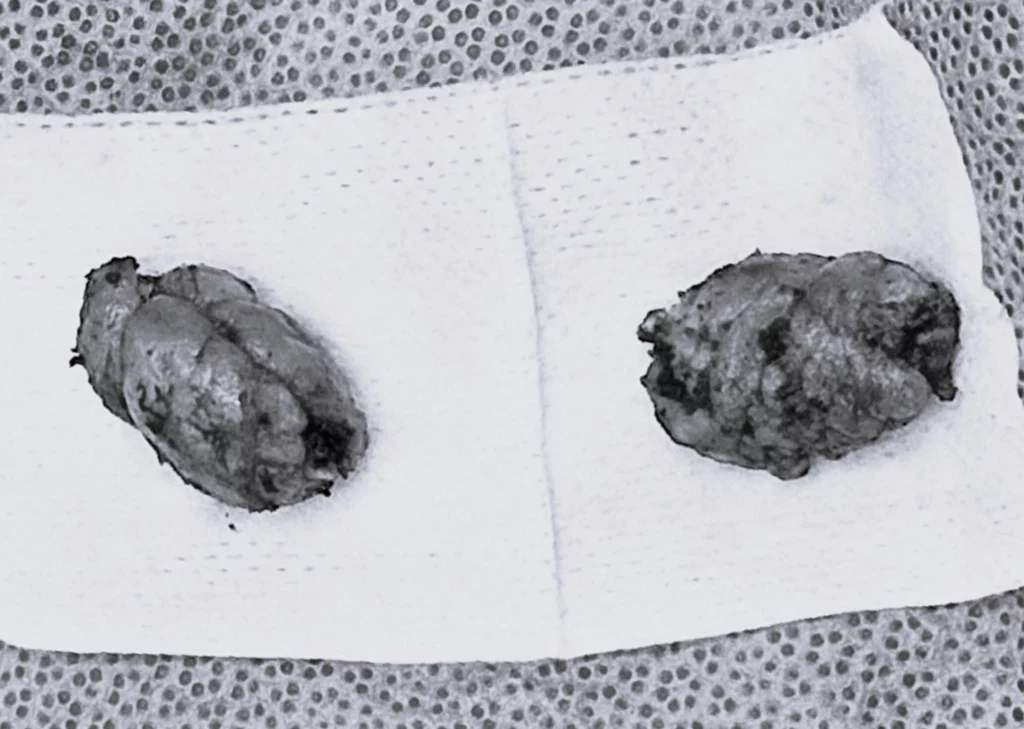
Surgical Approaches:
A. Facelift/Neck Lift Approach
- Incisions hidden within hairline and behind ears
- Performed simultaneously with other facial rejuvenation procedures
- Excellent cosmetic results with concealed scarring
B. Direct Submental Approach
- The incision is usually 2 to 3 centimeters long and sits under the jaw, where it is unlikely to be noticeable
- More direct access to the gland
- Suitable for isolated gland reduction procedures
4. Combined Treatment Approaches
Many patients benefit from combination treatments addressing multiple factors:
- Liposuction + Botox: For patients with both excess fat and glandular enlargement
- Neck lift surgery: Addresses deep fat, muscle laxity, and glandular ptosis
- Muscle plication: Tightening of the platysma muscle for additional support
Who Is a Good Candidate If Submandibular Salivary Gland Liposuction Won’t Work?
The right treatment depends entirely on what is creating the fullness beneath your jaw. Many patients arrive after being told that submandibular salivary gland liposuction would slim their jawline, only to discover their fullness is glandular rather than fatty. In general:
- Botox candidates: People with mild to moderate glandular enlargement, a visible bulge that does not change when they clench the jaw, and a preference for a non-surgical option with no downtime.
- Partial excision candidates: Those with pronounced, persistent glandular enlargement that has not responded to Botox, especially when the fullness is clearly bilateral and firm on examination.
- Liposuction candidates: Only patients whose fullness is genuinely subcutaneous fat—not gland—benefit from suction, which is why an accurate diagnosis must come first.
If you are unsure which group you fall into, a decision-support consultation helps clarify whether you even need surgery at all. Our guide on whether you need salivary gland removal surgery walks through the key questions to ask before choosing any procedure.
Diagnostic Methods for Gland Enlargement
Self-Assessment Techniques
- Palpation test: If the area remains unchanged when clenching your jaw, it’s likely glandular tissue
- Meal-time observation: Glandular enlargement may become more prominent when eating sour foods
- Symmetry evaluation: Bilateral enlargement often indicates salivary gland involvement
Professional Evaluation
At MINE Plastic Surgery & Dermatology, comprehensive diagnostic protocols include:
- High-resolution ultrasound for tissue characterization
- 3D CT analysis for detailed anatomical assessment
- Expert clinical examination by board-certified specialists
Why the Confusion About Submandibular Salivary Gland Liposuction?
1. Visual Similarity
Both submandibular gland enlargement and submental fat accumulation create similar aesthetic concerns, making differential diagnosis challenging without proper examination. This visual overlap is exactly why so many people search for submandibular salivary gland liposuction when what they actually need is a precise diagnosis.
2. Misleading Information
The term “submandibular salivary gland liposuction” appears frequently online, creating confusion about treatment possibilities and realistic outcomes.
3. Inadequate Consultation
Some facilities may not provide comprehensive pre-treatment evaluation, leading to inappropriate treatment selection and patient disappointment.
Treatment Considerations and Safety
1. Importance of Specialist Consultation
Facial nerve monitoring techniques during the procedure protect the marginal mandibular nerve, which controls the muscles of the chin and lower lip. Given the anatomical complexity, treatment should only be performed by experienced practitioners—and it is this same complexity that makes submandibular salivary gland liposuction an inappropriate shortcut for what is fundamentally a glandular problem.
2. Individualized Treatment Planning
Each patient’s anatomy and aesthetic goals require customized approaches. Factors influencing treatment selection include:
- Degree of glandular enlargement
- Skin elasticity and thickness
- Presence of concurrent fat accumulation
- Patient expectations and recovery limitations
Frequently Asked Questions
Can submandibular glands be surgically removed?
Yes, the removal (excision) of a submandibular gland is a common surgical procedure when medically indicated. However, complete removal is typically reserved for pathological conditions like tumors or chronic infections. For aesthetic purposes, partial reduction is preferred to maintain salivary function. It is essential for patients to follow specific guidelines during their recovery to ensure optimal healing and minimize complications. Submandibular gland surgery recovery tips include staying hydrated, avoiding strenuous activities, and following a soft diet as recommended by the surgeon. Additionally, maintaining proper oral hygiene can help prevent infections and promote a smoother recovery process.
How long do botox effects last in salivary glands?
The effects of the saliva gland botox injections last between three and six months so the procedure may need to be repeated in the future. Individual results may vary based on metabolism and gland responsiveness.
Is partial gland excision safe?
In a sample of 112 patients, Mendelson et al. demonstrated no risk of insufficient saliva production after superficial lobe removal. In that same series, minor complications occurred in 10.8% of patients and were managed without further surgery; submandibular sialocele (4.5%) and temporary marginal mandibular nerve weakness (4.5%) were the most common, and all resolved by three months. Crucially, no permanent dry mouth was reported. When performed by experienced surgeons using modern techniques, partial excision therefore has an excellent safety profile—far safer and far more effective than attempting submandibular salivary gland liposuction, which cannot remove the gland at all.
Can muscle tightening alone improve jawline definition?
Platysma muscle plication has limited effectiveness when used as a standalone treatment. The notion that liposuction alone can refine an undefined neck contour is mistaken, and relying on it can lead to dissatisfaction. Most cases require comprehensive approaches addressing multiple anatomical factors.
Can liposuction and botox be performed together?
Yes, combination treatments are common and often more effective than single modality approaches. The key is proper patient selection and realistic expectations about individual treatment contributions.
What causes submandibular gland enlargement?
Glandular enlargement can result from various factors:
- Genetic predisposition
- Chronic stress and hormonal changes
- Frequent stimulation of saliva production
- Certain medications
- Autoimmune conditions
- Natural aging process
Conclusion
Submandibular salivary gland liposuction fails because salivary glands are functional organs composed of glandular tissue, not fat. Understanding this fundamental difference is crucial for anyone seeking jawline improvement and double chin reduction.
Successful treatment requires:
- Accurate diagnosis to differentiate between glandular enlargement and fat accumulation
- Appropriate treatment selection based on individual anatomy and goals
- Experienced practitioners familiar with facial anatomy and modern techniques
For glandular enlargement: Botox injections provide effective non-surgical reduction, while partial excision offers permanent results for severe cases.
For fat accumulation: Traditional liposuction remains highly effective for genuine adipose tissue removal.
For complex cases: Combined approaches addressing multiple anatomical factors typically yield the best outcomes.
Modern treatment options including facelift approaches and direct submental excision provide excellent solutions for patients who haven’t achieved desired results with previous treatments.
For accurate diagnosis and personalized treatment planning, consult with experienced specialists who understand the anatomical complexities of the neck and jawline—rather than pursuing submandibular salivary gland liposuction that cannot reach the gland in the first place. At MINE Plastic Surgery & Dermatology, comprehensive evaluation ensures appropriate treatment selection for optimal aesthetic outcomes.
MINE Plastic Surgery & Dermatology | 813 Nonhyeon-ro, Gangnam-gu, Seoul, Korea | +82-2-516-1175
※ This content is for informational purposes only and does not replace professional medical advice, diagnosis, or treatment. Individual results may vary, and side effects may occur. Please consult with a board-certified plastic surgeon for personalized advice.
※ This content is for informational purposes only and does not replace professional medical advice, diagnosis, or treatment. Individual results may vary, and side effects may occur. Please consult with a board-certified plastic surgeon for personalized advice.