EN



Types of breast surgery are the six procedure groups plastic surgeons use to change breast volume, shape or position: implant augmentation, fat transfer, breast lift, breast reduction, revision surgery and nipple or areola correction. Each one solves a different problem, so the right choice depends on what actually bothers you.
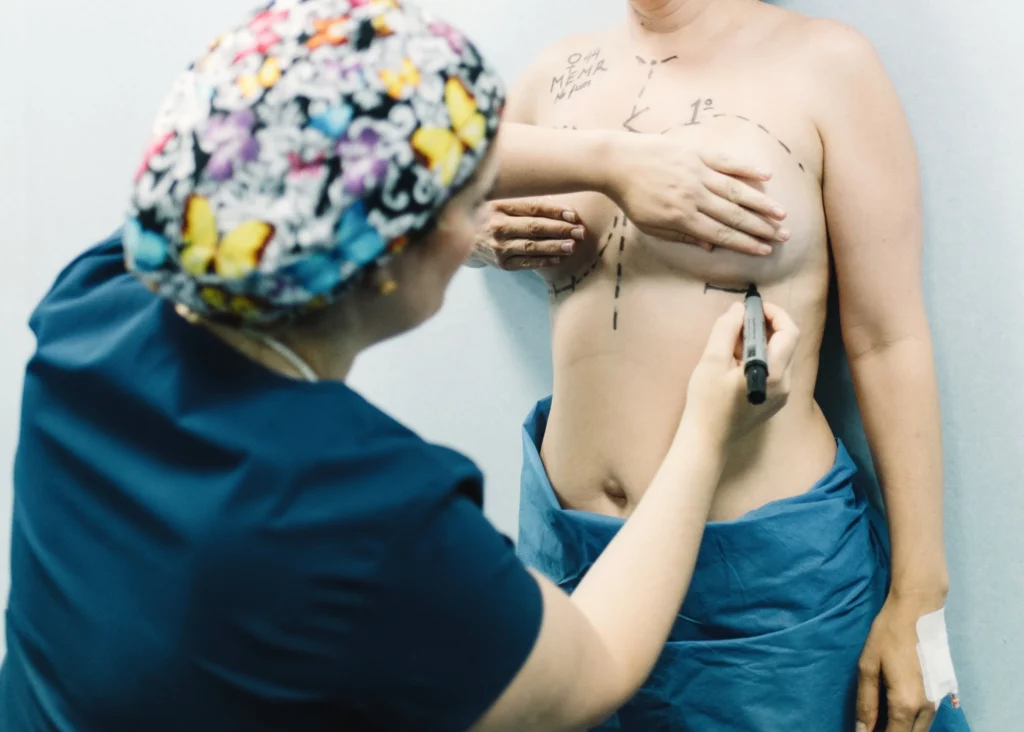
Many women start by asking about implant sizes. I start somewhere else: “What bothers you most when you look in the mirror?” Small breasts, sagging, breasts that feel too heavy, an old implant that has changed, or a nipple shape you dislike all point to different types of breast surgery.
This guide compares the types of breast surgery side by side, shows which cause usually leads to which choice, and covers the long-term check-ups that people with implants often forget.
Table of Contents
Types of Breast Surgery at a Glance: 6 Options Compared
The six types of breast surgery are best understood as answers to six different concerns, not as a menu of upgrades. Whether your breasts lack volume, have dropped, feel too large or have changed after a previous implant, the answer is different. This is the table I go through with patients first.
| Type | Concern it solves | What is done | Who it usually suits | Learn more |
|---|---|---|---|---|
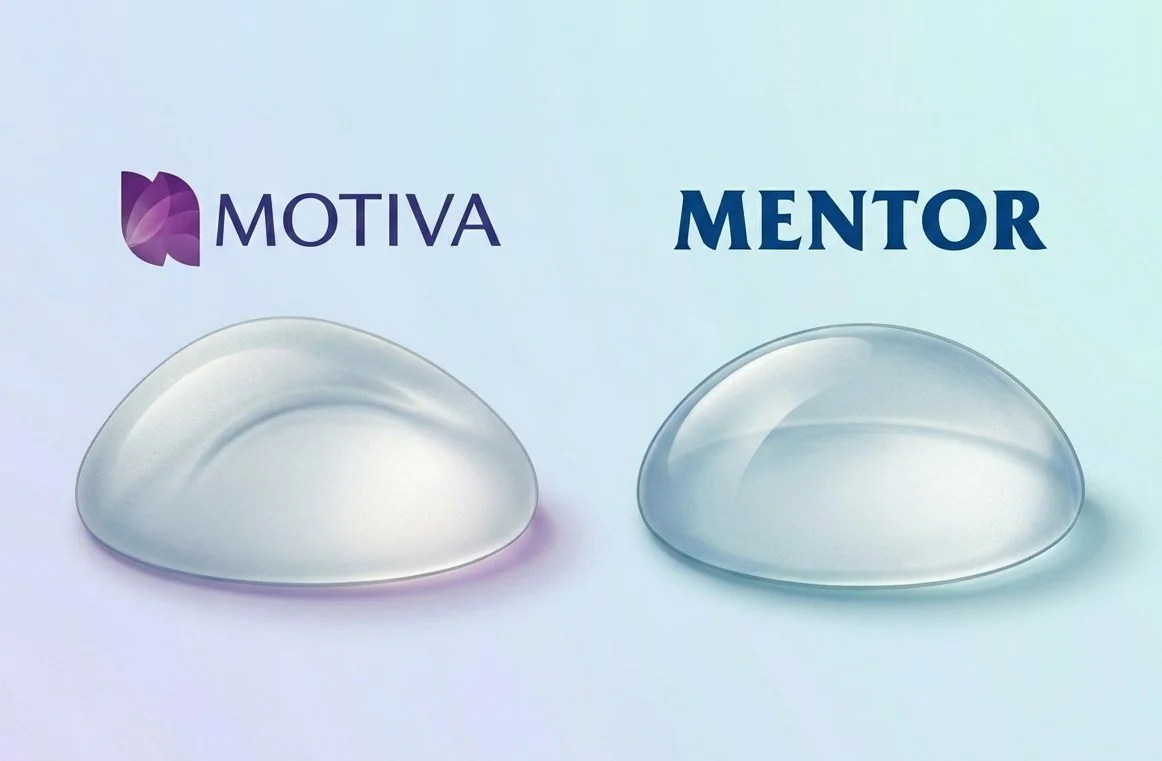
| Augmentation with implants | Not enough volume, size difference between sides | A silicone gel implant is placed behind the breast tissue or partly under the chest muscle | Slim women who want a clear increase and have little spare fat | Breast augmentation |
| Fat transfer | Modest volume gain with a soft, natural feel | Fat is taken from the tummy or thighs by liposuction, purified and injected into the breast | Women with enough donor fat who want around one cup or less | Breast fat grafting |
| Breast lift (mastopexy) | Sagging after pregnancy, breastfeeding, weight loss or aging | Excess skin is removed and the breast tissue and nipple are moved higher | Women whose nipple sits at or below the breast fold | Breast lift |
| Breast reduction | Breasts that are too large, with neck, shoulder or back pain | Breast tissue and skin are removed and the breast is reshaped | Women with physical discomfort or bra-strap grooves | Breast reduction |
| Breast revision | Hardening, shape change, rupture or wish to change size after implants | The scar capsule is treated or removed and the implant is replaced or taken out | Anyone with a problem or change after a previous implant | Breast revision |
| Nipple and areola surgery | Inverted nipples, large or uneven areolas | Duct-preserving correction of the nipple or reduction of the areola | Women bothered mainly by nipple or areola shape | Nipple surgery |
Two or more of these types of breast surgery are often combined such as a lift with an implant. If you already know you want implants, our complete guide to breast augmentation goes deeper into implant choice, placement and incision options.
Start With Your Concern: Volume, Sagging, Size or a Past Implant
Choosing between the types of breast surgery means naming your main concern first, because each concern has its own usual operation. Below are the five I hear most often, each with one question worth asking.

Not enough volume
Clothes and swimwear do not fill out the way you want, and padded bras feel like a cover-up. Of the types of breast surgery, the usual answer is implant augmentation, or fat transfer if the goal is modest and you have fat to spare. Ask: “Is my problem only volume, or is there some sagging too?”
Sagging or a low nipple position
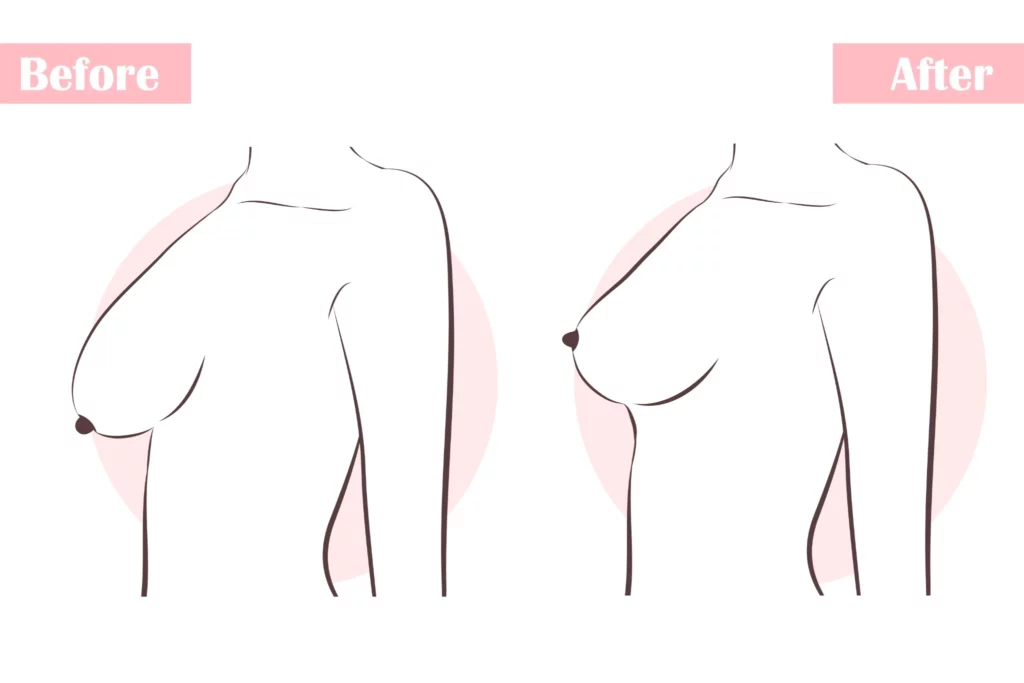
If your nipple points downward or sits at or below the fold under your breast, the main issue is position, not size. A breast lift is the core of the treatment here. Ask: “Where is my nipple compared with my breast fold?”
Breasts that are too large
Reduction is one of the few types of breast surgery done as much for comfort as for appearance. Neck and shoulder pain, deep grooves from bra straps and rashes under the breast are common reasons women choose a reduction. Ask: “How much tissue can be removed while keeping a natural shape?”
Problems with an existing implant
Revision is the one type of breast surgery that starts from a previous operation. Firmness, a change in shape, an implant that has moved, a suspected rupture or wanting a different size are all reasons for it. Hardening around an implant is often capsular contracture (the scar capsule around the implant tightening). Ask: “Does the capsule need to be removed, and which pocket will the new implant go in?”
Nipple or areola shape
Nipple and areola correction is the smallest of the types of breast surgery: inverted nipples and large or uneven areolas can be corrected on their own, without changing breast size. Ask: “Will this technique preserve the milk ducts if I may breastfeed later?”
Dr. Lee’s note: Half of a breast consultation is not about which implant to use. It is about deciding which of the types of breast surgery you need: is your problem volume or sagging? If that call is wrong, even an excellent implant will give the wrong result.
Why Breasts Look Small — and Which Surgery Each Cause Points To
Small-looking breasts usually have a cause, and the cause often decides which of the types of breast surgery fits best. Puberty, genetics, pregnancy and weight change can all play a part, and they often overlap.
Underdevelopment and genetics
Some women simply developed less glandular and fatty tissue during puberty. The shape is otherwise normal, so this is the classic case for adding volume. A slim woman with little body fat usually does better with an implant, while someone with enough donor fat and a modest goal may suit fat transfer.
Tuberous (constricted) breasts
In a tuberous breast, the fold under the breast sits high, the lower half looks empty and the tissue seems pushed toward a puffy areola. Tuberous breasts show why types of breast surgery are often combined: an implant alone rarely fixes this shape. The surgeon usually needs to release and lower the fold and reshape the lower part of the breast, sometimes with an areola reduction, in addition to adding volume.
Asymmetry
When the difference between the two sides is obvious, different implant sizes or different fat volumes can bring the sides closer together. The honest goal is balance that others will not notice, not perfect symmetry; no surgeon can promise two identical breasts.
Volume loss after pregnancy, breastfeeding or weight loss
During pregnancy and breastfeeding the breasts swell considerably, then shrink again after weaning as the milk glands and fat shrink back. Rapid weight loss also tends to take fat from the breasts early. Many women in this group have lost volume and gained some sagging at the same time, so two types of breast surgery may need to be combined.
When Sagging Comes With Low Volume: Lift, Implant or Both
A breast lift (mastopexy) is the operation that moves the breast and nipple back up; an implant adds volume but does not correct real sagging. Because the two problems often appear together, this is where choosing between types of breast surgery gets most confusing. It helps to split the situation into three branches.
Volume loss without sagging
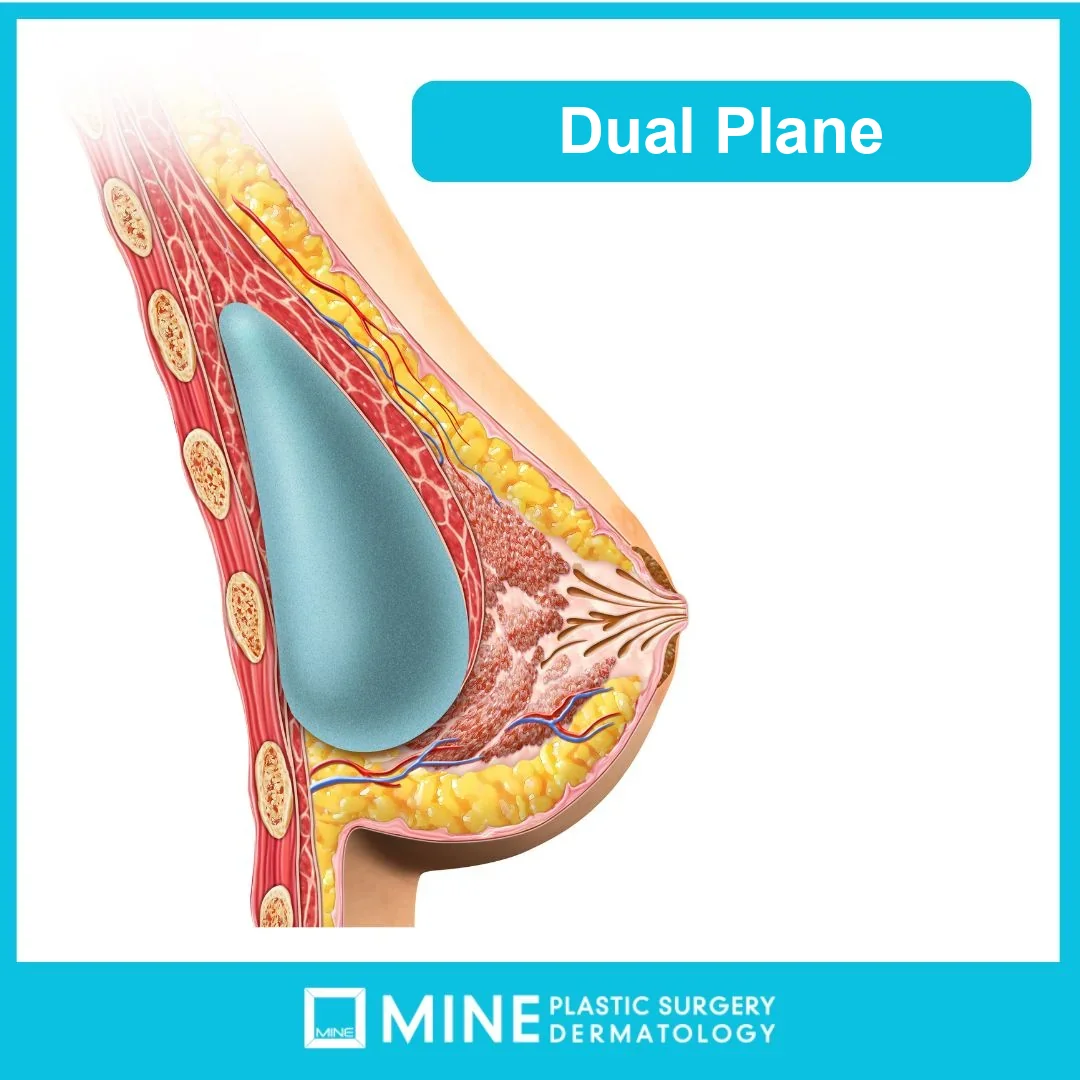
If the nipple still sits above the fold and the skin is reasonably firm, an implant or fat transfer alone is usually enough. When tissue is thin or slightly loose, surgeons often use the dual plane technique, in which the implant sits partly under the chest muscle and partly under the breast gland.
Sagging without volume loss
If you are happy with your size but the breast has dropped, a lift alone is the logical choice among the types of breast surgery. It removes extra skin and repositions the tissue; it does not add volume. Our article on types of breast lift surgery explains the different scar patterns, and the ASPS breast lift overview is a useful independent summary.
Both together
Putting an implant into a clearly sagging breast often looks unnatural: the implant sits high while the breast tissue hangs over it. Plastic surgery textbooks also point out that the extra weight of an implant can make sagging worse over the years, and that the treatment for sagging, with or without an implant, is a lift.
Doing both in one operation is more demanding. A study cited in a major plastic surgery textbook found that a first-time combined lift and augmentation had a significantly higher complication rate than augmentation alone. In a textbook-cited series of repeat lift-plus-implant operations, capsular contracture was the leading reason for surgery (33%), followed by asymmetry (22%). For this reason, some patients are advised to have the lift first and the implant later, in two stages.
Dr. Lee’s note: If you have both low volume and sagging, do not let anyone sell you a bigger implant as a shortcut for a lift. A larger implant adds weight, and weight is exactly what pulls a breast down.
Recovery, Risks and Cost by Surgery Type: The Short Version
Recovery, risks and cost differ between the types of breast surgery, and each has its own detailed article on our site, so this section gives only the short version.

Recovery in brief
Downtime varies widely across the types of breast surgery.
| Type | Typical downtime (general guide) | Main specific risk |
|---|---|---|
| Implant augmentation | Desk work after about a week; heavy exercise after about 6 weeks | Capsular contracture, rupture, implant shifting |
| Fat transfer | Usually short; the liposuction site is often sorer | Partial fat absorption, oil cysts or small calcifications |
| Breast lift | Similar to augmentation; scars need care for months | Visible scars, change in nipple sensation |
| Breast reduction | Slightly longer than a lift because more tissue is removed | Scars, nipple sensation change, possible effect on breastfeeding |
| Revision | Depends on whether the capsule is removed | Recurrence of the original problem |
| Nipple and areola surgery | Usually the shortest | Recurrence of inversion, sensation change |
Most patients return to desk work in about a week after implant augmentation and resume heavy exercise only after about 6 weeks. For a stage-by-stage picture, see our breast augmentation recovery timeline.
Risks in brief
All types of breast surgery share some risks: bruising, swelling, pain, temporary or lasting changes in sensation, and scars. Scars from breast surgery typically fade over 6–12 months, but they never disappear completely. Implant-specific risks such as capsular contracture are linked in the literature to bacterial contamination, bleeding around the implant and pocket choice, which is why careful sterile technique matters. The American Society of Plastic Surgeons also lists the main risks to discuss before augmentation.
What drives cost
Cost varies between types of breast surgery and depends on the implant product, the type of anesthesia, how complex the case is (a first operation, a revision or a lift added) and whether aftercare and revision policies are included. Pricing is individual, so ask for a written breakdown at your consultation. Our article on why breast augmentation quotes differ in Korea explains how to compare quotes line by line.
Long-Term Follow-Up After Breast Implants: Ultrasound, MRI, Mammograms and BIA-ALCL
Long-term follow-up is the regular check-up and imaging plan that keeps an implant safe for as long as it stays in your body. It is the part of implant-based types of breast surgery that patients most often skip, yet it catches small problems early.

Your check-up schedule
| When | What is checked |
|---|---|
| 1 week | Wound healing, bleeding under the skin (hematoma), signs of infection |
| 1 and 3 months | How the implant is settling, early capsule changes, massage guidance if advised |
| 6 and 12 months | Final shape, scars and symmetry |
| Year 5–6 | First imaging to look for silent rupture: ultrasound or MRI |
| Every 2–3 years after that | Repeat imaging, with ultrasound often used first and MRI when needed |
Silent rupture: why imaging matters
Modern silicone gel is thick, so a tear in the implant shell may cause no symptoms at all. This is called a silent rupture, and only imaging finds it. Under US FDA 2020 labeling guidance, silicone gel implants get a first imaging check 5–6 years after surgery and then every 2–3 years. Older advice, such as an MRI at year 3 or “come back at year 10”, is out of date.
Mammograms with implants
Implants do not replace normal breast cancer screening for your age. Tell the radiographer you have implants so they can use “displacement” views that move the implant aside.
BIA-ALCL: what to watch for
BIA-ALCL (breast implant-associated anaplastic large cell lymphoma) is a rare type of immune-cell cancer that forms in the fluid or scar capsule around an implant, linked mainly to textured implants. Plastic surgery textbooks report that about two-thirds of BIA-ALCL cases appear as fluid build-up more than 1 year after surgery and about one-third as a lump in the capsule. According to the same textbook chapter, about 1 in 8 patients first notice enlarged lymph nodes.
If you have no symptoms, routine screening or removing a healthy implant is not recommended. But new swelling on one side or a lump, especially years after surgery, should be checked by a surgeon promptly, usually with an ultrasound and sometimes a fluid test. When BIA-ALCL is confirmed, textbooks describe removing the implant together with its whole capsule.
Dr. Lee’s note: A check-up is not just a visit to hear “everything is fine”. One ultrasound at year 5 or 6 can change how big a later operation needs to be. Keep a copy of your surgery date and the implant product and size from your medical records.
Common Misconceptions About Breast Surgery
Misconceptions about the types of breast surgery usually come from treating every concern as a size problem. Here are five I correct often.
- Myth: Bigger is better. Fact: An implant too large for your chest adds weight and stretches the tissue, raising the risk of sagging, capsular contracture and thinning over the implant.
- Myth: Breast surgery ends breastfeeding. Fact: Most women can still breastfeed after augmentation when the milk glands are preserved. Reduction and some nipple procedures can affect it more, so mention pregnancy plans early.
- Myth: Implants last a lifetime. Fact: An implant is a medical device that needs lifelong follow-up, and some women will need another operation in the future.
- Myth: Fat transfer gives the same result as implants. Fact: Fat transfer gives a modest gain, and part of the injected fat is absorbed by the body. It suits small, natural changes rather than large increases.
- Myth: A lift adds volume. Fact: A lift moves the breast higher and tightens the skin. It does not add volume; that needs an implant or fat.
Frequently Asked Questions About Types of Breast Surgery
These are the questions patients ask most often when comparing the types of breast surgery.
What are the main types of breast surgery?
There are six main types of breast surgery: implant augmentation, fat transfer, breast lift, breast reduction, revision surgery and nipple or areola surgery. They are easiest to choose between when grouped by concern: volume, sagging, size, a past implant or the nipple.
How do I know whether I need a breast lift or implants?
Look at where your nipple sits compared with the fold under your breast, and how loose the skin feels. Volume loss alone points to an implant or fat transfer, sagging alone points to a lift, and both together usually need a lift plus an implant, sometimes in two stages.
Can fat transfer replace breast implants?
Among the types of breast surgery that add volume, fat transfer suits a modest gain of around one cup or less, and only if you have enough donor fat. Some of the fat is absorbed, so it is not suited to large increases or very slim patients.
How often should breast implants be checked?
Expect clinic checks several times in the first year. For silicone gel implants, current US FDA labeling guidance advises a first imaging check at 5–6 years and then every 2–3 years, or sooner if you notice any change.
Should I worry about BIA-ALCL if I already have implants?
BIA-ALCL is rare and linked mainly to textured implants. If you have no symptoms, you do not need special screening or removal. New one-sided swelling or a lump, especially more than a year after surgery, should be examined promptly.
Can I breastfeed after breast surgery?
Usually yes after augmentation, especially when the implant is placed in a way that spares the milk glands. Reduction and nipple surgery may affect breastfeeding more, so tell your surgeon about any pregnancy plans at the consultation.
Planning Your Breast Surgery Consultation in Seoul
A good consultation decides the branch first, volume, sagging, size or an old implant, and only then the product. Comparing the types of breast surgery in this order keeps the focus on your actual concern rather than on a brand name.
If you are still unsure which of the types of breast surgery fits you, that is exactly what the consultation is for. Bring your current bra size and one or two photos of the look you like. If you have had breast surgery before, bring your records with the implant product and size. You can learn more about breast surgery at MINE or call us on +82-2-516-1175 to arrange a consultation.
Written and reviewed by Dr. Lee Sung-wook, board-certified plastic surgeon, MINE Plastic Surgery, Seoul.
※ This content is for informational purposes only and does not replace professional medical advice, diagnosis, or treatment. Individual results may vary, and side effects may occur. Please consult with a board-certified plastic surgeon for personalized advice.