EN
EN

Choosing the right bras after breast augmentation directly shapes how comfortably you heal and how your final result settles. The best bra after breast augmentation is a soft, wire-free, front-closing support bra in the early weeks that gently controls swelling and holds your implants steady, gradually giving way to lighter recovery and wireless styles before you return to everyday bras around the three-month mark. Wearing the wrong bra too soon can add pain, prolong swelling, or even shift an implant before it has settled. This guide walks you through exactly which supportive bras to choose at each stage of your breast augmentation recovery, and why.
Table of contents
What Bra Should You Wear After Breast Augmentation? (Quick Answer)
The right bra changes as your body heals, so think in stages rather than one single bra. Here is the short version of how to choose bras after breast augmentation, from the operating table to your normal wardrobe:
- 0–2 weeks — Compression bra: A wire-free, front-closing medical support bra worn around the clock to calm swelling and keep implants in place.
- 2 weeks–1 month — Recovery bra: Soft, slightly stretchy support as swelling drops. Still no underwire.
- 1–3 months — Transition bras: Bralettes and soft-cup styles while implants gradually “drop and fluff” into their final position.
- 3+ months — Everyday bras: A fresh professional fitting, and underwire only once your surgeon confirms you have healed.
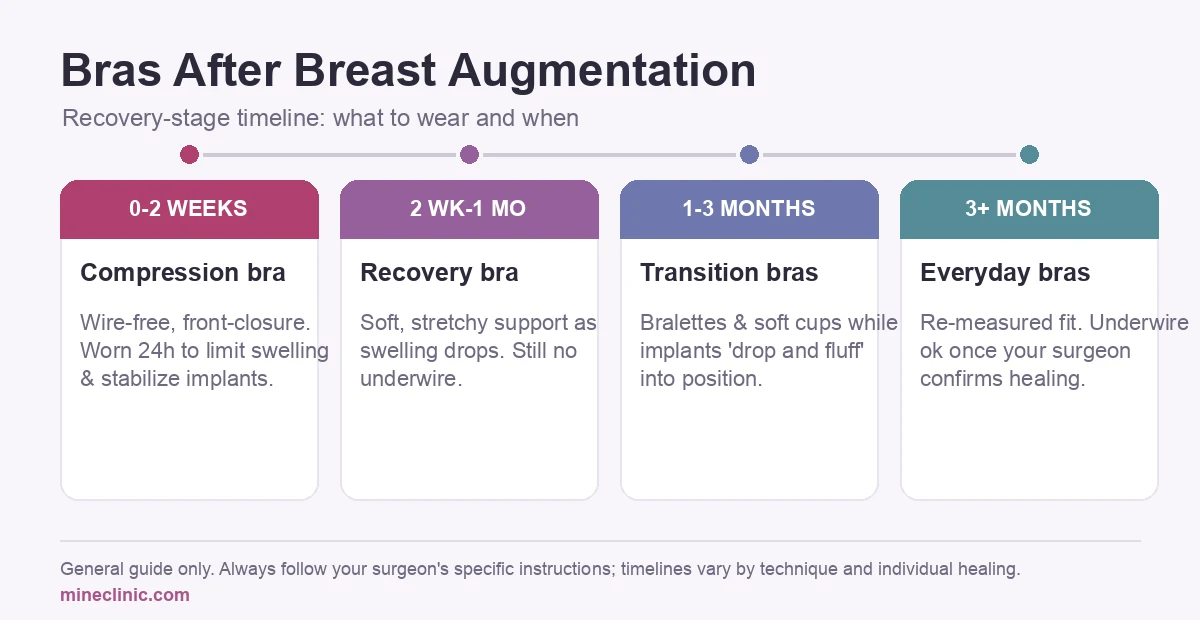
These timeframes are typical, but your surgeon’s instructions always come first. One important exception: if your augmentation used fat transfer rather than implants, some surgeons advise little or no compression in the first few weeks to protect the transferred fat, so the advice below for implant patients may not apply to you.
Why the Right Bra Matters: What Happens Inside as You Heal
To understand why bra choice matters so much, it helps to picture what is happening under the skin. During surgery, the surgeon creates a “pocket” for the implant. In the days that follow, the body responds with swelling and sometimes a small amount of fluid around the implant. A good support bra applies gentle, even pressure that helps limit this swelling and keeps everything still while the tissues knit back together.
Surgeons keep an eye on two kinds of fluid build-up, and it is worth knowing the plain-language version. A seroma is a pocket of clear fluid; a small one is common and your body usually reabsorbs it on its own within the first week or so. A hematoma is a collection of blood, and it needs prompt attention.
The classic warning signs, described in plastic surgery textbooks, are a breast that becomes suddenly swollen, firm, bruised, and noticeably painful, especially when you move your arm. If you notice these signs, contact your surgeon right away. Reputable surgical organizations such as the American Society of Plastic Surgeons echo the same advice: wear your support garment as directed and report unusual swelling promptly. This is also why surgeons ask you to avoid medicines and supplements that thin the blood for about two weeks around your surgery.
The other big process is settling, often called “drop and fluff.” Implants usually sit high and tight at first, then gradually drop into a softer, more natural position over weeks to months. Early support helps hold the implant steady so it settles evenly, while pressure from the wrong bra (such as an underwire digging in) can nudge an implant out of place before it has settled. You can read more about this process in our guide to the drop and fluff breast augmentation timeline, and see the bigger picture in our complete breast augmentation recovery guide.
The Critical Importance of Compression Bras After Surgery
During the first few days after breast augmentation, wearing a medical-grade compression bra is essential. This initial acute recovery period brings the most swelling and discomfort, and a proper compression bra plays several vital roles.
Key Functions of Compression Bras
- Reduces swelling: Gentle, even compression helps prevent excess fluid from building up around the implant
- Minimizes bleeding risk: Light, steady pressure supports the healing tissues and helps lower the risk of bleeding
- Stabilizes implant position: Helps implants stay in their proper position while they settle
- Protects suture lines: Shields surgical sites from excessive movement
- Provides comfort: Proper support reduces pain and discomfort
Characteristics of Ideal Post-Surgery Compression Bras
- Front closure design: Allows easy wearing without excessive arm raising
- Soft materials: Cotton or similarly gentle fabrics that won’t irritate sutures or sensitive skin
- Wire-free: No underwires that could press against wounds or implants
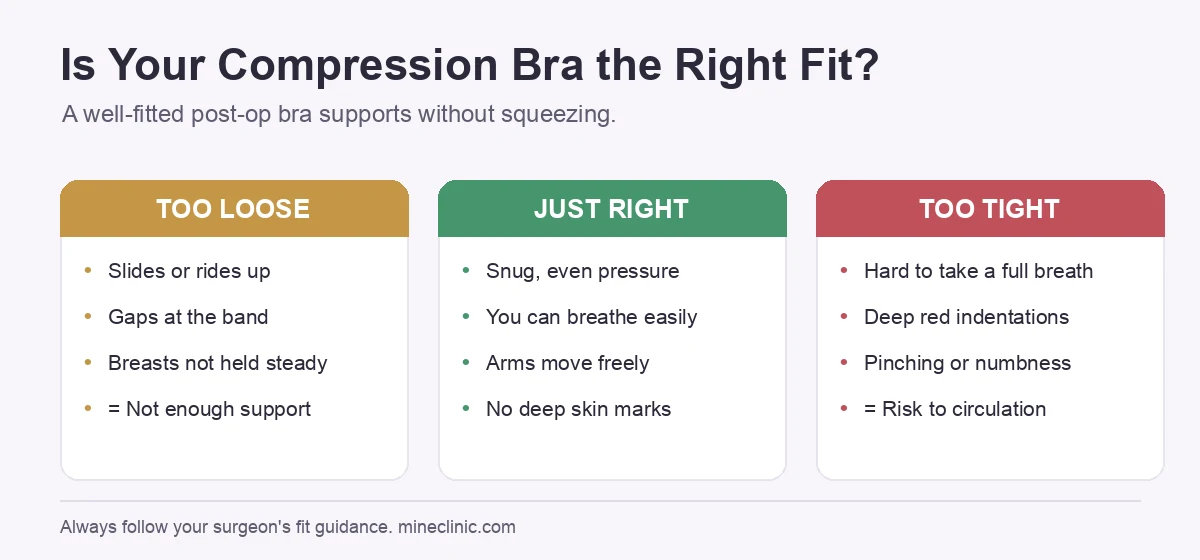
- Balanced compression: Neither too loose nor too tight for optimal pressure
- Wide shoulder straps: Distributes pressure across the shoulders with a wider strap design
- Adjustable bands: Design that can be adjusted as swelling changes
Important Precautions When Wearing Compression Bras
- 24-hour wear: Should be worn 24 hours a day except during showering, unless specifically instructed otherwise by your surgeon
- Correct size selection: Too tight can impede circulation; too loose provides insufficient support
- Hygiene management: Purchase multiple compression bras to alternate while washing
- Follow medical recommendations: Most clinics directly provide or recommend appropriate compression bras
Compression bras are typically first worn either before surgery or in the recovery room, and doctors generally recommend wearing them for about two weeks. Follow your surgeon’s specific instructions, as recommended periods may vary. For a fuller list of early dos and don’ts, see our guide on what to avoid after breast augmentation surgery.
Early Recovery Phase: How to Choose Bras (2 Weeks to 1 Month)
Between 2 weeks and 1 month post-surgery, initial healing progresses and swelling gradually decreases. During this period, comfortable support becomes more important than strong compression. It’s still too early to transition to regular bras, and specially designed recovery bras are necessary.
Key Features of Early Recovery Bras
- Front closure: Front-closing designs remain convenient as arm movement may still be limited
- Soft cup design: Wire-free designs with soft cups protect wounds and implants
- Stretch materials: Slightly elastic materials that adapt to changing swelling
- Wide side coverage: Broader designs that properly support surgical areas near the underarms
- Moderate compression: Comfortable compression that’s not as strong as initial post-op bras
- Breathable fabrics: Breathable materials that minimize skin irritation during extended wear
Selection Considerations for Recovery Bras
- Size re-measuring: You may need to re-measure as initial swelling subsides
- Comfort check: Ensure no discomfort under breasts, around underarms, or on shoulders
- Activity level: Select bras that support gradually increasing daily activities
- Skin health: Choose materials with good breathability to prevent skin issues
Wearing Guidelines for This Period
- Continued 24-hour wear: Most surgeons recommend continued 24-hour bra wear except during showering
- Multiple bras: Prepare at least two recovery bras for washing and rotation
- Regular cleaning: Hand wash with mild soap to maintain shape and support
- Gradual activity increase: Gradually increase activity levels within the support limits of your bra
During this period, continue to avoid underwire bras, push-up bras, and traditional bras with underwires. The wrong bra can cause implant displacement or discomfort before implants have fully settled. If you are still feeling soreness at this stage, our guide to breast augmentation pain and how to manage it explains what is normal and what is not.
Transition Period Bra Recommendations (1-3 Months)
The 1-3 month post-surgery period is an important transition time when implants gradually “drop and fluff.” During this stage, initial recovery is complete, but implants are still settling into their final position. This period requires a balance between support and comfort.
Transition Period Bra Characteristics
- Soft wireless design: Still wire-free but with more defined cup structures
- Light support: Designs that provide gentle support rather than strong compression
- Stretchy cups: Cups with some flexibility to allow implants to naturally settle
- Comfortable bands: Bands that support without compression
- Natural shape support: Designs that create natural silhouettes matching your new breast shape
Tips for Choosing Transition Period Bras
- New size confirmation: Most swelling has subsided, so getting an accurate measurement becomes important
- Try some everyday bras: With your doctor’s permission, you can try wearing comfortable everyday bras for part of the day
- Gradual transition: Gradually transition rather than suddenly switching to everyday bras
- Activity-specific bras: Begin using separate bras for daily activities and light exercise
Recommended Bra Types for This Period
- Bralettes: Wire-free bralettes that provide soft support
- Sports bras (light support): Sports bras with moderate support
- Transition bras: Bras specifically designed for transitioning from recovery to everyday wear
- Soft cup daily bras: Shaped everyday bras without underwires
Important Precautions
- Avoid push-up bras: Still avoid designs that strongly push up implants
- Avoid excessive compression: Avoid strong compression sports bras that flatten the chest
- Gradual wear time adjustment: Consult with your surgeon to gradually increase everyday bra wear time
- Monitor discomfort: Immediately discontinue wearing any bra that causes pain or discomfort
Most patients begin alternating between regular bras for daytime activities and more comfortable recovery bras at night during this period. The specific transition timing varies based on individual recovery progress and doctor recommendations.
Tips for Selecting Everyday Bras After Full Recovery
After 3-6 months, most patients are fully recovered and can wear everyday bras. At this stage, it’s important to select optimal bras that fit your new breast shape. Different types of bras may fit better after breast augmentation than those you preferred before surgery.
Guide to Choosing Bras for Your New Breast Shape
- Accurate size measurement: Having your new breast size professionally measured is crucial
- Cup shape considerations: Different cup shapes (full cup, demi cup, balconette) may suit different implant types and positions
- Band width and tightness: Proper width and tension in bands that support under the implants
- Underwire selection: Underwires should follow your natural breast curves without pressing on implants
- Material selection: Choose materials that provide comfortable wear without skin irritation
Suitability of Different Bra Types After Breast Augmentation
| Bra Type | Suitability | Features and Considerations |
|---|---|---|
| T-shirt Bras | Good | Smooth lines, comfortable for daily wear |
| Balconette Bras | Excellent | Superior lower support, natural-looking upper fullness |
| Plunge Bras | Good | Suitable for low-cut clothing, suitability varies by implant shape |
| Push-up Bras | Caution needed | Possibility of excessive pressure, select based on implant type |
| Sports Bras | Moderate | Choose products with sufficient support but not excessive compression |
| Bralettes | Good | Provides comfort, suitable for casual situations |
| Wireless Bras | Excellent | Comfortable and natural-looking, ideal for everyday wear |
Precautions When Selecting Everyday Bras
- Underwire position: Ensure underwires don’t press against implants or sides
- Tightness level: Too tight causes pressure on implants, too loose provides insufficient support
- Strap width: Appropriate strap width needed to support heavier breasts
- Materials: Choose non-allergenic, non-irritating materials
- All-day comfort: Should be comfortable even with extended wear
Bra Selection for Special Situations
- Exercise: Medium-support sports bras that secure implants without excessive compression
- Special occasions: Special design bras that enhance implant shape (consult with your surgeon)
- Swimwear/bikinis: Swimwear tops with sufficient support, preferably with adjustable straps
- Sleeping: Consider sleep bras that provide light support even after full recovery
Frequently Asked Questions About Post-Augmentation Bras
When can I start wearing regular bras after breast augmentation?
In most cases, you can wear regular bras about 3 months after surgery. However, this varies based on individual recovery speed and surgeon recommendations. The typical transition process is:
- 0-2 weeks: Medical compression bra worn 24 hours
- 2 weeks-1 month: Recovery bras primarily
- 1-3 months: Begin with soft wireless bras, try some everyday bras
- 3+ months: Complete transition to regular bras after surgeon confirmation
What happens if I don’t wear a bra after breast surgery?
Not wearing a bra during the early recovery period can cause several problems:
- Increased risk of implant displacement from intended position
- Prolonged swelling
- Increased risk of bleeding or fluid accumulation
- Unnecessary tension on suture lines
- Potential negative impact on surgical results
How tight should a compression bra be?
Compression bras should provide sufficient support without being too tight. Appropriate compression standards include:
- No restriction to breathing or movement
- No severe skin indentation marks
- Firm breast support without excessive pressure causing pain
- Ability to move arms freely
How do I choose the right bra size after surgery?
Following your surgeon’s recommended size during the immediate post-operative period is best. Generally, follow these guidelines:
- Initial compression bra: Band size slightly larger than pre-surgery chest circumference, cup size considering swelling
- Recovery period (2 weeks-1 month): Adjust to slightly better fitting size as swelling decreases
- Transition period (1-3 months): Professional size measurement recommended
- After full recovery: Get accurate sizing through professional bra fitting services
Where should I buy post-surgery bras?
Post-surgery bras can be purchased from:
- Medical facilities: Many plastic surgery clinics directly provide immediate post-surgery compression bras
- Medical supply stores: Specialty stores selling post-surgical recovery products
- Online specialty shops: Websites specializing in post-surgery recovery bras
- Department store lingerie sections: Later-stage recovery bras from professional fitting services
- Brand official websites: For guaranteed authentic products and detailed product information
When can I start wearing underwire bras?
Most plastic surgeons recommend avoiding underwire bras for at least 3 months after surgery. Underwires can press against implants or suture areas, causing discomfort and increasing complication risks. Always consult with your surgeon before wearing underwire bras.
When can I start wearing sports bras?
Light-support sports bras can generally be worn 4-6 weeks after surgery with surgeon approval. However, high-compression sports bras for high-intensity activities should be avoided until at least 3 months post-surgery, and even then only after consulting with your surgeon.
How many post-surgery bras should I prepare?
It’s advisable to prepare at least 2 bras for each recovery stage:
- Compression bras (0-2 weeks): 2-3 (for washing and rotation)
- Recovery bras (2 weeks-1 month): 2-3
- Transition bras (1-3 months): 2-4 (various styles)
- After full recovery: As needed for daily use, exercise, special occasions, etc.
Choosing appropriate bras after breast augmentation significantly impacts surgical results and comfort. Selecting the right bra for each recovery stage and following your surgeon’s wearing instructions is crucial. The optimal bra can vary based on individual body type, surgical method, and implant type, so consult thoroughly with your surgeon at mineclinic.
Have questions about selecting the right bras for your breast augmentation recovery? Contact mineclinic for expert guidance from our specialists who understand the importance of proper post-surgical support. For more on each stage of healing, explore our other detailed recovery guides on the mineclinic blog.
Medical disclaimer: This article is for general educational purposes only and is not a substitute for professional medical advice, diagnosis, or treatment. Recovery timelines and bra recommendations vary with your surgical technique, implant type, and individual healing. Always follow the specific instructions of your own surgeon, and contact your medical team promptly if you notice sudden swelling, firmness, bruising, severe pain, or any sign of complication.
※ This content is for informational purposes only and does not replace professional medical advice, diagnosis, or treatment. Individual results may vary, and side effects may occur. Please consult with a board-certified plastic surgeon for personalized advice.