EN
EN

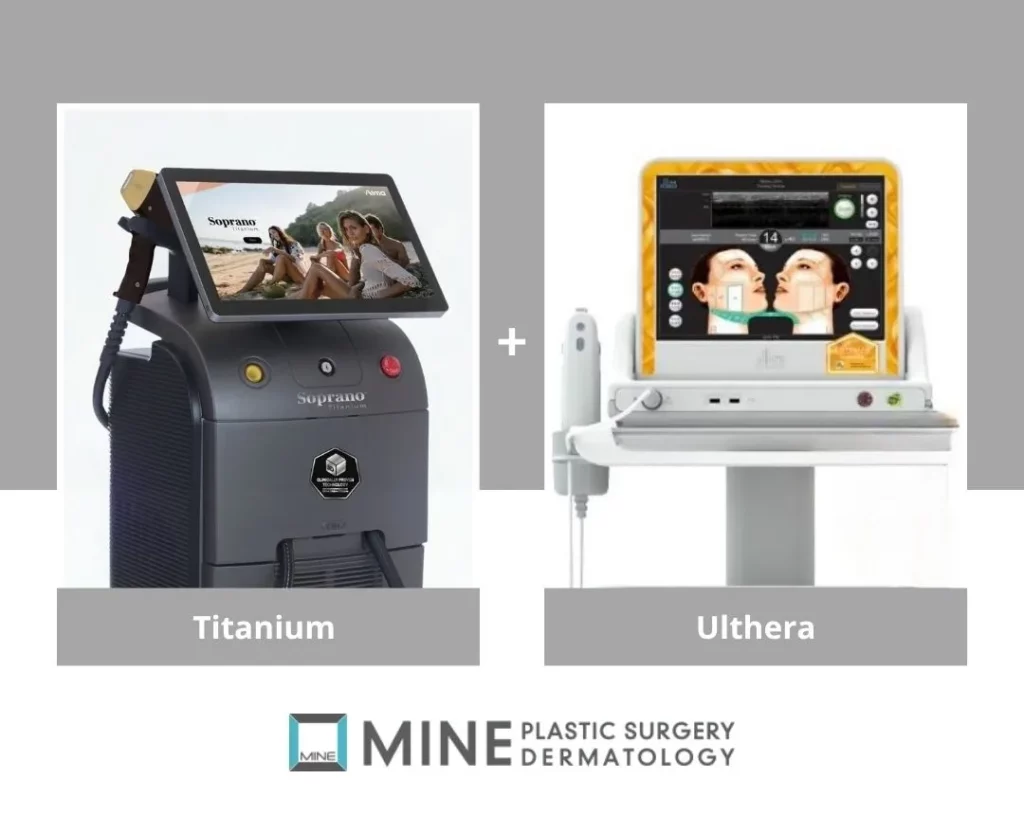
If you have ever caught your reflection and noticed your cheeks beginning to sag or your jawline losing its crisp edge, thinking “surgery feels like too much, but doing nothing isn’t an option either” — you are far from alone. One of the most common questions international patients ask me in the consultation room is, “Doctor, between Ulthera and Titanium, which one is actually better?”
Ulthera vs titanium lifting really comes down to two things: the type of energy each device uses and how deep into the skin that energy reaches. Ulthera delivers micro-focused ultrasound (HIFU) down to the SMAS layer about 4.5mm beneath the surface, while Titanium lifting uses a triple-wavelength diode laser (755/810/1064nm) to warm the dermis gently and evenly. Both are non-surgical treatments with essentially no downtime, which is exactly why they are so easy to confuse.
As a board-certified plastic surgeon, I have worked with both treatments for years. In this guide I will compare Ulthera and Titanium lifting from the ground up — energy principle, how long results last, pain, side effects, and honestly which type of person each one suits — based on my own clinical experience.
Table of Contents
- Why Ulthera and Titanium Lifting Get Confused — The Fundamental Difference
- Ulthera vs Titanium Lifting at a Glance: Energy, Depth, Results and Pain
- Ulthera Side Effects and Safety: What You Should Honestly Know
- Which Lifting Is Right for You? A Surgeon’s Selection Guide
- Frequently Asked Questions About Ulthera vs Titanium Lifting
- Why International Patients Choose MINE for Ulthera and Titanium
Why Ulthera and Titanium Lifting Get Confused — The Fundamental Difference
The reason patients mix up Ulthera and Titanium is simple: both are “non-surgical lifting” treatments that firm the skin without a single incision. But once you look under the hood, the energy they use and the depth that energy reaches are completely different. Think of two cars heading to the same destination — “a lifted, firmer face” — except one runs on gasoline and the other on electricity. Ulthera runs on focused ultrasound; Titanium runs on laser light. That difference in power source is what makes their results, sensation and ideal candidates so distinct.
Ulthera: Micro-Focused Ultrasound (HIFU) That Reaches the SMAS Layer
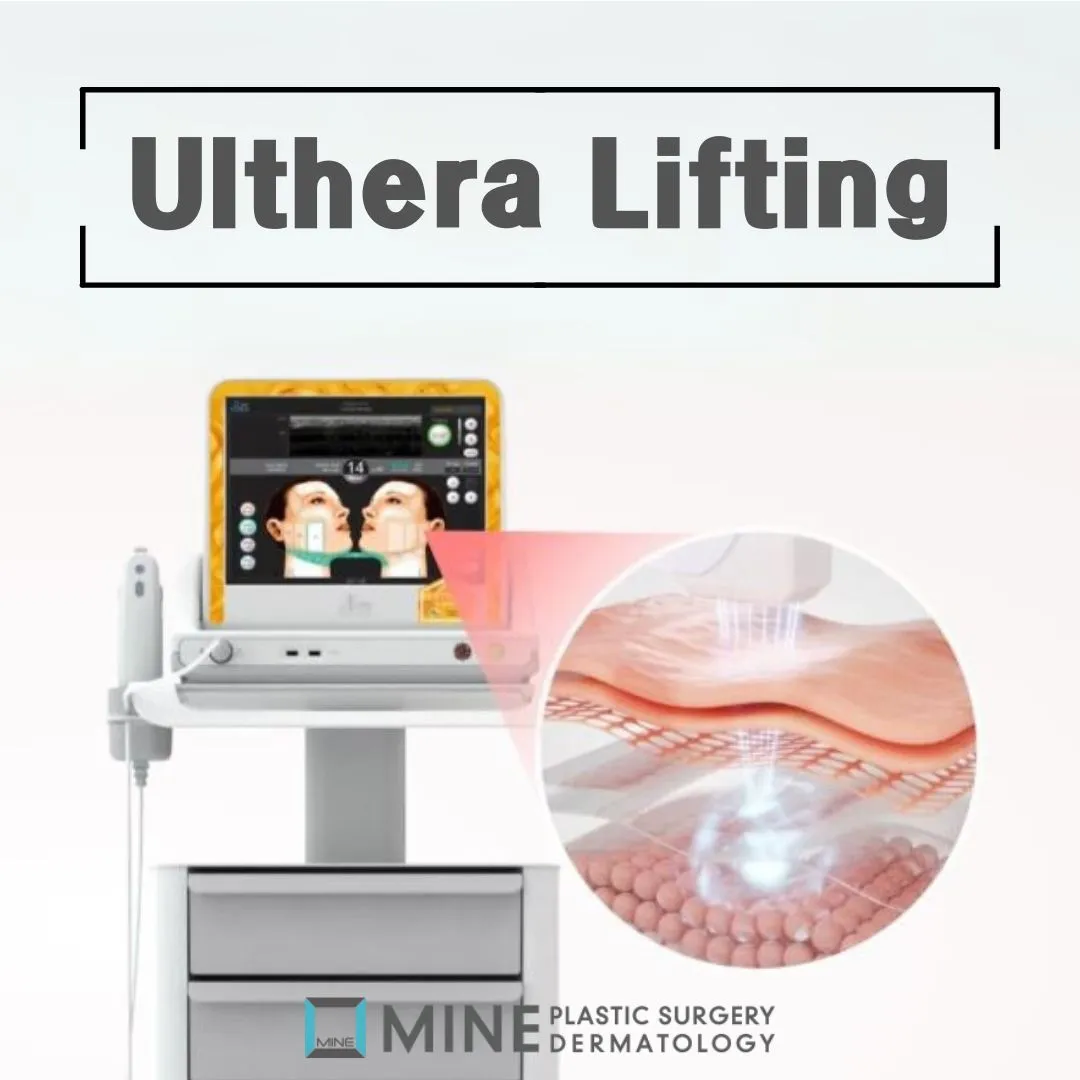
Ulthera (internationally marketed as Ultherapy) earned US FDA clearance in 2009 and works with micro-focused ultrasound (MFU/HIFU) — a technology that concentrates sound waves onto a single tiny point. The easiest way to picture it is a magnifying glass focusing sunlight until a sheet of paper starts to burn. In the same way, the device gathers ultrasound energy at precise depths of 1.5mm, 3.0mm and 4.5mm to create small thermal coagulation points of roughly 65–70°C. That heat contracts loose, aging collagen and, over the following weeks, stimulates your skin to build fresh collagen.
What makes Ulthera stand out is that it reaches the SMAS layer (the sheet of muscle and fascia that supports your face). The SMAS sits about 4.5mm below the surface — the very same layer a surgeon physically pulls upward during a facelift. This matters because, according to medical textbooks, focused ultrasound energy travels much deeper through tissue than laser or radiofrequency energy does. That makes Ulthera one of the rare non-surgical devices able to deliver energy to this deep support layer without any cutting. If you want the science in more detail, I explain how Ultherapy’s HIFU technology works in a dedicated guide.
Dr. Lee’s Key Point: Ulthera focuses ultrasound onto pinpoint depths to reach the SMAS layer (the fascia that holds up your face, around 4.5mm deep) — a rare feat among non-surgical lifting devices.
Titanium: Triple-Wavelength Laser That Evenly Warms the Dermis

Titanium lifting — more precisely, the Soprano Titanium platform — uses a triple-wavelength diode laser (755nm, 810nm and 1064nm) to warm the dermis (the elastic layer just beneath the skin’s surface) broadly and evenly. The simplest way to understand it: three laser depths delivered in a single, comfortable pass. Where Ulthera drives energy into deep points, Titanium spreads gentle warmth across a wider surface area. As the dermis is warmed, collagen contracts while the skin is prompted to produce new collagen.
Because Titanium works mainly in the dermis rather than plunging to the SMAS, it doesn’t reach as deep as Ulthera. In exchange, it tends to be far more comfortable, and many patients feel their skin looking tighter quite soon after the session. You can read the full complete guide to Titanium lifting for how the treatment is performed step by step.
Dr. Lee’s Key Point: Titanium uses a triple-wavelength laser to warm the dermis broadly and evenly, lifting skin elasticity with minimal discomfort and an immediate tightening feel.
Ulthera vs Titanium Lifting at a Glance: Energy, Depth, Results and Pain
Let me lay out the differences item by item. The heart of the ulthera vs titanium lifting question is really “which energy, to what depth, and for how long.”
| Aspect | Ulthera (Ultherapy) | Titanium |
|---|---|---|
| Energy type | Focused ultrasound (HIFU) | Triple-wavelength laser (755/810/1064nm) |
| Working pattern | Pinpoint, deep | Broad, even |
| Depth reached | Up to SMAS (~4.5mm) | Dermis |
| Results onset | Peaks at 3–6 months | Immediate tightening feel, then gradual |
| Typical duration | 9–18 months | Maintenance-style, ongoing |
| Pain | Moderate, managed with numbing | Minimal |
| Downtime | None | None |
Treatment Depth: Who Reaches the SMAS Layer?
The single most decisive difference is depth. Ulthera can deliver energy all the way to the SMAS layer about 4.5mm below the surface — rare among non-surgical devices — while Titanium works evenly across the shallower dermis. As medical textbooks and clinical studies note, focused ultrasound (HIFU) energy penetrates deeper into tissue than laser energy does. So if deep-layer sagging is your concern, Ulthera has the advantage; if you’re managing elasticity closer to the surface, Titanium is the better fit.
There’s a reason I emphasize this depth difference more than anything else during consultations. Even when two patients describe the same “sagging,” the most effective tool changes depending on which layer that sagging actually starts in. When the SMAS itself has drifted downward under the weight of expression and time, Ulthera — which stimulates that exact layer — makes sense. When the main issue is fine surface lines and a loss of skin firmness, the broadly warming Titanium suits better. Understanding the ulthera vs titanium lifting distinction really begins with identifying which depth your concern lives at.
How Long Results Last: The Collagen Remodeling Timeline

Lifting results are not finished the day of your appointment — your skin needs time to build and settle new collagen. With Ulthera, collagen contracts immediately, then over roughly 1–3 weeks your skin forms new Type III collagen (an early, softer form), which matures into firmer Type I collagen across 3–6 months. That is why results usually look their most defined about 3–6 months after treatment.
In clinical data, Ulthera results typically last 9–18 months, with the exact duration depending on your skin condition, age and lifestyle. Titanium also triggers collagen remodeling, but the immediate tightening tends to register first. This means the two treatments differ in the speed at which change appears: Titanium feels tighter right away and then eases into gradual change, while Ulthera can seem slow at first before becoming clearly visible around the 3–6 month mark. Knowing this timing in advance saves you from the “why isn’t anything happening yet?” anxiety in the early weeks.
Pain and Downtime Compared
Pain is where the two treatments genuinely diverge. Because Ulthera concentrates energy into focused points, you may feel brief zing-like sensations during the session, which we manage with numbing cream and pain relief. Titanium disperses its energy broadly, so it is comparatively comfortable. Both are non-surgical and require no dedicated recovery time, so returning to daily life is quick.
That said, how much discomfort you feel varies a lot from person to person. With the very same Ulthera settings, patients with thin or sensitive skin feel more, while less-sensitive patients often tell me it was “more bearable than expected.” For anyone anxious about pain, I allow generous numbing time before the session and step the energy up gradually while watching how the patient responds. If fear of pain has been holding you back, knowing this kind of adjustment is possible tends to put people at ease.
Dr. Lee’s Key Point: Ulthera goes deep and lasts long (9–18 months), peaking at 3–6 months; Titanium is comfortable with faster-felt firming. The right choice depends on your goal.
Ulthera Side Effects and Safety: What You Should Honestly Know
Safety matters just as much as results. No treatment comes with only upsides, so knowing what to expect beforehand is what lets you feel truly reassured.
Common, Temporary Reactions After Treatment
After Ulthera, you may notice redness and mild swelling, which usually settle within a few days. Less commonly, temporary numbness or tingling from nerve irritation can linger for a few weeks to a couple of months, but it typically resolves on its own over time.
Rare Complications — Hollow Cheeks and Nerve Irritation
The concern I hear most often is “hollow cheeks,” which is a rare complication. It occurs mainly in patients with thin cheeks or low body fat, where fat is broken down excessively — which is exactly why careful energy calibration and honest candidate selection by an experienced doctor matter so much. At MINE, we use Ulthera’s DeepSEE real-time ultrasound imaging to see precisely where the energy is being delivered during treatment, which helps us treat with greater accuracy and safety. You can read more about whether Ulthera can cause hollow cheeks in a separate article. For independent, authoritative information on the safety of aesthetic procedures, I also recommend the resources from the International Society of Aesthetic Plastic Surgery (ISAPS).
Dr. Lee’s Key Point: Cheek hollowing and sensory changes are rare, but the thinner your cheeks, the more energy control matters. DeepSEE real-time imaging raises the safety margin.
Which Lifting Is Right for You? A Surgeon’s Selection Guide
Based on everything we’ve covered about the ulthera vs titanium lifting difference, here is how I match each treatment to the right person.
Choose Ulthera If: Deep SMAS-Level Sagging
If your cheeks and jawline are visibly sagging and you want to lift the face from its deep support layer, Ulthera is the first choice. It suits anyone who needs genuine deep-layer lifting that reaches all the way to the SMAS.
Choose Titanium If: Early Skin Laxity, Pain-Sensitive, Maintenance Goals

If your sagging isn’t severe but your skin has started to lose firmness, or if you are sensitive to pain and prefer a steady “maintenance-style” lift, I recommend Titanium. It also suits international patients on short trips to Korea especially well — with no downtime, you can have a session and continue sightseeing or fly home the same week.
Combining Ulthera and Titanium: A Complementary-Depth Strategy
Because the two treatments reach different layers, receiving both can produce a complementary effect. Ulthera addresses the deep layer (SMAS) while Titanium works the middle layer (dermis), so together they care for the face at two depths at once — not redundantly, but as complementary layers. The interval between sessions has to be tailored to your individual skin, so an in-person consultation is essential. If you’re curious about this approach, I go deeper into combining Titanium and Ulthera in one treatment plan in a separate article.
Dr. Lee’s Key Point: Deep sagging calls for Ulthera; elasticity maintenance calls for Titanium. Because HIFU and laser target different depths, using both can care for the deep and middle layers together.
Frequently Asked Questions About Ulthera vs Titanium Lifting
Which is more effective, Ulthera or Titanium lifting?
It depends on your goal — neither is universally better. Deep, SMAS-level sagging responds best to Ulthera, while surface-level loss of skin elasticity suits Titanium. The ulthera vs titanium lifting question is really about which depth your concern lives at, and the two can also be combined for complementary layers.
How long do Ulthera results last?
In clinical data, Ulthera results typically last 9–18 months. They look clearest around 3–6 months after treatment, once new collagen has matured. The exact duration varies with your skin condition, age and lifestyle.
Does Ulthera hurt more than Titanium lifting?
Generally, yes. Ulthera concentrates energy into focused points, so brief zing-like sensations are felt, whereas Titanium’s laser warms broadly and is comfortable. Numbing cream and pain relief make Ulthera very manageable, and the energy can be stepped up gradually to suit you.
Can Ulthera cause hollow cheeks?
It is a rare complication, seen mostly in patients with thin cheeks or low body fat, caused by excessive fat breakdown. Proper candidate selection and careful energy calibration by an experienced doctor lower the risk substantially.
Can you combine Ulthera and Titanium lifting?
Yes. They target different layers — HIFU reaches the deep SMAS while the laser works the dermis — so their depths don’t overlap and they complement each other. The timing and interval are individualized after an in-person assessment of your skin thickness and degree of sagging.
Why International Patients Choose MINE for Ulthera and Titanium
Ulthera and Titanium are both excellent treatments, but the real key is receiving the right one “at the right energy for your skin and bone structure.” Even with the same Ulthera, applying identical energy to a patient with thin cheeks and one with thick cheeks can lead to very different outcomes. (Ulthera vs Thermage vs Titanium comparison)
At MINE, we use Ulthera’s DeepSEE real-time imaging to confirm exactly where energy is delivered during treatment, and we calibrate the energy individually for each patient’s skin thickness and degree of sagging. Every plan is reviewed by Dr. Lee Sung-wook, a board-certified plastic surgeon. For international patients weighing options before a Seoul trip, I’ve also written a practical overview of Ultherapy in Korea: cost, recovery and results.
Which of Ulthera or Titanium fits you best depends on your individual degree of sagging and facial structure — and an accurate judgment really requires seeing and feeling the skin in person. English-language consultations are available at our Gangnam, Seoul clinic, and we’re happy to plan your treatment around a short trip. To book a consultation, call +82-2-516-1175 or reserve online at your convenience.
※ This content is for informational purposes only and does not replace professional medical advice, diagnosis, or treatment. Individual results may vary, and side effects may occur. Please consult with a board-certified plastic surgeon for personalized advice.
Written and reviewed by Dr. Lee Sung-wook, board-certified Plastic Surgeon, MINE Plastic Surgery & Dermatology.